
Bardzo mi przykro, ale lekcje na platformie The Blue Tree działają jedynie na komputerze lub tablecie.
Do zobaczenia na większym ekranie 🙂
Zespół The Blue Tree
back to HOME > General Interest > Travel and Nature >

THE BLUE TREE
Travel & Nature

CEFR B1
Intermediate
warm up
Answer the questions below. Use the model answers to practice listening and reading.
| There is an ongoing debate on the causes of climate change. Where do you stand on this? |
TRANSCRIPT
I believe climate change is mostly caused by human activity. We burn too many fossil fuels, cut down forests, and produce too much waste. Some people still argue about it, but the science is quite clear. I think we can already see the effects in floods, fires, and rising temperatures. We can’t just wait and hope – we have to act.
| If climate change is the result of human activity, what do you think we should do to better manage it? |
TRANSCRIPT
If it’s really our fault, we should change the way we live. For example, we can use public transport, eat less meat, and recycle more. But the biggest changes must come from governments and companies. They need to invest in clean energy and protect nature. Each person can do something, but the problem is too big for just individuals to fix.
| How much hope do you have in humanity’s ability to prevent the collapse of the climate in the future? |
TRANSCRIPT
Honestly, I still have some hope. Humans are very creative and have solved many big problems in the past. If we work together and take climate change seriously, I think we can slow it down or even stop it. But we need to stop arguing and start acting fast. If we wait too long, the damage could be impossible to reverse.
part one

KEY LANGUAGE
Go through the flashcards below. Make sure you understand all the words and expressions.

VIDEO
Watch a trailer to a movie on Netflix: A life on Our Planet.

COMPREHENSION
Answer these questions. Refer to the information from the video.
- How old is David Attenborough in this trailer?
- Why was his life extraordinary?
- What does David Attenborough think about human influence on the planet?
- Why is this film particularly important for him?
- Does he believe we can make things right as regards the environment?
- What is he going to tell us in this film?
POLL
part two
THE INTERVIEW
In the second part of the lesson we will listen to an interview with David Attenborough. It comes from BBC Radio 4 and was recorded more than 20 years ago. What were David’s observations at that time?
Here is the introduction.
„David Attenborough knows the world better than most people. He’s spent much of the last seven years globe-trotting for his hugely successful television programmes Life on Earth and The Living Planet.
But his next series might well be named The End of Life on the Dying Planet. David Attenborough is very gloomy about much of what he’s seen.”
Go through the flashcards below. Make sure you understand all the words and expressions.
listening
Listen to the interview below.

COMPREHENSION
Answer these questions. Refer to the information from the video.
- Why are forests cut down in the Himalayas?
- “The trees were umbrellas”. What does this mean?
- What happens to soil without trees?
- What causes floods in Bangladesh?
- What is the ‘devastating statistic’ about the desert in the Sudan?
- Why does David Attenborough call it a ‘heart-breaking’ statistic?
- Why did he not believe at first that the Amazon jungle could disappear?
- How are statistics about the disappearing jungle made?
- How much jungle is being destroyed each year?
- Why are plants in tropical rain forests important?
POLL
Cast your vote in the poll.
DISCUSSION
DIALOGUE
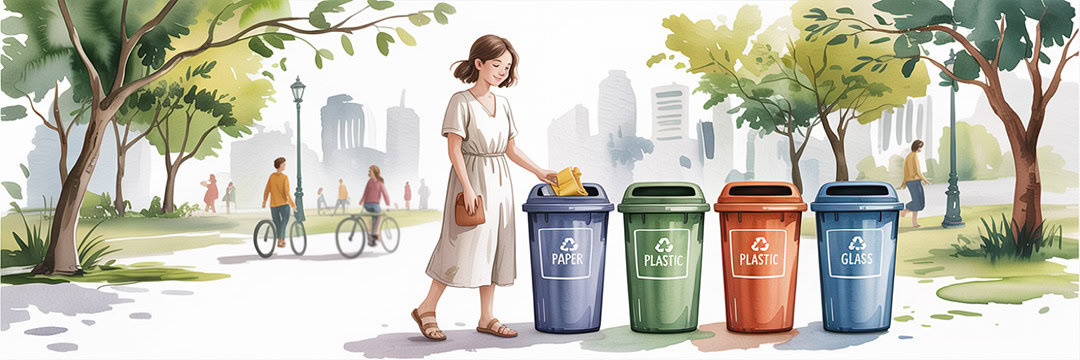
Alita and Pete meet at a park after watching David Attenborough’s documentary. Inspired by the message, they talk about nature, the planet, and the future.
Alita: That documentary was extraordinary, wasn’t it? I had no idea things had declined so quickly.
Pete: Yeah, I agree. I really appreciate how Attenborough used his own story to show what we’ve lost over time.
Alita: And the images of the forests and oceans were so spectacular—yet it made me feel a bit gloomy, seeing how much damage we’ve inflicted.
Pete: Same here. I didn’t know that felling trees on such a massive scale could lead to clogged rivers and poor soil.
Alita: Right! Trees work like a sponge, helping to keep the soil fertile and absorb water. Without them, everything suffers.
Pete: And it’s not just trees. Overusing land for wheat or other crops can cause fungus or moulds to spread and make the area unusable.
Alita: It’s terrifying. And what we build often isn’t insulated properly, so we use more energy and threaten the environment even more.
Pete: True. But I also felt hopeful. If we all do our part—planting trees, saving energy, using less firewood—it could amount to something meaningful.
Alita: I agree. Some people think it’s an exaggeration, but I’d say it’s not. I insist we have to change the way we live before it’s too late.
Pete: Then let’s head for that tree-planting event next weekend. Small steps can multiply into big results.
Alita: Deal! I don’t want to feel deprived of a healthy planet. Let’s help tame this damage while we still can.
OVER TO YOU
Discuss these questions. Refer to the topic of the lesson and your own experience.
 | Have you ever watched a documentary that made you appreciate nature more? What was it about? |
| In your opinion, is climate change a real threat to our planet? Why or why not? |
| Do you think people today are deprived of natural beauty compared to the past? Why? |
| What does a spectacular natural place look like to you? Can you describe one you’ve seen? |
| Some say it’s an exaggeration to say humans are destroying the planet. Do you agree or disagree? Explain. |
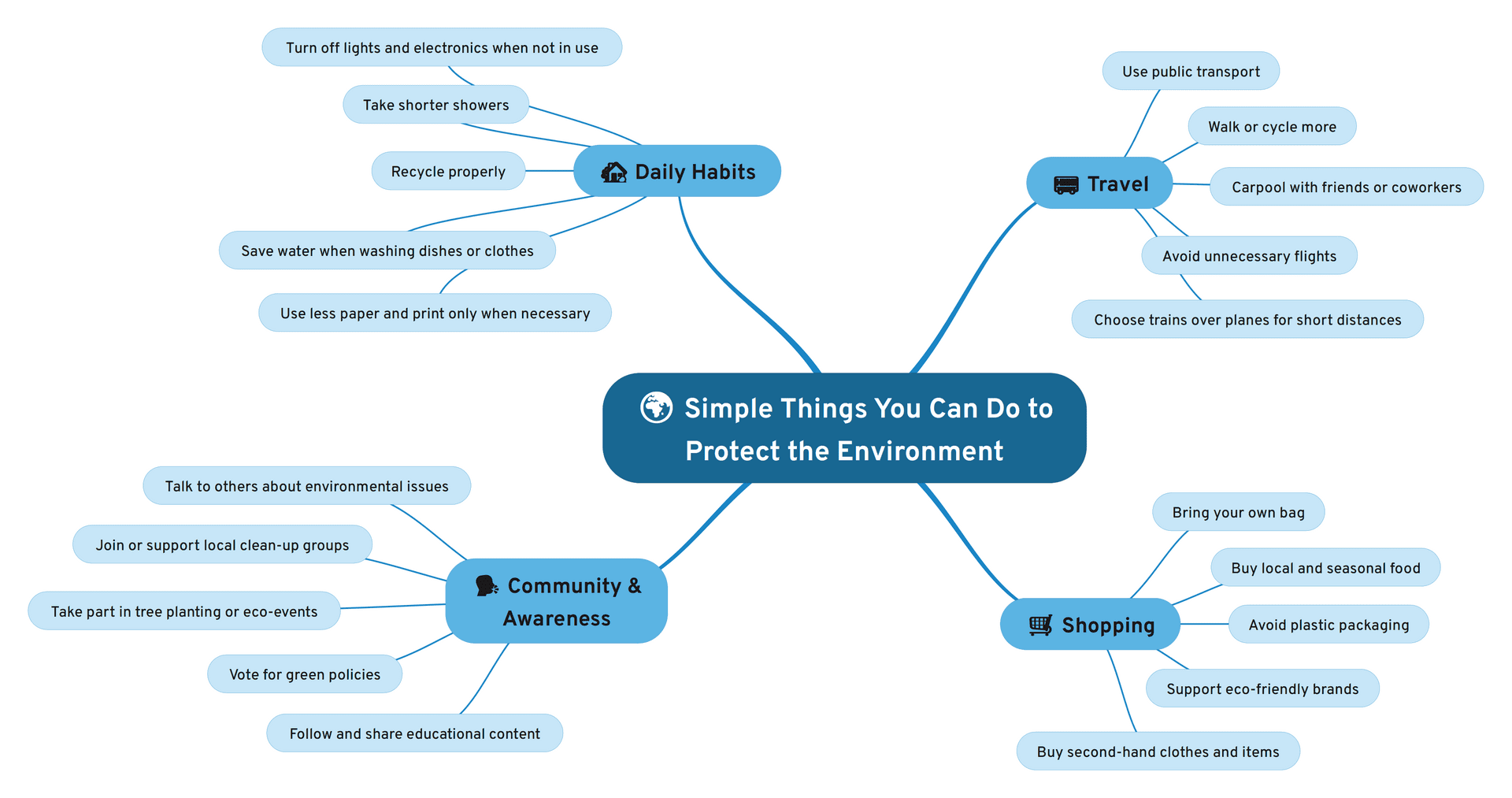
What can we do
Conside the ideas on the mind-map below. Discuss what can a regular person living in a city can realistically do to protect the environment.
lesson glossary
David Attenborough
COMMENTS
What do you think of the ideas from this class? Share your views and opinion below.
0 Comments