Secrets of Learning Languages with Lydia Machova

Secrets of Learning Languages with Lydia Machova

Sorry, but lessons on The Blue Tree work only on a computer or a tablet.

Bardzo mi przykro, ale lekcje na platformie The Blue Tree działają jedynie na komputerze lub tablecie.

Do zobaczenia na większym ekranie 🙂

Zespół The Blue Tree

back to HOME > Personal Development  > How to learn > Secrets of learning languages

Learn more words

THE BLUE TREE

How to Learn

CEF B1

CEFR B1

Intermediate

warm up

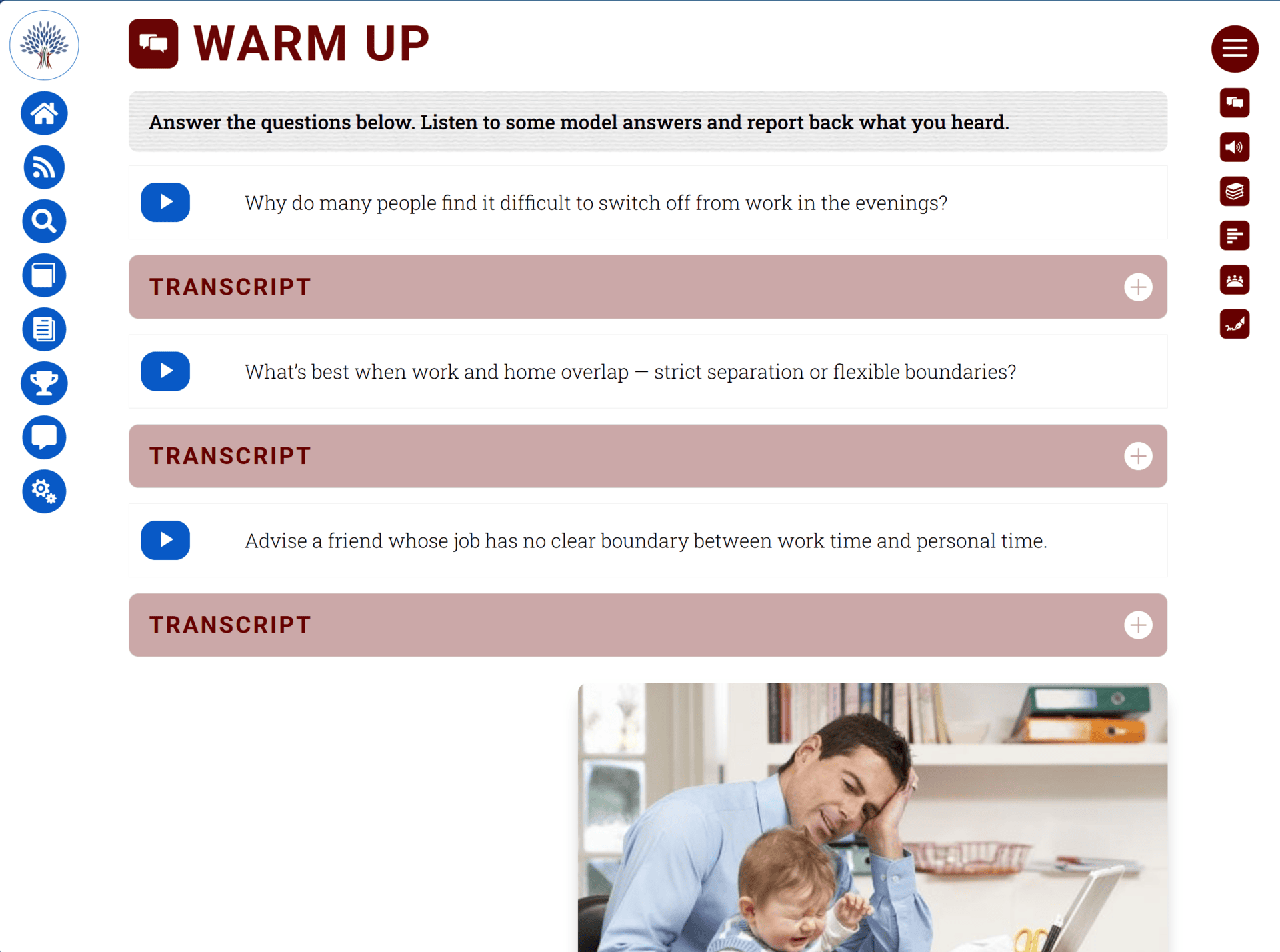
Answer these questions. Listen to a model answer (if it is available) and see if there’s anything you would like to add to your own opinion.

TRANSCRIPT

I speak two languages fluently—English and Spanish. I’ve always appreciated how being bilingual allows me to communicate with a wider range of people and experience different cultures more deeply. It’s also been a big help in both personal and professional situations. I’d love to add another language to my list, maybe something completely different like Italian or Japanese!

TRANSCRIPT

I do like learning languages! It can be tough at first, but once you start to get the hang of it, it becomes a lot more fun. I love how it feels like solving a puzzle, and you can see your progress over time. Plus, learning a new language opens up so many new experiences—whether it’s through travel, meeting new people, or just understanding a different culture better. It’s challenging but really rewarding.

What are the advantages of knowing many languages?
TRANSCRIPT

Knowing many languages gives you a lot of advantages. First, it can improve your job opportunities since many businesses operate globally now. It also helps you connect with people from different backgrounds, which is invaluable both personally and professionally. Plus, it keeps your brain sharp—learning languages has been shown to improve memory and cognitive skills. It’s like having a superpower that opens doors everywhere.

The Blue Tree - Podręcznik do nauki angielskiego online

part one

KEY LANGUAGE

Study these flashcards. Make sure you understand all the items.

Secrets Of Learning Languages 1
0 / 0
0 / 0

VIDEO

Watch the first part of the video.

COMPREHENSION

Answer these questions. Refer to the information from the video.

10:05What does Lýdia love doing?She loves learning foreign languages.
20:15How often does she like to learn a new language?She likes to learn a new language every two years.
30:22How many languages is she currently working on?She is currently working on her eighth one.
40:50What do people always ask her when they find out?They ask her how she does it and what her secret is.

part two

KEY LANGUAGE

Go through the flashcards below. Make sure you understand all the words and expressions.

Secrets Of Learning Languages 2
0 / 0
0 / 0

VIDEO

Watch the second part of the video.

COMPREHENSION

Answer these questions. Refer to the information from the video.

11:15What are polyglots?Polyglots are people who speak a lot of languages.
21:30What did she want to find out from them?She wanted to find out how polyglots learn languages so much faster than other people.
31:50What is Benny’s method for learning a new language?His method is to start speaking from day one.
42:05Why doesn’t Benny mind making mistakes?Because making mistakes and getting feedback is how he learns.

part tHREE

KEY LANGUAGE

Go through the flashcards below. Make sure you understand all the words and expressions.

Secrets Of Learning Languages 3
0 / 0
0 / 0

VIDEO

Watch the second part of the video.

COMPREHENSION

Answer these questions. Refer to the information from the video.

12:23What was Lucas’s method of learning Russian?He added a hundred random Russian speakers on Skype and copied their messages to each other, making two strangers have a conversation.
22:28What allowed Lucas to start writing himself?He had so many of these copied conversations that he figured out how a Russian conversation usually starts.
32:33What does Lydia think about Lucas’s method?She thinks it is an "ingenious method".

part four

KEY LANGUAGE

Go through the flashcards below. Make sure you understand all the words and expressions.

Secrets Of Learning Languages 4
0 / 0
0 / 0

VIDEO

Watch the second part of the video.

COMPREHENSION

Answer these questions. Refer to the information from the video.

12:46What are some of the ways polyglots learn new languages?Some start by imitating sounds, others learn the 500 most frequent words, and some start by reading about the grammar.
22:56Did Lydia learn that there is one way of learning languages?No, she learned that everybody seems to have a unique way they learn a language.
33:16What do polyglots have in common?The one thing they all have in common is that they simply found ways to enjoy the language-learning process.
43:21How did polyglots talk about the process of learning languages?They were talking about language learning as if it was great fun.

part five

KEY LANGUAGE

Go through the flashcards below. Make sure you understand all the words and expressions.

Secrets Of Learning Languages 5
0 / 0
0 / 0

VIDEO

Watch the second part of the video.

COMPREHENSION

Answer these questions. Refer to the information from the video.

13:57How did Lydia learn Spanish?She learned Spanish by reading the "Harry Potter" books.
24:01What did polyglots find about methods of learning languages?They found that while everyone uses different methods, they always make sure it is something they personally enjoy.
34:07How much did she understand from Harry Potter at the beginning?She didn’t understand almost anything at the beginning.
44:14Why did she continue reading the book?She kept reading because she loved the book.
54:23Why did she decide to learn German by watching "Friends"?She decided to watch it because it is her favorite sitcom.
64:36What happened after the third season of watching "Friends" in German?The dialogue finally started to make sense.
75:33What are some methods of learning languages Lydia recommends?She recommends typing words in an app, finding interesting content on YouTube or in podcasts, and applying the method of self-talk.
85:45What is the first secret of learning languages?The first secret is finding enjoyment in the process of learning languages.

part six

KEY LANGUAGE

Go through the flashcards below. Make sure you understand all the words and expressions.

Secrets Of Learning Languages 6
0 / 0
0 / 0

VIDEO

Watch the second part of the video.

COMPREHENSION

Answer these questions. Refer to the information from the video.

15:55What is the second secret according to Lydia?You need to use effective methods.
26:11What is the benefit of using spaced repetition?It allows you to keep words long term.
36:30Where can we find information about effective methods of learning languages?You can check out polyglots’ YouTube channels and websites and get inspiration from them.

part sEVEN

KEY LANGUAGE

Go through the flashcards below. Make sure you understand all the words and expressions.

Secrets Of Learning Languages 7
0 / 0
0 / 0

VIDEO

Watch the second part of the video.

COMPREHENSION

Answer these questions. Refer to the information from the video.

16:39What is the third secret?The third secret is to create a system in your learning.
26:47How can we create more time for learning a new language?We can create that time if we just plan a bit ahead, such as waking up 15 minutes earlier to revise vocabulary.
37:03What are some ideas how to find time for learning a new language?You can find time by doing things without planning, such as listening to podcasts on your way to work or while doing household chores.
47:16What is important as regards having a system?The important thing is to create a plan in the learning, such as deciding to practice speaking every Tuesday and Thursday.
57:30What is the benefit of having a system for learning a new language?If you create a system in your learning, you don’t need to find that extra time because it will become a part of your everyday life.

part EIGHT

KEY LANGUAGE

Go through the flashcards below. Make sure you understand all the words and expressions.

Secrets Of Learning Languages 8
0 / 0
0 / 0

VIDEO

Watch the second part of the video.

COMPREHENSION

Answer these questions. Refer to the information from the video.

17:35What is the forth secret of learning a language?The fourth secret is patience.
27:46What is possible after learning a new language for two months?You can make a "visible improvement" if you learn in small chunks every day.
37:50What is the strongest motivator?There is nothing that motivates us more than our own success.
48:01How did Lydia feel when she undertood a joke in German version of "Friends"?She was very happy and remembers that moment vividly.
58:20Why does she learn a new language every two years?Because she gets addicted to that feeling of joy and success.

part NINE

KEY LANGUAGE

Go through the flashcards below. Make sure you understand all the words and expressions.

Secrets Of Learning Languages 9
0 / 0
0 / 0

VIDEO

Watch the second part of the video.

COMPREHENSION

Answer these questions. Refer to the information from the video.

18:44What may some people assume about polyglots?They may assume that polyglots are just language geniuses who have a special talent.
28:57Was benny a good at languages when he was at school?No, he studied Irish for 11 years and German for five years but still couldn’t speak them.
39:15How many languages does Benny speak?He can now easily have a conversation in over 10 languages.
49:22How good was Lucas at English at school?He tried to learn English at school for 10 years and completely failed.
59:45How long did it take Lucas to learn 11 languages?It took him about 10 years to learn 11 new languages.
69:57As a language mentor, what does Lydia help people with?She helps people take their language learning into their own hands and find methods they enjoy.
710:20When do Lydia’s clients find the magic language talent?They suddenly find it once they start enjoying the process, applying effective methods, and creating a system.

POLL

Cast your vote in the poll below.

1️⃣ When you learn a new language, what motivates you the most?
2️⃣ 2. What is your biggest challenge when learning a language?
3️⃣ 3. Which approach to language learning sounds closest to yours?
1 vote

×

DISCUSSION

Different ways of learning languages

Agata and Dawid are talking about learning languages. They are discussing Lydia’s ideas and sharing their own experience in learning a foreign language. 

Read (role-play) their dialogue. Whose story is closer to yours?

Agata: Hi David! Did you watch the TED Talk by Lydia Machova?

David: Yes, I did! I really liked it. She has a lot of energy and good ideas. What did you think?

Agata: I liked it too. I think the most important thing she said is that learning languages can be fun. I sometimes forget that.

David: Me too. I always think I have to study grammar and vocabulary lists. But she said we can learn with things we enjoy—like watching series or reading books.

Agata: Yes! I started watching a Spanish telenovela last week. I don’t understand everything, but I can guess a lot from the situation.

David: That’s great. I use music. I listen to English and Spanish songs and try to learn the lyrics. It helps me remember new words.

Agata: Lydia also said we need a system. Do you have one?

David: Kind of. I try to do something every day. Just 20 minutes. Sometimes I use an app. Sometimes I talk to my language partner online.

Agata: That’s smart. I still need to find my system. I study a lot one day, and then nothing for three days. Not good…

David: Don’t worry. She also said we should be patient. If we keep going, we will improve.

Agata: Yes, and I think I need to be more patient with myself. Maybe I will try her idea of “language coaching”—just helping myself stay motivated.

David: That’s a good idea. Let’s keep each other motivated too!

Agata: Deal! Let’s talk next week in Spanish?

David: ¡Sí, claro! Hasta pronto, Agata!

Agata: Hasta pronto, David!

OVER TO YOU

Answer these questions. Refer to your own experience and what you learnt in this lesson.

BulletWhat is your favorite way to learn a new language? Why do you like it?
BulletDo you have a system for learning languages? If yes, what is it? If not, would you like to create one?
BulletCan you think of a time when you felt proud of your progress in learning a language? What happened?
BulletDo you agree that enjoying the process is the most important part of language learning? Why or why not?
BulletWhat would you say to someone who wants to give up learning a new language?

DOWNLOAD

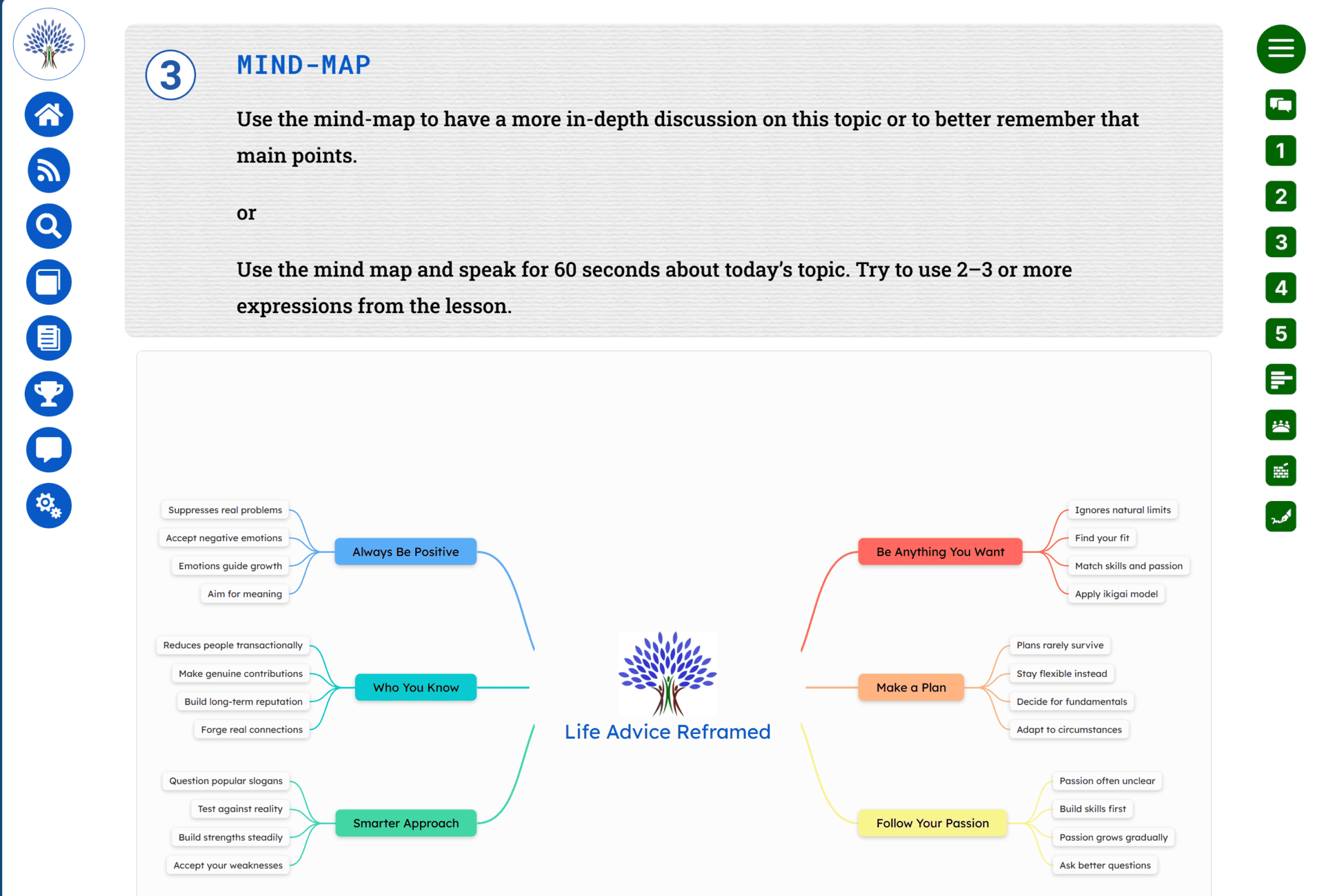
Download a mind-map with ideas of methods for learning languages.

What methods would you add to it?

download a mind-map

Learning is more effective when you use mind-maps!

Weekly Learning Plan is a practical template for self-disciplined students who want to track their learning.

It contains a lot of ideas of what you could do to improve your English.

WEEKLY LEARNING PLAN

Use this template to plan your week of learning!

lesson glossary

Secrets of learning languages

COMMENTS

What is your experience with learning languages? How did you learn English? Which methods or systems have you tested and can recommend?

Share your views and experience here.

Dwoję się i troję by lekcje na The Blue Tree były skuteczne

Dwoję się i troję by lekcje na The Blue Tree były skuteczne

Dwoję się i troję, żeby lekcje na TBT były skuteczne

How Paul Nation’s Four Strands Can Help Us Design Better Language Lessons

The title of this post is based on a Polish idiom: “dwoić się i troić”, which means trying very hard, doing everything you can, almost multiplying yourself, to make something work. In the case of The Blue Tree, it captures a simple idea: I do not want TBT lessons to be only attractive. I want them to be effective.

Dwoję się i troję, żeby lekcje na TBT były skuteczne

Every English teacher knows this small, uncomfortable moment.

You finish a lesson and think: That went well.
The students talked. The materials looked good. The video was interesting. The discussion was lively. Nobody fell asleep. Small victory, right?

But then another question quietly appears in the back of your mind:

Was the lesson only attractive, or was it also effective?

This question matters more and more today. We have beautiful slides, videos, apps, games, flashcards, AI tools, interactive platforms, quizzes, images, mind maps and colourful materials. We can make almost any lesson look engaging. But attractiveness is not the same as learning.

A lesson may be fun and still unbalanced.
A lesson may look modern and still give students too little speaking practice.
A lesson may be full of vocabulary and still give students too few chances to use it fluently.
A lesson may be very communicative and still give students too little help with accuracy.

This is where Paul Nation’s model of the four strands becomes extremely useful.

It gives us a simple but powerful question:

Does my language programme give learners a balanced diet of language learning?

I like the word diet here. A good diet is not one magic ingredient. You cannot live on protein alone. You cannot live on fruit alone. And, sadly, you cannot live on coffee alone, although many teachers have tried.

In the same way, a good language course should not be based only on grammar, only on speaking, only on vocabulary, or only on attractive content. It needs balance.

Paul Nation, a well-known researcher in vocabulary and language teaching, suggests that a strong language programme should include four main strands:

  1. Meaning-focused input
  2. Meaning-focused output
  3. Language-focused learning
  4. Fluency development

Let’s look at these four strands first.


1. Meaning-focused input: students need to receive meaningful language

The first strand is meaning-focused input.

This means that students read or listen to English in order to understand a message. The focus is not mainly on analysing the language. The focus is on meaning.

Students may read an article, listen to a story, watch a short video, follow a dialogue, or explore an idea. They are not just looking at English as a system. They are using English to understand something.

In a good lesson, students should receive language that is:

  • interesting enough to deserve attention,
  • understandable enough not to become frustrating,
  • rich enough to expose them to useful vocabulary and structures,
  • connected to ideas, stories, problems or real-life situations.

This is especially important because language learning is not only about learning rules. Learners need contact with living language. They need to see how words behave in context. They need to hear natural patterns. They need examples of how people express ideas, opinions, emotions, doubts and decisions.

For English teachers, this may include:

  • reading texts,
  • short articles,
  • stories,
  • interviews,
  • podcasts,
  • TED-style talks,
  • dialogues,
  • video lessons,
  • book excerpts,
  • listening tasks.

The key question is:

Do my students regularly receive English that carries real meaning?

Not just disconnected sentences. Not just grammar examples. Not just artificial textbook lines about Tom going to the bank. Real meaning.

Of course, “real” does not always mean “authentic and difficult”. For lower-level learners, we often need graded or adapted material. But the material should still communicate something worth thinking about.

2. Meaning-focused output: students need to express something

The second strand is meaning-focused output.

This is where students use English to speak or write. Again, the main focus is meaning. They want to say something, explain something, react to something, share an opinion, tell a story, solve a problem or respond to another person.

This is where many lessons claim to be communicative. But we need to be careful.

A lesson is not communicative simply because students say a few words in English. A lesson becomes meaningfully communicative when students have something to express and a reason to express it.

Good output tasks may include:

  • discussion questions,
  • pair work,
  • role-plays,
  • short presentations,
  • written reflections,
  • email writing,
  • storytelling,
  • problem-solving tasks,
  • opinion sharing,
  • comparing different viewpoints.

The key question is:

Do my students regularly use English to communicate their own thoughts?

This is important because students cannot become confident speakers only by listening to good English. They need to produce language themselves. They need to try, hesitate, reformulate, search for words, make mistakes, receive help and try again.

Output also shows teachers what students can actually do. A learner may recognise a phrase in a text but fail to use it in speech. A learner may understand a grammar structure but avoid it when speaking. Output reveals the gap between passive knowledge and active use.

That gap is not a failure. It is where teaching becomes interesting.

3. Language-focused learning: students need conscious attention to language

The third strand is language-focused learning.

This is the strand most teachers know very well. It includes direct work on vocabulary, grammar, pronunciation, spelling, word formation, collocations, sentence patterns and accuracy.

In other words, students stop for a moment and look at how the language works.

This strand may include:

  • vocabulary explanations,
  • grammar focus,
  • pronunciation practice,
  • phonetic transcription,
  • flashcards,
  • translation activities,
  • gap-fill tasks,
  • sentence transformation,
  • error correction,
  • work on collocations and chunks,
  • noticing useful expressions in a text.

Some modern teaching conversations almost make teachers feel guilty about doing direct language work. As if every minute spent on grammar or vocabulary was somehow old-fashioned.

I do not think this is helpful.

Students need meaning, yes. They need communication, yes. But they also need clarity. They need help seeing patterns. They need vocabulary organised in a way they can remember and use. They need to notice why one phrase works and another sounds unnatural.

The problem is not language-focused learning itself. The problem appears when it becomes the whole lesson.

If a course is only grammar explanation, translation, word lists and exercises, students may know a lot about English without being able to use it comfortably. But if we remove focused language work completely, students may communicate freely but inaccurately, with the same limited vocabulary for years.

So the question is not: Should we teach language directly?
The better question is:

Do we teach language directly as part of a balanced learning experience?

In my opinion, this is where well-designed vocabulary work becomes extremely powerful. Especially when we teach not only isolated words but also:

  • collocations,
  • chunks,
  • useful phrases,
  • natural examples,
  • pronunciation,
  • translation where helpful,
  • patterns students can immediately use in speech or writing.

4. Fluency development: students need to get faster and more confident with language they already know

The fourth strand is often the easiest to forget.

It is fluency development.

This does not mean “just speaking”. It means practising language that is already familiar, so that students can use it more quickly, more smoothly and with less mental effort.

This is an important distinction.

If a student is trying to understand a difficult new text, that is not fluency development.
If a student is learning ten new expressions for the first time, that is not fluency development.
If a student is struggling to build every sentence from zero, that is not fluency development.

Fluency practice should usually be based on material that students already know or mostly know. The goal is not to add a lot of new language. The goal is to help students access known language faster.

Fluency tasks may include:

  • speaking for 60 seconds about a familiar topic,
  • repeating the same answer and improving it,
  • retelling a story,
  • quick vocabulary recall,
  • timed speaking,
  • easy extensive reading,
  • repeated reading,
  • short writing under time pressure,
  • saying the same idea in a clearer or more natural way.

The key question is:

Do my students get regular chances to become faster and more confident with language they have already met?

This is the strand that can make a big difference in real-life communication.

Many students know more English than they can use. They recognise words, understand explanations and complete exercises — but when they need to speak, everything becomes slow and heavy. It is like having a beautiful library in your head, but no clear path to the right shelf.

Fluency practice builds those paths.

It helps students move from:

“I know this phrase somewhere…”

To:

“I can actually use this phrase when I speak.”

This is also how I want to keep developing lessons on The Blue Tree. Not as collections of attractive activities, but as balanced learning experiences. A good TBT lesson should give teachers something practical, students something meaningful, and the learning process a clear structure.

A simple TBT checklist based on Nation’s four strands

For teachers, theory becomes useful when it leads to better decisions.

So here is a simple checklist we can use when designing or reviewing a lesson.

1. Meaning-focused input

Ask:

Do students read or listen to something meaningful?

This may be a text, video, story, dialogue, article, interview or short explanation. The important thing is that students are receiving English in order to understand a message.

2. Meaning-focused output

Ask:

Do students speak or write in order to express their own thoughts?

This may happen through discussion, role-play, reflection, presentations, written answers or problem-solving tasks.

3. Language-focused learning

Ask:

Do students consciously notice and practise useful language?

This includes vocabulary, grammar, pronunciation, collocations, chunks, sentence patterns and feedback.

4. Fluency development

Ask:

Do students practise using familiar language more smoothly and confidently?

This may include timed speaking, repeated answers, quick recall, retelling, easy reading or short writing tasks.

If a lesson touches all four areas, it has a much better chance of being not only enjoyable but also effective.

Of course, not every single lesson must divide time into perfect 25% sections. Real teaching is more flexible than that. Some lessons may focus more on input. Some may focus more on speaking. Some may be revision-heavy. Some may prepare students for an exam.

But over time, a course should not become one-sided.

The checklist helps us notice imbalance.

If students receive a lot of input but rarely speak, we know what to add.
If students speak a lot but never receive focused language help, we know what to add.
If students learn vocabulary but do not recycle it, we know what to add.
If students understand everything slowly but cannot use it fluently, we know what to add.

This is the practical value of Nation’s model.

It does not replace teacher intuition. It sharpens it.


Attractive is good. Effective is better.

I love attractive lessons.

I love beautiful visuals, good stories, smart questions, clean design, mind maps, flashcards, interactive activities and lessons that make students curious.

But attractiveness should serve learning.

A lesson should not only make students think:

“That was nice.”

It should also help them feel:

“I understood something.”
“I noticed useful language.”
“I said something meaningful.”
“I can use this better now.”

That is the difference.

As teachers, we are constantly balancing many things: motivation, accuracy, fluency, confidence, exam needs, classroom energy, time pressure, mixed levels and real human moods on a Tuesday morning.

No model will solve all of that for us.

But a good model can give us a compass.

Paul Nation’s four strands are one such compass.

They remind us that a strong English lesson should give students:

  • meaningful language to receive,
  • meaningful language to produce,
  • focused attention to how language works,
  • practice that makes known language more fluent.

That is a beautifully simple idea.

And it is also a useful challenge.

When we design our next lesson, we can ask:

Is this lesson attractive?

Good question.

But then we should ask the better one:

Is this lesson balanced enough to help students actually grow?

That is where real teaching begins.

Aktywuj mówienie poprzez ilustracje

Aktywuj mówienie poprzez ilustracje

Aktywuj mówienie dzięki ilustracjom

Kiedy projektujemy lekcję na thebluetree.pl, każdy element ma swoje uzasadnienie metodyczne. Każdy. Również ten, który na pierwszy rzut oka wygląda na czysto estetyczny — czyli ilustracja.

TBT - Naśladuj najlepszych - ćwicz wymowę z ElevenLabs

Ilustracja jako narzędzie aktywacji języka. Dlaczego w lekcjach The Blue Tree obrazek nie jest dekoracją

W większości naszych lekcji znajdziesz co najmniej trzy obrazki. Pierwszy jest na kafelku w katalogu. Drugi otwiera lekcję jako hero image. Trzeci pojawia się pod sekcją Warm-up. Czwarty — pod ankietą lub sekcją refleksyjną. To nie jest przypadek. To jest świadoma decyzja projektowa, oparta na konkretnych założeniach z dydaktyki języków obcych i andragogiki.

Ten krótki tekst jest dla Ciebie — nauczyciela, który korzysta z naszych materiałów. Chcę pokazać, co tak naprawdę dostajesz razem z tymi obrazkami i jak możesz to wykorzystać w pracy z uczniem.


Dlaczego w ogóle ilustracja, a nie tylko tekst?

Tu warto na chwilę cofnąć się do podstaw. Allan Paivio w swojej dual coding theory z 1971 roku pokazał, że nasz umysł przetwarza informacje dwoma niezależnymi, choć powiązanymi kanałami: werbalnym (słowa, zdania, struktury) i niewerbalnym (obrazy, sceny, wrażenia). Kiedy uczeń otrzymuje materiał równocześnie w obu kanałach, powstają tak zwane referential connections — mosty między słowem a obrazem, które wzmacniają zapamiętywanie i ułatwiają późniejsze przywołanie.

W praktyce oznacza to tyle: uczeń, który widzi scenę w kawiarni i jednocześnie czyta dialog o zamawianiu jedzenia, koduje słownictwo dwukrotnie. Werbalnie i wizualnie. More routes in, more routes out.

Dlatego ilustracja w lekcji The Blue Tree nigdy nie jest ornamentem. Jest drugim kanałem dostępu do języka.


Cztery ilustracje — cztery funkcje dydaktyczne

1. Kafelek w katalogu — funkcja orientacyjna

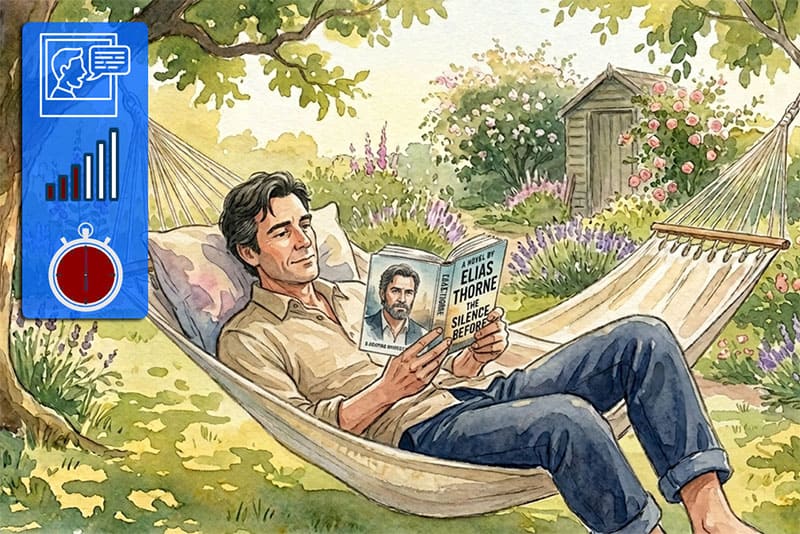
Ilustracja na kafelku pełni rolę advance organizer — czyli tego, co Ausubel nazywał punktem zaczepienia poznawczego, jeszcze zanim uczeń wejdzie w treść. W jednym spojrzeniu uczeń (lub Ty, planując lekcję) dostaje zestaw informacji: temat, kategorię, poziom, szacowany czas trwania. Wszystko zakodowane w symbolach naniesionych na obraz.

To drobny detal, ale ma znaczenie dla self-directed learning — kluczowej zasady andragogiki Malcolma Knowlesa. Dorosły uczący się angielskiego chce sam decydować, co i kiedy bierze na warsztat. Kafelek daje mu materiał do tej decyzji w trzy sekundy.

2. Hero image — funkcja aktywacyjna

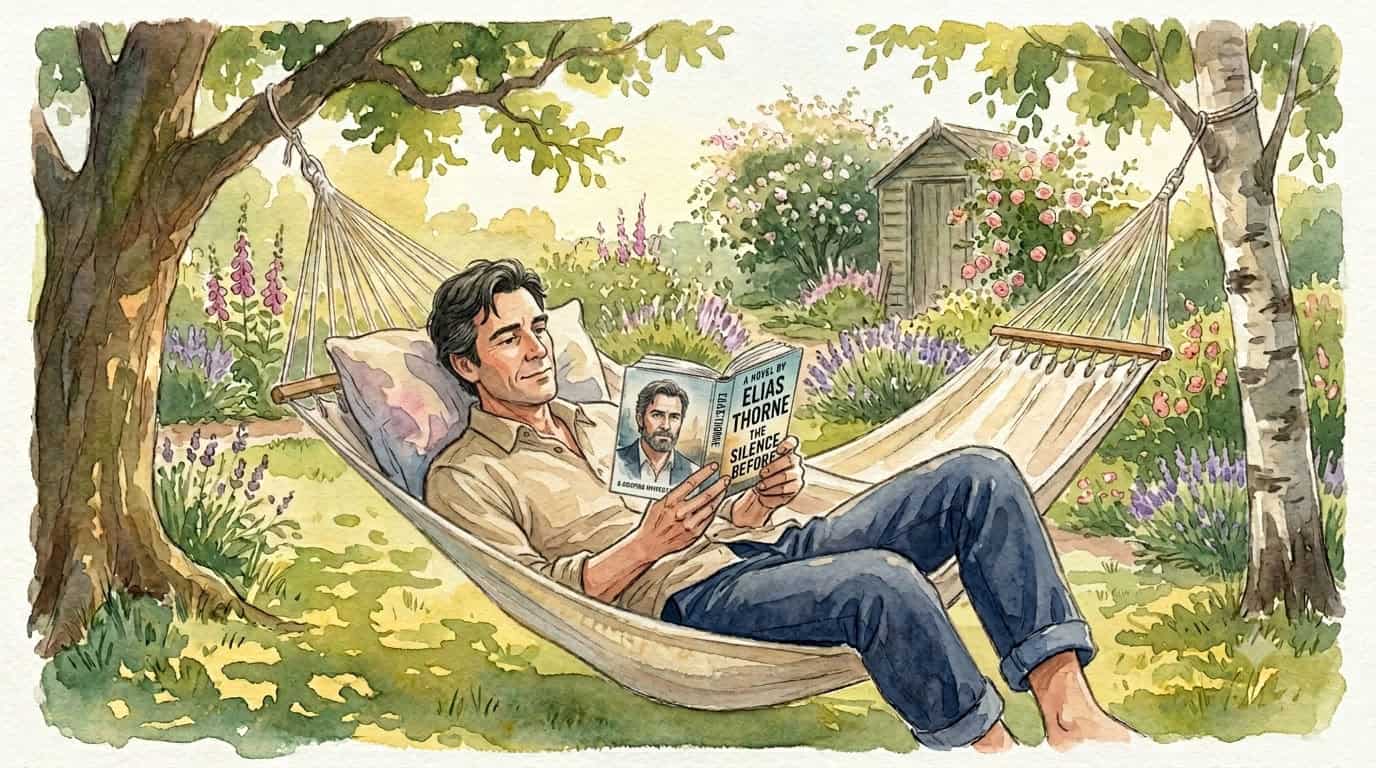
Tu zaczyna się prawdziwa praca. Pierwsza ilustracja w lekcji jest speaking trigger — bodźcem do swobodnej produkcji językowej, zanim uczeń zobaczy choćby jedno zdanie z głównego materiału.

Co robisz jako nauczyciel? Powiększasz obrazek (tak, można go powiększyć — to nie jest przypadek, że dodaliśmy tę funkcję), i prosisz ucznia, żeby po prostu opowiedział, co widzi. Bez podpowiedzi. Bez ramki. Bez “zacznij od…”.

A potem słuchasz. I to słuchanie jest jedną z najpotężniejszych form diagnostic assessment, jaką masz w lekcji online.

Zwróć uwagę na kilka rzeczy:

  • Zakres leksykalny. Czy uczeń sięga po przymiotniki i przysłówki, czy zatrzymuje się na rzeczownikach i czasownikach? “There is a woman” to inny poziom niż “There’s a young woman in a brown sweater, looking thoughtfully at her own reflection.”
  • Struktury gramatyczne. Czy używa Present Continuous do opisu sceny? Czy próbuje sięgnąć po konstrukcje typu “It looks as if…”, “She seems to be…”?
  • Strategie poznawcze. Czy uczeń tylko opisuje, czy także wnioskujeinfers, speculates, hypothesizes? Czy łączy obrazek z tytułem lekcji? Czy zgaduje, o czym może być cały materiał?
  • Discourse markers i fluency. Czy mówi płynnie, czy szuka słów? Czy używa wypełniaczy typu “well, I think…”, “it might be…”, “I’m not sure but…”?

W ciągu dwóch minut takiego show and tell dostajesz pełniejszą diagnozę produkcji ustnej niż z większości formalnych testów. To jest language assessment in action.

3. Ilustracja pod Warm-up — funkcja kontrastowa lub uzupełniająca

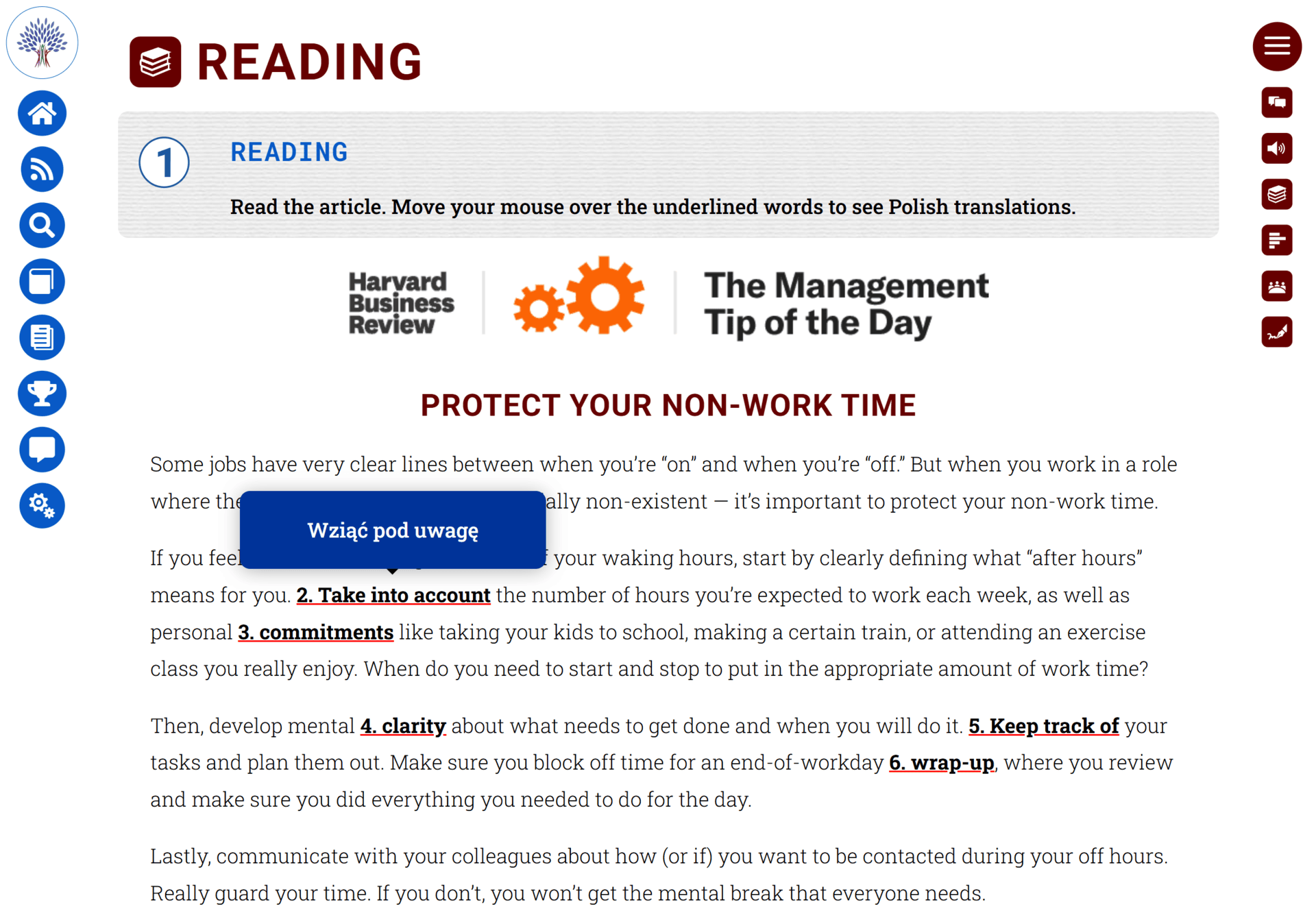
Druga ilustracja w lekcji nie powtarza pierwszej. Czasem ją uzupełnia, czasem kontrastuje. Jeśli pierwszy obrazek pokazywał kogoś samotnie zastanawiającego się przed lustrem, drugi może pokazywać dwie osoby w rozmowie — i nagle uczeń ma do dyspozycji nową warstwę słownictwa, nowy zestaw relacji do opisania.

To jest scaffolding w czystej postaci. Pierwsza scena uruchamia jeden rejestr językowy. Druga rozszerza go o kolejny. Uczeń nie musi wymyślać wszystkiego od zera — buduje na tym, co już powiedział.

I znów: można powiększyć, żeby uczeń mógł się skupić na detalu. Wyraz twarzy. Gest. Kontekst tła. Każdy detal to potencjalne pytanie, każde pytanie to potencjalna produkcja.

4. Ilustracja pod ankietą — funkcja konsolidacyjna

Ostatnia ilustracja jest closing prompt. Pojawia się po tym, jak uczeń przeszedł przez tekst, słownictwo, ćwiczenia. Teraz wraca do obrazka — ale wraca jako ktoś inny. Bogatszy o nowe słownictwo, nowe struktury, nową świadomość tematu.

To moment, w którym pojawia się immediate application — kolejna z zasad andragogiki Knowlesa. Dorosły uczący się chce od razu używać tego, czego się nauczył, a nie odkładać to “na kiedyś”. Ostatnia ilustracja daje mu tę okazję. “Now describe this picture again — but use at least five new words from today’s lesson.”

To także doskonały moment na deliberate practice w sensie Ericssona — czyli ćwiczenie z konkretnym celem, z natychmiastową informacją zwrotną. Uczeń wie, czego ma użyć. Ty słuchasz, czy się udało. Korekta jest natychmiastowa.

Co zyskujesz Ty, nauczyciel?

Po pierwsze — narzędzie diagnostyczne, które działa od pierwszej minuty lekcji. Nie potrzebujesz testu poziomującego. Posłuchaj, jak uczeń opowiada o pierwszej ilustracji, i wiesz, gdzie jesteście.

Po drugie — strukturę produkcji ustnej, która prowadzi ucznia od swobodnej wypowiedzi przez kontrolowaną do refleksyjnej. Cztery obrazki, cztery momenty mówienia, cztery różne tryby aktywacji języka.

Po trzecie — paliwo do rozmowy, kiedy lekcja się zacina. Każdy nauczyciel zna ten moment, kiedy uczeń milknie. Wracasz do obrazka, zadajesz nowe pytanie o detal, i rozmowa rusza dalej.

Po czwarte — bridge między tematem a doświadczeniem ucznia. Obrazek pokazujący osobę w księgarni może uruchomić wspomnienia, opinie, anegdoty. A wspomnienia, opinie i anegdoty to gold w nauczaniu dorosłych. Knowles podkreślał to kilkadziesiąt lat temu: doświadczenie życiowe dorosłego ucznia to nie balast, to najbogatsze źródło materiału do nauki.


Drobny detal, który zmienia wszystko

Ostatnia rzecz, o której chcę wspomnieć: w naszych lekcjach każdą ilustrację można powiększyć. Wiem, że brzmi to banalnie. Ale ten jeden klik zmienia status obrazka — z dekoracji na materiał dydaktyczny. Uczeń, który widzi szczegóły, ma o czym mówić. Uczeń, który mówi, uczy się.

That’s the whole point.


Ilustracje w lekcjach The Blue Tree nie są tam dla efektu. Są tam, bo wiemy, że dorosły uczący się języka potrzebuje wielu kanałów wejścia, wielu okazji do produkcji i wielu momentów, w których jego doświadczenie może wejść do gry.

Twoim zadaniem jako nauczyciela jest tylko jedno: nie pomijać ich.

Powiększ. Zapytaj. Posłuchaj.

A potem zapytaj jeszcze raz.

A Tribute to David Attenborough – Free lesson

A Tribute to David Attenborough – Free lesson

A Tribute to David Attenborough

A free Blue Tree lesson celebrating the voice that taught the world to listen to nature.

TBT - Naśladuj najlepszych - ćwicz wymowę z ElevenLabs

What can we learn from a voice we have heard all our lives? This free lesson brings together two contrasting moments from Sir David Attenborough’s career — the trailer for A Life on Our Planet and a BBC interview from more than twenty years ago — to help learners develop their English through ideas about nature, change, and the passing of time.

David Attenborough: A Life on Our Planet

David Attenborough: A Life on Our Planet

Sorry, but lessons on The Blue Tree work only on a computer or a tablet.

Bardzo mi przykro, ale lekcje na platformie The Blue Tree działają jedynie na komputerze lub tablecie.

Do zobaczenia na większym ekranie 🙂

Zespół The Blue Tree

David Attenborough: A Life on Our Planet
Learn more words

THE BLUE TREE

Travel & Nature

CEF B1

CEFR B1

Intermediate

warm up

Answer the questions below. Use the model answers to practice listening and reading.

There is an ongoing debate on the causes of climate change. Where do you stand on this?
TRANSCRIPT

I believe climate change is mostly caused by human activity. We burn too many fossil fuels, cut down forests, and produce too much waste. Some people still argue about it, but the science is quite clear. I think we can already see the effects in floods, fires, and rising temperatures. We can’t just wait and hope – we have to act.

If climate change is the result of human activity, what do you think we should do to better manage it?
TRANSCRIPT

If it’s really our fault, we should change the way we live. For example, we can use public transport, eat less meat, and recycle more. But the biggest changes must come from governments and companies. They need to invest in clean energy and protect nature. Each person can do something, but the problem is too big for just individuals to fix.

How much hope do you have in humanity’s ability to prevent the collapse of the climate in the future?
TRANSCRIPT

Honestly, I still have some hope. Humans are very creative and have solved many big problems in the past. If we work together and take climate change seriously, I think we can slow it down or even stop it. But we need to stop arguing and start acting fast. If we wait too long, the damage could be impossible to reverse.

part one

KEY LANGUAGE

Go through the flashcards below. Make sure you understand all the words and expressions.

VIDEO

Watch a trailer to a movie on Netflix: A life on Our Planet.

COMPREHENSION

Answer these questions. Refer to the information from the video.

10:09How old is David Attenborough in this trailer?
20:19What does he think about his life?
30:32What does David Attenborough think about human influence on the planet?
40:42What are we replacing the wild with?
50:50Why is this film particularly important for him?
61:03Does he believe we can make things right as regards the environment?
71:30What do people need to learn?
81:41What is he going to tell us in this film?

POLL

Cast your vote in the poll below.

1️⃣ What worries you most about the environment today?
2️⃣ Who do you think should take the most responsibility for protecting the planet?
3️⃣ How optimistic are you about the future of the environment?
2 votes

×

part two

THE INTERVIEW

In the second part of the lesson we will listen to an interview with David Attenborough. It comes from BBC Radio 4 and was recorded more than 20 years ago. What were David’s observations at that time?

Here is the introduction.

„David Attenborough knows the world better than most people. He’s spent much of the last seven years globe-trotting for his hugely successful television programmes Life on Earth and The Living Planet.

But his next series might well be named The End of Life on the Dying Planet. David Attenborough is very gloomy about much of what he’s seen.”

Go through the flashcards below. Make sure you understand all the words and expressions.

listening #1

Listen to the first part of the interview. Answer the questions that follow.

10:11How does David Attenborough feel about the future of our planet?David Attenborough is very gloomy about much of what he’s seen.
20:23Why are forests cut down in the Himalayas?In the Himalayas, people cut down trees because there are an awful lot of people who need firewood to keep warm.
30:43"The trees were umbrellas". What does this mean?The rain washes out the good soil, which ends up as mud a thousand miles away in the channels of the River Ganges.
40:43What happens to soil without trees?The rain washes out the good soil, which ends up as mud a thousand miles away in the channels of the River Ganges.
50:52What causes floods in Bangladesh?Without the forest acting as a sponge, rainwater runs straight off into channels clogged with mud, and the whole area is underwater. So cutting down trees in Nepal drowns people in Bangladesh.
61:26What is the ‘devastating statistic’ about the desert in the Sudan?In parts of the Sudan, the desert in just 15 years has advanced 60 miles.
71:38Why does David Attenborough call it a ‘heart-breaking’ statistic?Because how can you go to these people and say, you mustn’t cut down that tree in order to cook your food?

Listening #2

Listen to the second part of the interview. Answer the comprehension questions below.

11:55Why did he not believe at first that the Amazon jungle could disappear?He remembered flying over the Amazonian jungle for hour after hour and not seeing a sign of the hand of man beneath him — just a green carpet of trees — so he said to himself, it can’t be true that this will disappear by the end of the century.
22:24How are statistics about the disappearing jungle made?The statistics are based on surveys by satellites with infrared cameras which measure the change of a patch of green leaves into a patch of bare ground.
32:43How much jungle is being destroyed each year?About 29,000 square miles a year — an area the size of the whole of Scotland disappearing every year.
42:53Why are plants in tropical rain forests important?Trees are a vital part of the water cycle and give us oxygen. 40% of our drugs and medicines are derived from plants, most from the tropical rainforest and the Amazon. Those plants also help fight the diseases that threaten our food crops.

LISTENING #3

Listen to the final part of the interview. Answer the questions. 

13:20How do plant breeders fight funguses and moulds that attack crops?Plant breeders beat the funguses by changing the varieties of crops, and to change a variety they need new genes, which come from wild plants.
23:52What could happen to mankind if we lose wild plant strains?The fields could be devastated and mankind would starve.
34:14What current events does David Attenborough mention as direct consequences of environmental destruction?The floods in India and Pakistan and the starvation in parts of Africa — these aren’t accidents but direct consequences.
44:30Who suffers first from these environmental problems, and why shouldn’t wealthier nations feel safe?The deprived people, those living on the edge of prosperity, suffer first — but if we think we are insulated from that, we are wrong. They are the start, as sure as fate, and they are coming our way.

DISCUSSION

DIALOGUE

Alita and Pete meet at a park after watching David Attenborough’s documentary. Inspired by the message, they talk about nature, the planet, and the future.

Alita: That documentary was extraordinary, wasn’t it? I had no idea things had declined so quickly.

Pete: Yeah, I agree. I really appreciate how Attenborough used his own story to show what we’ve lost over time.

Alita: And the images of the forests and oceans were so spectacularyet it made me feel a bit gloomy, seeing how much damage we’ve inflicted.

Pete: Same here. I didn’t know that felling trees on such a massive scale could lead to clogged rivers and poor soil.

Alita: Right! Trees work like a sponge, helping to keep the soil fertile and absorb water. Without them, everything suffers.

Pete: And it’s not just trees. Overusing land for wheat or other crops can cause fungus or moulds to spread and make the area unusable.

Alita: It’s terrifying. And what we build often isn’t insulated properly, so we use more energy and threaten the environment even more.

Pete: True. But I also felt hopeful. If we all do our part—planting trees, saving energy, using less firewood—it could amount to something meaningful.

Alita: I agree. Some people think it’s an exaggeration, but I’d say it’s not. I insist we have to change the way we live before it’s too late.

Pete: Then let’s head for that tree-planting event next weekend. Small steps can multiply into big results.

Alita: Deal! I don’t want to feel deprived of a healthy planet. Let’s help tame this damage while we still can.

OVER TO YOU

Discuss these questions. Refer to the topic of the lesson and your own experience.

BulletHave you ever watched a documentary that made you appreciate nature more? What was it about?
BulletIn your opinion, is climate change a real threat to our planet? Why or why not?
BulletDo you think people today are deprived of natural beauty compared to the past? Why?
BulletWhat does a spectacular natural place look like to you? Can you describe one you’ve seen?

BulletSome say it’s an exaggeration to say humans are destroying the planet. Do you agree or disagree? Explain.

What can we do

Conside the ideas on the mind-map below. Discuss what can a regular person living in a city can realistically do to protect the environment.

Use the mind map and speak for 60 seconds about today’s topic. Try to use 2–3 or more expressions from the lesson.

lesson glossary

David Attenborough

COMMENTS

What do you think of the ideas from this class? Share your views and opinion below.