Obudź w sobie wojownika – o rywalizacji w nauce języka

Obudź w sobie wojownika – o rywalizacji w nauce języka

Obudź w sobie wojownika – o rywalizacji w nauce języka

Zbieranie certyfikatów to nie tylko miły dodatek — to mechanizm, który naprawdę zwiększa zaangażowanie w naukę. Sprawdź, jak działa rywalizacja na TBT i dlaczego warto grać o swoje postępy.

Obudź w sobie wojownika - o rywalizacji w nauce języka

Rywalizacja w nauce? Brzmi trochę jak szkolny wyścig, ale w praktyce… może działać zaskakująco dobrze.

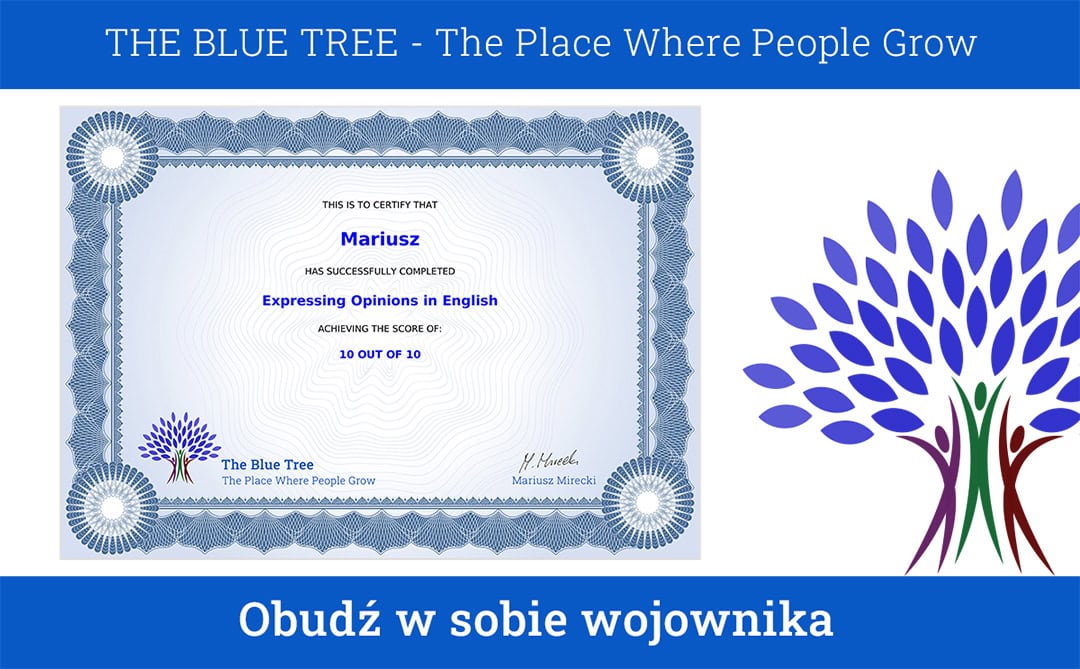
Na The Blue Tree dorzuciliśmy właśnie coś, co to pokazuje bardzo konkretnie. Testy i quizy, które — jeśli zdasz na co najmniej 60% — nagradzają Cię certyfikatem. Takim jak ten powyżej. Mała rzecz. A jednak nie do końca mała.

Bo nagle coś się zmienia.

Nie robisz już tylko lekcji. Zbierasz dowody. Trofea. Małe „I did it”, które zostają z Tobą na dłużej. I które — trochę niepostrzeżenie — budują coś ważniejszego: wewnętrzną pamięć sprawczości.

Zresztą, to nie jest nowy pomysł.

W Europejskim Paszporcie Językowym jest specjalna sekcja: dossier. Miejsce na certyfikaty, dyplomy, potwierdzenia postępów. Ktoś już dawno zauważył, że lubimy widzieć efekty swojej pracy. I że takie „ślady drogi” mają znaczenie.

Na TBT dokładamy do tego jeszcze jeden element: lekką rywalizację.

Leaderboard. Wyniki. Chęć, żeby następnym razem było trochę lepiej. Może szybciej. Może dokładniej. Może o kilka procent więcej.

I to jest ten moment, w którym nauka przestaje być obowiązkiem, a zaczyna być… grą.

Nie o wszystko. Nie za wszelką cenę.
Ale na tyle, żeby chciało się wrócić jutro i spróbować jeszcze raz.

Zrób lekcję.
Zdaj test.
Zbierz certyfikat.

A potem zerknij na swoją historię nauki w dashboardzie.

I zobacz, jak rośnie.

Twoja historia nauki – pisz ją sam

Twoja historia nauki – pisz ją sam

Historia Nauki – piszą ją sam

Systematyczność nie musi być skomplikowana. Nowa funkcja historii nauki w The Blue Tree pozwala śledzić swoje postępy dzień po dniu — a to pierwszy krok do zbudowania trwałego nawyku uczenia się.

The Blue Tree - Blog - Four secrets of language learning

Od dziś na The Blue Tree pojawia się coś, co na pierwszy rzut oka wygląda niepozornie, ale może naprawdę dużo zmienić w sposobie, w jaki się uczysz.

Możesz zapisywać swoje lekcje w historii nauki.

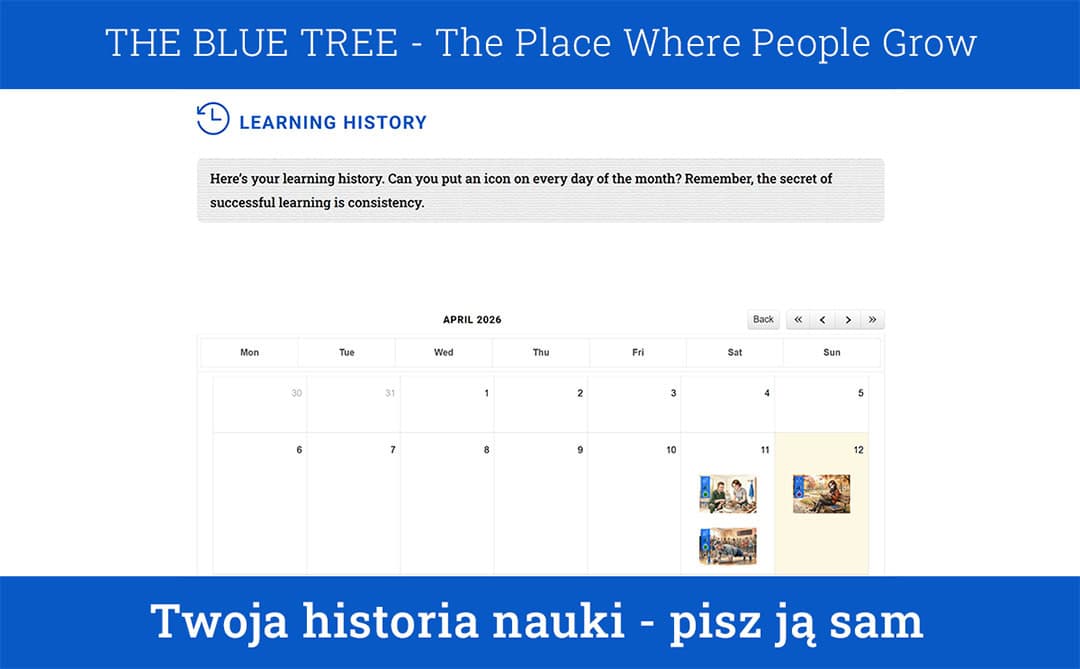
Jak to działa? Bardzo prosto. Robisz lekcję. Dodajesz ją do zrobionych lekcji. A potem wchodzisz do swojego dashboardu i widzisz swoją historię — dzień po dniu. Najedziesz myszką na obrazek i od razu widzisz, jaką lekcję zrobiłeś. Niby drobiazg, ale właśnie takie drobiazgi zaczynają budować większą całość.

Bo nagle nauka przestaje być czymś „gdzieś tam w tle”, a zaczyna zostawiać ślad.

I tu wchodzi w grę coś, o czym pisze James Clear. W Atomic Habits pojawia się prosta, ale bardzo mocna idea: track what you do. Śledź swoje działania, bo to, co widzisz, zaczyna wpływać na to, co robisz dalej.

Kiedy widzisz kilka dni z rzędu — rośnie satysfakcja.
Kiedy pojawia się luka — pojawia się też lekka potrzeba, żeby do tego wrócić.

Bez presji. Bez wielkich deklaracji. Raczej spokojne: ok, wracam jutro.

Właśnie w ten sposób buduje się systematyczność. Nie przez zryw, tylko przez powtarzalność. Nie przez motywację, która przychodzi i znika, ale przez małe, widoczne kroki.

Ta nowa funkcjonalność jest trochę jak lustro. Pokazuje Ci nie to, co planujesz zrobić, tylko to, co naprawdę robisz. A to często jest najcenniejsza informacja.

Po kilku tygodniach możesz spojrzeć na swoją historię i zobaczyć coś więcej niż pojedyncze lekcje. Zobaczyć proces. Zobaczyć ciągłość. Zobaczyć siebie w działaniu.

I może wtedy pojawi się myśl, która jest dużo ważniejsza niż jakikolwiek pojedynczy dzień:

to już nie jest przypadek.
to jest nawyk.

A nawyki — jak wiemy — piszą nasze historie.

Speaking Cards – Breaking the ice

Speaking Cards – Breaking the ice

Sorry, but lessons on The Blue Tree work only on a computer or a tablet.

Bardzo mi przykro, ale lekcje na platformie The Blue Tree działają jedynie na komputerze lub tablecie.

Do zobaczenia na większym ekranie 🙂

Zespół The Blue Tree

Speaking Cards – Breaking the ice
Learn more words

THE BLUE TREE

Everyday English

CEF B1

CEFR B1

Intermediate

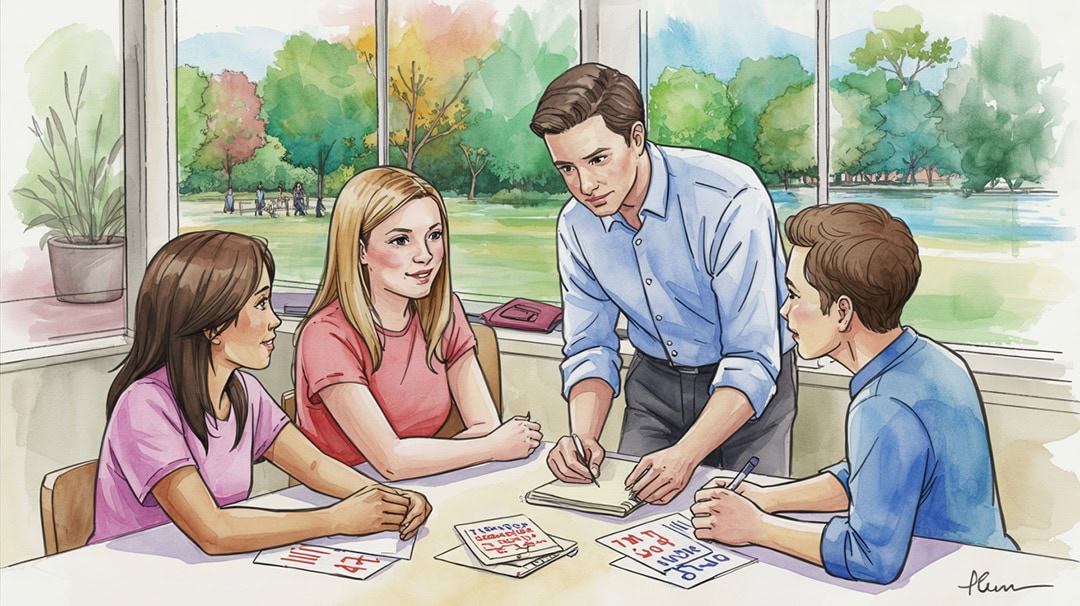
Practise English by describing this image

part one

Play this game. Answer the questions from the cards. Ask follow up questions to learn more about your partner.

part two

Model answers

Read and listen to a model answer to some of the questions from this game. The first one is for the question: What’s the biggest risk you have taken in your life?

Move your mouse over the bold words to see their meaning in Polish.

The biggest risk I have taken in my life was moving to another country to study and work. I didn’t know anyone there, and my English was not very strong at that time. I was worried about feeling lonely and failing, but I decided to try anyway. At first, everything was difficult, but little by little I made friends and learned new skills. Looking back, it was a big challenge, but it changed me and made me much stronger.

czuć się samotnym

krok po kroku / stopniowo

patrząc wstecz

Question #2

Now, do the same with this question: If you could relive one day in your life, which day would you choose and why?

If I could relive one day in my life, I would choose my graduation day. It was a once-in-a-lifetime experience, because all my family was there to support me. I had studied hard for years, and finally everything paid off. I remember standing on the stage and feeling nervous, but when I heard my name, I was over the moon. That day showed me that if you keep working hard, you can finally reach the light at the end of the tunnel.

niepowtarzalne przeżycie

opłaciło się / przyniosło efekty

zobaczyć światełko w tunelu (po trudnym okresie)

Question 3

Study the model answer for the question: Do you think climate change will change how we live in the next 20 years? How?

Yes, I think climate change will strongly affect our lives in the next 20 years. Many people may have to move because of rising sea levels, and we will probably need to cut down on waste and energy use. Some countries might experience extreme weather more often. But I also believe new technology can help. If we cooperate and make better choices, maybe we will turn the tide before it’s too late.

podnoszący się poziom mórz

ograniczyć / zmniejszyć

odwrócić bieg wydarzeń

Question #4

Study the model answer to the question: 

One small daily habit that improves my mood is going for a short walk in the morning. Fresh air always gives me a positive boost before the day begins. During the walk, I usually listen to music or a podcast, which helps me switch off from stressful thoughts. Sometimes I meet neighbors and exchange a few words. It may seem simple, but this routine helps me to start the day on the right foot.

pozytywny zastrzyk energii

odciąć się / wyłączyć się

zacząć dzień dobrze / pomyślnie

Question #5

Study the model answer to the question: What makes a good friend: honesty, loyalty, or a sense of humor?

For me, a good friend is someone who shows unconditional loyalty. Of course, honesty and humor are also important, but loyalty means that your friend will stay by your side even when life gets hard. A true friend won’t let you down when you need support the most. At the same time, a sense of humor helps you see the funny side of problems, which makes difficult moments much easier to handle together.

bezwarunkowa lojalność

zawieść kogoś

zobaczyć zabawną stronę sytuacji

COMMENTS

Choose one or more questions from this game and write your own answer. Post it here or send it to your teacher.

Language of recommending, suggesting and giving advice

Language of recommending, suggesting and giving advice

Sorry, but lessons on The Blue Tree work only on a computer or a tablet.

Bardzo mi przykro, ale lekcje na platformie The Blue Tree działają jedynie na komputerze lub tablecie.

Do zobaczenia na większym ekranie 🙂

Zespół The Blue Tree

Language of recommending, suggesting and giving advice
Learn more words

THE BLUE TREE

Tests & Quizzes

CEF B1

CEFR B1

Intermediate

THE BLUE TREE - Test Your English - Polecany Nauczyciel Angielskiego - Giving advice

INTRODUCTION

Read each short dialogue. Choose the best answer (a, b, or c) to complete the conversation. Only one answer is correct.

Example:
A: I’m bored.
B: ___ go for a walk?
a) Why not
b) You must
c) I don’t know

Correct answer: a) Why not

If you get more than 70% of answers, you will receive a beautiful certificate. 

Check your score on the Leaderboard below.

TEST

Language of recommending, suggesting and giving advice

Lubisz dawać rady? A może raczej wolisz ich unikać? 😅
Ten quiz pomoże Ci sprawdzić, jak dobrze znasz angielskie sposoby na sugerowanie, polecanie i doradzanie.

Na przykład:

👉 Ktoś mówi: „Nie wiem, co obejrzeć wieczorem”.
Możesz odpowiedzieć:

  • „Why don't we watch a comedy?” (Dlaczego by nie obejrzeć komedii?)

  • Albo: „If it were up to me, I'd go to the cinema.” (Jeśli by to ode mnie zależało, to wolałbym pójść do kina).

Brzmi znajomo? No to świetnie!

W każdym pytaniu zobaczysz krótką rozmowę i trzy możliwości odpowiedzi. Tylko jedna jest poprawna.
Powodzenia – i pamiętaj: dobre rady nie bolą… chyba że to „You should go on a diet” w trakcie dzielenia się tortem 🎂😂

To jak? Jedziemy z testem? 

Jak podasz mi swoje imię i email, to dostaniesz certyfikat i wyniki. A później weźmiesz udział w losowaniu nagród (dotyczy kampanii "Back to school 2025)

1.

A: I don’t know what to order.
B: ___ try the pasta? It’s their specialty.

2.

A: I feel so tired lately.
B: You ___ take a break for a few days.

3.

A: I’m nervous about the job interview tomorrow.
B: How about ___ some answers with me tonight?

4.

A: I’m not sure where we should go on holiday.
B: I’d recommend ___ somewhere quiet this year.

5.

A: I don’t like my hairstyle.
B: You should ___ a new hairdresser.

6.

A: I’m always late for work.
B: Why don’t you ___ an earlier bus?

7.

A: I want to get fitter, but I don’t have much time.
B: Have you thought about ___ short runs in the morning?

8.

A: I can’t decide which phone to buy.
B: If I were you, I’d ___ the cheaper one.

9.

A: I can’t sleep at night.
B: You might ___ drinking coffee in the evening.

10.

A: I don’t know if I should take this new job.
B: I’d suggest you ___ about it carefully.

11.

A: Shall we go for a walk after dinner?
B: Sure. ___ going to the park?

12.

A: I’m terrible at cooking.
B: You ___ take a class. It might be fun.

13.

A: I feel lonely sometimes.
B: Have you tried ___ a club or society?

14.

A: I’m thinking about moving to another city.
B: If I were you, I ___ stay here a bit longer.

15.

A: I’ve got too much work.
B: Why don’t you ___ your boss for help?

16.

A: I don’t know how to improve my English.
B: I’d recommend ___ podcasts every day.

17.

A: This town is boring.
B: You should ___ the museum. It’s interesting.

18.

A: I feel stressed before exams.
B: What about ___ some breathing exercises?

19.

A: I want to buy a present for Kate, but I don’t know what.
B: Why not ___ her a book? She loves reading.

20.

A: I can’t decide what film to watch.
B: I’d suggest we ___ that new comedy.

LEADERBOARD

LEADERBOARD CHART

Check your score on the leaderboard below. 

RankUserCorrect Score
1Magda Knapik100
2100
3100
4Jerzy95
5Karina Kordaczuk95
6Katarzyna Owczarska90
7Anna Lewandowska80
8marta80
9Tomek75
10Tomek75

LEADERBOARD GRAPH

Have a look at the leaderboard graph below.

Be respectful to your coworkers

Be respectful to your coworkers

Sorry, but lessons on The Blue Tree work only on a computer or a tablet.

Bardzo mi przykro, ale lekcje na platformie The Blue Tree działają jedynie na komputerze lub tablecie.

Do zobaczenia na większym ekranie 🙂

Zespół The Blue Tree

Learn more words

THE BLUE TREE

Learn from TED

CEF B1

CEFR B2

Upper
Intermediate

Practise speaking by describing this image

warm up

Answer these questions. Use the model answers to practice listening and reading.

We spend much of the day with people at work. How important is it for you to have a good rapport with them?
TRANSCRIPT

Having a good rapport with my coworkers is really important to me. It makes the workday more enjoyable and helps us solve problems together more easily. When we understand and trust each other, there’s less stress and more teamwork. Even small things like saying hello or asking how someone is can improve the atmosphere and make work feel more positive.

In any team there are people who can be a bit annoying. How do you deal with such people?
TRANSCRIPT

I try to stay calm and professional. If someone annoys me, I remind myself that we’re all different and that I probably irritate others sometimes too! I focus on our common goals and try to talk to the person politely if the problem continues. Often, just being kind and respectful helps improve the situation without creating more conflict.

TRANSCRIPT

There are many benefits. When you get on well with your colleagues, you can work faster because you help each other more. You also feel more relaxed, which is great for your mental health. It’s easier to ask for help, share ideas, and even enjoy a few laughs. Being friendly doesn’t mean you have to be best friends, but it really makes a difference.

part one

KEY LANGUAGE

Go through the flashcards below. Make sure you understand all the words and expressions.

VIDEO

Watch the first part of the video.

COMPREHENSION

Answer these questions. Refer to the information from the video.

  • ⌚ 0:22 How do you answer the question: “Who do you want to be?”
  • ⌚ 0:33 How important is the way we treat people?
  • ⌚ 0:42 What does it mean to lift people up?
  • ⌚ 0:51 What does it mean to hold people down?

part two

KEY LANGUAGE

Go through the flashcards below. Make sure you understand all the words and expressions.

VIDEO

Watch the second part of the video.

COMPREHENSION

Answer these questions. Refer to the information from the video.

  • ⌚ 1:14 What kind of behaviour does incivility include?
  • ⌚ 1:26 What does the example of texting while others are talking illustrate?
  • ⌚ 2:10 Why did her father end up in hospital?

part three

KEY LANGUAGE

Go through the flashcards below. Make sure you understand all the words and expressions.

VIDEO

Watch the third part of the video.

COMPREHENSION

Answer these questions. Refer to the information from the video.

  • ⌚ 2:33 How did her colleagues treat her?
  • ⌚ 2:38 What did she decide to do about this situation?
  • ⌚ 2:43 What theory does Christine Pearson have on this topic?
  • ⌚ 2:57 Does incivility affect the bottom line?
  • ⌚ 3:31 What were some answers they got for their survey on incivility?
  • ⌚ 3:44 Explain what this date mean: 66%, 80%, 12%
  • ⌚ 4:02 How much money was Cisco losing due to incivility?
  • ⌚4:32 What did they find as regards people who experience incivility?

part four

KEY LANGUAGE

Go through the flashcards below. Make sure you understand all the words and expressions.

VIDEO

Watch the fourth part of the video.

COMPREHENSION

Answer these questions. Refer to the information from the video.

  • ⌚ 5:20 What happened to the performance of witnesses of incivility?
  • ⌚ 5:33 Why does Christine say that incivility is like a bug?
  • ⌚ 5:44 Where can we catch this ‘bug’?
  • ⌚ 5:55 Do you remember the areas that incivility affect us?
  • ⌚ 6:26 What are some words that can trigger rudeness?
  • ⌚ 6:41 How did seeing “rude” words affect the participants of this study?
  • ⌚ 7:41 What happened when a doctor shouted at his team?

part five

KEY LANGUAGE

Go through the flashcards below. Make sure you understand all the words and expressions.

VIDEO

Watch the fifth part of the video.

COMPREHENSION

Answer these questions. Refer to the information from the video.

  • ⌚ 8:22 What is the number one reason for incivility?
  • ⌚ 8:31 What is the second reason for lack of civility?
  • ⌚8:53 Do ‘jerks’ get ahead in the long run?
  • ⌚ 9:08 What is the main factor behind executive failure according to research?
  • ⌚ 9:34 Does civility pay?
  • ⌚ 9:53 What does it mean to be truly civil?
  • ⌚ 10:04 What is “radical candour”?
  • ⌚ 10:23 How do people view others who are civil towards them?
  • ⌚ 10:35 What are the two characteristics of a civil person?

part six

KEY LANGUAGE

Go through the flashcards below. Make sure you understand all the words and expressions.

VIDEO

Watch the sixth part of the video.

COMPREHENSION

Answer these questions. Refer to the information from the video.

  • ⌚ 11:11 What do people want from their leaders?
  • ⌚ 11:31 Explain this data: 56%, 92%, 1.1x, 55%
  • ⌚ 11:58 How can we make people feel more respected?
  • ⌚ 12:15 What is the 10-5 way?
  • ⌚ 13:16 How does Doug’s story illustrate the fact that civility can improve company performance?
  • ⌚ 13:37 What kind of leader was Doug?
  • ⌚ 14:06 How did Doug show his employees that he valued them?
  • ⌚ 15:22 What does Christine Porath encourage us to do in the end?

POLL

Cast your vote in the poll.

Coming Soon
In your opinion, does Christine Porath make a compelling argument for civility?
Total Votes : 7
w

DISCUSSION

Dialogue

Alita and Pete are having lunch together in the office kitchen. Earlier that morning, a colleague snapped at someone during a team meeting. This leads them into a discussion about civility and respect in the workplace.

Alita:
Did you notice what happened in the meeting today? I felt bad for Marta. She didn’t deserve that reaction.

Pete:
Yeah, I saw it too. It was completely uncalled for. Even if someone’s having a bad day, that’s no excuse to be rude.

Alita:
Exactly. A little kindness goes a long way. We all have our own stress, but we still need to treat each other with respect.

Pete:
And it affects the whole atmosphere. After that moment, the mood in the room totally changed.

Alita:
True. People became quiet and less engaged. It shows how one negative comment can impact the entire team.

Pete:
I think we sometimes underestimate the power of small, respectful actions. Saying “thank you,” or even just smiling, can change how people feel at work.

Alita:
Absolutely. Civility is more than just being polite—it builds trust and makes collaboration easier.

Pete:
And the best part? It doesn’t cost a thing.

Alita:
Right! It’s free and makes everyone’s day better. We should all be more mindful of how we speak to each other.

OVER TO YOU

Discuss these questions.

BulletWhy do you think some people behave rudely at work?
BulletWhat are some small things we can do each day to show respect to our coworkers?
BulletDo you think people are more or less respectful today than they were in the past? Why?
BulletHave you ever witnessed or experienced a situation where someone’s kindness changed the atmosphere? What happened?
BulletDo you agree with the idea that civility improves teamwork? Why or why not?

MIND-MAP

Use the mind-map below to have a more in-depth conversation about this topic.

Be respectful to your co-workers

lesson glossary

COMMENTS

Share your views and experience here.