Personal Brand: Four Principles of Distinction by William Arruda

Personal Brand: Four Principles of Distinction by William Arruda

Sorry, but lessons on The Blue Tree work only on a computer or a tablet.

Bardzo mi przykro, ale lekcje na platformie The Blue Tree działają jedynie na komputerze lub tablecie.

Do zobaczenia na większym ekranie 🙂

Zespół The Blue Tree

Personal Brand: Four Principles of Distinction by William Arruda
Learn more words

THE BLUE TREE

Personal
Productivity

CEF B1

CEFR B2

Upper
Intermediate

Practise speaking by describing this image

warm up

Answer the questions below. Then listen to the model answers and think how you could improve yours.

What is “personal brand”? What does it mean to have a strong personal brand?
TRANSCRIPT

A personal brand is like your reputation but more intentional. It’s the way people perceive you based on your skills, personality, and values. Having a strong personal brand means you stand out for the right reasons. For example, if you’re known as someone reliable, creative, or innovative, people will naturally trust and want to work with you. It’s not just about what you do but also how you make others feel and the unique value you bring to any situation.

What can a person do to improve their personal brand? Are you doing any of these things?
TRANSCRIPT

To improve your personal brand, you can start by identifying your strengths and what makes you unique. Then, consistently showcase those qualities in your work and interactions. Networking is also important—building genuine relationships can boost how others perceive you. Another tip is to keep learning and developing new skills to stay relevant. Personally, I’m working on improving my communication skills and being more active on professional platforms like LinkedIn to share my ideas and experiences. It’s a gradual process, but I think it’s worth the effort.

Would you rather somebody else managed your career or is this something you would like to have more control over?
TRANSCRIPT

I’d definitely prefer to have more control over my career. While it might seem easier to let someone else make the decisions, I think it’s important to take responsibility for where you’re headed. Managing your own career allows you to align your work with your values and goals. Of course, getting advice from mentors or colleagues is helpful, but ultimately, I like knowing that I’m steering the ship. It makes any success feel more personal and meaningful.

part one

KEY LANGUAGE

Go through the flashcards below. Make sure you understand all the words and expressions.

VIDEO

Watch the first part of the video.

COMPREHENSION

Answer these questions. Refer to the information from the video.

  • ⌚ 0:19 What was William and Kristen researching when they were writing their book?
  • ⌚ 0:31 How many principles do all exceptional people have in common?
  • ⌚ 0:58 What are wildly successful people ready to do?
  • ⌚ 1:03 What do such people know?
  • ⌚ 1:10 What is the advantage of the first principle?

part two

KEY LANGUAGE

Go through the flashcards below. Make sure you understand all the words and expressions.

VIDEO

Watch the second part of the video.

COMPREHENSION

Answer these questions. Refer to the information from the video.

  • ⌚ 1:35 Who was managing people’s careers in the past?
  • ⌚ 1:48 What were some of the behaviours that companies were looking for in employees in the past?
  • ⌚ 2:01 What does it mean to ‘be your own boss’?
  • ⌚ 2:11 What questions can we ask when we have a career discussion with ourselves?
  • ⌚ 2:25 Who can’t we rely on to manage our career any more?

part three

KEY LANGUAGE

Go through the flashcards below. Make sure you understand all the words and expressions.

VIDEO

Watch the third part of the video.

COMPREHENSION

Answer these questions. Refer to the information from the video.

  • ⌚ 2:45 What does ‘climbing the ladder’ mean in the context of one’s career?
  • ⌚ 2:52 What do many people do once they reach the next rung of the ladder?
  • ⌚ 3:14 What does William encourage us to do everyday?
  • ⌚ 3:33 How should we see our career advancement?
  • ⌚ 3:50 How can we demonstrate that we add value to our workplace?

part four

KEY LANGUAGE

Go through the flashcards below. Make sure you understand all the words and expressions.

VIDEO

Watch the last part of the video.

COMPREHENSION

Answer these questions. Refer to the information from the video.

  • ⌚ 4:08 What do successful people want to know about their daily activities?
  • ⌚ 4:14 What do they want to increase?
  • ⌚ 4:16 What do they need to demostrate?
  • ⌚ 4:31 How can we ‘put a mark’ on everything we do professionally?

POLL

Cast your vote in the poll.

Which of the four principles of career distinction do you find the most effective and practical?
2 votes

×
w

DISCUSSION

WE NEED TO UP THE GAME

Alita and Kat are talking about their personal brands. 

Read (role-play) their dialogues. 

Alita: You know, Kat, I’ve been thinking about William Arruda’s principles of career distinction. It’s fascinating how he breaks it down: stand out and stand for something, be your own boss, forget the ladder, and build your brand.

Kat: I know, right? It really makes you reflect on how you approach your career. And honestly, Pete is already nailing it. He’s got such a clear personal brand. Everyone knows him as the go-to person for creative solutions.

Alita: Exactly! He’s always so consistent in how he presents himself. His LinkedIn profile, his projects, even the way he interacts with people—it all reinforces the same image. I admire how he’s built his reputation.

Kat: Me too. And he’s not just “standing out” for the sake of it; he really stands for something. You can tell he values innovation and collaboration. It’s inspiring, but it also makes me realize I need to step up my game.

Alita: Same here. I feel like I’m stuck in that traditional mindset—climbing the ladder instead of building a brand. Arruda’s idea of “forget the ladder” really hit me. It’s about creating your own path rather than waiting for someone to promote you.

Kat: Totally. And “be your own boss” doesn’t mean quitting your job; it’s about taking control of your career, even within the company. Pete’s great at that. He actively seeks out opportunities instead of waiting for them to come to him.

Alita: That’s what I need to start doing. I’ve been so focused on following what’s expected that I haven’t carved out my own space. I think the first step for me is figuring out what I want to be known for.

Kat: Same here. I want people to associate me with being a strong communicator and a team builder. I guess it’s time to stop admiring Pete and start applying these principles ourselves.

Alita: Agreed. Let’s make it a goal—by this time next year, we’ll have personal brands as strong as Pete’s.

Kat: Deal! And who knows, maybe Pete will come to us for advice by then!

Alita: Now that would be a career distinction! [laughs]

OVER TO YOU

Discuss the questions below. Refer to the information from the lesson and your own experience.

BulletWhat does it mean to “stand out and stand for something” in your career, and how can this principle be applied in different industries?
BulletArruda suggests “forgetting the ladder” as a career strategy. What alternative paths to success do you think are most effective today?
BulletHow can someone “be their own boss” while working within a traditional company structure? What steps can they take to gain more control over their career?
BulletBuilding your personal brand is often about consistency. What do you think are the biggest challenges in maintaining a consistent personal brand, and how can they be overcome?
BulletArruda’s principles focus on individuality and self-direction. How can these ideas help someone achieve long-term career satisfaction and success?

lesson glossary

Item Polish Translation
ExceptionalWyjątkowy
To determineOkreślić
Stand outWyróżniać się
LadderDrabina
Stand for somethingReprezentować coś
To stick your neck outNarażać się
RepelOdpychać
AttractPrzyciągać
To take a standZająć stanowisko
Make wavesWywoływać zamieszanie
ConformDostosować się
PensionEmerytura
AccomplishOsiągnąć
Take it upon yourselfWziąć na siebie
ProactivelyProaktywnie
Rungs of a ladderSzczeble drabiny
SeekSzukać
Reach outZwrócić się
And so forthI tak dalej
BinaryBinarny
To get caught up inDać się wciągnąć w
To advance toward somethingZmierzać do czegoś
RampPochylnia
IntegrateZintegrować
DetractUjąć, odjąć
Put your mark onOdcisnąć swoje piętno na
ItemPolish Translation

COMMENTS

Share your views and experience here.

Grit by Angela Duckworth

Grit by Angela Duckworth

Sorry, but lessons on The Blue Tree work only on a computer or a tablet.

Bardzo mi przykro, ale lekcje na platformie The Blue Tree działają jedynie na komputerze lub tablecie.

Do zobaczenia na większym ekranie 🙂

Zespół The Blue Tree

Grit by Angela Duckworth
Learn more words

THE BLUE TREE

Personal
Productivity

CEF B1

CEFR B2

Upper
Intermediate

Practise speaking by describing this image

warm up

Answer the questions below. Then listen to the model answers and think how you could improve yours.

What do you think matters most in the pursuit of mastery – talent or effort?
TRANSCRIPT

“I believe effort matters more than talent in the pursuit of mastery. Talent might give you a head start, but without consistent effort, even the most gifted person won’t reach their full potential. For example, in school, I used to struggle with math, but by working on it every day and asking questions, I improved. It taught me that hard work can often outshine natural ability.”

Why do you think so many people want to believe that talent is the deciding factor in other people’s success?
TRANSCRIPT

“I think people want to believe talent is the deciding factor because it gives them an easy explanation for success. It’s comforting to say, ‘Oh, they’re just naturally gifted,’ because it means we don’t have to question our own effort or feel bad about not achieving the same things. It’s easier to think success is something you’re born with rather than something you can build with hard work.”

Think of some skill or ability you are fascinated about. How do you feel about putting in the extra effort to get better at it?
TRANSCRIPT

“I’m really fascinated by learning new languages. It’s amazing how they open up different cultures and ways of thinking. I actually enjoy putting in the extra effort, like practicing vocabulary or speaking with native speakers, because every small improvement feels rewarding. It’s challenging, but I know the effort will pay off in the end.”

part one

KEY LANGUAGE

Go through the flashcards below. Make sure you understand all the words and expressions.

VIDEO

Watch the first part of the video.

COMPREHENSION

Answer these questions. Refer to the information from the video.

  • ⌚ 0:12 What question is Angela Duckworth obsessed with?
  • ⌚ 0:25 Where did she look the answer to this question?
  • ⌚ 0:30 What two options are there?
  • ⌚ 0:37 What is the popular opinion on this issue?
  • ⌚ 0:51 When do we tend to discount our own effort?
  • ⌚ 0:59 What has Angela found regarding talent and effort?
  • ⌚ 1:08 What two equations illustrate the relationship between talent and effort?

part two

KEY LANGUAGE

Go through the flashcards below. Make sure you understand all the words and expressions.

VIDEO

Watch the second part of the video.

COMPREHENSION

Answer these questions. Refer to the information from the video.

  • ⌚ 1:25 WHat is the biggest predictor of li-long achievement?
  • ⌚ 1:37 Why, for some people, it is an inconvenient truth?
  • ⌚ 1:47 How can it also be liberating to believe in grit?
  • ⌚ 2:07 How does grit help us feel more positively about ourselves?
  • ⌚ 2:22 Is being gritty easy?

part three

KEY LANGUAGE

Go through the flashcards below. Make sure you understand all the words and expressions.

VIDEO

Watch the third part of the video.

COMPREHENSION

Answer these questions. Refer to the information from the video.

  • ⌚ 2:40 What is the first thing we can do to grow grit?
  • ⌚ 3:07 What question should we ask ourselves?
  • ⌚ 3:14 How will becoming fascinated in something help us become grittier?

part four

KEY LANGUAGE

Go through the flashcards below. Make sure you understand all the words and expressions.

VIDEO

Watch the fourth part of the video.

COMPREHENSION

Answer these questions. Refer to the information from the video.

  • ⌚ 3:20 What is the second method of growing your grit?
  • ⌚ 3:37 How did Rowdy Gaines strive to improve his swimming?
  • ⌚ 3:43 What’s the common refrain of all paragons of grit?
  • ⌚ 3:52 How can you seek improvement?

part five

KEY LANGUAGE

Go through the flashcards below. Make sure you understand all the words and expressions.

VIDEO

Watch the fifth part of the video.

COMPREHENSION

Answer these questions. Refer to the information from the video.

  • ⌚ 3:56 What’s the third way to grow grit?
  • ⌚ 4:19 What did Angela find through her reseach as regards pleasure and purpose?
  • ⌚ 4:26 How do gritty people see their work?
  • ⌚ 4:33 How does the example of a bricklayer illustrate it?
  • ⌚ 4:38 Who decides if our work has meaning?

part six

KEY LANGUAGE

Go through the flashcards below. Make sure you understand all the words and expressions.

VIDEO

Watch the sixth part of the video.

COMPREHENSION

Answer these questions. Refer to the information from the video.

  • ⌚ 4:45 What’s the last way to grow our grit?
  • ⌚ 5:09 What did Bill McNab learn when he interviewed managers?
  • ⌚ 5:11 What mindset do we need to scrap from our head?
  • ⌚ 5:20 What does the science teach us about brain in this respect?
  • ⌚ 5:23 What two things help mold the brain?

POLL

Cast your vote in the poll.

According to you, what is the most important factor in achieving long-term success?
Which is the most effective way of building grit, in your view?
How does Angela Duckworth describe the relationship between talent and effort?
0 votes

×
w

DISCUSSION

SAMPLE DIALOGUE

Read a dialogue between Alita and Pete. 

Dialogue: Breakfast Conversation About Grit

Setting: Alita and Pete are seated at a table in the hotel dining area, enjoying a hearty breakfast before their team-building mountain climb. Alita is sipping coffee, and Pete is spreading jam on a piece of toast.


Pete: (smiling) So, Alita, are you ready to conquer the mountain today?

Alita: (grinning) Absolutely! I’ve been looking forward to this all week. It’s going to be a great challenge. How about you? Feeling confident?

Pete: (laughing) Confident might be pushing it. Let’s just say I’m determined not to be the last one up there! Speaking of determination, have you ever heard of Angela Duckworth’s concept of grit?

Alita: (nodding) Of course! It’s all about perseverance and passion for long-term goals, right? I think grit is the secret ingredient to success in almost anything.

Pete: Exactly! It’s fascinating how she emphasizes that effort counts twice as much as talent. I mean, we’re not all born mountain climbers, but with enough practice and determination, we can make it to the top.

Alita: Totally agree. Talent might give you a head start, but it’s effort that keeps you going. Like today—climbing this mountain isn’t about who’s the fastest or strongest. It’s about pushing through when your legs are tired, and the summit feels far away.

Pete: (taking a bite of his toast) That’s true. But don’t you think some people rely too much on the idea of talent? It’s like an excuse not to try harder.

Alita: (thoughtfully) Yeah, it’s easier to say, “I’m just not good at this,” than to put in the work. But grit teaches us that failure is part of the process. It’s not about being perfect; it’s about showing up every day and trying to improve.

Pete: (pointing with his fork) Like that quote: “Fall seven times, stand up eight.” I love that. It’s the same mindset we’ll need on the mountain.

Alita: (laughing) Exactly! I bet halfway up, we’ll all be groaning and asking, “Why did we sign up for this?” But grit is what’ll get us through—one step at a time.

Pete: (raising his glass of orange juice) To grit and determination, then! Let’s show this mountain what we’re made of.

Alita: (clinking her coffee cup with his glass) To grit! And to proving that effort always pays off.

OVER TO YOU

Discuss the questions below. Refer to the information from the lesson and your own experience.

  • Can you share a time when you faced a significant challenge and had to rely on determination to overcome it? What kept you going?

  • Have you ever pursued a goal for a long time despite setbacks or slow progress? What motivated you to stay committed?

  • What is one skill or ability you’ve worked hard to improve? How did consistent effort shape your progress?

  • Think of a situation where you failed at something initially. How did you react, and what did you learn from the experience?

  • Do you believe it’s possible to build grit if someone doesn’t naturally have it? What strategies have you used or seen others use to develop persistence and determination?

lesson glossary

wdt_ID wdt_created_by wdt_created_at wdt_last_edited_by wdt_last_edited_at Word Translation Example
1mariuszmirecki11/12/2024 11:49 AMmariuszmirecki11/12/2024 11:49 AMConduct a studyPrzeprowadzić badanieScientists conducted a study to find out why some people learn faster than others.
2mariuszmirecki11/12/2024 11:49 AMmariuszmirecki11/12/2024 11:49 AMPredictorCzynnik prognostycznyHard work is often a good predictor of success in school.
3mariuszmirecki11/12/2024 11:49 AMmariuszmirecki11/12/2024 11:49 AMMarvel atPodziwiaćI always marvel at how fast she can solve difficult math problems.
4mariuszmirecki11/12/2024 11:49 AMmariuszmirecki11/12/2024 11:49 AMOverlook the importancePrzeoczyć znaczenieWe shouldn't overlook the importance of eating healthy food.
5mariuszmirecki11/12/2024 11:49 AMmariuszmirecki11/12/2024 11:49 AMTo commend peopleChwalić ludziThe teacher commended the students for their hard work on the project.
6mariuszmirecki11/12/2024 11:49 AMmariuszmirecki11/12/2024 11:49 AMPut in the effortWłożyć wysiłekIf you put in the effort, you can achieve anything you want.
7mariuszmirecki11/12/2024 11:49 AMmariuszmirecki11/12/2024 11:49 AMTo discount somethingLekceważyć cośWe shouldn't discount the possibility that she might be right.
8mariuszmirecki11/12/2024 11:49 AMmariuszmirecki11/12/2024 11:49 AMSustainedUtrzymujący sięHis success was the result of sustained effort over many years.
9mariuszmirecki11/12/2024 11:49 AMmariuszmirecki11/12/2024 11:49 AMInconvenient truthNiewygodna prawdaThe inconvenient truth is that achieving your dreams takes a lot of hard work.
10mariuszmirecki11/12/2024 11:49 AMmariuszmirecki11/12/2024 11:49 AMExcuseWymówkaShe always has an excuse for not finishing her homework on time.
11mariuszmirecki11/12/2024 11:49 AMmariuszmirecki11/12/2024 11:49 AMDon’t even bother tryingNawet nie próbuj się wysilaćIf you think you can’t do it, you might not even bother trying, and that's a mistake.
12mariuszmirecki11/12/2024 11:49 AMmariuszmirecki11/12/2024 11:49 AMNot doomed to mediocrityNie skazany na przeciętnośćWith hard work and determination, you are not doomed to mediocrity.
13mariuszmirecki11/12/2024 11:49 AMmariuszmirecki11/12/2024 11:49 AMTo trump somethingPrzebić coś (być lepszym od czegoś)Hard work and perseverance often trump natural talent.
14mariuszmirecki11/12/2024 11:49 AMmariuszmirecki11/12/2024 11:49 AMResist temptationsOprzeć się pokusomHe was able to resist temptations and focus on his studies instead.
15mariuszmirecki11/12/2024 11:49 AMmariuszmirecki11/12/2024 11:49 AMStriveDążyćWe should all strive to be better at what we do every day.
16mariuszmirecki11/12/2024 11:49 AMmariuszmirecki11/12/2024 11:49 AMQuickness of apprehensionSzybkość pojmowaniaHer quickness of apprehension helps her understand new topics faster than others.
17mariuszmirecki11/12/2024 11:49 AMmariuszmirecki11/12/2024 11:49 AMIntriguing questionsIntrygujące pytaniaThe teacher asked some intriguing questions that made us think deeply.
18mariuszmirecki11/12/2024 11:49 AMmariuszmirecki11/12/2024 11:49 AMCapacityZdolnośćHe has the capacity to learn new skills quickly if he puts in the effort.
19mariuszmirecki11/12/2024 11:49 AMmariuszmirecki11/12/2024 11:49 AMParagonWzór (do naśladowania)She is a paragon of kindness and generosity in our community.
20mariuszmirecki11/12/2024 11:49 AMmariuszmirecki11/12/2024 11:49 AMCarve out timeWygospodarować czasYou need to carve out time every day to practice your skills.
21mariuszmirecki11/12/2024 11:49 AMmariuszmirecki11/12/2024 11:49 AMSeekSzukaćMany people seek advice when they are making important decisions.
22mariuszmirecki11/12/2024 11:49 AMmariuszmirecki11/12/2024 11:49 AMRemind somebody ofPrzypominać komuś oThis photo reminds me of the amazing summer we spent together.
23mariuszmirecki11/12/2024 11:49 AMmariuszmirecki11/12/2024 11:49 AMObtainUzyskaćYou need to obtain a permit before you can start the project.
24mariuszmirecki11/12/2024 11:49 AMmariuszmirecki11/12/2024 11:49 AMContributorWspółtwórca, osoba przyczyniająca sięShe is a major contributor to the success of the team.
25mariuszmirecki11/12/2024 11:49 AMmariuszmirecki11/12/2024 11:49 AMCorrelate directlyKorelować bezpośrednioThe hours you study correlate directly with your exam results.
26mariuszmirecki11/12/2024 11:49 AMmariuszmirecki11/12/2024 11:49 AMUltimate aimOstateczny celHis ultimate aim is to become a successful entrepreneur.
27mariuszmirecki11/12/2024 11:49 AMmariuszmirecki11/12/2024 11:49 AMBeyondPozaThe view from the mountain was beyond anything I had imagined.
28mariuszmirecki11/12/2024 11:49 AMmariuszmirecki11/12/2024 11:49 AMBricklayerMurarzThe bricklayer worked hard to complete the new wall on time.
29mariuszmirecki11/12/2024 11:49 AMmariuszmirecki11/12/2024 11:49 AMLay the bricksKłaść cegłyThey began to lay the bricks for the foundation of the house.
30mariuszmirecki11/12/2024 11:49 AMmariuszmirecki11/12/2024 11:49 AMIt's largely up to youTo w dużej mierze zależy od ciebieWhether you succeed or not is largely up to you and your effort.
31mariuszmirecki11/12/2024 11:49 AMmariuszmirecki11/12/2024 11:49 AMCore beliefPodstawowe przekonanieOne of her core beliefs is that hard work always pays off.
32mariuszmirecki11/12/2024 11:49 AMmariuszmirecki11/12/2024 11:49 AMRoutinely failRutynowo ponosić porażkęPeople who don’t prepare well routinely fail their exams.
33mariuszmirecki11/12/2024 11:49 AMmariuszmirecki11/12/2024 11:49 AMTo be grittyByć wytrwałymTo be gritty means to keep going even when things get tough.
34mariuszmirecki11/12/2024 11:49 AMmariuszmirecki11/12/2024 11:49 AMTo mold somethingKształtować cośThe teacher’s role is to mold young minds and inspire creativity.
35mariuszmirecki11/12/2024 11:49 AMmariuszmirecki11/12/2024 11:49 AMTo disruptZakłócaćThe loud noise disrupted our meeting and made it hard to focus.
36mariuszmirecki11/12/2024 11:49 AMmariuszmirecki11/12/2024 11:49 AMTake actionPodjąć działanieIf you want to see change, you need to take action immediately.
WordTranslationExample
5 Ways People Are Dumb With Money

5 Ways People Are Dumb With Money

Learn more words

THE BLUE TREE

Business English

CEF B1

CEFR B1

Intermediate

Practise speaking by describing this image

warm up

Answer the questions below. Listen to some sample answers. Report back what you heard or read the trascript

TRANSCRIPT

I think I’m quite good with money, but there’s always room for improvement. I try to save a little each month and set goals for bigger things I want to buy. For example, I saved up to buy a new laptop instead of using my credit card. I also try to avoid buying things I don’t really need, though sometimes I give in if I see a big sale. It’s easy to feel like I’m getting a good deal, but then I realize I didn’t need the item after all. I could be better at planning for the future, but overall, I feel proud of how I handle my money.

TRANSCRIPT

The best advice I follow for managing my personal finances is to always spend less than I earn. I make sure to pay myself first by putting a bit of money into my savings every month, no matter what. This helps me build a safety net for emergencies. I also try to plan ahead and avoid impulse buying. For example, if I want something expensive, I wait a week to see if I still want it. This advice has really helped me stay on track with my money and feel more secure.

TRANSCRIPT

The most irrational financial decision I ever made was buying a used car that looked perfect on paper. It had low mileage, a good price, and even some nice features I really wanted. I didn’t check it properly before buying it, though, and after a few weeks, problems started popping up. The engine had issues, the brakes needed replacing, and it turned out the car had been in a big accident before. I spent so much on repairs that I could have almost bought a new car. I learned my lesson—to never rush into a big purchase without a full check.

part one

KEY LANGUAGE

Go through the flashcards below. Make sure you understand all the words and expressions.

VIDEO

Watch the first part of the video.

COMPREHENSION

Answer these questions. Refer to the information from the video.

  • ⌚ 0:23 Who is Penny and what do we know about her attitude to money?
  • ⌚ 0:35 What did economists think about the general population for more than a hundred years?
  • ⌚ 0:55 Who is Richard Thaler and what is he famous for?
  • ⌚ 1:02 What is his field of research called?
  • ⌚ 1:20 What did Thaler find out about people, money and emotions?

part two

KEY LANGUAGE

Go through the flashcards below. Make sure you understand all the words and expressions.

VIDEO

Watch the second part of the video.

COMPREHENSION

Answer these questions. Refer to the information from the video.

  • ⌚ 1:44 What is the first scenario with the Pokemon card about?
  • ⌚ 2:05 What is the second scenario about?
  • ⌚ 2:21 Why is this irrational behaviour?
  • ⌚ 2:32 How would imaginary Penny approach this problem?
  • ⌚ 2:42 What is the endowment effect?
  • ⌚ 2:45 When do we experience this effect?

part three

KEY LANGUAGE

Go through the flashcards below. Make sure you understand all the words and expressions.

VIDEO

Watch the third part of the video.

COMPREHENSION

Answer these questions. Refer to the information from the video.

  • ⌚ 3:01 Why do they have to sit through a movie they don’t like?
  • ⌚ 3:15 Have you ever been in a similar situation with a movie or the pop-corn?
  • ⌚ 3:30 What is this fallacy called?
  • ⌚ 3:39 What is the Mental Balancesheet about?
  • ⌚ 4:07 How do retailers exploit this fallacy?

part four

KEY LANGUAGE

Go through the flashcards below. Make sure you understand all the words and expressions.

VIDEO

Watch the fourth part of the video.

COMPREHENSION

Answer these questions. Refer to the information from the video.

  • ⌚ 4:28 Explain the two situations about the headphones and the laptop?
  • ⌚ 4:28 Would YOU take the walk?
  • ⌚ 4:37 How would many people answer these questions and why is it really one question not two?
  • ⌚ 4:45 Which scenario would most people say YES to?
  • ⌚ 4:53 What’s the definition of Transaction Utility?
  • ⌚ 5:12 Which example illustrates the use of this fallacy in stores?
  • ⌚ 5:21 What effect can it have on some shoppers?
  • ⌚ 5:31 What is the most important thing to consider in any purchase?

part five

KEY LANGUAGE

Go through the flashcards below. Make sure you understand all the words and expressions.

VIDEO

Watch the fifth part of the video.

COMPREHENSION

Answer these questions. Refer to the information from the video.

  • ⌚ 5:36 If you won a 100 pln on a lottery scratcher, what would YOU do with the money?
  • ⌚ 5:47 How would most people spend it and what is usually their thinking like?
  • ⌚ 5:56 What is Mental Accounting?
  • ⌚ 6:09 What rule does Mental Accounting violate?
  • ⌚ 6:28 When can Mental accounting be useful?
  • ⌚ 6:47 What did the researchers find about people spending money on gas?
  • ⌚ 7:07 Why do these fallacies exist?
  • ⌚7:15 How can knowing about these fallacies help us?

POLL

Cast your vote in the poll below.

Which of the fallacies do you think is the most dangerous?
5 votes

×
w

DISCUSSION

SHARING OUR OWN MISTAKES

Alita and Pete are sharing some stories from their lives when they fall prey to these fallacies. 

Read (role play) their dialogue.

Alita and Pete

Alita: So, Pete, what did you think of that video? I thought I was pretty good with money, but now I’m not so sure! Turns out, I’ve made most of those mistakes myself.

Pete: Oh, same here! I always thought I was smart with my cash, but apparently, I’ve been doing mental accounting all my life. I even have a separate “pizza fund,” like somehow pizza money is different from regular money. What about you?

Alita: Oh, I’m definitely guilty of that, too. My “weekend treat” money is somehow totally different from my “bills” money. And don’t even get me started on my “coffee fund.” I need that one like my life depends on it!

Pete: I get it! You know, I’ve also been burned by the sunk cost fallacy. I once sat through an entire 3-hour movie—about cheese-making—just because I’d paid for the ticket. I kept thinking, “It has to get better.” Spoiler alert: it didn’t.

Alita: Oh no! But hey, I’m no better. Last year, I bought this “vintage” lamp at a yard sale. I thought it would be perfect for my living room. I spent hours restoring it, only to realize it looked terrible. Now it just sits in my closet, taking up space. I can’t bring myself to throw it away—I mean, I worked so hard on it!

Pete: Haha, we’re a pair! And don’t even get me started on the endowment effect. Once I own something, it suddenly becomes priceless. Like, I have this old, ratty mug I’ve had since college. If you offered me a hundred dollars for it, I’d still say no. It’s my special mug, even though it leaks sometimes.

Alita: That’s hilarious! You know, I had my own little “endowment effect” moment last month. I accidentally wore my favorite shoes during a rainstorm. They were soaked and ruined, but instead of tossing them, I kept them! They have this, like, emotional value now. They’ll probably never see daylight again, but they’re still in my closet.

Pete: And let’s not forget transaction utility! I bought a whole case of energy drinks once because they were on sale. Do I even like energy drinks? Not really. But they were half off! Now they’re just cluttering my pantry.

Alita: Ha! You’re not alone. Last week, I bought a “buy one get one free” deal on cucumbers. Why do I need two giant bags of cucumbers? I had cucumber in everything for days—cucumber smoothies, cucumber sandwiches, you name it. I think I’m done with cucumbers for a while.

Pete: Oh, we’re hopeless! But at least we know we’re not alone. And maybe, just maybe, we’ll avoid these mistakes next time.

Alita: Here’s hoping! But hey, if I see another “special offer,” all bets are off.

DISCUSSION QUESTIONS

Discuss the questions below. Refer to the information from the video and your own life experience.

  • Have you ever spent money on something you didn’t really need? Why did you buy it, and did you regret it later?
  • Why do you think people find it hard to let go of things they already own, even if they don’t use them?
  • Can you think of a time when you kept spending on something even though it wasn’t worth it? What happened?
  • How do you decide when something is a good deal or just a way to spend extra money?
  • What advice would you give someone who wants to be better with their money?

LESSON GLOSSARY

Check out the language from this lesson.

FREE PRACTICE

Share a personal story about managing money. It can be about the most rational or irrational purchase or financial decision you have ever made. 

Write your answer in the comments below or send it to your teacher.

COMMENTS

Share your views and opinions here.

Top 5 Communication Skills You Need

Top 5 Communication Skills You Need

Sorry, but lessons on The Blue Tree work only on a computer or a tablet.

Bardzo mi przykro, ale lekcje na platformie The Blue Tree działają jedynie na komputerze lub tablecie.

Do zobaczenia na większym ekranie 🙂

Zespół The Blue Tree

Top 5 Communication Skills You Need
Learn more words

THE BLUE TREE

Better
Communicator

CEF B1

CEFR B2

Upper
Intermediate

Practise speaking by describing this image

warm up

Answer the questions below. Listen to model answers and read the transcript to get some more practice in conversational English.

TRANSCRIPT

To do my job well in the marketing team, I need to be creative and have strong people skills. It’s really important to be able to think of fresh ideas for campaigns and to communicate well with my colleagues and clients. I also need to stay organized and be able to focus, which is something I’m always working on.

Do you believe that people who graduate from universities are generally well prepared to face work challenges?
TRANSCRIPT

I think it depends. Universities give you a solid foundation, but the real preparation comes from hands-on experience. A lot of challenges at work, especially in HR, involve understanding people and handling unexpected situations. That’s something you really learn on the job, not just in a classroom.

If you could learn one thing that will help you do your job better, what would it be?
TRANSCRIPT

If I could learn one thing to help me in my job as an underwriter, it would be mastering more advanced data analysis tools. My work already involves a lot of numbers, but getting even better at analyzing large sets of data quickly would make my job more efficient and accurate.

key language

Study the words below. Make sure you understand them well.

part one

VIDEO

Watch the first part of the video.

Comprehension questions

Answer the questions below. Use the information from the video.

  • ⌚ 0:29 What is the number one skill?
  • ⌚ 0:40 What effect does good presenting skills have on people who listen to you?
  • ⌚0:45 What does it mean that public speaking is like an escalator?
  • ⌚0:54 Is public speaking a soft or hard skill?
  • ⌚ 1:32 What is informative speaking about?
  • ⌚ 2:03 What does persuasive speaking entail?
  • ⌚ 2:19 When does impromptu speaking happen?

part two

VIDEO

Watch the second part of the video.

Comprehension questions

Answer the questions below. Use the information from the video.

  • ⌚ 3:08 What are verbal communications skills about?
  • ⌚ 3:28 What’s the first characteristic of good verbal skills?
  • ⌚ 3:55 What are signposts and why should we use them when we speak?
  • ⌚ 4:17 What does using plain language mean?

part three

KEY LANGUAGE

Go through the flashcards below. Make sure you understand all the words and expressions.

VIDEO

Watch the third part of the video.

Comprehension questions

Answer the questions below. Use the information from the video.

  • ⌚ 4:55 What do people with good interpersonal skills know how to do?
  • ⌚ 5:02 What does empathizing mean in this context?
  • ⌚ 5:09 What can people with good interpersonal skills handle well?
  • ⌚ 5:36 How do researchers divide communication skills?
  • ⌚ 5:42 What does it mean to be a well-rounded communicator?

part four

VIDEO

Watch the fourth part of the video.

Comprehension questions

Answer the questions below. Use the information from the video.

  • ⌚ 5:50 What does working well in groups and teams entail?
  • ⌚ 6:12 How important is collaborative spirit?
  • ⌚ 6:29 How do good communicators see other people in their team or group?
  • ⌚ 6:34 What is one way to stand out in a group?
  • ⌚ 7:03 What is the common issue with problem solving discussions?

part five

VIDEO

Watch the fifth part of the video.

Comprehension questions

Answer the questions below. Use the information from the video.

  • ⌚ 7:27 What is the last top skill?
  • ⌚ 7:40 How much do good leaders listen in comparison to an average employee?
  • ⌚ 8:18 What do good listeners do?

POLL

Cast your vote in the poll below.

Which of the the three types of public speaking would you like to be better at?
Which of the characteristics of good verbal communication skills do you find the most appealing?
Which of the interpersonal communication skills do you find the most difficult to implement?
Which of the elements related to working well in groups and teams are you good at already?
Which of the elements of the listening skill would you like to get better at? (you can select more than one)
4 votes

×
w

DISCUSSION

ALITA AND PETE DISCUSS THESE SKILLS

Read (role-play) this dialogue between Alita and Pete. They are talking about their experience with these top skills for work.

Alita: You know, Pete, I’ve been thinking a lot about those communication skills we’ve been discussing. Public speaking, verbal communication, working well in teams… they all seem so important in our jobs.

Pete: Yeah, definitely. I’ve had a lot of practice with interpersonal communication in HR, but public speaking is still something I need to improve. What about you?

Alita: I’m the same with public speaking. I get nervous every time I have to present something in front of a large group. But I think I’m pretty good at verbal communication—being concise and clear. It helps in marketing when you need to get the message across quickly.

Pete: That’s a good point. Being concise is something I’m working on. Sometimes I can get a bit long-winded when explaining policies to staff. Kat’s really mastered that, though. She’s so precise in the way she communicates.

Alita: Oh yeah, Kat’s amazing at that! She’s always so to the point. I could learn a lot from her. I think I’m also pretty strong at working in teams, though. I love collaborating with people, and I feel like I contribute well when we’re brainstorming ideas.

Pete: You’re definitely great at teamwork. It’s clear you’ve got that collaborative spirit. And Sven’s got listening skills down. He’s always so calm and collected in meetings, really paying attention to everyone’s input.

Alita: Sven’s definitely a great listener. I should probably follow his example. I get a little distracted sometimes when I’m multitasking and could improve on that. Listening is a big part of good communication, isn’t it?

Pete: For sure. I think mastering these skills is crucial if we want to keep growing professionally. The more we can refine them, the better we’ll be at leading and making an impact.

Alita: Absolutely. It’s not just about doing the job; it’s about evolving in how we communicate and connect with others. We’ve got some work ahead of us, but I’m looking forward to it.

Pete: Same here. And we’ve got good examples around us—Kat and Sven show us that it’s possible to master these skills. We’ll get there.

Alita: Definitely. Let’s keep learning and improving!

OVER TO YOU

Discuss these questions. Refer to the lesson and your own experience. 

  • Which communication skill do you think is the most challenging to develop, and why?
  • How have strong communication skills helped you in your workplace? Can you share a specific example?
  • In what ways can improving listening skills enhance teamwork and collaboration?
  • What role does non-verbal communication play in the workplace, and how can we become more aware of it?
  • How do you think mastering public speaking can influence your professional growth, even if it’s not a big part of your current role?

COMMENTS

Share your views and experience here.

Are you following your dream

Are you following your dream

Sorry, but lessons on The Blue Tree work only on a computer or a tablet.

Bardzo mi przykro, ale lekcje na platformie The Blue Tree działają jedynie na komputerze lub tablecie.

Do zobaczenia na większym ekranie 🙂

Zespół The Blue Tree

Are you following your dream
Learn more words

THE BLUE TREE

Surprise Me

CEF B1

CEFR B1

Intermediate

Practise speaking by describing this image

warm up

Answer the questions below. Listen to Alita’s answers. Check the transcript if you have to. Report back what she said.

Do you think parents should help their children set and follow goals and dreams?
TRANSCRIPT

Yes, I think parents should definitely help their children with setting and following their dreams and goals. It’s like having a coach who knows you really well and always cheers you on. They can guide you and help you figure out what you want to do, especially when you’re feeling a bit lost or unsure. Plus, they can share their experiences and give advice that can save you from making common mistakes. It’s always good to have that kind of support, don’t you think? Having someone believe in you can really boost your confidence.

Do you know anybody who has followed their childhood dream and was successful?
TRANSCRIPT

Yes, I actually do know someone! My friend from school always dreamed of becoming a chef. Even as a kid, she was always in the kitchen, trying out recipes. She stuck with it, went to culinary school, and now she owns her own restaurant. It’s so cool to see her living her dream. It just shows that if you’re passionate and persistent, you can really make your dreams come true.

What’s the difference between a dream and a goal?
TRANSCRIPT

The way I see it, a dream is like a big picture or a vision of what you want in the future. It’s something you hope for, like becoming a famous writer or traveling around the world. A goal, on the other hand, is more specific and measurable. It’s like the steps you take to make your dream happen. For example, if your dream is to travel the world, your goal might be to save a certain amount of money each month or to visit one new country each year. Dreams give you direction, and goals are your way to get there!

part one

KEY LANGUAGE

Study the words and expressions on these flashcards. Put down any words in your notebook. You might want to change the view to see the word first. (check Options tab).

part two

LISTENING FOR GIST

Listen to the podcast. Focus on finding information about these three people:

  • Bronnie Ware
  • Daisy
  • Herman

part three

LISTENING FOR COMPREHENSION

Listen to the podcast again. 

Answer the questions that will appear on the screen. 

w

DISCUSSION

BENEFITS OF SHARING

Read about some benefits of sharing. Do you agree with them? Can you see any other advantages?

It’s More Efficient

Think about it like sharing a lawnmower in your neighborhood. Instead of everyone buying their own, you just use one when you need it. This saves money, space, and is kinder to the planet since you’re making less stuff.

People Get Closer

Sharing things means you have to chat, coordinate, and work together with your neighbors. This can lead to stronger friendships and a sense of belonging, which makes everyone feel good and supported.

It’s Fairer

In Riverside, they share things so everyone gets the same amount, no matter how much they work. This way, everyone has what they need, and no one is left out or feels less important.

Helps Everyone Through Tough Times

When times are tough, like if someone loses a job or has a big unexpected expense, the community can rally around them. Everyone chips in, so no one has to go through hard times alone.
Focus on What’s Important: Instead of worrying about making money or buying the latest gadget, people in these communities focus on helping each other and enjoying life together. It’s about valuing people over things.

 CHAT WITH DAISY

Read this imaginary interview between Daisy and Kasia. Kasia is a bit sceptical about Riverside community’s approach to sharing. Do you feel a bit like Kasia, too?

Kasia: So, Daisy, I keep hearing about this sharing thing you do in Riverside. How does that even work? Doesn’t it get complicated?

Daisy: It’s actually simpler than you might think, Kasia. Imagine if instead of everyone buying and owning everything separately, we all shared what we have. Like tools, cars, even books—it’s all communal.

Kasia: Interesting. But how do you decide who gets what and when?

Daisy: That’s the fun part! We use a system where you just check out items as you need them, sort of like a library. There’s a schedule for things that are in high demand, like the washing machine or the community van.

Kasia: And everyone is cool with that? What if someone wants more than their fair share?

Daisy: We really try to foster a spirit of fairness and trust. Sure, disagreements can happen, but because we all know each other pretty well, it’s easier to communicate and resolve things. Plus, everyone gets the same basic amount, regardless of how much they work, so there’s no pressure to overdo it.

Kasia: Wow, that sounds pretty freeing, actually. No rat race, huh?

Daisy: Exactly! It’s not about competing for more stuff. We focus on making life better for everyone in the community. It’s about helping each other out and enjoying life together.

Kasia: Sounds like a breath of fresh air. But do people ever call you communists or something?

Daisy: Oh, all the time! But we don’t mind. Labels aside, it’s about living in a way that makes sense to us, caring for each other, and not getting too caught up in material things. What matters is that it works for us.

Kasia: That really does put things into perspective. Maybe the rest of the world could learn a thing or two from Riverside.

Interview with Herman and Candelaria

Read this interview with the Zapp couple. Do you have other questions you would like to ask Herman or Candelabria or their children?

Trevor: Hello, Herman and Candelaria! It’s amazing to meet you both. Let’s start with your journey. What inspired you to start this incredible adventure around the world?

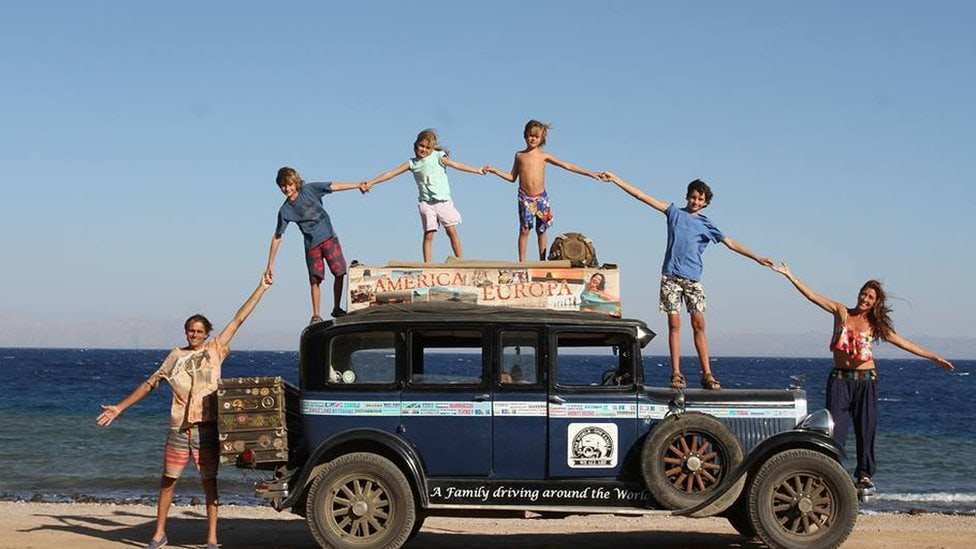
Herman: Hi Trevor! Thanks for having us. It all started from a desire to see the world and not just settle down after getting married. I guess we both felt that there was so much more to see and experience. My grandfather gave us his old Graham-Paige car and some wise advice to “go slowly if you want to get far,” which really set the tone for our travels.

Candelaria: And adding to that, Trevor, once we began traveling and ran out of money, we decided to rely on the generosity of people we met along the way. This turned our journey into not just an adventure but a story of human kindness.

Trevor: That sounds incredibly fulfilling. Over the years, what have been some of the most memorable highlights from your travels?

Herman: Oh, there are so many. Driving across different continents, we’ve seen some spectacular sights. From the Atacama Desert in Chile during our early days to exploring the diverse landscapes of the US, Australia, and Asia. Each place has its unique charm and challenge.

Candelaria: For me, it’s the people we’ve met. In the Philippines, for instance, a family gave us their only piece of meat and their bed, and still apologized for not having more to offer. Those moments touch you deeply.

Trevor: With such a varied experience, how do you manage raising a family on the road?

Herman: It’s certainly not typical, but it’s our way of life now. Our children are homeschooled using an online service, and they get to learn directly from the world around them. They’ve experienced different cultures, languages, and natural wonders firsthand.

Candelaria: Yes, and they each have a story of their own, born in different countries. It adds to their unique upbringing and view of the world.

Trevor: What takeaways do you have from living such an unconventional life?

Herman: It teaches you patience, resilience, and gratitude. Living out of a vintage car and depending on the kindness of strangers has shown us the best of humanity.

Candelaria: And it shows you that life is about the journey, not just the destination. We cherish every moment, every person, and every new experience.

Trevor: Finally, any plans for the future? Are you thinking of settling down anytime soon?

Herman: Not at all, Trevor! We’ve almost driven the distance to the moon, and we plan to keep going. There’s still so much more to see and learn.

Trevor: Herman, Candelaria, thank you both so much for sharing your inspiring story. Safe travels, and who knows, maybe we’ll catch up again on another part of your journey!

Candelaria: Thank you, Trevor!

Herman: Yes, thank you. We’d love that!

OVER TO YOU

Discuss the questions below. Refer to the story from the lesson and your own experience.

BulletWhat was your childhood dream, and how has it changed as you’ve grown older?
BulletHave you ever watched a documentary that made you reflect on your life or goals? What was it about?
BulletWhat is one dream you still want to make come true? What small step could you take toward it?
BulletIs there something you struggle with when you try to follow your dreams or set new goals?
BulletDo you think having an outlandish dream is a bad thing? Why or why not?

COMMENTS

Share your thoughts and ideas below.