

David Attenborough: A Life on Our Planet

Sorry, but lessons on The Blue Tree work only on a computer or a tablet.
Bardzo mi przykro, ale lekcje na platformie The Blue Tree działają jedynie na komputerze lub tablecie.
Do zobaczenia na większym ekranie 🙂
Zespół The Blue Tree
back to HOME > General Interest > Travel and Nature >
David Attenborough: A Life on Our Planet

THE BLUE TREE
Travel & Nature

CEFR B1
Intermediate
warm up
Answer the questions below. Use the model answers to practice listening and reading.
| There is an ongoing debate on the causes of climate change. Where do you stand on this? |
TRANSCRIPT
I believe climate change is mostly caused by human activity. We burn too many fossil fuels, cut down forests, and produce too much waste. Some people still argue about it, but the science is quite clear. I think we can already see the effects in floods, fires, and rising temperatures. We can’t just wait and hope – we have to act.
| If climate change is the result of human activity, what do you think we should do to better manage it? |
TRANSCRIPT
If it’s really our fault, we should change the way we live. For example, we can use public transport, eat less meat, and recycle more. But the biggest changes must come from governments and companies. They need to invest in clean energy and protect nature. Each person can do something, but the problem is too big for just individuals to fix.
| How much hope do you have in humanity’s ability to prevent the collapse of the climate in the future? |
TRANSCRIPT
Honestly, I still have some hope. Humans are very creative and have solved many big problems in the past. If we work together and take climate change seriously, I think we can slow it down or even stop it. But we need to stop arguing and start acting fast. If we wait too long, the damage could be impossible to reverse.
part one

KEY LANGUAGE
Go through the flashcards below. Make sure you understand all the words and expressions.

VIDEO
Watch a trailer to a movie on Netflix: A life on Our Planet.

COMPREHENSION
Answer these questions. Refer to the information from the video.
- How old is David Attenborough in this trailer?
- Why was his life extraordinary?
- What does David Attenborough think about human influence on the planet?
- Why is this film particularly important for him?
- Does he believe we can make things right as regards the environment?
- What is he going to tell us in this film?
POLL
part two
THE INTERVIEW
In the second part of the lesson we will listen to an interview with David Attenborough. It comes from BBC Radio 4 and was recorded more than 20 years ago. What were David’s observations at that time?
Here is the introduction.
„David Attenborough knows the world better than most people. He’s spent much of the last seven years globe-trotting for his hugely successful television programmes Life on Earth and The Living Planet.
But his next series might well be named The End of Life on the Dying Planet. David Attenborough is very gloomy about much of what he’s seen.”
Go through the flashcards below. Make sure you understand all the words and expressions.
listening
Listen to the interview below.

COMPREHENSION
Answer these questions. Refer to the information from the video.
- Why are forests cut down in the Himalayas?
- “The trees were umbrellas”. What does this mean?
- What happens to soil without trees?
- What causes floods in Bangladesh?
- What is the ‘devastating statistic’ about the desert in the Sudan?
- Why does David Attenborough call it a ‘heart-breaking’ statistic?
- Why did he not believe at first that the Amazon jungle could disappear?
- How are statistics about the disappearing jungle made?
- How much jungle is being destroyed each year?
- Why are plants in tropical rain forests important?
POLL
Cast your vote in the poll.
DISCUSSION
DIALOGUE
Alita and Pete meet at a park after watching David Attenborough’s documentary. Inspired by the message, they talk about nature, the planet, and the future.
Alita: That documentary was extraordinary, wasn’t it? I had no idea things had declined so quickly.
Pete: Yeah, I agree. I really appreciate how Attenborough used his own story to show what we’ve lost over time.
Alita: And the images of the forests and oceans were so spectacular—yet it made me feel a bit gloomy, seeing how much damage we’ve inflicted.
Pete: Same here. I didn’t know that felling trees on such a massive scale could lead to clogged rivers and poor soil.
Alita: Right! Trees work like a sponge, helping to keep the soil fertile and absorb water. Without them, everything suffers.
Pete: And it’s not just trees. Overusing land for wheat or other crops can cause fungus or moulds to spread and make the area unusable.
Alita: It’s terrifying. And what we build often isn’t insulated properly, so we use more energy and threaten the environment even more.
Pete: True. But I also felt hopeful. If we all do our part—planting trees, saving energy, using less firewood—it could amount to something meaningful.
Alita: I agree. Some people think it’s an exaggeration, but I’d say it’s not. I insist we have to change the way we live before it’s too late.
Pete: Then let’s head for that tree-planting event next weekend. Small steps can multiply into big results.
Alita: Deal! I don’t want to feel deprived of a healthy planet. Let’s help tame this damage while we still can.
OVER TO YOU
Discuss these questions. Refer to the topic of the lesson and your own experience.
 | Have you ever watched a documentary that made you appreciate nature more? What was it about? |
| In your opinion, is climate change a real threat to our planet? Why or why not? |
| Do you think people today are deprived of natural beauty compared to the past? Why? |
| What does a spectacular natural place look like to you? Can you describe one you’ve seen? |
| Some say it’s an exaggeration to say humans are destroying the planet. Do you agree or disagree? Explain. |
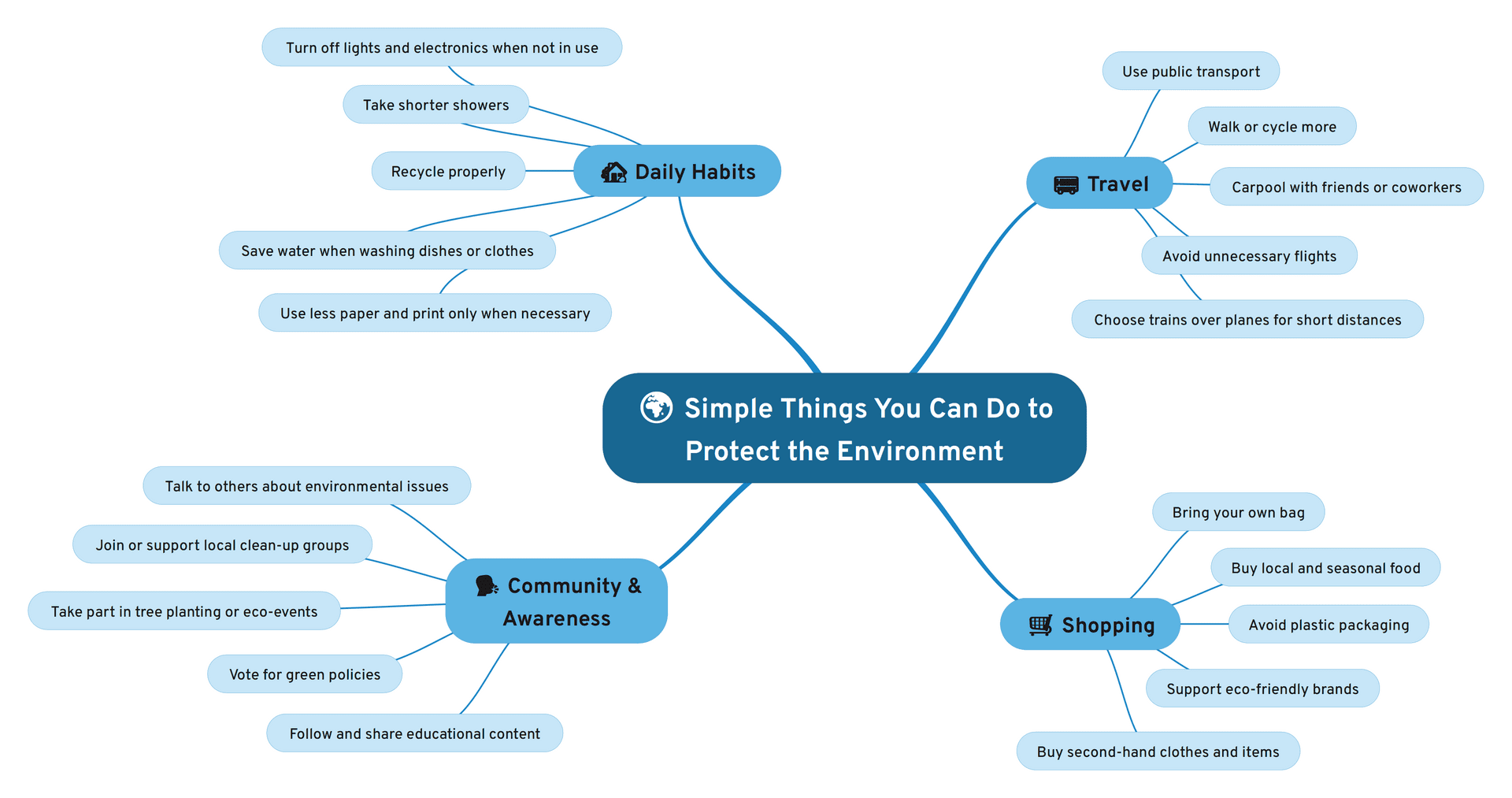
What can we do
Conside the ideas on the mind-map below. Discuss what can a regular person living in a city can realistically do to protect the environment.
lesson glossary
David Attenborough
COMMENTS
What do you think of the ideas from this class? Share your views and opinion below.
Talking Picture – Books and Reading
Sorry, but lessons on The Blue Tree work only on a computer or a tablet.
Bardzo mi przykro, ale lekcje na platformie The Blue Tree działają jedynie na komputerze lub tablecie.
Do zobaczenia na większym ekranie 🙂
Zespół The Blue Tree
back to HOME > Learning English > Everyday English >
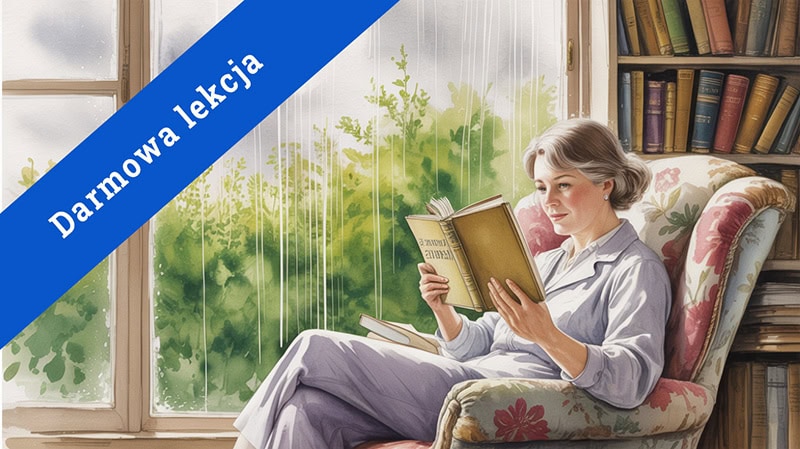
Talking Picture – Books and Reading

THE BLUE TREE
Everyday English
CEFR B1
Intermediate
TALKING PICTURE
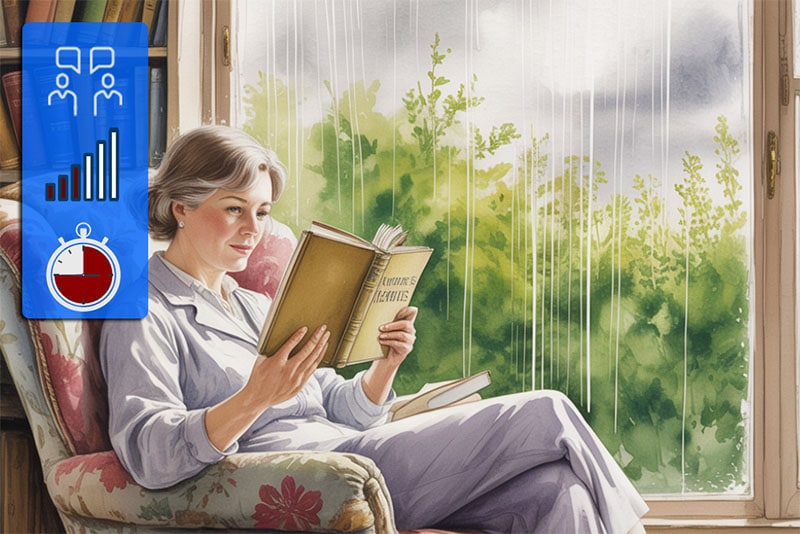
Answer the questions. Move your mouse over the icons to see the questions.
model answers
QUESTION #1
Do you like reading books? Has it changed over time?
I didn’t always enjoy reading—when I was a teenager, I only picked up books because I had to. But that changed a few years ago when a friend recommended The Alchemist by Paulo Coelho. I couldn’t put it down. Since then, I’ve started reading more regularly. I really enjoy books that make me think, like Atomic Habits or Tuesdays with Morrie. These days, I try to read a little every evening. It helps me wind down and keep my mind sharp. So yes, my feelings about reading have changed a lot over time.
wziąć się za coś, zacząć coś
zrelaksować się, rozluźnić się
ćwiczyć umysł
QUESTION 2
Do you think there is a difference between reading paper books and digital e-books?
Yes, I definitely think there’s a difference. Personally, I prefer paper books because they feel more real and I find it easier to concentrate. There’s something special about turning the pages, underlining interesting quotes, or just enjoying the smell of a new book. Reading a printed book helps me slow down and really absorb the content. When I read on a screen, I sometimes get distracted or tempted to check notifications. I’ve also heard that people tend to remember more when they read on paper, which makes sense to me.
That said, e-books have their advantages too. They’re super convenient when you’re travelling—you can carry dozens of books in one small device. I also like that you can adjust the font size or read in the dark without needing a lamp. I still stick to printed books when I want to relax at home, but I rely on e-books when I’m on the go. In the end, I think both formats have their place, and it really depends on the situation and your personal habits.
podkreślenie, zaznaczenie
przyswajać (treść) / wchłaniać informacje
rozpraszać się / tracić koncentrację
wygodny / praktyczny
dostosować (rozmiar czcionki) / zmienić ustawienia
mieć swoje miejsce
Question #3
Do you have a favourite character from a book, somebody you were looking up to, or who inspired you somehow in life?
Yes, one character who really inspired me is Atticus Finch from To Kill a Mockingbird by Harper Lee. I first read the book in school, and it really stayed with me. Atticus is a quiet, wise man who believes in doing the right thing, even when the whole world seems to be against him. He doesn’t care about popularity or money—he just follows his conscience. I really look up to him for the way he stands up for justice and treats everyone with respect, no matter who they are. That kind of moral strength is rare these days.
Reading about Atticus made me think more deeply about how I behave and what I believe in. Of course, I’m not a lawyer like him, but I try to follow his example in small ways—by listening before judging, speaking up when I see something wrong, and trying to be fair, even when it’s hard. He’s not just a character in a book; for me, he became a kind of role model. His story showed me that you don’t need to shout to be strong—you just need to stay true to your values.
podziwiać kogoś / brać z kogoś przykład
stanąć w obronie czegoś/kogoś
zabierać głos / wypowiadać się otwarcie
pozostać wiernym swoim wartościom

QUESTION #4
Many books were turned into films. Do you think it is a good idea? Do you have your favourite book adaptation?
Yes, I think turning books into films can be a great idea, but only if it’s done well. Sometimes filmmakers cut out too many important scenes or change the story, and that really takes away from the original message. But when it’s done properly, it can bring the story to life and reach people who wouldn’t normally pick up a book. A good adaptation helps you visualise the characters, settings, and emotions in a totally new way. It’s also fun to compare the film and the book to see what was kept in and what was left out.
One of my favourite book adaptations is The Lord of the Rings trilogy. The books are quite long and full of details, so I was curious how they would translate to the screen. In my opinion, Peter Jackson did an amazing job. The films stayed true to the spirit of the books, and the visuals were breathtaking. I especially loved the music and how the characters were portrayed. Of course, some parts were skipped or shortened, but overall, the movies captured the main ideas and feelings. Watching them made me want to dive back into that world.
psuć coś / umniejszać wartość czegoś / odbierać coś (czemuś wartość)
ożywić historię / tchnąć życie w historię
sięgnąć po książkę
pozostać wiernym (czemuś)
ponownie zanurzyć się w (coś) / wrócić z zaangażowaniem do (czegoś)

Question #5
Do you think books will exist in a hundred years? Will people still acquire knowledge mainly by reading?
I believe books will still exist in some form, but the way we read and learn might be completely different. Paper books might become more of a collector’s item or something people enjoy for pleasure and nostalgia. Digital formats and audiobooks are already becoming more popular, especially with younger generations. Still, there’s something timeless about holding a real book and flipping through the pages. I don’t think books will disappear completely—they’ll just adapt to new technology and habits.
When it comes to gaining knowledge, reading will probably still play a role, but maybe not the main one. People are already learning a lot through podcasts, videos, and interactive apps. Some students prefer to look things up on YouTube or ChatGPT instead of reading a long article. It’s faster and more visual. But in the end, reading helps you deepen your understanding and develop your thinking skills, so I hope it won’t be replaced entirely. Maybe in the future, we’ll mix all methods—reading, listening, watching—to learn in a more balanced way.
przekładać kartki (książki) / kartkować książkę
zdobywanie wiedzy
wyszukiwać informacje / sprawdzać coś (np. w internecie)
pogłębić zrozumienie
zrównoważony sposób
FREE PRACTICE
Choose one question from the Talking Picture and write your own answer to it. Paste your answer in the comments section or send it to your teacher.

Talking Picture – Books and Reading
The Puzzle of Motivation by Daniel Pink
Sorry, but lessons on The Blue Tree work only on a computer or a tablet.
Bardzo mi przykro, ale lekcje na platformie The Blue Tree działają jedynie na komputerze lub tablecie.
Do zobaczenia na większym ekranie 🙂
Zespół The Blue Tree

THE BLUE TREE
Man & Society

CEFR C1
Advanced
warm up
Answer the questions below. Listen to same people answering these questions. Report back or read the transcript to practise speaking.
| What motivates you to do your best work or study? Is it money, praise, passion – or something else? |
TRANSCRIPT
I think passion is what motivates me the most. When I’m interested in a topic, I want to learn more and do my best without anyone pushing me. Money is nice, but it doesn’t keep me going for long. I need to feel that my work has meaning.
| Do you work better when someone tells you exactly what to do, or when you have the freedom to decide how to do it? Why? |
TRANSCRIPT
I definitely work better when I have the freedom to decide how to do things. I like being creative and choosing my own methods. When someone tells me exactly what to do, I feel less motivated. I prefer having clear goals but also space to find my own way to reach them.
| How much freedom or autonomy do you have in your job or studies? Would more autonomy help you do better? |
TRANSCRIPT
Right now, I don’t have much autonomy – most things are planned for me. I think more freedom would help me focus and be more responsible. When I can choose how and when to work, I feel more trusted, and that motivates me a lot.
part one
KEY LANGUAGE
Go through the flashcards below. Make sure you understand all the words and expressions.
VIDEO
Watch the first part of the video.
DISCUSSION
How practical do you think these rules are? Select from 0 (useless) to 5 (useful). Explain your answers.
part two
KEY LANGUAGE
Go through the flashcards below. Make sure you understand all the words and expressions.
VIDEO
Watch the second part of the video.
DISCUSSION
Now do the same with the next ten rules for life by Daniel Pink.
part three
KEY LANGUAGE
Go through the flashcards below. Make sure you understand all the words and expressions.
VIDEO
Watch the third part of the video.
DISCUSSION
Discuss the next ten rules for life.
part four
KEY LANGUAGE
Go through the flashcards below. Make sure you understand all the words and expressions.
VIDEO
Watch the fourth part of the video.
COMPREHENSION
Asnwer these questions using the information from the film.
part five
KEY LANGUAGE
Go through the flashcards below. Make sure you understand all the words and expressions.
VIDEO
Watch the fifth part of the video.
COMPREHENSION
Asnwer these questions using the information from the film.
part six
KEY LANGUAGE
Go through the flashcards below. Make sure you understand all the words and expressions.
VIDEO
Watch the sixth part of the video.
COMPREHENSION
Asnwer these questions using the information from the film.
DISCUSSION
MOTIVATION THAT WORKS
Context: Alita and Pete have just watched Daniel Pink’s TED Talk in a professional development session at work.
Read their dialogue. Whose views do you lean towards?
Alita: That talk really made me think. I’ve always believed that money is a good motivator, but now I’m not so sure.
Pete: Yeah, the part about rewards actually dulling creative thinking was surprising. I mean, I thought offering bonuses would incentivize people to do better.
Alita: Me too. But it makes sense. If I’m under pressure to get a reward, I focus too much on the goal and not on the process. I lose curiosity.
Pete: Right. I liked how he talked about autonomy. Having the freedom to decide how to do my work really makes a difference for me.
Alita: Same here. When I worked in a place where everything was micromanaged, I felt no energy. But now, with more self-direction, I feel much more engaged.
Pete: And don’t forget purpose. When you know your work matters, you want to do it well—even without extra rewards.
Alita: Absolutely. I’ve also felt that when we have the chance to come up with ideas ourselves, we’re more committed.
Pete: True. I think more companies should get rid of those outdated, carrot-and-stick approaches and focus on intrinsic motivation.
Alita: Agreed. It’s not about becoming soft or touchy-feely. It’s about creating an environment where people can actually perform better.
OVER TO YOU
Discuss these questions.
| What motivates you more: external rewards (like money or praise), or internal satisfaction? Why? |
| Have you ever had a job or project where you had real autonomy? How did it affect your performance? |
| What kind of work gives you a sense of purpose? |
| Why do you think traditional carrot-and-stick methods are still used if they often don’t work? |
| If you could redesign your workplace, what changes would you make to increase motivation? |
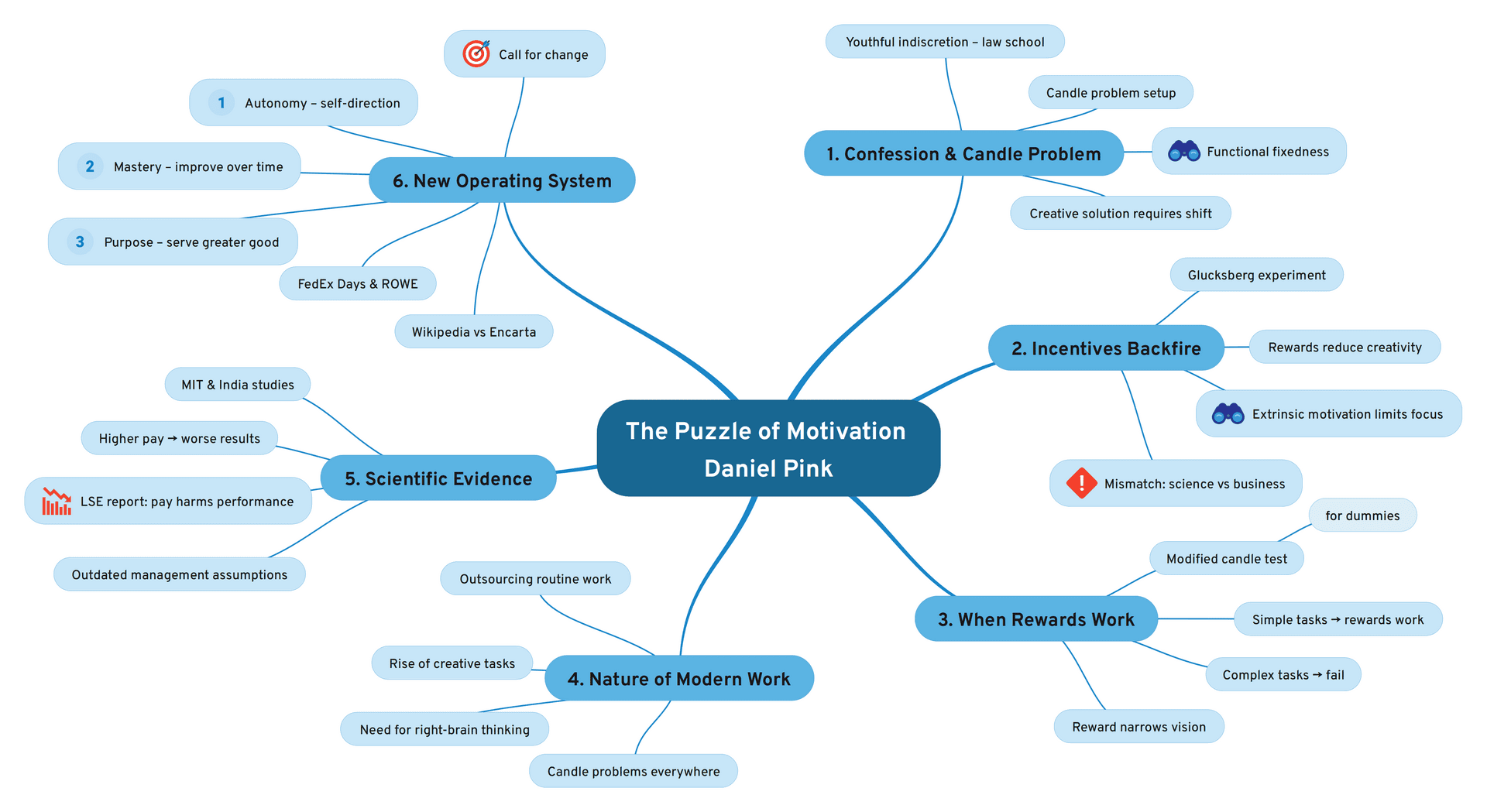
MIND-MAP
Use the mind-map to have a more in-depth discussion on this topic or to better remember that main points.
lesson glossary
COMMENTS
What do you think of the ideas presented in this lesson?
Share your views and experience here.
COMMENTS
Paste your upgraded answers here.