

Language of recommending, suggesting and giving advice

Sorry, but lessons on The Blue Tree work only on a computer or a tablet.
Bardzo mi przykro, ale lekcje na platformie The Blue Tree działają jedynie na komputerze lub tablecie.
Do zobaczenia na większym ekranie 🙂
Zespół The Blue Tree
back to HOME > Learning English > Tests and Quizzes >
Language of recommending, suggesting and giving advice

THE BLUE TREE
Tests & Quizzes

CEFR B1
Intermediate

INTRODUCTION
Read each short dialogue. Choose the best answer (a, b, or c) to complete the conversation. Only one answer is correct.
Example:
A: I’m bored.
B: ___ go for a walk?
a) Why not
b) You must
c) I don’t know
Correct answer: a) Why not
If you get more than 70% of answers, you will receive a beautiful certificate.
Check your score on the Leaderboard below.
TEST


LEADERBOARD

LEADERBOARD CHART
Check your score on the leaderboard below.
| Rank | User | Correct Score |
|---|---|---|
| 1 | Magda Knapik | 100 |
| 2 | 100 | |
| 3 | Jerzy | 95 |
| 4 | Karina Kordaczuk | 95 |
| 5 | Katarzyna Owczarska | 90 |
| 6 | Anna Lewandowska | 80 |
| 7 | marta | 80 |
| 8 | Tomek | 75 |
| 9 | Tomek | 75 |
| 10 | Maciej | 75 |

LEADERBOARD GRAPH
Have a look at the leaderboard graph below.

Be respectful to your coworkers
Sorry, but lessons on The Blue Tree work only on a computer or a tablet.
Bardzo mi przykro, ale lekcje na platformie The Blue Tree działają jedynie na komputerze lub tablecie.
Do zobaczenia na większym ekranie 🙂
Zespół The Blue Tree

THE BLUE TREE
Learn from TED

CEFR B2
Upper
Intermediate

warm up
Answer these questions. Use the model answers to practice listening and reading.
| We spend much of the day with people at work. How important is it for you to have a good rapport with them? |
TRANSCRIPT
Having a good rapport with my coworkers is really important to me. It makes the workday more enjoyable and helps us solve problems together more easily. When we understand and trust each other, there’s less stress and more teamwork. Even small things like saying hello or asking how someone is can improve the atmosphere and make work feel more positive.
| In any team there are people who can be a bit annoying. How do you deal with such people? |
TRANSCRIPT
I try to stay calm and professional. If someone annoys me, I remind myself that we’re all different and that I probably irritate others sometimes too! I focus on our common goals and try to talk to the person politely if the problem continues. Often, just being kind and respectful helps improve the situation without creating more conflict.
| What are the benefits of being on good terms with your workmates? |
TRANSCRIPT
There are many benefits. When you get on well with your colleagues, you can work faster because you help each other more. You also feel more relaxed, which is great for your mental health. It’s easier to ask for help, share ideas, and even enjoy a few laughs. Being friendly doesn’t mean you have to be best friends, but it really makes a difference.

part one
KEY LANGUAGE
Go through the flashcards below. Make sure you understand all the words and expressions.
VIDEO
Watch the first part of the video.

COMPREHENSION
Answer these questions. Refer to the information from the video.
- ⌚ 0:22 How do you answer the question: “Who do you want to be?”
- ⌚ 0:33 How important is the way we treat people?
- ⌚ 0:42 What does it mean to lift people up?
- ⌚ 0:51 What does it mean to hold people down?
part two
KEY LANGUAGE
Go through the flashcards below. Make sure you understand all the words and expressions.
VIDEO
Watch the second part of the video.
COMPREHENSION
Answer these questions. Refer to the information from the video.
- ⌚ 1:14 What kind of behaviour does incivility include?
- ⌚ 1:26 What does the example of texting while others are talking illustrate?
- ⌚ 2:10 Why did her father end up in hospital?
part three
KEY LANGUAGE
Go through the flashcards below. Make sure you understand all the words and expressions.
VIDEO
Watch the third part of the video.
COMPREHENSION
Answer these questions. Refer to the information from the video.
- ⌚ 2:33 How did her colleagues treat her?
- ⌚ 2:38 What did she decide to do about this situation?
- ⌚ 2:43 What theory does Christine Pearson have on this topic?
- ⌚ 2:57 Does incivility affect the bottom line?
- ⌚ 3:31 What were some answers they got for their survey on incivility?
- ⌚ 3:44 Explain what this date mean: 66%, 80%, 12%
- ⌚ 4:02 How much money was Cisco losing due to incivility?
- ⌚4:32 What did they find as regards people who experience incivility?
part four
KEY LANGUAGE
Go through the flashcards below. Make sure you understand all the words and expressions.
VIDEO
Watch the fourth part of the video.
COMPREHENSION
Answer these questions. Refer to the information from the video.
- ⌚ 5:20 What happened to the performance of witnesses of incivility?
- ⌚ 5:33 Why does Christine say that incivility is like a bug?
- ⌚ 5:44 Where can we catch this ‘bug’?
- ⌚ 5:55 Do you remember the areas that incivility affect us?
- ⌚ 6:26 What are some words that can trigger rudeness?
- ⌚ 6:41 How did seeing “rude” words affect the participants of this study?
- ⌚ 7:41 What happened when a doctor shouted at his team?
part five
KEY LANGUAGE
Go through the flashcards below. Make sure you understand all the words and expressions.
VIDEO
Watch the fifth part of the video.
COMPREHENSION
Answer these questions. Refer to the information from the video.
- ⌚ 8:22 What is the number one reason for incivility?
- ⌚ 8:31 What is the second reason for lack of civility?
- ⌚8:53 Do ‘jerks’ get ahead in the long run?
- ⌚ 9:08 What is the main factor behind executive failure according to research?
- ⌚ 9:34 Does civility pay?
- ⌚ 9:53 What does it mean to be truly civil?
- ⌚ 10:04 What is “radical candour”?
- ⌚ 10:23 How do people view others who are civil towards them?
- ⌚ 10:35 What are the two characteristics of a civil person?
part six
KEY LANGUAGE
Go through the flashcards below. Make sure you understand all the words and expressions.
VIDEO
Watch the sixth part of the video.
COMPREHENSION
Answer these questions. Refer to the information from the video.
- ⌚ 11:11 What do people want from their leaders?
- ⌚ 11:31 Explain this data: 56%, 92%, 1.1x, 55%
- ⌚ 11:58 How can we make people feel more respected?
- ⌚ 12:15 What is the 10-5 way?
- ⌚ 13:16 How does Doug’s story illustrate the fact that civility can improve company performance?
- ⌚ 13:37 What kind of leader was Doug?
- ⌚ 14:06 How did Doug show his employees that he valued them?
- ⌚ 15:22 What does Christine Porath encourage us to do in the end?
POLL
Cast your vote in the poll.
DISCUSSION
Dialogue
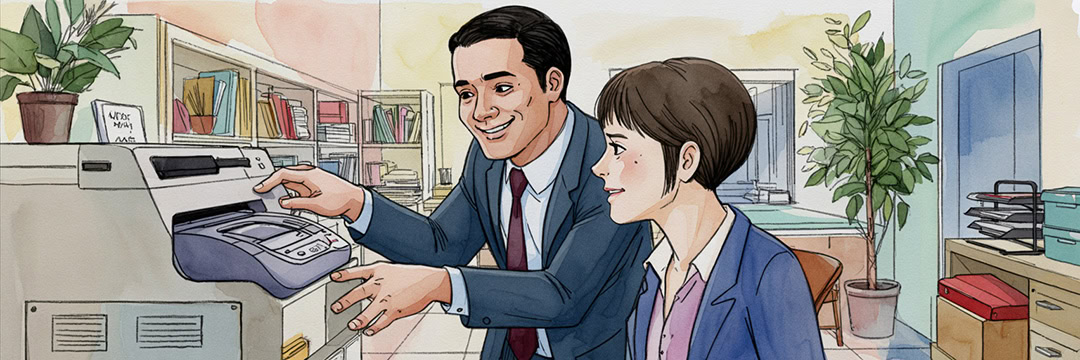
Alita and Pete are having lunch together in the office kitchen. Earlier that morning, a colleague snapped at someone during a team meeting. This leads them into a discussion about civility and respect in the workplace.
Alita:
Did you notice what happened in the meeting today? I felt bad for Marta. She didn’t deserve that reaction.
Pete:
Yeah, I saw it too. It was completely uncalled for. Even if someone’s having a bad day, that’s no excuse to be rude.
Alita:
Exactly. A little kindness goes a long way. We all have our own stress, but we still need to treat each other with respect.
Pete:
And it affects the whole atmosphere. After that moment, the mood in the room totally changed.
Alita:
True. People became quiet and less engaged. It shows how one negative comment can impact the entire team.
Pete:
I think we sometimes underestimate the power of small, respectful actions. Saying “thank you,” or even just smiling, can change how people feel at work.
Alita:
Absolutely. Civility is more than just being polite—it builds trust and makes collaboration easier.
Pete:
And the best part? It doesn’t cost a thing.
Alita:
Right! It’s free and makes everyone’s day better. We should all be more mindful of how we speak to each other.
OVER TO YOU
Discuss these questions.
 | Why do you think some people behave rudely at work? |
| What are some small things we can do each day to show respect to our coworkers? |
| Do you think people are more or less respectful today than they were in the past? Why? |
| Have you ever witnessed or experienced a situation where someone’s kindness changed the atmosphere? What happened? |
| Do you agree with the idea that civility improves teamwork? Why or why not? |
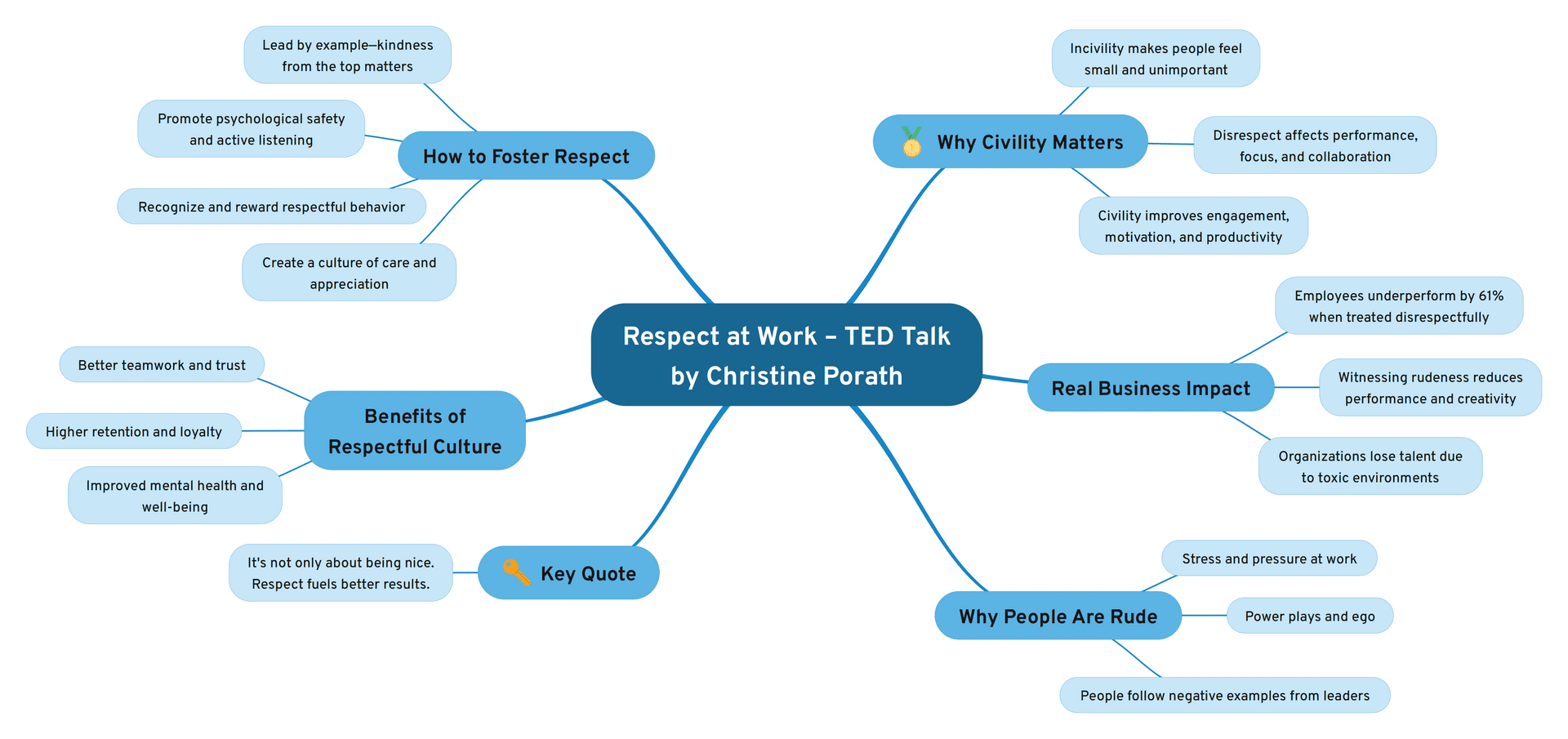
MIND-MAP
Use the mind-map below to have a more in-depth conversation about this topic.
lesson glossary

How to talk about stress
Sorry, but lessons on The Blue Tree work only on a computer or a tablet.
Bardzo mi przykro, ale lekcje na platformie The Blue Tree działają jedynie na komputerze lub tablecie.
Do zobaczenia na większym ekranie 🙂
Zespół The Blue Tree
back to HOME > Learning English > Everyday English > Talking about progress

THE BLUE TREE
Everyday English
CEFR B1
Intermediate

warm up
Answer the questions below.
| What is your best method to manage stress? Can you describe a situation when it helped you? |
TRANSCRIPT
When I feel stressed, I usually go for a long walk in the park. It helps me clear my head and calm down. Last month, I had a big presentation at work, and I was very nervous. I went for a walk the evening before, and it really helped me sleep better and feel more confident the next day.
| Do you think people are more or less stressed than in the past? |
TRANSCRIPT
I think people are more stressed now than in the past. Life is faster, and we are connected to work almost all the time through our phones. In the past, people could leave their work in the office. Now, many of us get emails and messages in the evening or at weekends, so it’s harder to relax and take a real break.
| What stresses you out the most? |
TRANSCRIPT
What stresses me out the most is having too much on my plate at the same time. When deadlines come close and everyone expects me to do things quickly, I start to feel under pressure. I try to manage my time well, but sometimes it’s just too much. That’s when I feel burnt out and need to slow down for a while.

part one
KEY LANGUAGE
Go through the flashcards below. Make sure you understand all the words and expressions.
VIDEO
Watch the first part of the video.
COMPREHENSION
Answer these questions. Refer to the information from the video.
- What makes people stressed?
- What verbs does “stressed” collocate with?
- What should we remember about as regards the way we say “stressed”?
- What does it mean when somebody stresses you out?

LISTEN & REPEAT
Practice listening and speaking. Listen to the example below. Repeat them.
- I always eat when I’m feeling stressed.
- He was feeling very stressed and tired.
- She felt overly stressed and needed to calm down.
- Stressed out? Take a break and have some coffee.
part two
KEY LANGUAGE
Go through the flashcards below. Make sure you understand all the words and expressions.
VIDEO
Watch the second part of the video.
COMPREHENSION
Answer these questions. Refer to the information from the video.
- What does it mean to be “burnt out“?
- What do you say when you are mentally tired and can’t focus?
- What does it mean when you have too much on your plate?
- When are you under pressure?
- Who is putting you under pressure? 🙂
- When do we use “to be under the pump“?
- What does “to burn the candle at both ends” mean?
LISTEN & REPEAT
Practice listening and speaking. Listen to the example below. Repeat them.
- I’m feeling burnt-out at work—I need a holiday.
- Many teachers are suffering from burnout.
- John is a bit absent-minded. He has a lot on his mind lately.
- The team performs well under pressure.
- The director is under increasing pressure to resign.
- At the end of the school year, I am under the pump to get good grades.
- I am burning the candle at both ends with this new project I am involved in.
part three
KEY LANGUAGE
Go through the flashcards below. Make sure you understand all the words and expressions.
VIDEO
Watch the third part of the video.
COMPREHENSION
Answer these questions. Refer to the information from the video.
- When do we run ourselves into the ground?
- What is so interesting about this expression?
- How do you feel when you reach a breaking point?
- How can you remember the idiom come apart at the seams?
- What does it mean to “snap“?
- What is the strongest expression Emma teaches us in this video?
LISTEN & REPEAT
Practice listening and speaking. Listen to the example below. Repeat them.
- We lost the game despite my players running themselves into the ground.
- After months of lockdown many people were reaching their breaking point.
- With all the workload I have these days I’m close to coming apart at the seams.
- Something inside him snapped, and he hit her.
- My parents would always bite my head off just because I was the oldest one.
DISCUSSION
VENTING OVER LUNCH
Read (role-play) this dialogue.
Dialogue: Talking About Stress (Over Lunch)
Setting: Alita and Pete are having lunch together in the office kitchen.
Alita: Sighs I feel like I’m burning the candle at both ends lately. This week has been insane.
Pete: I hear you. You look like you’ve got a lot on your plate. What’s going on?
Alita: Oh, it’s everything at once. Reports, emails, meetings… I’m completely overloaded. And to top it off, my kids have exams, so home is not much calmer.
Pete: Wow. That would stress me out too. I’ve been under a lot of pressure as well. My manager keeps reminding me about deadlines. It’s like I’m under the pump all the time.
Alita: That’s the worst. It’s not even the amount of work—it’s the constant feeling that someone is watching and expecting more.
Pete: Exactly. And when I finally get home, I can’t relax. I keep thinking about what I didn’t finish. I’m afraid I’m heading for burnout.
Alita: That’s serious, Pete. You need to take a break before you crash. When I felt like that last year, I booked a weekend away. No laptop, no emails. Just nature and sleep.
Pete: Sounds like heaven. Maybe I should try that. Or at least take one day off and switch off completely.
Alita: Do it. Even one day can help you recharge. We need to learn to manage stress before it manages us.
Pete: True. Thanks, Alita. Talking about it already makes me feel a bit better.
Alita: Anytime. That’s what lunch breaks are for—refueling and venting!
OVER TO YOU
Discuss these questions. Find ways to use the language you were learning in this lesson.
 | Have you ever felt like you were burning the candle at both ends? What were you doing at the time? |
| What helps you when you feel completely stressed out at work or school? |
| Do you sometimes have too much on your plate? How do you deal with it? |
| Have you ever felt under pressure to do something quickly or perfectly? How did you manage it? |
| What do you usually do when you feel close to burnout? Do you take action or try to push through? |
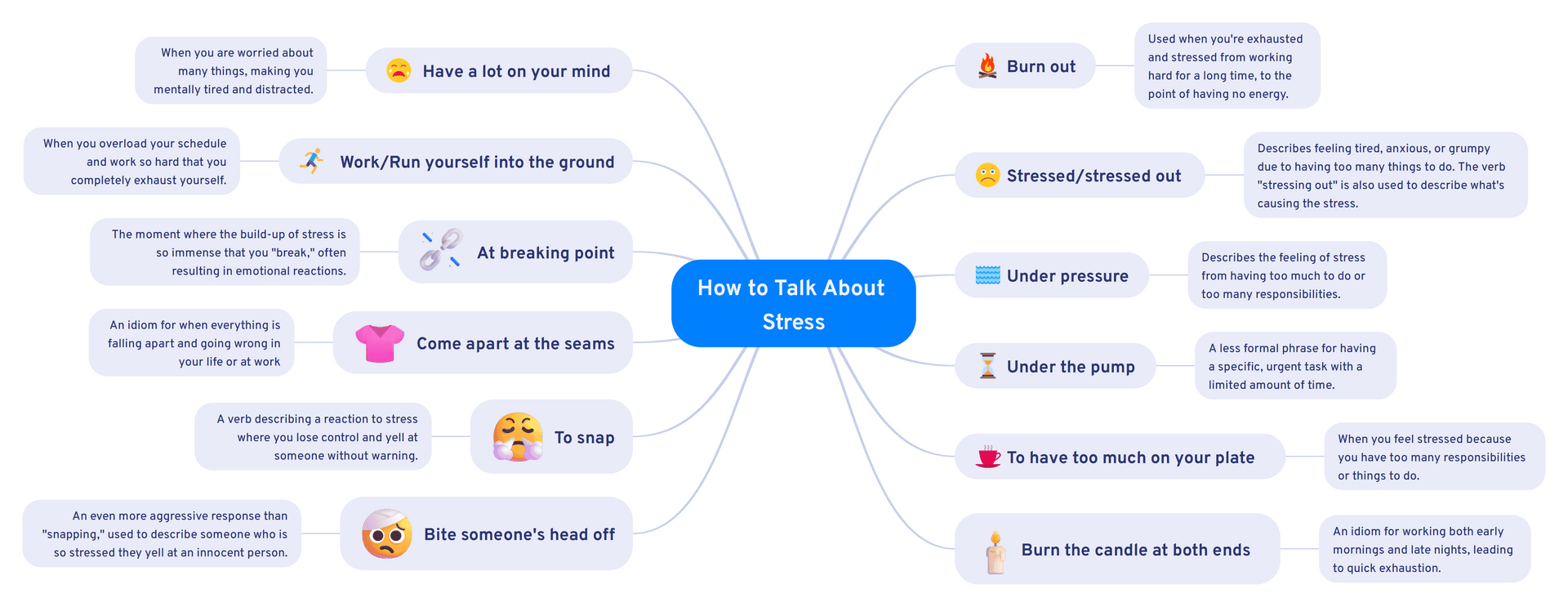
MIND-MAP
Use the mind-map to revise and remember the expressions for stress from this lesson.
LESSON GLOSSARY
How to talk about stress
COMMENTS
What is your best way to let go of the stresses and strains of life?
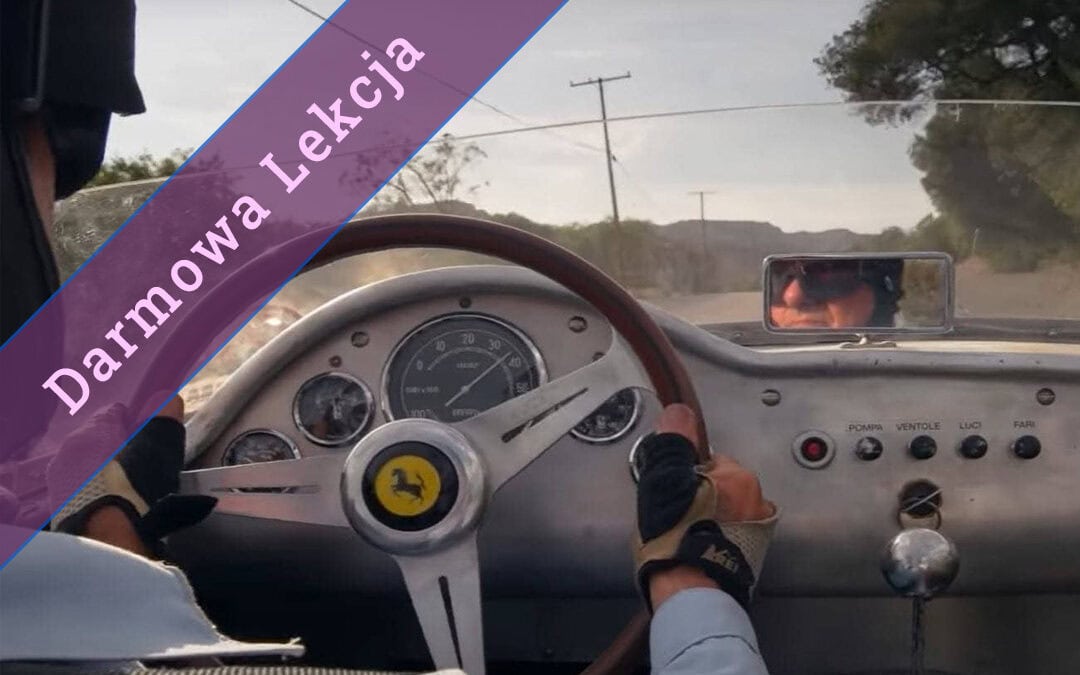
Building a dream car
Sorry, but lessons on The Blue Tree work only on a computer or a tablet.
Bardzo mi przykro, ale lekcje na platformie The Blue Tree działają jedynie na komputerze lub tablecie.
Do zobaczenia na większym ekranie 🙂
Zespół The Blue Tree
back to HOME > General Interest > Surprise me >
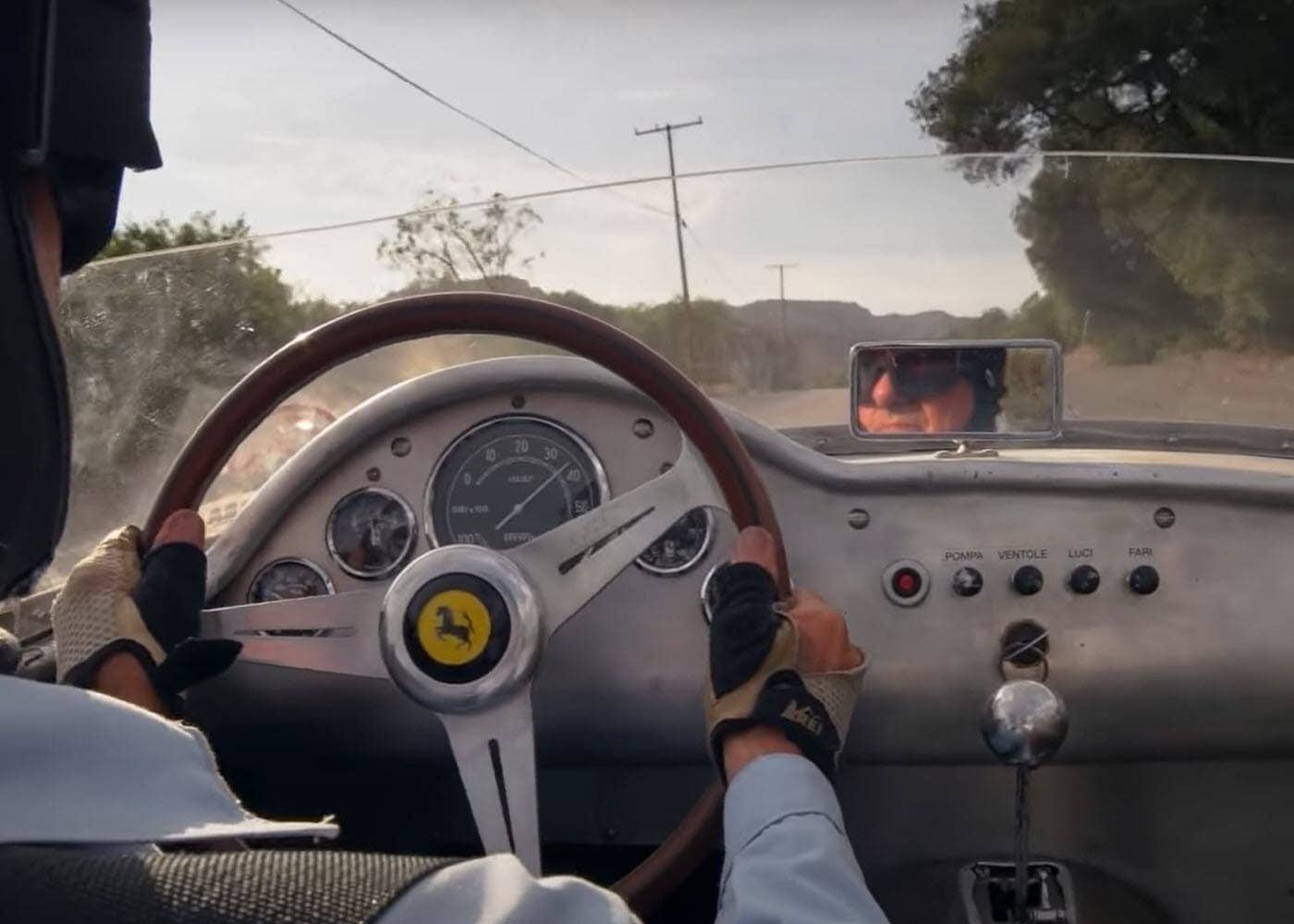
Building a dream car

THE BLUE TREE
Surprise Me
CEFR B1
Intermediate
warm up
Answer the questions below. Then listen to the model answers and think about how you could improve yours.
| Do you have a favourite car? |
TRANSCRIPT
My favorite car is probably a Tesla Model S. I love the idea of electric cars and how they are shaping the future of driving. The sleek design and technology really appeal to me. Plus, I’ve always been drawn to innovative things, so driving a Tesla would be amazing.
| How difficult it is to build a car? |
TRANSCRIPT
Building a car sounds incredibly difficult to me. There are so many technical aspects involved, from designing the parts to assembling everything correctly. I admire people who have the patience and knowledge to do something like that. It’s not just about mechanics; it’s a huge commitment of time and skill.
| Do you prefer to buy things or make them yourself, if you knew how to do it? |
TRANSCRIPT
I think it depends on the item. If it’s something small and creative, I love making things myself, like crafting or baking. But when it comes to bigger things, like electronics or furniture, I usually prefer to buy them. Knowing how to make something from scratch is rewarding, but sometimes it’s more convenient to purchase.
part one
KEY LANGUAGE
Go through the flashcards below. Make sure you understand all the words and expressions.
VIDEO
Watch the first part of the video.
COMPREHENSION
Answer these questions. Refer to the information from the video.
- Why did he decide to build this car?
- Where did he find the main part?
- How similar is it to the original?
- Which part is different?
part two
KEY LANGUAGE
Go through the flashcards below. Make sure you understand all the words and expressions.
VIDEO
Watch the second part of the video.
COMPREHENSION
Answer these questions. Refer to the information from the video.
- What happened when he was working in Italy?
- What was his role in building Delorean?
- What does his family feel about his passion for race cars?
- How do people react when they see his car?
At the end of the video he says that even if somebody offered him the original car, he would still prefer his own. What does it say about him? How do you feel about buying things as opposed to doing things yourself?
POLL
Cast a vote in the poll below.

part three
Play this flashcard game about parts of a car.
DISCUSSION
DIALOGUE
Read or role-play this dialogue between Alita and Pete.
Alita:
That was amazing, wasn’t it? I never expected to enjoy a car museum so much!
Pete:
I know! I used to think cars were just machines, but seeing all those old models really made me appreciate the design and history.
Alita:
Yes, especially the classic ones from the 1950s and 60s. There’s something so elegant and simple about them.
Pete:
Exactly. They didn’t have all the tech we have now, but they had style—and soul.
Did you see that silver BMW 507? It reminded me of that video we watched about the guy who built his own Testarossa.
Alita:
Oh yes! He was so passionate. I liked how he said he just wanted to feel what his heroes felt when they drove those cars.
Pete:
And I respect that. I mean, some people said his car was fake, but he used real Ferrari parts and put in so much effort.
Alita:
True. It’s not always about owning the original—it’s about the experience. If I had the skills, I’d love to build something too.
Pete:
Same here. Maybe not a Ferrari, but an old VW camper van would be cool. We could travel around Europe in it.
Alita:
That’s a dream! Do you think today’s cars will ever be as iconic as the old ones?
Pete:
Good question. Maybe some electric models will become classics in the future—but it won’t be the same. The sound, the smell, the feeling—it’s different.
Alita:
Still, it’s nice to see that people are keeping the history alive. Some passions never go out of style.
Pete:
Definitely. Visiting that museum just made me want to learn more about car design and maybe even take a road trip in something vintage.
Alita:
Let’s add that to our bucket list!
OVER TO YOU
Discuss these questions. Refer to the topic of the lesson and your own experience.
 | Do you enjoy driving? Why or why not? |
| What was the first car you ever drove or owned? Do you remember how it felt? |
| How important is owning a car in your daily life? Could you live without one? |
| Do you think public transport is a good alternative to driving? Why or why not? |
| What are some recent changes in car technology that you find interesting? |
lesson glossary
COMMENTS
What do you think of the ideas from this class? Share your views and opinion below.
COMMENTS
Share your views and experience here.