Measure your adaptability

Measure your adaptability

Sorry, but lessons on The Blue Tree work only on a computer or a tablet.

Bardzo mi przykro, ale lekcje na platformie The Blue Tree działają jedynie na komputerze lub tablecie.

Do zobaczenia na większym ekranie 🙂

Zespół The Blue Tree

Measure your adaptability
Learn more words

THE BLUE TREE

Personal
Productivity

CEF B1

CEFR B2

Upper
Intermediate

warm up

Answer the questions below.

Do you know what your IQ (Intelligence Quotient) is?
TRANSCRIPT

I don’t know exactly what my IQ is, and to be honest, I’ve never really focused on it. I know IQ tests are meant to measure intelligence, but I’ve always felt that intelligence can show up in different ways, like creativity or problem-solving, which might not always be captured by a number. I’m more interested in how well I can learn and adapt rather than what my IQ score might say.

Do you know what your EQ (Emotional Quotient) is?
TRANSCRIPT

I’m not sure what my exact EQ is, but I’ve always been interested in emotional intelligence. I think it’s something we can all work on and improve over time. Understanding how my emotions affect my actions and how to relate to others has been a big focus for me, both personally and professionally. I believe it’s one of the key factors in building good relationships and managing stress.

Which of these – IQ or EQ – is more important for success in business and life?
TRANSCRIPT

In my opinion, both IQ and EQ are important, but if I had to choose, I’d say EQ is more important for success in business and life. While IQ can help with solving technical problems or logical thinking, EQ helps you navigate relationships, handle stress, and communicate effectively. In the long run, being able to connect with others and manage your emotions is what really makes a difference.

How important is the ability to adapt to change?
TRANSCRIPT

Adaptability is incredibly important in today’s world. Things are changing so fast—whether it’s new technologies, shifting markets, or unexpected challenges—that the ability to adapt and stay flexible is key to staying relevant and successful. It’s not just about reacting to change but also about being proactive and open to learning, unlearning, and growing continuously.

key language

Go through the flashcards below. Memorise as many words and their definitions as you can.

watch the video

Watch the video below.

COMPREHENSION

Answer the questions below. Throw some newly learned words and phrases into your answers.

  • What is Natalie’s job?
  • What are some the predictors of successful entrepreneurs?
  • What is AQ and why it should matter to all of us?
  • What three strategies does she use to assess entrepreneurs?
  • What is Natalie’s prediction about the importance of IQ, EQ and AQ?

POLL

Cast your vote in the poll.

Coming Soon
Natalie mentions three quotients: IQ, EQ and AQ. Which one is the most important in the contemporary world?
Total Votes : 4

lesson glossary

Measure your adaptability

COMMENTS

What do you think of Natalie’s idea of measuring adaptability? How important is this feature in today’s world?

Share your views and experience here.

How to be happy in English

How to be happy in English

Sorry, but lessons on The Blue Tree work only on a computer or a tablet.

Bardzo mi przykro, ale lekcje na platformie The Blue Tree działają jedynie na komputerze lub tablecie.

Do zobaczenia na większym ekranie 🙂

Zespół The Blue Tree

How to be happy in English
Learn more words

THE BLUE TREE

Learn Words

CEF B1

CEFR B2

Upper
Intermediate

Practise speaking by describing this picture

warm up

Answer the questions below. Listen to sample answers. Read the transcript.
Share with the class a happy memory. What is it about? Why is it special for you?
TRANSCRIPT
A happy memory for me is when I went to the beach with my family last summer. We spent the whole day swimming, playing volleyball, and having a barbecue. It was special because we don’t often have time to be together like that, and the weather was perfect. I felt really relaxed and full of joy.
TRANSCRIPT
For me, happiness is about inner balance. I’ve learned from the Stoics that it doesn’t depend on external things like money or success. It’s more about how we respond to what happens in life. If I can stay calm and accept things I can’t control, I feel at peace. That’s what being happy means to me — it’s a state of mind, not something you get from outside.
TRANSCRIPT
No, I don’t think being happy is the same as being successful. Success often depends on achievements, money, or status, but happiness is something deeper. You can have everything and still not feel happy. For me, happiness comes from feeling content and at peace with myself, while success is more about reaching goals. They’re both important, but they don’t always go together.

STUDY SECTION

THESAURUS: happy and related words

Study the words and expressions related to being happy.

FEELING HAPPY
  1. Content: She was content with her life and didn’t feel like she needed anything else.
  2. Blissful: They spent a blissful day at the beach, soaking up the sun and playing in the waves.
  3. Radiant: Her smile was radiant and infectious, lighting up the entire room.
  4. Joyful: The children were joyful and giggling as they played together in the park.
  5. Cheerful: The cheerful music made everyone feel happy and energized.
  6. Jovial: He had a jovial personality and was always making people laugh.
  7. Euphoric: She felt euphoric after completing her first marathon, a feeling of immense happiness and accomplishment.
  8. Merry: The holiday season always made her feel merry and excited for the festivities.
  9. Pleased: He was pleased with the results of his hard work and dedication to his job.
  10. Satisfied: She felt satisfied with her meal, knowing that she had eaten a healthy and delicious dinner.
very happy
  1. Overjoyed: She was overjoyed when she found out she got the job.
  2. Thrilled: He was thrilled to hear that his book had been published.
  3. Delighted: The children were delighted to see the circus come to town.
  4. Grinning from ear to ear: She was grinning from ear to ear when she saw her surprise birthday party.
  5. On cloud nine: He was on cloud nine after proposing to his girlfriend and she said yes.
  6. Jumping for joy: The children were jumping for joy when they found out they were going to Disney World.
  7. Walking on air: She was walking on air after receiving a promotion at work.
  8. Bursting with happiness: He was bursting with happiness when he saw his newborn baby for the first time.
  9. Feeling on top of the world: She was feeling on top of the world after completing her first marathon.
  10. In seventh heaven: She was in seventh heaven after receiving tickets to her favorite band’s concert.
MAKE SOMEONE FEEL HAPPY
  1. make somebody happy: He would do anything to make her happy.
  2. cheer up: I tried to cheer him up by telling a joke.
  3. make somebody’s day: Sherry’s phone call really made my day.
  4. put somebody in a good mood: Shopping for new shoes usually puts her in a good mood.
  5. raise somebody’s spirits: The chance to get out of the house for a few hours had clearly raised her spirits.
HAPPY + NOUN
  1. Happy hour: Let’s meet at the bar for happy hour and enjoy some discounted drinks.
  2. Happy ending: The movie had a happy ending, with the main character finding true love.
  3. Happy couple: The happy couple announced their engagement and set a date for their wedding.
  4. Happy medium: It’s important to find a happy medium between work and leisure time.
  5. Happy accident: The discovery of penicillin was a happy accident that revolutionized medicine.
  6. Happy-go-lucky: He had a happy-go-lucky personality and always saw the bright side of things.
  7. Happy camper: The children were happy campers, enjoying all the activities and games at summer camp.
  8. Happy place: The beach was her happy place, where she could relax and unwind.
  9. Happy dance: She did a happy dance when she found out she had been accepted into her dream school.
  10. Happy tune: The cheerful melody of the happy tune made everyone want to dance and sing along.
ADVERB + HAPPY
  1. Quite happy: He was quite happy with the results of his exam, but knew he could do better.
  2. Extremely happy: The couple was extremely happy on their wedding day, surrounded by family and friends.
  3. Incredibly happy: She was incredibly happy to see her sister after months of being apart.
  4. Somewhat happy: She was somewhat happy with her new haircut, but thought it could have been a bit shorter.
  5. Relatively happy: He was relatively happy with his progress in learning a new language.
  6. Moderately happy: The movie reviews were moderately happy, with some critics giving it high praise and others finding faults.
  7. Reasonably happy: She was reasonably happy with her salary, but hoped to negotiate a raise in the future.
  8. Mildly happy: He was mildly happy with the gift, but was hoping for something a bit more exciting.

PRACTICE

MULTIDECKER FLASHCARDS

Play this flashcard game. Decide which category each word or expression should go to.

SAMPLE SENTENCES

Let’s revise these words and expressions for being happy once again.

Complete the sentences below with the same words which were used in the examples (in toggles).


Ready. Steady. GO!

1. 

He would do anything to make her .

2. 

She greeted us with a smile.

3. 

Carla seems pretty much with her life.

4. 

“That was quite a performance,” he said, looking .

5. 

We were all when it was time to go home.

6. 

I hate to , you guys, but I told you it wouldn’t work.

7. 

She was at the possibility of being sent to Europe.

8. 

When she discovered she’d got the job she was over the .


Well done! You're almost there!

9. 

We received news that she will recover.

10. 

I tried to him up by telling a joke.

11. 

Sherry’s phone call really my day.

Happy stories

Complete three stories of Kat, Sven, and Alita. Each story has language of talking about feeling happy.

OVER TO YOU

Create your own story about a happy moment. Use the language from this lesson. Submit your story in the comments section.

LESSON GLOSSARY

How to be happy in English

wdt_ID ITEM MEANING
1cheerfulradosny, pogodny, wesoły
2be in a good moodbyć w dobrym nastroju
3contentzadowolony, rad
4cheeryradosny, wesoły
5pleasedzadowolony, usatysfakcjonowany
6gladzadowolony (szczęśliwy z jakiegoś powodu)
7be tickledszaleć z radości
8gloatnapawać się, chełpić się, triumfować
9delightedzachwycony, uszczęśliwiony
10thrilledbardzo szczęśliwy
11be on top of the worldczuć się jak w niebie, być wniebowziętym
12be over the moonnieposiadający się ze szczęścia, bardzo zadowolony
13joyfuluradowany, szczęśliwy, radosny
14radiantrozpromieniony
15make somebody happyuszczęśliwić kogoś
16cheer uppocieszać kogoś, rozweselać kogoś, dodawać otuchy komuś
17make somebody's daysprawić, że dzień będzie lepszy dla kogoś, poprawić komuś humor
18put somebody in a good moodpoprawić komuś humor
19raise somebody's spiritspoprawić komuś nastrój, podnieść kogoś na duchu
20a happy endingszczęśliwe zakończenie
21a happy coupleszczęśliwa para
22blissfullybłogo
23reasonably happyw miatę, całkiem szczęsliwy
24happy as can betak szczęśliwy, jak tylko można
ITEMMEANING

COMMENTS

When did you feel the happiest? Share with The Blue Tree the story of your happiest moment.
Rich and Poor

Rich and Poor

Sorry, but lessons on The Blue Tree work only on a computer or a tablet.

Bardzo mi przykro, ale lekcje na platformie The Blue Tree działają jedynie na komputerze lub tablecie.

Do zobaczenia na większym ekranie 🙂

Zespół The Blue Tree

Rich and Poor
Learn more words

THE BLUE TREE

Learn Words

CEF B1

CEFR B1

Intermediate

warm up

Answer the question below.

  • What’s your attitude to money?
  • Are you good with money? Can you manage your money well?
  • How would your life change if you were filthy rich?

Rich and poor

STUDY SECTION

Study the words and expressions for talking about wealth and poverty. 

WORDS MEANING RICH
  • wealthy
    She comes from a wealthy family, who own houses in London and Paris.
  • prosperous
    After the war, Germany became one of Europe’s most prosperous countries.
  • well-to-do
    He wants to find a husband from a well-to-do background for his daughter.
  • comfortably off
    When the children were small we never had much money, but now we seem to be comfortably off.
  • affluent
    As people become more affluent, so their standard and style of living improves.
EXTREMELY RICH
  • be loaded
    Did you know Peter has three houses? He must be loaded.
  • be rolling in it
    Don’t worry about him. He’s rolling in it. Clearly, he can afford to pay for it.
  • stinking rich
    This gorgeous woman walked in, beautifully dressed and obviously stinking rich.
  • filthy rich
    Gregory is filthy rich but he never gives a penny to charity.
  • be worth a fortune
    The Chief Executive started her career as a secretary, and now she’s worth millions.
  • have money to burn
    Every time I see her she’s wearing something new. She must have money to burn.
PERSON WHO IS RICH
  • fat cat
    A very rich and powerful person, usually in business or politics
    Why should those fat cats get rich at our expense?
  • new money
    People who have recently become rich
    He’s not quite sure who the Joyces are, because they are new money.
  • tycoon
    A rich and powerful person who is involved in business or industry
    Tapie, business tycoon and football club owner, was appointed Minister for Cities.
  • be born with a silver spoon in the mouth
    To be rich because you come from a rich family
    You can hardly know what it means to be poor as you were born with a silver spoon in your mouth. 
  • to live in the lap of luxury
    To live in very comfortable and expensive conditions
    After winning the reward for the best salesperson, we spent two weeks in the hotel living in the lap of luxury.
TO BECOME RICH
  • make good
    He’s a local boy made good.
  • marry into money
    Sue married into money when she found the Sheik. 
  • go from rags to riches
    America is full of stories of people who went from rags to riches. 
  • be set up for life
    After winning the lottery, Rob is set up for life. Provided, he manages his money well. 
  • to strike it rich
    Jack has struck it rich when he launched the social media site. 
OTHER MEANINGS OF RICH
  • large amount
    Citrus fruits are rich in vitamin C.
  • full of interest
    The area has a very rich history.
  • food that has a lot of taste
    The sauce was very rich.
  • colours that are bright and vivid
    A rich dark brown colour.
HAVING LITTLE MONEY
  • poor
    She was born in a poor district of Chicago in 1925.
  • badly off
    She was quite badly off for a while after her husband died.
  • impoverished
    His family became so impoverished they were forced to sell the farm.
  • destitute
    The rest of her family all died in a smallpox epidemic, leaving her destitute.
NOT HAVE MONEY AT THE MOMENT
  • hard up
    I’m a little hard up just now – can I pay you back next week?
  • broke
    We’re always broke at the end of the month.
  • skint
    I’m really skint – you couldn’t lend me a few quid could you?
  • be down-on-your-luck
    In the film, Williams plays a down-on-his-luck salesman whose wife has left him.
FEWER LIFE OPPORTUNITIES
  • disadvantaged
    Quinn argued that an increase in the minimum wage would help the most disadvantaged Americans.
  • deprived
    Children growing up in deprived areas are far more likely to turn to crime and drug abuse.

PRACTICE

Complete the flashcard exercise below. Decide if the word on the card describes somebody who is rich or poor. Flip the card to see an example sentence. 

TEST

Let’s see how well you remember these words and expressions for rich and poor. Complete these sentences with the words from the example you read and listened to.

Score more than 80% and get a beautiful certificate!

UPS! Ta sekcja jest dostępna tylko dla moich uczniów. Zapraszam na wyjątkowe lekcje angielskiego online lub na Mokotowie w Warszawie. Napisz do mnie na hi@thebluetree i umów się na darmową lekcję próbną.
w

DISCUSSION

Answer the question below. Try using vocabulary from the lesson.

  • Are there more pros or cons in being prosperous?
  • Should well-off people pay more taxes?
  • If you had money to burn, what would you spend it on?
  • Does money change people? What happens to people when they become rich in a relatively short time?
  • Is it possible to be happy on little money?
  • Have you ever heard anybody who was rich but lost their fortune? What happened?

LESSON GLOSSARY

Rich or Poor

COMMENTS

Build some sentences to illustrate the meanings of words which were new from this lesson. 

Money and happiness

Money and happiness

Sorry, but lessons on The Blue Tree work only on a computer or a tablet.

Bardzo mi przykro, ale lekcje na platformie The Blue Tree działają jedynie na komputerze lub tablecie.

Do zobaczenia na większym ekranie 🙂

Zespół The Blue Tree

Learn more words

THE BLUE TREE

Opinions

CEF B1

CEFR B2

Upper
Intermediate

Practise speaking by describing this image

warm up

Talking about money

Answer these questions. Listen to Warren, a man from the US, answer these questions. Report back what you heard.

TRANSCRIPT

Can money buy happiness? Well, in my opinion, money can make life easier but it can’t buy true happiness. Sure, it’s good to have enough to pay bills and have some savings. It’s nice to not worry about money all the time. But real happiness comes from things you can’t buy, like spending time with family and friends, enjoying hobbies, or helping others. Those things make me truly happy, not just having money.

How much money would you like to have? Same as now, a little more, much more?
TRANSCRIPT

How much money would I like to have? I’d say a little more than I have today would be nice. It’s always good to have a bit extra for unexpected things or to enjoy some small luxuries. But, honestly, I wouldn’t mind having less money! Just kidding, of course. I know being really rich can have its own problems. Sometimes, more money means more worries. I’m happy with having enough without all the extra stress that too much money can bring.

TRANSCRIPT

What does being rich mean to me? To me, being rich isn’t just about the amount of money you have. It’s more about feeling secure and being able to enjoy life without constant worry about finances. Being rich means having enough to take care of my needs, help out others when I can, and having some left for enjoying life’s little pleasures. It’s also about being rich in non-material things, like having good relationships, health, and happiness. Those are priceless and make me feel truly wealthy.

part one

KEY LANGUAGE

Go through the flashcards below. Make sure you understand all the words and expressions.

VIDEO

Watch the first part of the video.

COMPREHENSION

Answer these questions. Refer to the information from the video.

100:08What did turn out as regards their budget?
200:10How does he want to spend this extra money?
300:17What will be the focus of this episode?
400:20What do many people believe about money and happiness?
500:22What does he mean when he says: “Sort of”?

part two

KEY LANGUAGE

Go through the flashcards below. Make sure you understand all the words and expressions.

VIDEO

Watch the second part of the video.

COMPREHENSION

Answer these questions. Refer to the information from the video.

100:28What did the studies find out about people living in poverty?
200:35How much money does one need to earn for his happiness to flatten out?
300:42Does making 200 000 a year make you twice as happy as when you earn 80 000?
400:55If having money doesn’t make us happy, what does?

part three

KEY LANGUAGE

Go through the flashcards below. Make sure you understand all the words and expressions.

VIDEO

Watch the second part of the video.

COMPREHENSION

Answer these questions. Refer to the information from the video.

101:01What is Dr Waldinger a director of?
201:12What’s special about this study?
301:35What was the surprising finding from this research?
401:49What was the strongest predictor of one’s health and happiness in the old age?
502:17In what way are relationships like doing physical exercises?

part four

KEY LANGUAGE

Go through the flashcards below. Make sure you understand all the words and expressions.

VIDEO

Watch the second part of the video.

COMPREHENSION

Answer these questions. Refer to the information from the video.

102:42What were these two researchers studying?
202:48Why is studying spending so interesting?
303:15What is the first finding from this research?
403:35Giving somebody $5 might not make them like us. What might?
503:47What do we get when we spend money on doing things with others?

part five

KEY LANGUAGE

Go through the flashcards below. Make sure you understand all the words and expressions.

VIDEO

Watch the second part of the video.

COMPREHENSION

Answer these questions. Refer to the information from the video.

103:151What should we spend more money on?
204:01What did the researchers at Cornell find out?
304:23How does the graph of happiness develop when we buy something for ourselves?
404:44What happens to happiness chart when we buy experiences?

part six

KEY LANGUAGE

Go through the flashcards below. Make sure you understand all the words and expressions.

VIDEO

Watch the second part of the video.

COMPREHENSION

Answer these questions. Refer to the information from the video.

104:54What should we know about ourselves?
205:05What do our spending needs to be aligned with in order to make us happy?
305:14What can extroverts spend their money on to increase their satisfaction?
405:20How can introverts increase their happiness using money?
505:26What does it mean that we should do an audit of our spending?
w

DISCUSSION

DIALOGUE

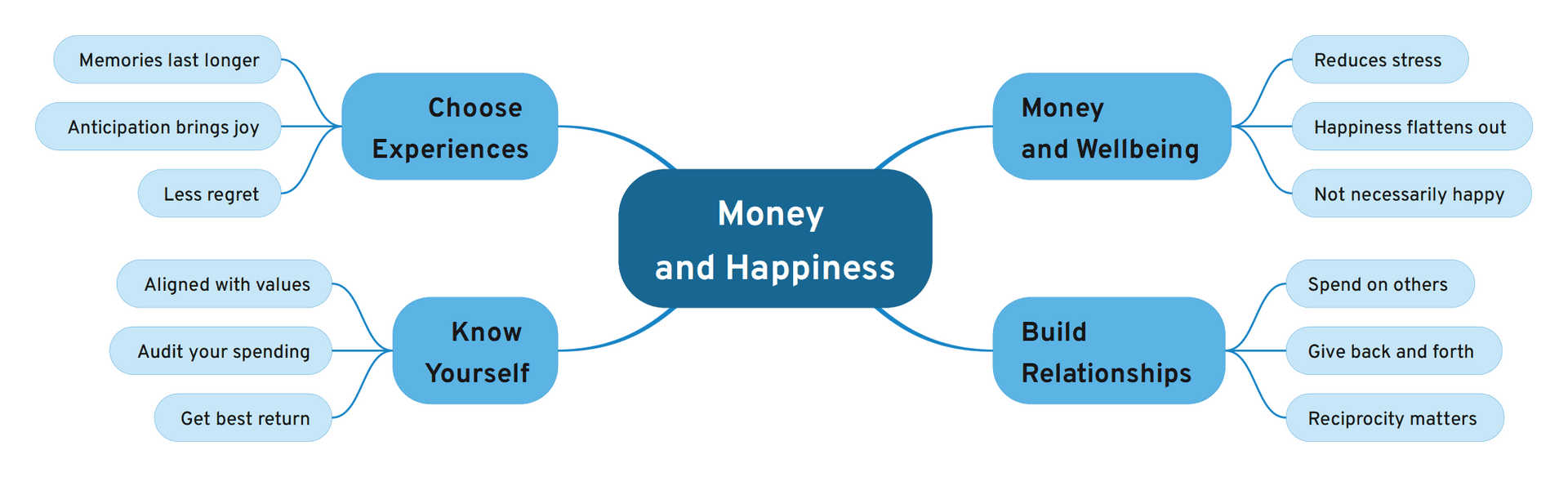
Alita and Pete are sitting in a quiet café after work. They recently watched a video about the relationship between money and happiness. The video presented three main conclusions: use money to build social relationships, choose experiences over things, and know yourself. 

Read or role-play their dialogue.

Alita: I’ve been thinking about that video we watched. The idea that we should use money to build relationships really stood out to me.

Pete: Same here. It makes sense when you think about it. Taking a friend out for dinner creates a shared memory. Buying another gadget doesn’t.

Alita: Exactly. And I loved the point about choosing experiences over things. I remember trips I took years ago, but I can’t even recall what phone I had back then.

Pete: That’s a good example. Experiences become part of who we are. Things just… sit there.

Alita: But what about the third point — knowing yourself? That one feels harder to apply.

Pete: I think it means your spending should be aligned with your values. If you love music, maybe concert tickets make you happier than a new watch.

Alita: So it’s not about spending less, but spending smarter?

Pete: Right. The research suggests we’d be better off doing a little audit of where our money goes.

Alita: That’s actually a helpful way to look at it. Small shifts, not big sacrifices.

Pete: Exactly. And if I were to recap — spend on people, choose memories, and know what truly matters to you.

OVER TO YOU

Discuss these questions. Refer to the topic of the lesson and your own experience.

BulletWhy do many people believe that buying things will make them happy?
BulletWhat makes experiences more memorable than material possessions?
BulletHow can spending money on others strengthen relationships?
BulletWhy is it important to understand your own values before making spending decisions?
BulletWhat prevents people from changing their spending habits even when they know what would make them happier?

DIVE DEEPER WITH A MIND-MAP

Study this mind-map to dive deeper into this topic and remember more from this lesson.

POLL

Cast your vote in the poll below.

1️⃣ What usually makes you happier when you spend money?
2️⃣ How often do you think about whether your spending matches your values?
3️⃣ Which of the three takeaways from the video do you find most useful?
1 vote

×

lesson glossary

Go through the main vocabulary items from this lesson using this practical glossary.

Expression Phonetic Translation Example
it turns out/ɪt tɜːnz aʊt/okazuje sięIt turns out that money alone doesn't make people happy.
figure out/ˈfɪɡə aʊt/zrozumieć, rozgryźćI'm trying to figure out why some people are happier than others.
sort of/sɔːt əv/poniekąd, w pewnym sensieMoney can sort of buy happiness, but only if you spend it wisely.
poverty/ˈpɒvəti/ubóstwo, biedaMany people living in poverty struggle to meet their basic needs.
flatten out/ˈflætn aʊt/wyrównać się, ustabilizować sięAfter a certain income level, happiness tends to flatten out.
to make (number) a year/meɪk ... ə jɪə/zarabiać (kwotę) rocznieShe makes around 80,000 dollars a year working as a consultant.
necessarily/ˌnesəˈserəli/koniecznie, niekoniecznie (w przeczeniach)Having more money doesn't necessarily mean you'll be happier.
to conduct a study/kənˈdʌkt ə ˈstʌdi/przeprowadzić badanieResearchers conducted a study on the relationship between money and happiness.
predict/prɪˈdɪkt/przewidywaćIt's difficult to predict how people will react to sudden wealth.
abuse alcohol/əˈbjuːz ˈælkəhɒl/nadużywać alkoholuSome people abuse alcohol when they feel unhappy or stressed.
marital satisfaction/ˈmærɪtl ˌsætɪsˈfækʃn/zadowolenie z małżeństwaThe study found that marital satisfaction was more important than income.
by far/baɪ fɑː/zdecydowanie, bez wątpieniaGood relationships are by far the most important factor in happiness.
the strongest predictor/ðə ˈstrɒŋɡɪst prɪˈdɪktə/najsilniejszy wskaźnik/predyktorSocial connections are the strongest predictor of long-term wellbeing.
to get at causation/ɡet æt kɔːˈzeɪʃn/dotrzeć do przyczyny, ustalić związek przyczynowyScientists try to get at causation, not just correlation.
to tend to something/tend tuː/dbać o coś, zajmować się czymśWe should tend to our relationships if we want to be happy.
wither away/ˈwɪðər əˈweɪ/zanikać, obumieraćFriendships can wither away if we don't invest time in them.
to affect/əˈfekt/wpływać naHow we spend money can affect our level of happiness.
ubiquitous/juːˈbɪkwɪtəs/wszechobecnyThe desire for more money is ubiquitous in modern society.
methodology/ˌmeθəˈdɒlədʒi/metodologiaThe study used a careful methodology to track happiness over time.
findings/ˈfaɪndɪŋz/wyniki, wnioski (z badań)The findings suggest that experiences bring more joy than things.
to boil down/bɔɪl daʊn/sprowadzać się doHappiness often boils down to the quality of our relationships.
takeaway/ˈteɪkəweɪ/wnioski, najważniejsze przesłanieThe main takeaway from this research is to invest in experiences.
reciprocity/ˌresɪˈprɒsəti/wzajemnośćStrong friendships are built on reciprocity and trust.
give back and forth/ɡɪv bæk ənd fɔːθ/dawać i brać, wymieniać się wzajemnieHealthy relationships involve giving back and forth over time.
on average/ɒn ˈævərɪdʒ/średnio, przeciętnieOn average, people who spend money on experiences are happier.
spike in happiness/spaɪk ɪn ˈhæpinəs/nagły wzrost szczęściaBuying a new car gives you a spike in happiness, but it doesn't last.
to some extent/tə sʌm ɪkˈstent/do pewnego stopniaMoney can buy happiness, but only to some extent.
regret/rɪˈɡret/żałować, żalPeople rarely regret spending money on meaningful experiences.
whereas/weərˈæz/podczas gdy, natomiastExperiences bring lasting joy, whereas material things lose their appeal.
anticipated/ænˈtɪsɪpeɪtɪd/oczekiwany, wyczekiwanyThe anticipated holiday brought her more joy than the trip itself.
look forward to/lʊk ˈfɔːwəd tuː/nie móc się doczekać, cieszyć się naI always look forward to spending time with my friends.
every once in a while/ˈevri wʌns ɪn ə waɪl/od czasu do czasuEvery once in a while, it's good to treat yourself to something special.
aligned with/əˈlaɪnd wɪð/zgodny z, dopasowany doYour spending should be aligned with your personal values.
to be better off/bi ˈbetər ɒf/być w lepszej sytuacjiYou'd be better off spending money on experiences than on things.
me time/miː taɪm/czas dla siebieEveryone needs some me time to relax and recharge.
it's up to you/ɪts ʌp tə juː/to zależy od ciebieHow you spend your money is up to you.
to shift/ʃɪft/przesunąć, zmienićTry to shift your focus from buying things to creating memories.
to recap/riːˈkæp/podsumowaćLet me recap the three main points from the research.
first off/fɜːst ɒf/po pierwsze, na początekFirst off, let's talk about how money affects happiness.
put an emphasis on/pʊt ən ˈemfəsɪs ɒn/kłaść nacisk naThe study puts an emphasis on the quality of relationships.
if I were to/ɪf aɪ wɜː tuː/gdybym miał/miałaIf I were to give you one piece of advice, it would be to invest in experiences.
to get the best return/ɡet ðə best rɪˈtɜːn/uzyskać najlepszy zwrot/efektTo get the best return on your money, spend it on others.
for the purposes of/fə ðə ˈpɜːpəsɪz əv/na potrzeby, w celuFor the purposes of this study, happiness was measured through surveys.
what are we looking at?/wɒt ɑː wiː ˈlʊkɪŋ æt/co my tam mamy? (idiom)So, what are we looking at here? Three key findings about spending.
Olive Garden/ˈɒlɪv ˈɡɑːdn/Olive Garden (amerykańska sieć restauracji włoskich)Taking a friend to Olive Garden can bring more happiness than buying a new gadget.
ExpressionPhoneticTranslationExample

COMMENTS

Can money buy happiness? Write your answer to this question. Use the languge and information presented in this lesson and your own experience.

How to disagree productively by Julia Dhar

How to disagree productively by Julia Dhar

Sorry, but lessons on The Blue Tree work only on a computer or a tablet.

Bardzo mi przykro, ale lekcje na platformie The Blue Tree działają jedynie na komputerze lub tablecie.

Do zobaczenia na większym ekranie 🙂

Zespół The Blue Tree

Learn more words

THE BLUE TREE

Better
Communicator

CEF B1

CEFR C2

Proficiency

Practise speaking by describing this image

warm up

Answer the questions below.

TRANSCRIPT

People argue because they feel strongly about their beliefs or perspectives and want to be heard. Sometimes it’s about proving a point, but other times it’s about defending what matters to them. Arguments can come from misunderstandings or differences in values, but they’re not always a bad thing. If handled the right way, disagreements can lead to better understanding and growth.

TRANSCRIPT

I don’t really think about arguments in terms of winning or losing. I guess it depends on the situation. Sometimes I feel like I’ve made my point clearly, but other times I realize that I’ve misunderstood the other person’s perspective. I try to focus more on finding common ground instead of just trying to ‘win’ the argument. That way, it feels like a win for both sides, not just one person.

Would the world be a better place if people knew how to argue productively?
TRANSCRIPT

Definitely! If people knew how to argue productively, the world would be a much better place. Arguments wouldn’t be about tearing each other down, but about genuinely trying to understand different viewpoints. We could solve problems more effectively and create stronger communities. Productive disagreement helps people see that it’s okay to have different ideas and still work together toward solutions.

part one

KEY LANGUAGE

Go through the flashcards below. Make sure you understand all the words and expressions.

VIDEO

Watch the first part of the video.

COMPREHENSION

Answer these questions. Refer to the information from the video.

  • What is the state of public discourse?
  • How do many arguments finish?
  • What is Julia’s life mission?

part two

KEY LANGUAGE

Go through the flashcards below. Make sure you understand all the words and expressions.

VIDEO

Watch the second part of the video.

COMPREHENSION

Answer these questions. Refer to the information from the video.

  • Why did Julia’s parents send her to a debating club?
  • How does formal debating work?
  • How did Julia’s first attempt at debating go?
  • How good did she become eventually?
  • What are the three elements of a productive debate?

part three

KEY LANGUAGE

Go through the flashcards below. Make sure you understand all the words and expressions.

VIDEO

Watch the third part of the video.

COMPREHENSION

Answer these questions. Refer to the information from the video.

  • What is a rebuttal and why is it so important for debating?
  • What was Julia’s initial thought on successful debaters?
  • What is the first step to a productive disagreement?
  • Why is it more beneficial to debate face to face?

part four

KEY LANGUAGE

Go through the flashcards below. Make sure you understand all the words and expressions.

VIDEO

Watch the fourth part of the video.

COMPREHENSION

Answer these questions. Refer to the information from the video.

  • What is the second step towards a productive disagreement?
  • What is the best strategy to win a debate?
  • How can this principle be used in public discourse?

part five

KEY LANGUAGE

Go through the flashcards below. Make sure you understand all the words and expressions.

VIDEO

Watch the fifth part of the video.

COMPREHENSION

Answer these questions. Refer to the information from the video.

  • What is the third key to a productive disagreement?
  • What are the benefits of practising intellectual humility?
  • What question does Julia recommend we all ask ourselves?

Julia Dhar

What is it that you have changed your mind about? And why?

follow up

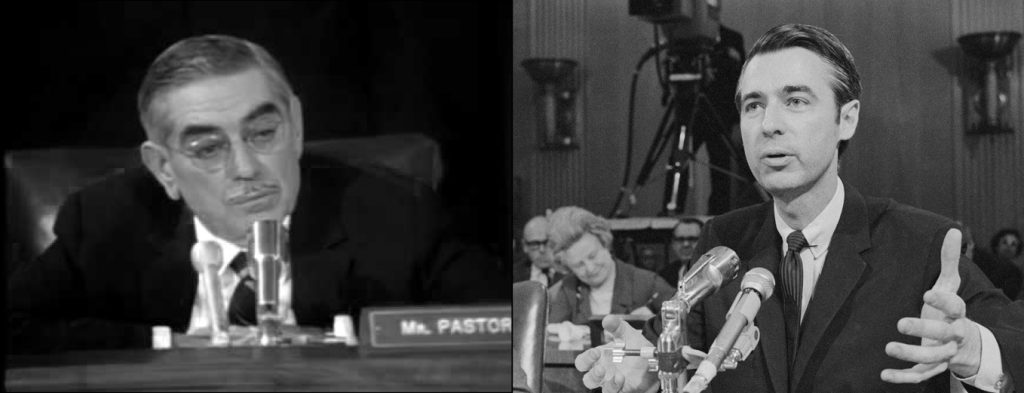
Julia describes at length how Fred Rogers convinced Senator Pastore to change his mind about funding public television. 

Would you like to see a short clip about this hearing? Here it is, and I cannot recommend it enough 🙂

watch the video

POLL

Cast your vote in the poll.

Coming Soon
Julia Dhar believes we should all do three things to make our disagreements more productive. Which of these three things, do you think, is the most difficult to put to practice?
Total Votes : 6
w

DISCUSSION

JULIA’S IDEAS IN PRACTICE

Alita and Pete are discussing Julia’s ideas and how they helped them find a compromise in the past. 

Read or role-play this dialogue.

Alita:
Did you watch Julia Dhar’s TED Talk about disagreeing productively?

Pete:
Yeah, I saw it last week. Honestly, I wish more people followed her ideas—especially during election season. The way politicians and even regular people argue these days is just depressing.

Alita:
Exactly. It’s like nobody listens anymore. Everyone’s shouting, but no one is really having a conversation. Dhar’s idea of shared reality really stuck with me. Imagine if candidates started with common ground instead of personal attacks.

Pete:
That would change everything. I remember last year I had a huge argument with my uncle about immigration policy. We both got emotional and defensive. But then I remembered Julia’s advice—separate identity from the idea. So I said, “Can we agree that we both want people to feel safe and be treated fairly?” That shifted the whole tone.

Alita:
That’s a great example. Something similar happened at work. We were debating whether to let people work fully remote. It got tense, but I asked everyone to write their opinions anonymously, like Julia suggested. When we discussed the proposals without knowing who wrote them, people were more open-minded. And we found a hybrid solution that worked for everyone.

Pete:
I love that. It’s proof her method works. But how do we bring that mindset into national conversations? Right now, candidates act like changing your mind is a weakness.

Alita:
That’s another point she made: the humility of uncertainty. I’d respect a leader more if they said, “I’ve changed my mind because I learned something new.” It shows they care more about truth than ego.

Pete:
Totally agree. We need more Mister Rogers and Senator Pastores, like she said. Thoughtful people on both sides, willing to listen and rethink. Maybe it starts with us—at home, work, even on social media.

Alita:
Yes, I believe small changes in how we talk to each other can lead to bigger changes in society. I just hope more people hear her message before the next election.

Pete:
Same here. Let’s keep practicing it—and maybe inspire a few others along the way.

OVER TO YOU

Discuss these questions. Refer to the information from the lesson and your own experience.

BulletWhy is it so hard for people to admit they might be wrong in an argument? What helps you stay open-minded?

BulletHow could we apply the idea of anonymous contributions, like Julia did in her project, to improve discussions at school or work?
BulletJulia Dhar said we should ask each other: “What have you changed your mind about, and why?” — how would you answer that question?
BulletWhat does intellectual humility mean to you? Do you think it’s a strength or a weakness in today’s world? Why?
BulletHow do people usually react when their opinions are challenged? What makes someone more open or more defensive in those situations?

lesson glossary

Disagreeing Productivity