Don’t use advanced English

Don’t use advanced English

Sorry, but lessons on The Blue Tree work only on a computer or a tablet.

Bardzo mi przykro, ale lekcje na platformie The Blue Tree działają jedynie na komputerze lub tablecie.

Do zobaczenia na większym ekranie 🙂

Zespół The Blue Tree

Don’t use advanced English
Learn more words

THE BLUE TREE

Everyday English

CEF B1

CEFR B1

Intermediate

Practise English by describing this image

warm up

Answer these questions.

  • How long have you been learning English?
  • Why does learning a foreign language take a long time?
  • What does it mean to be an advanced user of a foreign language for you?

key language

Study the words in this flashcard game. All of them appear in the video.

watch the video

Watch the video.

Comprehension

Answer the questions below. Use the information from the listening and your own experience. 

  • 1. What does it mean that a word is advanced?
  • 2. What effect can using advanced vocabulary have on listeners?
  • 3. Who do you have to speak more often: native speakers or learners of English?
  • 4. What’s the problem with Terms and Conditions?
  • 5. Do you read such documents before you click ACCEPT?
  • 6. What is successful communication for you?
  • 8. How can the feeling of guilt affect our performance in speaking a foreign language?
  • 9. What does Christian think learners need more of?
w

DISCUSSION

Discribe these two pictures.

Now this one.

Discuss the questions below.

  • Which picture better illustrates your approach to learning English?
  • Why thinking about progress as climbing a ladder may be limiting?
  • What is this gap the woman is jumping across in language learning?
  • What does it mean to bridge the gap in this context?
  • What can learners do to be able to express their thoughts and ideas more fluently?
  • What does it mean that “You don’t need more English. You need more practice”?

POLL

Cast your vote in the poll.

My ultimate goal in learning English is to:
12 votes

×

PRACTICE

Look at this list of language functions. How many can you do today? Click on the function to highlight it. Make a note of all the functions you don’t know yet. 

Discussion and opinion

Doubt, guessing and certainty

Feelings and emotions

AgreeingAsking for clarificationApologizing
Asking for opinionsCorrecting yourselfCongratulating somebody
Conceding a pointExpressing certaintyExpressing sympathy
Dealing with questionsExpressing ignoranceMaking complaints
DisagreeingExpressing likelihoodThanking somebody
Expressing preferencesSpeculatingWishing somebody luck
Giving reasons
Interrupting somebody

Openings and endings

Permission and obligation

Suggestions and advice

Ending conversationsAsking about obligationAsking for help
Introducing somebodyAsking for permissionAsking for information
Inviting somebody to somethingForbidding somethingGiving someobody advice
Leaving phone messagesGiving ordersMaking recommendations
Opening conversationsMaking requestsMaking suggestions
Wrapping up discussionsOffering help
Offering somebody something
Warning somebody of danger

Based on Oxford Learer’s Dictionaries, Conversations.

COMMENTS

Submit your views and opinions below.

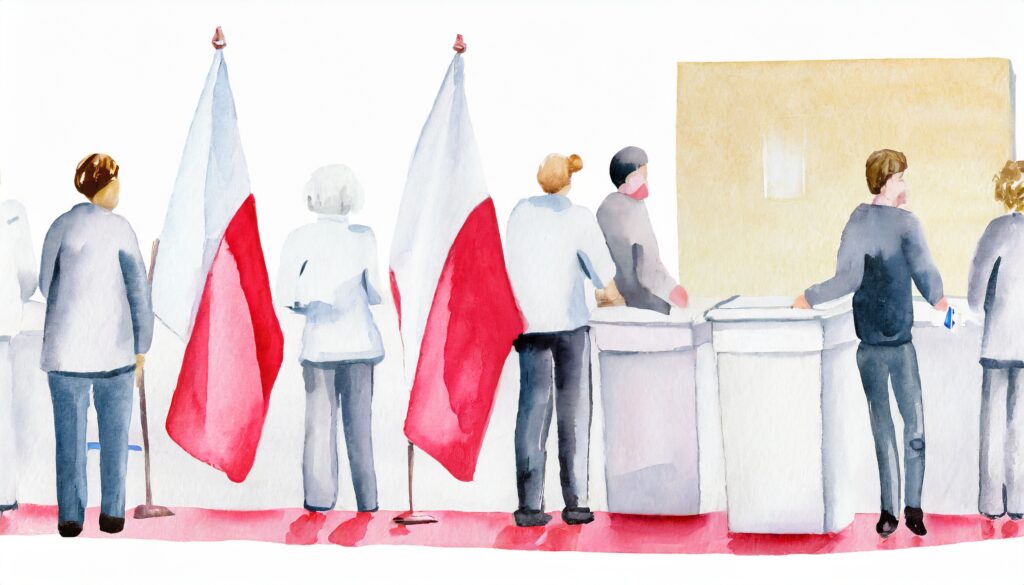
What’s your opinion about politics

What’s your opinion about politics

Sorry, but lessons on The Blue Tree work only on a computer or a tablet.

Bardzo mi przykro, ale lekcje na platformie The Blue Tree działają jedynie na komputerze lub tablecie.

Do zobaczenia na większym ekranie 🙂

Zespół The Blue Tree

Learn more words

THE BLUE TREE

Opinions

CEF B1

CEFR B2

Upper
Intermediate

Practise speaking by describing this image

warm up

Answer the questions below. Listen to some model answers. Read the transcript.

TRANSCRIPT

To be honest, I didn’t care much about politics when I was younger. It felt too complicated and far away from my daily life. But now, I try to stay informed, especially during elections or when big decisions are being made. I’ve realized that politics actually affects so many things, from education to healthcare, so it’s worth paying attention.

TRANSCRIPT

No, I’ve never joined a political party. I prefer to stay independent and decide who to support based on the issues, not the group. I do follow politics and vote regularly, but I think parties can sometimes make people focus more on winning than solving real problems.

TRANSCRIPT

I think politics is really important because it shapes the future of a country. Laws, taxes, and even basic freedoms are all influenced by political decisions. Even if someone doesn’t like politics, they still have to live with the results—so it’s better to be aware and take part.

key language

Study the words in this flashcard game. Make sure you know them all.

part one

Four Voices, Four Views on Politics

We asked four adults from different backgrounds to share how they see politics today. Their answers reflect a wide range of experiences and beliefs.

Listen, read and then discuss each person’s comment.

READING – person 1

Read the text aloud.

To be honest, I think politics is just a show. The promises, the speeches, the campaigns — it’s all for appearances. Once politicians get into power, they forget about ordinary people and take care of their own circles.

I used to keep up with political debates and elections, but after a few years, I felt like I was being tricked. Nothing ever really changes, and corruption stays the same no matter who’s in charge. I’ve stopped voting because I don’t want to waste my time supporting a broken system.

Some people tell me I should still get involved, but I think that’s naive. For me, politics is more about manipulation than leadership. If change is going to happen, it won’t come from the top — it’ll come from the streets, from people pushing back.

COMPREHENSION

Answer these questions about this speaker’s comment.

BulletWhat does he think about political promises and speeches?
BulletWhy did he stop voting?
BulletWhat two specific problems does he mention that make him distrust politicians?
BulletWhat does he believe is the real source of change in society?
BulletWhat does he mean when he says politics is “more about manipulation than leadership”?

part two

A Committed Party Member

Listen to and then read second person’s comment.

READING – person 2

Read the text aloud.

I’ve been a member of a political party for almost a decade now. I joined because I believe that real change starts with responsibility, not complaints. Too many people like to criticise without offering solutions — I wanted to do something more.

I help organise local events, talk to voters, and work on policy discussions. Of course, politics isn’t perfect — there are internal struggles, compromises, and delays. But that’s democracy. You can’t expect fast results in a system that needs debate.

Being politically active has given me purpose. It’s not about power — it’s about standing up for your values. If you want a better society, you need to get involved, not just comment from the sidelines.

COMPREHENSION

Answer these questions about this speaker’s comment.

BulletWhy did Tomasz decide to join a political party?
BulletWhat kinds of activities is he involved in as a party member?
BulletWhat challenges does Tomasz mention about political life?
BulletWhat does he say is the real reason for being politically active?
BulletWhat does Tomasz mean by the phrase “comment from the sidelines”?

part three

Critical, but Engaged

Here’s a comment of Mei from Taiwan

READING – person 3 

Read the text aloud.

I wouldn’t call myself a political person, but I do care about social issues. I regularly follow the news and try to stay informed about what’s happening in my country and around the world. Some decisions made by politicians really frustrate me, especially when they ignore climate goals or public health concerns.

I don’t belong to a party, but I vote in every election. I also speak out online and support campaigns that match my beliefs. I know politics is full of problems, but turning away doesn’t help.

For me, politics is like a tool. If you don’t use it, someone else will — and probably not in a way you like. So I stay involved, even if I don’t always trust the people in power.

COMPREHENSION

Answer these questions about this speaker’s comment.

BulletWhat kind of issues does Mei care about and try to raise awareness of?
BulletWhy does she say that politics is more than just voting?
BulletIn what ways does Mei stay politically involved without being part of a party?
BulletWhy does she think that giving up on politics is not an option?
BulletWhat does Mei mean when she compares politics to a tool?

part four

A Reluctant Participant

Finally, let’s listen to Diego’s comment.

READING – person 4 

Read the text aloud.

I’ve never loved politics. To me, it’s often loud, messy, and full of empty promises. But over the years, I’ve come to realise that staying out of it doesn’t protect you — it just leaves you powerless.

I started paying attention when new economic laws hit my business hard. I began attending community meetings, asking questions, and reading about policy changes. I still don’t feel totally confident in the system, but I believe holding leaders accountable is better than doing nothing.

I’d say I’m a reluctant participant. I don’t enjoy it, but I see the need. If we want a future where we’re not constantly reacting to bad decisions, we have to be part of the process — even if it’s uncomfortable.

COMPREHENSION

Answer these questions about this speaker’s comment.

BulletWhat made Diego start paying attention to politics?
BulletHow has his attitude toward politics changed over time?
BulletWhat actions does Diego take to stay involved in political life?
BulletWhy does he describe himself as a “reluctant participant”?
BulletWhy does Diego think “holding leaders accountable” is important, even if he doesn’t fully trust the system?

POLL

Cast your vote in the poll.

1. How interested are you in politics?
2. What do you think motivates most politicians?
3. What influences your political views the most?
4. Should politics be discussed at work or school?
1 vote

×
w

DISCUSSION

🎭 Dialogue: After the Debate

Read or role-play this dialogue.

Sven:
So… did you watch the whole debate last night?

Pete:
Yeah, unfortunately. I wasn’t planning to, but once I started, I couldn’t look away — like watching a slow-motion car crash.

Sven:
I know what you mean. I didn’t expect much, but I thought I should at least hear what they had to say. You know, be informed.

Pete:
Fair enough. But to be honest, I’m tired of the same empty promises. They all talk about reforming education or solving the housing crisis, but nothing ever really changes.

Sven:
That’s true, but one of them did make some valid points about income inequality and access to healthcare. I wouldn’t say I was impressed, but… it felt a bit more grounded than usual.

Pete:
Maybe. But when one of them says, “we’ll tackle corruption,” and then completely ignores how their own party’s involved in shady stuff… I just can’t take it seriously.

Sven:
Yeah, there’s definitely a trust issue. But I guess I still believe that not all politicians are the same. Some might actually want to make a difference.

Pete:
You’re more optimistic than I am. I think they’re all just playing the game — saying what people want to hear to win votes, not to serve the public good.

Sven:
I get that. I really do. But if we stop listening and give up completely, don’t we just let the worst ones run the show?

Pete:
Maybe. But it’s hard to stay engaged when the whole system feels broken. I support certain causes — climate action, protecting social welfare — but trusting politicians to lead them? That’s another story.

Sven:
Same here. I don’t trust the system, but I also don’t want to look back in ten years and feel like I didn’t even try.

Pete:
Fair point. I guess we have to stay involved, even if it’s just to hold them accountable.

Sven:
Exactly. It’s not about believing everything they say — it’s about not checking out completely.

OVER TO YOU

Discuss these questions.

BulletDo you usually vote in local or national elections? Why or why not?
BulletHave you ever taken part in a protest, campaign, or political event? If yes, what was it about?
BulletDo you believe that one person can make a difference in politics? Why or why not?
BulletHow much trust do you have in politicians in your country? What shapes your opinion?
BulletIf you had the chance to change one political law or policy, what would it be and why?

The president who lived like a farmer

Read the story of José Mujica, Uruguay’s humble leader.

When people think of presidents, they usually imagine luxury cars, formal suits, and grand houses. But José Mujica, who served as the president of Uruguay from 2010 to 2015, broke that stereotype completely. Often described as “the world’s poorest president,” Mujica chose a life of modesty and simplicity, even while holding the highest office in the country.

Mujica lived on a small farm outside Montevideo, Uruguay’s capital, with his wife and three-legged dog. Instead of living in the official presidential palace, he stayed in his old house, drove a 1987 Volkswagen Beetle, and donated around 90% of his salary to charities and small businesses. He believed that leaders should live like the people they serve, not above them.

But Mujica didn’t like being called “poor.” In a 2014 interview, he said:

“I’m not a poor president. Poor is someone who needs a lot. My definition is Seneca’s. I’m a sober president; I need little to live.”

A former guerrilla fighter who spent over a decade in prison, Mujica had seen both freedom and hardship. Those experiences shaped his political values. He believed in honesty, equality, and simple living. As a leader, he focused on healthcare, education, and legalising same-sex marriage and cannabis — bold moves that gained him international respect.

Many admired Mujica not just for his ideas, but for how he lived them. In a world where politicians often lose touch with everyday reality, he became a symbol of authentic leadership. He reminded people that power doesn’t have to mean luxury — it can mean humility, courage, and service.

COMMENTS

Share your opinions and comments below.

Magic Words by Jonah Berger

Magic Words by Jonah Berger

Sorry, but lessons on The Blue Tree work only on a computer or a tablet.

Bardzo mi przykro, ale lekcje na platformie The Blue Tree działają jedynie na komputerze lub tablecie.

Do zobaczenia na większym ekranie 🙂

Zespół The Blue Tree

Magic Words by Jonah Berger
Learn more words

THE BLUE TREE

Better
Communicator

CEF B1

CEFR B2

Upper
Intermediate

Practise speaking by describing this image

warm up

In this lesson we will review the book “Magic Words” by Jonah Berger. Have a look at some discussion questions below. Answer them using your own experience. Listen to some model answers and relate back what you have heard.

The Power of Words: Can you recall a time when someone’s words had a significant impact on your feelings or decisions, either positively or negatively? How did that make you feel, and why do you think those particular words had such an effect on you?
TRANSCRIPT

Yes, I remember a time when a colleague said, ‘I believe in your ability to handle this project.’ Those words had a huge impact on me. I felt more confident and capable because they trusted me, and that trust made me push myself harder. It’s amazing how a few positive words can completely change how we perceive ourselves and what we’re capable of.

Self-Persuasion: Have you ever used specific words or phrases to motivate or discourage yourself from doing something? For instance, telling yourself ‘I can’t’ versus ‘I don’t’ when faced with a temptation or challenge?
TRANSCRIPT

Definitely. I’ve used ‘I don’t’ instead of ‘I can’t’ when trying to cut out bad habits, like saying ‘I don’t eat junk food’ rather than ‘I can’t.’ It’s a subtle shift, but it makes me feel like I’m in control, rather than being restricted by some outside force. It’s a great way to frame things positively and stay motivated.

Influence on Others: Have you noticed how different words or approaches can change people’s reactions or decisions? For example, how asking someone ‘Could you help me?’ might have a different response compared to ‘Would you mind helping me?’ Why do you think that is?
TRANSCRIPT

I’ve noticed that subtle differences in phrasing can make a big impact. For example, when I ask someone ‘Could you help me?’ it feels like I’m asking for their input or collaboration, and they’re more likely to say yes. But if I say ‘Would you mind helping me?’ it can sound like a burden. The way we phrase things really changes how people perceive the request and react to it.

part one

KEY LANGUAGE

Study the words below. Make sure you understand them well.

Listen to the recording to learn how to pronounce them.

to double the chancespodwajać szanseWinning the lottery would double the chances of him going on a world tour.
enormousogromnyThe elephant has an enormous size compared to the mouse.
banishwypędzanie, usuwanieShe is banishing the negative thoughts from her mind.
nervesnerwyI always get nerves before speaking in public.
performancewystęp, wykonanieHer performance in the play was outstanding.
dramaticallydramatycznieHis health improved dramatically after changing his diet.

VIDEO

Watch the first part of the video.

COMPREHENSION

Answer these questions. Refer to the information from the video.

  • ⌚ 0:19 How powerful are words?
  • ⌚ 0:21 What will the first word help you with?
  • ⌚ 0:22 What will the second word help you with?
  • ⌚ 0:23 What’s the power of this category of words we will learn later in this lesson?

part two

KEY LANGUAGE

Study the words below. Make sure you understand them well.

enhancedwzmocniony, podkreślonyThe spices enhanced the flavor of the dish.
temptedkuszonyShe was tempted to eat the last piece of cake.
substitutionsubstytucjaAlmond milk is a common substitution for dairy milk in vegan recipes.
autonomyautonomiaAchieving autonomy in decision-making is crucial for personal growth.
locus of controlośrodek kontroliBelieving in fate means having an external locus of control.
heightenspodnosi, wzmacniaThe suspense heightens as the story progresses.
extinguishesgasi, tłumiThe rain extinguishes the campfire.
non-negotiableniepodlegający negocjacjomThe terms of the contract were non-negotiable.
leveragewykorzystaćShe wants to leverage her skills in the new job.
prioritizepriorytetyzowaćIt’s essential to prioritize your tasks to be productive.
directivedyrektywa, polecenieThe manager gave a clear directive to the team.
persuasiveprzekonywującyHis argument was so persuasive that everyone agreed.
pronepodatnySome plants are prone to certain pests.
resistanceopórThere was a lot of resistance to the new policy.

VIDEO

Watch the second part of the video.

COMPREHENSION

Answer these questions. Refer to the information from the video.

  • ⌚ 0:45 What were the first group of participants told to do?
  • ⌚ 0:50 What were the second group supposed to say to themselves?
  • ⌚ 1:07 What effect did this have in the end?
  • ⌚ 1:27 How does saying “I can’t” make us feel?
  • ⌚ 1:34 What happens when we say “I don’t”?
  • ⌚ 1:51 What are other benefits of using “I don’t”?
  • ⌚ 2:05 How can we leverage the power of “I don’t”?
  • ⌚ 2:25 Which of the three examples resonates with you the most?
  • ⌚ 2:38 Why is it important to use “because” and “choose to”?

part three

KEY LANGUAGE

Study the words below. Make sure you understand them well.

nerve-wrackingdenerwującyPreparing for the exam was a nerve-wracking experience.
self-talkrozmowa z sobąSelf-talk can be a useful tool for motivation and reflection.
intensifieswzmacnia, potęgujeThe music intensifies as the movie reaches its climax.
qualificationskwalifikacjeHis qualifications make him suitable for the job.
cortisolkortyzolStress can increase the levels of cortisol in the body.
promptspobudza, skłaniaThe bright colors prompted her to buy the dress.
supportivewspierającyHe has always been a supportive friend.
declarationsdeklaracjeShe made several bold declarations during the meeting.
procrastinatingzwlekanieStop procrastinating and start working on your project.
dissatisfyingniesatysfakcjonującyThe food at that restaurant was quite dissatisfying.

VIDEO

Watch the third part of the video.

COMPREHENSION

Answer these questions. Refer to the information from the video.

  • ⌚ 3:09 How do many people self-talk? Which pronouns do they use?
  • ⌚ 3:32 What should we replace the “I” pronoun with?
  • ⌚ 3:49 How did the presenters who used the second person self-talk perform on a presentation?
  • ⌚ 4:02 What is the benefit of seeing the situation from a supportive coach perspective?
  • ⌚ 4:13 What words can boost your confidence even further?

part four

KEY LANGUAGE

Study the words below. Make sure you understand them well.

strivingdążenieShe is striving to achieve excellence in her studies.
boostzwiększyć, podnieśćThe advert gave a significant boost to sales.
lecturingwykładanie, pouczanieHe’s been lecturing at the university for years.
eliteelitaShe belongs to the elite group of athletes in the country.
upholdpodtrzymywać, przestrzegaćIt’s important to uphold the traditions of our ancestors.
turnoutfrekwencjaThe turnout for the event was much higher than expected.
cheateroszustNobody likes a cheater in a game.
concisezwięzłyHer writing style is clear and concise.

VIDEO

Watch the fourth part of the video.

COMPREHENSION

Answer these questions. Refer to the information from the video.

  • ⌚ 4:39 How can you help a person who got stuck?
  • ⌚ 5:07 What do “could” questions help people to focus on?
  • ⌚ 5:23 What do good coaches know and what do they say to their clients as a result?
  • ⌚ 5:42 When people don’t do what we expect them to do, what shouldn’t we do?
  • ⌚ 5:42 What should we do instead?
  • ⌚ 6:06 What examples illustrate the power of building identity?
  • ⌚ 6:20 Why is turning actions into identities effective?

POLL

Cast your vote in the poll below.

Which of the lessons from the book "Magic Words" by Jonah Berger appeals to you the most

×

PRACTICE

Let’s revise the vocabulary from this lesson.

Play this Multidecker flashcard game.

COMMENTS

Share your views and experience here.

Will she dump him

Will she dump him

Sorry, but lessons on The Blue Tree work only on a computer or a tablet.

Bardzo mi przykro, ale lekcje na platformie The Blue Tree działają jedynie na komputerze lub tablecie.

Do zobaczenia na większym ekranie 🙂

Zespół The Blue Tree

Will she dump him
Learn more words

THE BLUE TREE

Everyday English

CEF B1

CEFR B1

Intermediate

Practise English by describing this image

warm up

Answer the questions below

  • How do you feel about keeping a secret?
  • If you knew about something your friend should know, but were asked not to reveal it, would you tell them?
  • What are some of the reasons couples break up?

key language

Check some of the language you will learn in this lesson. 

There are many colloquial, everyday expressions to talk about relationships.

part one

Meet Maz, Ben and their friends Rob and Kat. This story is about Maz and Ben. Is there future in this relationship?

Read the first dialogue. Maz meets Kat for a coffee. Here’s their conversation.

Kat: Hey Maz, how’s everything with Ben?

Maz: It’s okay, I guess. He’s so sweet, but sometimes, I feel like we’re just not on the same page.

Kat: Why? What happened?

Maz: Well, I’ve been thinking that maybe we don’t have that much in common. You know how ambitious I am, and he’s so… laid-back.

Kat: Yeah, I noticed that. But opposites attract, right?

Maz: Maybe. But sometimes I feel like he doesn’t really know me. Like, truly understand what I want.

Kat: What makes you say that?

Maz: It’s just this vibe I get. And the other day, I overheard him talking about planning a big surprise for me.

Kat: A surprise? That sounds exciting!

Maz: Normally, yes. But he was talking about booking a two-week holiday on a Greek island. He thinks I’ll love it because it’s sunny, but he never even asked if I wanted to go there.

Kat: Oh! Well, maybe he just wanted to do something special for you. You know, be romantic and all.

Maz: I appreciate the gesture, Kat. But what if I had other plans? Or what if that’s not the place I’d want to go? A surprise like that is a huge commitment.

Kat: I understand where you’re coming from. It is a bit risky on his part.

Maz: Exactly! And it just proves my point that maybe he doesn’t know me as well as he thinks he does.

Kat: Maybe you should talk to him, Maz. Before he goes ahead and books the trip.

Maz: I should, shouldn’t I? I just don’t want to hurt his feelings.

Kat: It’s better to be honest now than regret it later. Just explain to him how you feel. He’ll understand.

Maz: You’re right, Kat. Thanks for being there. I’ll talk to him.

Kat: Anytime, Maz. Communication is key. Good luck!

w

DISCUSSION

Discuss the questions below.

  • Do you think it’s always a good idea to plan big surprises in a relationship, like the holiday Ben has in mind for Maz? Why or why not?

  • How important is it for couples to like the same things? Can being different be a good thing in a relationship?

  • How can people make sure they really know what their partner wants or likes? How can they talk to each other better to avoid confusion?

part two

Kat meets Rob, Ben’s best friend. Listen to their conversation.

w

DISCUSSION

Discuss the questions below.

  • Why do you think Maz might be thinking of ending things with Ben, even though he seems unaware of the issues?

  • How important is it for friends to keep secrets, like the conversation about Ben and Maz? Would you have shared the information or kept it to yourself?

  • Do you believe that having a lot in common is crucial for a successful relationship? Why or why not?

part three

Now Ben meets Rob. Listen to their conversation.

w

DISCUSSION

Discuss the questions below.

  • Do you think Ben is making the right decision by planning a surprise holiday without consulting Maz first? Why or why not?

  • Why do you think Ben is so confident that Maz will love his surprise, despite her having strong opinions?

  • How does the conversation highlight the differences in understanding and approach towards romance between the two friends?

  • What could be the potential problems or misunderstandings that might arise from Ben’s decision to surprise Maz?

  • How important is it to consider a partner’s schedule and commitments when planning surprises?

part four

Language of relationships

Study the list of 15 expressions used to discuss relationships. 

How many did you know before?

IdiomTranslationExample
1. Fancy someonePodkochiwać się w kimś“Do you fancy him?”
2. Go steadyChodzić ze sobą“Are they going steady now?”
3. Pop the questionOświadczyć się“He finally popped the question on their holiday.”
4. Tied the knotWziąć ślub“They tied the knot last summer.”
5. On the rocksW kryzysie“I’ve heard their relationship is on the rocks.”
6. Puppy loveMłodzieńcze zauroczenie“It’s just puppy love; she’ll get over it.”
7. SnogCałować sięI saw them snogging in the park.”
8. Get hitchedWziąć ślub“When are you two getting hitched?”
9. Ditch someoneRzucić kogoś“He got ditched by his girlfriend.”
10. Play the fieldNie związywać się z nikim na stałe“He’s not ready to settle down; he’s still playing the field.”
11. Have a flingMieć przelotny romans“She had a fling while she was on holiday.”
12. Made for each otherStworzeni dla siebie“Look at them, they’re just made for each other.”
13. Fall head over heelsZakochać się po uszy“She fell head over heels for him after their first date.”
14. Old flameDawna miłość“I saw him with his old flame at the cafe.”
15. Chat someone upPodrywać kogoś“He tried to chat her up at the bar.”
Alita Pete and Kat are having a conversation

Will she dump him

Now, when you know Maz and Ben, do you think they are going to split up?

Create a dialogue where the story finds a resolution. Decide if you want them to stay together or split up.

COMMENTS

Submit your views and opinions below.

Helios. The Democratic Organisation

Helios. The Democratic Organisation

Learn more words

THE BLUE TREE

Business English

CEF B1

CEFR B2

Upper
Intermediate

Practise speaking by describing this image

warm up

Answer the questions below. Listen to sample answers. Report back what you heard.

How would you describe the company culture of the firm you work for?
TRANSCRIPT

The company I work for has a collaborative and supportive culture. Teamwork is highly valued, and there’s a strong emphasis on innovation and continuous learning. People are approachable, and it’s easy to share ideas or concerns. It feels like an environment where personal growth and professional goals align.

Do you think companies should be run tightly or rather more liberally?
TRANSCRIPT

I think it depends on the nature of the business. Tight management works well in industries where precision and consistency are essential, like manufacturing or healthcare. On the other hand, a more liberal approach fosters creativity and innovation, especially in fields like tech or marketing. Balance is key.

Can the rules of democracy be implemented in the business setting?
TRANSCRIPT

Implementing the rules of democracy in business could work to an extent, like allowing employees to have a voice in major decisions. But businesses also need leadership that can act decisively. A fully democratic model might slow down processes, but a mix of consultation and leadership could be effective.

part one

KEY LANGUAGE

Go through the flashcards below. Make sure you understand all the words and expressions.

VIDEO

Watch the video. It’s a fragment of a series “For All Mankind” from Apple TV. A woman comes to an office of Helios. She talks to the boss of this company. They discuss a candidate for a job. Later a decision is made. 

When you watch this video, focus on how the office looks like and what the decision making process is like.

COMPREHENSION

Answer these questions. Refer to the information from the video.

  • ⌚ 0:19 Has Karen been in this office before?
  • ⌚ 0:32 What are some of the things Karen is surprised about?
  • ⌚ 0:43 Why does Karen begin with the question: “Is this your office?”?
  • ⌚ 0:54 How did Dev describe the work culture at Helios?
  • ⌚ 1:26 What drink does Dev offer Karen?
  • ⌚ 2:25 Who did Karen recommend for the position of Mars expedition leader?
  • ⌚ 2:35 Why doesn’t Ed want to work for NASA anymore?
  • ⌚ 2:55 What happens when Dev says: “Hey, everybody, bring it in.”
  • ⌚ 3:23 How do people react to the idea of Ed Baldwin becoming the leader of their expedition?
  • ⌚ 4:04 How is the decision finally made?

part two

When talking about company culture you can use many different adjectives. Go through this poll. Listen to and read the short description of each pair of adjectives. Check any new language if necessary.

Use your answers to create a description of company culture of your current or former employer.

1. Supportive - Unsupportive

In a supportive company, people feel they are not on their own. Managers listen, give feedback, and help employees grow. When someone struggles, the focus is on solving the problem, not blaming the person. This creates trust and makes people more willing to speak up.

In an unsupportive culture, help is hard to find. Feedback is rare or unclear, and problems are often ignored. Employees may feel stressed, undervalued, or left to figure things out alone, which slowly kills motivation.

Supportive
Unsupportive
2. Competitive - Collaborative


A competitive company pushes people to perform better than others. Targets, rankings, and results matter a lot. This can be motivating for some, but it may also create tension and reduce trust between colleagues.

A collaborative company focuses on working together. People share ideas, help each other, and succeed as a team. Individual results matter, but teamwork comes first, which usually creates a calmer and more positive atmosphere.

Competitive
Collaborative
3. Innovative - Traditional


An innovative culture encourages new ideas and experimentation. Employees are allowed to question old ways and try new solutions. Mistakes are treated as part of learning, not failure.

A traditional culture values proven methods. People follow established rules and processes that have worked for years. This brings stability and predictability, but change usually happens slowly and carefully.

Innovative
Traditional
4. Hierarchical - Flat


In a hierarchical company, roles are clearly defined and decisions come from the top. Employees know who is in charge and what is expected of them, but decisions can take time.

In a flat company, there are fewer levels of authority. People have easier access to leaders and more say in decisions. This can speed things up, though responsibilities may sometimes feel less clear.

Hierarchical
Flat
5. Flexible - Rigid


A flexible culture adapts easily to change. Rules are treated as guidelines, not strict laws. Employees often have freedom in how they work, which increases autonomy and creativity.

A rigid culture follows rules very closely. Processes are fixed and deviations are discouraged. This ensures consistency, but it can feel restrictive and slow when quick changes are needed.

Flexible
Rigid
6. Progressive - Conservative


A progressive company looks ahead and embraces change. New tools, ideas, and approaches are welcomed, and the company reacts quickly to trends and challenges.

A conservative company prefers stability and tradition. Changes are carefully considered and introduced slowly. This reduces risk but can make the organization less responsive to new opportunities.

Progressive
Conservative
7. Risk-taking - Risk-averse


A risk-taking culture accepts uncertainty. Employees are encouraged to try bold ideas, even if they might fail. This can lead to big successes, but also occasional setbacks.

A risk-averse culture avoids uncertainty. Decisions are made carefully, with a strong focus on safety and predictability. Growth is steadier, but innovation may be limited.

Risk-taking
Risk-averse
8. Empowering - Micromanaging


An empowering company trusts its people. Employees can make decisions and take responsibility for their work. This usually increases confidence and engagement.

A micromanaging culture controls every detail. Managers closely supervise how tasks are done, which can make employees feel mistrusted and less motivated to think independently.

Empowering
Micromanaging
9. Individualistic - Team-oriented


An individualistic culture highlights personal achievement. Employees are rewarded for their own results and independence.

A team-oriented culture values cooperation. Success is shared, and people support each other to reach common goals, even if individual effort is less visible.

Individualistic
Team-oriented
10. Sustainable - Short-term focused


A sustainable company thinks long-term. Decisions consider future employees, customers, and the environment. Growth may be slower, but it is more stable.

A short-term focused company aims for quick results. Immediate profits matter most, sometimes at the cost of long-term trust, people, or stability.

Sustainable
Short-term focused
w

DISCUSSION

Discuss these questions. Refer to the video fragment you have just seen and your own experience.

  • What do you think of the open office plan of modern offices?
  • How would you feel working for Helios?
  • Should companies take care of employees wellbeeing?
  • What do you think of Dev sitting together with everybody else?
  • What do you think of the democratic decision making process shown in this clip?
  • What are the pros and cons of adopting democracy in a business context?

COMMENTS

Share your views and opinions here.