Making Predictions

Making Predictions

Sorry, but lessons on The Blue Tree work only on a computer or a tablet.

Bardzo mi przykro, ale lekcje na platformie The Blue Tree działają jedynie na komputerze lub tablecie.

Do zobaczenia na większym ekranie 🙂

Zespół The Blue Tree

Making Predictions
Learn more words

THE BLUE TREE

Everyday English

CEF B1

CEFR B2

Upper
Intermediate

warm up

Answer the questions below. Listen to same people answering these questions. Report back or read the transcript to practise speaking.

How important is the weather forecast for you when you are planning a holiday or a trip outside?
TRANSCRIPT

Honestly, I check the forecast every day before I travel. If it says it’s going to rain all week, I might even change my plans. I think weather can really affect how much you enjoy your trip—especially if you’re planning outdoor activities.
Plus, I like to pack properly, so knowing whether I’ll need a raincoat or sunscreen makes a big difference.

Over the years many people wanted to predict what the future will look like. What about you? Do you have an idea how our life and work will change in the future?
TRANSCRIPT

I think remote work is here to stay and will become even more common. AI will probably take over a lot of repetitive tasks, but I believe there will still be a strong need for creative and emotional intelligence in many jobs. Life might be faster and more connected, but also a bit more stressful.
That’s why I think people will also start paying more attention to mental health and work-life balance.

TRANSCRIPT

I’d love to visit the future—maybe the year 2200—just to see what kind of technology people will have. Will we live on Mars? Will climate change be under control? It would be fascinating to find out how humanity evolves.
And who knows, maybe I could bring back some amazing ideas or inventions to help improve life today.

part one

People in business often have to make predictions about the future: for example, to say if they think a product or idea will be successful or not.

Study these ways of talking about how likely something is. 

100% – I’m completely sure this will happen

These expressions are used when you are absolutely sure that something will happen in the future.

💬 Useful expressions:

  • I’ll definitely…

  • There’s no doubt that I will…

  • I’m absolutely certain that I will…

✅ Example 1:

I’ll definitely go to the meeting tomorrow.
🟡 This means the speaker is 100% sure. The meeting is in their plans and nothing will stop them.

✅ Example 2:

There’s no doubt that I will pass the exam.
🟡 The speaker is very confident. They believe they studied enough to succeed.

✅ Example 3:

I’m absolutely certain that I will enjoy the trip.
🟡 The speaker knows what kind of trip it is and feels sure it will be fun.

80% – I’m very sure, but not completely

We use these when we are almost certain, but there’s still a small chance things might change.

💬 Useful expressions:

  • I almost definitely will…

  • There’s a strong possibility that I will…

  • I’m quite certain I will…

✅ Examples:

I almost definitely will join you for lunch.
🟡 I plan to come, but something unexpected might happen.

There’s a strong possibility that I will move to a new flat soon.
🟡 I’ve been looking for one and found a few I like.

I’m quite certain I will pass the interview.
🟡 I feel confident, but I can’t be 100% sure.

60% – It’s likely, but not guaranteed

These phrases show that something will probably happen, but we don’t know for sure.

💬 Useful expressions:

  • I may well…

  • It’s possible that I will…

  • It’s quite likely that I will…

✅ Examples:

I may well be late for the meeting.
🟡 There’s a good chance it will happen, maybe because of traffic.

It’s possible that I will visit my cousins next month.
🟡 I haven’t decided yet, but I’m thinking about it.

It’s quite likely that I will change jobs this year.
🟡 I’ve started looking and sent out some applications.

40% – I’m not sure, but maybe

We use these expressions when we are not very sure, but we think there’s a chance.

💬 Useful expressions:

  • The chances are that I will…

  • I might…

  • There’s some possibility that I will…

✅ Examples:

The chances are that I will forget something.
🟡 It’s possible. I often forget things when I travel.

I might go to the cinema tonight.
🟡 I’m thinking about it, but I haven’t decided yet.

There’s some possibility that I will work abroad next year.
🟡 It could happen, but nothing is confirmed.

20% – I think it’s unlikely

These phrases show that you don’t expect something to happen, but it’s still possible.

💬 Useful expressions:

  • There’s a slim chance that I will…

  • I don’t expect I will…

  • I doubt whether I will…

✅ Examples:

There’s a slim chance that I will finish this project today.
🟡 I’ll try, but it’s not very likely. It’s a lot of work.

I don’t expect I will see him at the party.
🟡 He usually doesn’t come to these events.

I doubt whether I will have time to call you later.
🟡 I’ll be busy, so probably not.

1% – It’s almost impossible

These are used when we are sure something won’t happen.

💬 Useful expressions:

  • There’s no chance that I will…

  • No way I will…

  • It’s almost impossible that I will…

✅ Examples:

There’s no chance that I will wake up at 5 a.m. tomorrow.
🟡 I’m not a morning person, so I know I won’t do it.

No way I will go skydiving!
🟡 I’m too scared. I would never do that.

It’s almost impossible that I will finish the book today.
🟡 I’m still on page 10 and it’s 500 pages long!

part two

Look at these ingenious inventions and decide if they are going to be a success or a flop.

part three

READ AND LISTEN

Read and listen the following vision of the future. This article was written at the beginning of the XXI century. How many of the things mentioned in it have actually come true?

In the next century, people will have more information and less time. What customers want will continually evolve. It’s easy to predict some individual products of the future such as intelligent fridges, mobile internet phones, e-banking, but most new ideas cannot be 1. anticipated. The only thing we know for sure is that new products will be 2. superseded sooner rather than later. In this environment, the success of a company will not be based on the individual products or services that they provide, but on the customers that they 3. cultivate. The worth of the future company will be measured by the hold it has on these customers. The companies that offer their customers a ‘total experience’ will survive. This means all the products and services related to their 4. core business, a complete offer that saves their customers time and effort. So rather than buying gas, electricity, water and telephone services from different companies, consumers will be choosing one 5. provider for all these services to save them time and money. The companies that provide this ‘total experience’ will win customers. Any company that expects to 6. prosper in the old way, by focusing on its core products alone, will 7. struggle.

Source: In Company Photocopiable Resources, Macmillan, 2001

przewidziane / oczekiwane

zastąpione

pielęgnować / rozwijać (np. relacje z klientami)

działalność podstawowa / główny profil działalności

dostawca / usługodawca

odnosić sukces / dobrze prosperować

zmagać się / mieć trudności

TALKING ABOUT PREDICTIONS

Alita and Pete are discussing the ideas from this text. It’s 2025 and they are quite surprised how accurate some of these predictions from 2001 were.

Notice how they are using the language of predictions.

Alita:
Have you read that old article from 2001 about the future of business and technology? It’s surprising how accurate it turned out to be!

Pete:
I know, right? I mean, they predicted intelligent fridges and mobile internet. Back then, that must have sounded crazy, but now we take it for granted. I honestly didn’t expect technology to develop so fast.

Alita:
Same here. And what really surprised me was the idea of a “total experience.” It said people would want one provider for everything—gas, electricity, internet—and now look at companies like Amazon or Google. They offer everything from cloud storage to smart home devices.

Pete:
Exactly. The author said companies would succeed if they focused on building strong customer relationships. That’s still true today. I think it’s quite likely that in the next ten years, customer loyalty will matter even more than product quality.

Alita:
Yeah, and companies that don’t adapt may well disappear. Just look at what happened to brands that didn’t go digital. They struggled or disappeared completely.

Pete:
True. Also, the prediction that new products would be “superseded sooner rather than later” was spot on. These days, your new phone is old in a year. I wouldn’t have believed that back in 2001.

Alita:
I guess the only thing we can be sure of is that change will keep happening. I’m almost certain that AI will reshape even more industries very soon.

Pete:
And who knows? In a few years, we might be talking to digital assistants that are smarter than us. It sounds unlikely now, but after reading that article—I’m not so sure anymore!

OVER TO YOU

Now practise predicting future trends and events. Use the prompts below or come up with your own.

  • climate change
  • international travel
  • globalisation
  • mobile technologies
  • AI
  • population
  • politics

part four

TIME CAPSULE

Read this short article about the idea of a time capsule.

Message to the Future: What’s in Your Time Capsule?

Imagine it’s the year 3025 and someone finds a mysterious metal box buried in a backyard. Inside? A fidget spinner, a pizza menu, and a USB stick with a password no one can crack. Welcome to the wonderful world of time capsules—those little boxes of hope, sent to the future with love, confusion, and questionable taste.

Time capsules have been around for centuries. One was hidden in the base of the Statue of Liberty in 1884. When it was opened, people found newspapers, coins, and… a calling card. (Apparently, even back then, people wanted to network.)

Perhaps the most famous time capsule isn’t even on Earth. In 1977, NASA sent the Voyager Golden Record into space—a gold-plated disc with music, greetings in 55 languages, and even whale sounds. The idea? To introduce humans to extraterrestrial life. Let’s hope aliens appreciate Chuck Berry.

Some time capsules go hilariously wrong. In 2014, one was opened after 100 years and contained… a ticket to a play, a tooth, and a pair of shoes. The future was, understandably, underwhelmed.

But still, there’s something beautiful about sending a message to people we’ll never meet. Whether it’s serious or silly, a time capsule reminds us that someone, someday, might wonder what life was like now—and hopefully, they’ll get more than just an expired chocolate bar.

So, if you were to make one today, what would you put inside?

What’s in Your Time Capsule?

Alita and Pete are sharing their ideas what they will put in a time capsule. 

Read or role play their dialogue.

Alita:
Okay, Pete, imagine we’re making a time capsule today. It will be opened in the year 3025. What would you put inside?

Pete:
Easy. My old smartphone. I want future humans—or aliens—to laugh at how we thought this little thing was the height of technology.

Alita:
Great idea! And I’d include a handwritten recipe for banana bread. Let’s remind them there was once a global obsession with baking during a pandemic.

Pete:
Oh yes, the Great Banana Bread Boom of 2020. I’d also put in a mask. Just one. Let them wonder if it was a fashion statement, a medical tool, or part of some strange ritual.

Alita:
Nice. I think I’d add a photo of people sitting next to each other without their phones. That alone might shock them.

Pete:
True. Or maybe a Spotify playlist on a CD, just to confuse them completely.

Alita:
We should definitely write a note, too: “Dear Future, sorry about the climate, we did try… a bit.”

Pete:
And maybe a coffee cup that says, “But first, coffee.” Just to prove caffeine addiction is timeless.

Alita:
Perfect. Funny, isn’t it? What seems normal now might look totally ridiculous—or deeply meaningful—in a thousand years.

Pete:
Exactly. Maybe the most valuable thing in the capsule won’t be the objects… but the stories behind them.

OVER TO YOU

Discuss these questions.

BulletIf you had to choose only one object to represent life in 2025, what would it be and why?
Think about what symbolises our daily life, habits, or technology.
BulletDo you think people in the future will understand the meaning of the things we leave in time capsules? Why or why not?
What might be confusing or surprising to them?
BulletIs it more important to include funny or serious items in a time capsule? What balance would you choose?
Explain your reasoning and give examples.
BulletWhat kind of message would you write to future generations? What do you think they need to hear from us?
Would you apologise, warn them, or give advice?
BulletIf you could open a time capsule from 100 years ago, what would you hope to find inside?
What would you be curious about from the past?

DOWNLOAD

Check out the mind-map below. It contains all the language of making predictions and expressing likelihood from this lesson plus some extra expressions. 

Click on the mind-map to see a bigger version. Right click to save the mind-map to your computer.

COMMENTS

What is your outlook on the future? Are you excited about future developments or rather anxious and worried? Do we have reasons to be optimistic about the future?

Share your views and experience here.

Growth Mindset with Mojo

Growth Mindset with Mojo

Sorry, but lessons on The Blue Tree work only on a computer or a tablet.

Bardzo mi przykro, ale lekcje na platformie The Blue Tree działają jedynie na komputerze lub tablecie.

Do zobaczenia na większym ekranie 🙂

Zespół The Blue Tree

Growth Mindset with Mojo
Learn more words

THE BLUE TREE

How to Learn

CEF B1

CEFR A2

Pre-Intermediate

warm up

Answer the questions below. Then listen to the audio answers and report back on what you’ve heard.

What was the most difficult subject for you at school?
TRANSCRIPT

The most difficult subject for me at school was definitely math! I really struggled with some of the concepts and formulas, and it felt like no matter how much I studied, it never really clicked. But I had a great teacher who helped me break things down step by step, and that made it easier to get through.

Have you ever given up something because you thought it was too difficult for you?
TRANSCRIPT

Yeah, I’ve given up on learning guitar before. I picked it up thinking it’d be fun, but after a few weeks, I just couldn’t seem to get the hang of it. My fingers hurt, and it felt like I wasn’t making any progress, so I just stopped. Looking back, I probably needed to approach it with a bit more patience and structured practice.

Do you believe you need to have talent to become good at something?
TRANSCRIPT

I don’t believe you need to have talent to be good at something. Talent might give you a bit of a head start, but I think hard work and deliberate practice are much more important. If you stick with something, put in the effort, and stay consistent, you can definitely improve, even if it’s tough in the beginning.

part one

KEY LANGUAGE

Go through the flashcards below. Make sure you understand all the words and expressions.

VIDEO

Watch the first part of the video.

COMPREHENSION

Answer these questions. Refer to the information from the video.

  • Why did Mojo want to quit school?
  • What did Katie tell him?
  • What is the brain similar to?

part two

KEY LANGUAGE

Go through the flashcards below. Make sure you understand all the words and expressions.

VIDEO

Watch the second part of the video.

COMPREHENSION

Answer these questions. Refer to the information from the video.

  • Why did Mojo abandon his Robot project?
  • How do people feel about making mistakes?
  • What does it mean to learn from your mistakes?

part three

KEY LANGUAGE

Go through the flashcards below. Make sure you understand all the words and expressions.

VIDEO

Watch the third part of the video.

COMPREHENSION

Answer these questions. Refer to the information from the video.

  • What was Katie’s problem?
  • Why are people afraid to ask for help?
  • What is the meaning of the phrase: “Not yet”?

part four

KEY LANGUAGE

Go through the flashcards below. Make sure you understand all the words and expressions.

VIDEO

Watch the fourth part of the video.

COMPREHENSION

Answer these questions. Refer to the information from the video.

  • How did Mojo want to become a genius?
  • Is there any shortcut to getting smarter?
  • How do the neurons work?

part five

KEY LANGUAGE

Go through the flashcards below. Make sure you understand all the words and expressions.

VIDEO

Watch the fifth part of the video.

COMPREHENSION

Answer these questions. Refer to the information from the video.

  • Is the Growth Mindset about trying harder?
  • Does the Growth Mindset mean you can do anything if you work hard enough?
  • How should we feel about doing challenging things?
  • What is the ultimate goal of the Growth Mindset?

PRACTICE

Play this Multidecker game to see if you understand the main concepts of the Growth Mindset. 

POLL

Cast your vote in the poll.

Coming Soon
What do you think of the concept of the Growth Mindset?
Total Votes : 4

lesson glossary

Growth mindset with mojo

Body language in presentations

Body language in presentations

Sorry, but lessons on The Blue Tree work only on a computer or a tablet.

Bardzo mi przykro, ale lekcje na platformie The Blue Tree działają jedynie na komputerze lub tablecie.

Do zobaczenia na większym ekranie 🙂

Zespół The Blue Tree

Body language in presentations
Learn more words

THE BLUE TREE

Better
Communicator

CEF B1

CEFR C1

Advanced

warm up

Answer the questions below. Then listen to the model answers and think about how you could improve yours.

Do you pay attention to speaker’s body language?
TRANSCRIPT

Yes, I definitely pay attention to a speaker’s body language. It gives me a sense of how confident or passionate they are about what they’re saying. Even if their words are great, if their body language is closed off or they seem nervous, it’s hard to stay fully engaged. I think body language is a big part of the overall message.

How important is presenter’s body language during a presentation?
TRANSCRIPT

A presenter’s body language is extremely important during a presentation. It can either enhance the message or distract the audience. Good body language shows confidence and keeps the audience interested. Things like open gestures, eye contact, and standing tall can make a big difference in how the message is received. It also helps to build trust with the audience.

How do you approach this topic during your presentations?
TRANSCRIPT

When I’m giving a presentation, I try to focus on my posture and making natural gestures that align with what I’m saying. I also make sure to maintain eye contact with different parts of the audience. For me, it’s about staying aware of how I’m presenting myself so I come across as approachable but also confident. If my body language is off, I think it could undermine the whole presentation.

part one

KEY LANGUAGE

Go through the flashcards below. Make sure you understand all the words and expressions.

VIDEO

Watch the first part of the video.

COMPREHENSION

Answer these questions. Refer to the information from the video.

  • What are Deborah’s credentials as regards the topic of presentations?
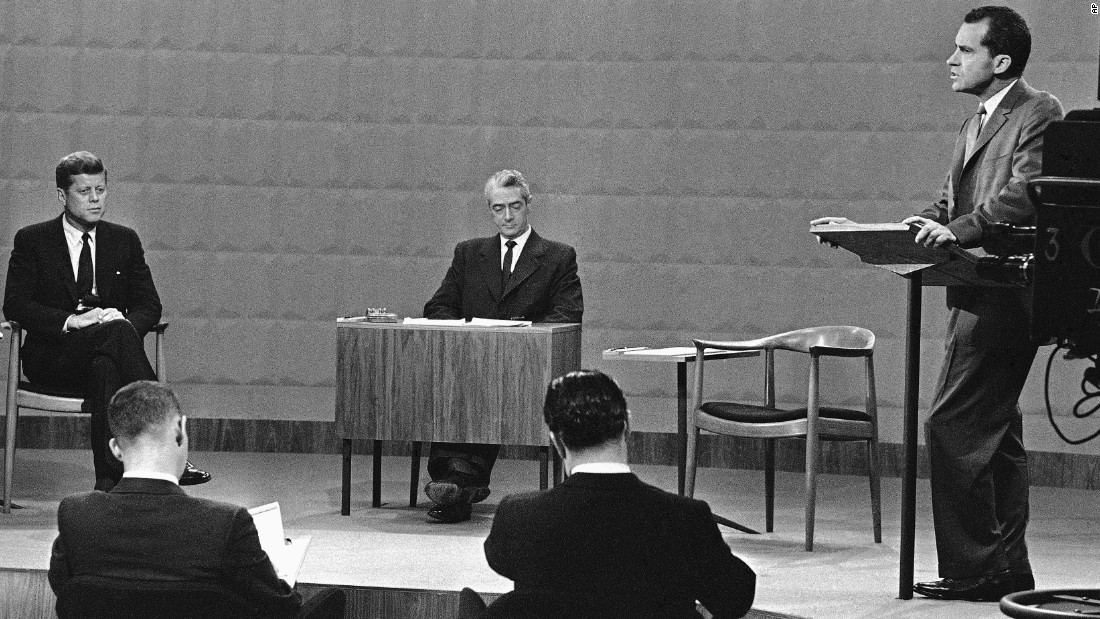
  • How did the first televised presidential debate illustrate the importance of body language?
  • Do you think body language carries so much weight that it may sway voters one way or the other?
  • What does Deborah say about the effect our body language can have on the audience?
  • Do you support her opinion that the audience mimics the body language of the speaker?

part two

KEY LANGUAGE

Go through the flashcards below. Make sure you understand all the words and expressions.

VIDEO

Watch the second part of the video.

COMPREHENSION

Answer these questions. Refer to the information from the video.

  • What are the five areas of body language?
  • What advice does Deborah offer as regards posture?
  • Which of these tips would you like to practise next time you present?

part three

KEY LANGUAGE

Go through the flashcards below. Make sure you understand all the words and expressions.

VIDEO

Watch the third part of the video.

COMPREHENSION

Answer these questions. Refer to the information from the video.

  • What are some of the dos and don’ts of body movement and gestures?
  • Deborah repeats the word ‘purposeful’ a lot. What does she mean by it?
  • Which of these suggestions you would like to incorporate in your own public speaking?

part four

KEY LANGUAGE

Go through the flashcards below. Make sure you understand all the words and expressions.

VIDEO

Watch the fourth part of the video.

COMPREHENSION

Answer these questions. Refer to the information from the video.

  • What is good eye-contact about?
  • What’s your own experience as regards keeping eye contact with the audience?
  • What is the most important facial expression?
  • How should we dress for a presentation?

POLL

Take part in the survey.

Coming Soon
Which of these body language factors has the biggest impact during a presentation?
Total Votes : 2

lesson glossary

Body language in presentations

COMMENTS

Share your views and experience here.

7 Steps to Speaking Success

7 Steps to Speaking Success

Sorry, but lessons on The Blue Tree work only on a computer or a tablet.

Bardzo mi przykro, ale lekcje na platformie The Blue Tree działają jedynie na komputerze lub tablecie.

Do zobaczenia na większym ekranie 🙂

Zespół The Blue Tree

7 Steps to Speaking Success
Learn more words

THE BLUE TREE

Everyday English

CEF B1

CEFR A1

Elementary

warm up

Answer the questions below. Listen to some model answers to these questions. Report back what you heard or read the transcript to practise speaking.

Which language skill would you like to be better at; speaking, listening, reading or writing?
TRANSCRIPT

I would like to be better at speaking. I can understand a lot when I listen or read, but when I try to speak, I often feel nervous and forget words. Sometimes, I know what I want to say, but it is hard to find the right words quickly. I also want to sound more natural and confident when I speak English. To improve, I think I should practise speaking more, maybe with a teacher or a language partner. Watching movies and repeating sentences could also help me sound more fluent.

TRANSCRIPT

“For me, speaking is the most difficult skill to improve. Listening and reading are quite easy because I can practice them every day, and there are many materials to use. Writing is also not too bad because we have tools like spell checkers and AI to help us. But when I speak, I have to think fast, and sometimes I get stuck. I worry about making mistakes or not knowing the right words. Also, I don’t always have people to practice with. That’s why speaking is the hardest for me.”

TRANSCRIPT

“I try to work on my speaking in different ways. One thing that helps me a lot is recording myself. I choose a topic, speak about it, and then listen to my recording. This way, I can hear my mistakes and try to improve. Another thing I do is describe pictures on my phone. I look at a photo and try to say as much as I can about it in English. It helps me think in English and find the right words faster. Also, I take every chance to speak in my English classes. I always try to answer questions and take part in discussions. The more I speak, the more confident I feel.”

SEVEN STEPS TO SPEAKING SUCCESS

Over the years, I have helped many students improve their speaking skills in English. There are many ways to achieve this goal, but the one that, in my opinion, brings really good results is the method of the 7 STEPS. 

Read about each step below and try it for yourself. 

1. Choose a topic from the ones below or come up with your own.

2. If there is a picture for your topic, describe it. Otherwise, make some notes about your topic. Put Polish and English words. Then translate the Polish words. Alita recommends Diki.pl.

3. Put the notes in order you want to present them. Think of some structure or organizing idea. In rhetorhic we call it a throughline.

4. Practise saying the story to yourself or your teacher.

5. Record yourself. Listen to yourself and see if you like the way it flows.

6. Correct or upgrade your text with more words and more complex grammar. Alita recommends using ChatGPT.

7. Record your final answer and send it to your teacher. 🙂 

Never be content with your first attempt

FAMILY

FAMILY & RELATIONS

Here’s how you can work with this topic. First, describe the picture below in the fullest possible way. Next, check the prompts section for ideas on what to consider. Then, go through the language section. It contains some interesting words and expressions. Finally, read some sample answers.

family

Portrait of an extended family with their pet dog sitting at the park

EASY PROMPTS

  • Who are the members of your family? Can you describe each one briefly?
  • What is your favorite family tradition and why?
  • What are their jobs, habits, and hobbies?

MEDIUM PROMPTS

  • How does your family celebrate holidays or special events?
  • How have your family dynamics and relationships changed as you’ve grown older?
  • Can you say at least one thing about each member of your immediate family?

HARD PROMPTS

  • How would you say your family’s values and beliefs have influenced your personal development?
  • How do you think the role of the family in society has changed over time, and what might be the reasons for this?
  • In many societies, traditional nuclear families are becoming less common as other family structures increase in prevalence. Discuss the implications of this trend on society and individuals.
Word/PhraseDefinition
Immediate familyYour closest family members, like parents, brothers, and sisters.
RelativesAll the people in your family, including uncles, aunts, grandparents, and cousins.
Close familyA family where people have strong relationships and spend a lot of time together.
Get along wellTo have a good relationship with someone.
Take after (someone)To be similar to an older family member in appearance or personality.
Family traditionA special activity or way of doing things that a family follows, often for many years.
Growing up in (a big/small) familyA phrase to describe your childhood family experience.
Look up to (someone)To admire and respect a family member, like an older sibling or parent.
Have things in commonTo share interests or personality traits with a family member.
Spend time togetherA simple phrase to describe family members doing things together, like eating meals or going on trips.

Pre-Intermediate (A2)

Prompt: Who are the members of your family? Can you describe each one briefly?
“I have a small family. My immediate family includes my parents and my younger brother. My dad is a doctor, and he works in a hospital. He is very kind and always helps people. My mom is a teacher, and she loves reading books. She is very patient. My brother is 12 years old. He is funny and likes playing video games. We spend a lot of time together, and we get along well. My grandparents live in another city, but we visit them often. I love my family a lot.”

Intermediate (B1-B2)

Prompt: How have your family dynamics and relationships changed as you’ve grown older?
“When I was younger, I spent most of my time with my parents and my brother. We always ate dinner together and played games. Now, things are different. My brother and I are older, so we are both busier with school and hobbies. My parents also have work, so we don’t spend as much time together as before. However, we still try to have meals together when possible. We also talk more about serious things now, like school, future plans, and sometimes even problems. I think as I grow up, I appreciate my family more. Even though we are all busy, I know I can always count on them.”

Advanced (C1-C2)

Prompt: How do you think the role of the family in society has changed over time, and what might be the reasons for this?
“The role of the family has changed significantly over the years due to social, economic, and technological developments. In the past, families were often larger and more connected, with several generations living together and supporting one another. Today, many families are smaller, and people often move away for work or education, leading to less daily interaction. Another change is the rise of different family structures, such as single-parent families or blended families. Technology has also influenced how families communicate. In some ways, it helps us stay in touch, but it can also create distance when people spend more time on screens than with each other. Despite these changes, I believe family still plays a crucial role in shaping our values and providing emotional support, even if the ways we interact are different from the past.”

SPORT

SPORT & FITNESS

Here’s how you can work with this topic. First, describe the picture below in the fullest possible way. Next, check the prompts section for ideas on what to consider. Then, go through the language section. It contains some interesting words and expressions. Finally, read some sample answers.

family

Describe this picture in the fullest way possible.

Easy Prompts (A2)

  1. Do you do any sport or exercise? If yes, what do you do? If no, why not?
  2. What is your favorite sport to watch or play? Why do you like it?
  3. Who is your favorite athlete or sports team? What do you like about them?

Medium Prompts (B1-B2)

  1. How has your attitude towards sports and exercise changed over time?
  2. Do you think playing team sports is better than individual sports? Why or why not?
  3. What are the most popular sports in your country, and why do you think they are so popular?

Hard Prompts (C1-C2)

  1. How do you think sports can influence a person’s character and personal development?
  2. What are the biggest challenges in professional sports today, and how can they be solved?
  3. Should all children be required to participate in sports at school, or should it be optional? Explain your opinion.
Word/PhraseDefinition
Stay in shapeTo keep your body fit and healthy.
Work outTo do exercises to keep fit.
Team sportA sport played with teammates, like football or basketball.

Individual sportA sport you play alone, like tennis or swimming.

Warm-upExercises done before a workout to prepare the body.
Cool downExercises done after a workout to relax the body.
CardioExercises that improve the heart and lungs, like running or cycling.
Strength trainingExercises that make muscles stronger, like lifting weights.
Set a recordTo achieve the best result ever in a sport.
Be into (a sport)To really like and enjoy a sport.

Pre-Intermediate (A2)

Prompt: Do you do any sport or exercise? If yes, what do you do? If no, why not?

“Yes, I do some exercise. I like to go jogging in the park three times a week. It helps me stay in shape and feel good. I also enjoy playing football with my friends on the weekend. We play in a small team, and it is a lot of fun. Sometimes, I do a short workout at home, but I don’t always have time. I think sport is important because it keeps you healthy and happy.”


Intermediate (B1)

Prompt: How has your attitude towards sports and exercise changed over time?

“When I was younger, I didn’t like sports very much. I preferred staying at home and watching TV. But now, I try to stay active because I know it is good for my health. I go to the gym twice a week and do strength training. I also enjoy running because it helps me relax. In the past, I only did sports in school, but now I do them because I want to feel good and have more energy. I think it is important to find a sport that you enjoy.”


Advanced (C1)

Prompt: How do you think sports can influence a person’s character and personal development?

“I believe that sports play a crucial role in shaping a person’s character and mindset. Firstly, they teach discipline and perseverance. Whether you’re training for a marathon or working towards a fitness goal, you need to stay consistent and motivated. Secondly, sports, especially team sports, help develop teamwork and communication skills. You learn to cooperate, trust others, and handle both success and failure. Additionally, sports can improve mental resilience. Athletes often push themselves beyond their limits, which helps them build confidence and a strong work ethic. Overall, engaging in sports is not just about physical fitness—it shapes who you are as a person.”

FASHION

fashion & appearance

Here’s how you can work with this topic. First, describe the picture below in the fullest possible way. Next, check the prompts section for ideas on what to consider. Then, go through the language section. It contains some interesting words and expressions. Finally, read some sample answers.

family

Describe this picture in the fullest way possible.

Easy Prompts (A2)

  1. What clothes do you usually wear every day?
  2. Do you prefer casual or formal clothes? Why?
  3. What is your favorite piece of clothing, and why do you like it?

Medium Prompts (B1-B2)

  1. How has your style changed over the years?
  2. Do you think fashion is important in everyday life? Why or why not?
  3. What do you usually wear for special occasions like weddings or parties?

Hard Prompts (C1-C2)

  1. How does fashion influence people’s confidence and self-expression?
  2. What impact does fast fashion have on the environment, and what can be done to improve the situation?
  3. In some professions, people are required to follow a strict dress code. Do you think this is necessary or outdated? Why?
Word/PhraseDefinition
Casual wearComfortable, everyday clothes like jeans and T-shirts.
Formal attireElegant clothing worn for special events, such as suits and dresses.
TrendyFashionable and popular at the moment.
OutfitA set of clothes worn together.
AccessoriesExtra items like bags, belts, and jewelry that complete an outfit.
Dress codeRules about what people should wear in a certain place or situation.
Mix and matchTo combine different clothes to create a stylish look.
Designer clothesExpensive clothing made by famous fashion brands.
Second-handClothes that have been owned and worn by someone else before.
Fast fashionCheap, trendy clothes made quickly by big brands but often bad for the environment.

Pre-Intermediate (A2)

Prompt: What clothes do you usually wear every day?

“I usually wear casual clothes. I like jeans, T-shirts, and sneakers because they are comfortable. In summer, I wear shorts and light dresses. In winter, I wear warm sweaters and a big coat. When I go to school or work, I wear something more formal, like a nice shirt and trousers. I don’t like wearing high heels or very fancy clothes. I prefer to feel comfortable.”


Intermediate (B1-B2)

Prompt: How has your style changed over the years?

“When I was younger, I didn’t care much about fashion. I just wore whatever my parents bought for me. But now, I try to choose my own style. A few years ago, I liked trendy clothes, and I wanted to wear what was popular. Now, I prefer clothes that are comfortable and match my personality. I also care more about quality, so I buy fewer but better clothes. I have also started to mix and match my outfits more to create different looks. Fashion is fun, but I think it’s important to feel good in what you wear.”


Advanced (C1-C2)

Prompt: How does fashion influence people’s confidence and self-expression?

“Fashion is more than just clothing; it is a way to express personality and emotions. The way we dress can influence our confidence and how others see us. Wearing a stylish outfit that fits well can make someone feel more self-assured, while uncomfortable or poorly chosen clothes might have the opposite effect. Additionally, fashion allows people to show their individuality. Some prefer classic and elegant styles, while others enjoy experimenting with bold colors and patterns. In a professional setting, fashion can also send a message of competence and seriousness. Ultimately, while clothes do not define a person, they can certainly play a role in shaping first impressions and personal confidence.”

SCHOOL & EDUCATION

SCHOOL & EDUCATION

Here’s how you can work with this topic. First, describe the picture below in the fullest possible way. Next, check the prompts section for ideas on what to consider. Then, go through the language section. It contains some interesting words and expressions. Finally, read some sample answers.

family

Describe this picture in the fullest way possible.

Easy Prompts (A2)

  1. What was your favourite subject at school? Why did you like it?
  2. Did you like your school? What do you remember most about it?
  3. What did a typical school day look like for you?

Medium Prompts (B1-B2)

  1. How did your experience at school shape who you are today?
  2. What makes a great teacher? Can you think of a teacher who had a big impact on you?
  3. Do you think the education system in your country prepares young people well for adult life? Why or why not?

Hard Prompts (C1-C2)

  1. Some people argue that schools focus too much on grades and not enough on developing real-life skills. To what extent do you agree?
  2. How should education change to keep up with the demands of the modern world, especially with the rise of AI and technology?
  3. Is university education still worth the investment, or are there better alternatives for young people today? Discuss.
Word/PhraseDefinition
ClassmateA person who is in the same class as you at school.
Get good/bad gradesTo receive high or low marks in school subjects.
Pay attentionTo listen carefully and focus on what the teacher is saying.
Skip a classTo not go to a lesson on purpose.
Learn something by heartTo memorise something so you can say it without looking.
Fall behindTo make less progress than others in your class.
CurriculumThe subjects and topics that are taught at a school.
Hands-on learningA way of learning by doing things, not just reading or listening.
Have a knack for somethingTo be naturally good at a particular subject or skill.
Cram for an examTo study a lot in a very short time just before a test.

Pre-Intermediate (A2)

Prompt: What was your favourite subject at school? Why did you like it?

“My favourite subject at school was history. I liked it because the teacher was very interesting and told us stories about the past. I also liked learning about different countries and famous people. I was not very good at maths because I found it difficult, but history was easy for me. I always got good grades in this subject. I think it is important to learn about the past because it helps us understand the world today. I also liked art, but history was always my number one.”

Intermediate (B1-B2)

Prompt: What makes a great teacher? Can you think of a teacher who had a big impact on you?

“I think a great teacher is someone who can explain things clearly and make lessons interesting. But more than that, a great teacher is someone who really cares about their students. I had an English teacher in secondary school who had a big impact on me. She always encouraged me to speak, even when I made mistakes. She never made me feel stupid. Instead, she would say, ‘That’s a good try, now let’s make it even better.’ She also used a lot of real-life examples, which made the language feel useful and not just something from a textbook. Because of her, I started to enjoy learning English and became more confident. I think the best teachers are the ones who believe in you, sometimes even more than you believe in yourself.”

Advanced (C1-C2)

Prompt: Some people argue that schools focus too much on grades and not enough on developing real-life skills. To what extent do you agree?

“I largely agree with this view. While grades serve as a convenient way to measure academic progress, they often fail to reflect what truly matters in adult life. Schools tend to prioritise memorisation and test performance over skills such as critical thinking, financial literacy, communication, and emotional intelligence. As a result, many young people leave school with impressive qualifications but struggle with basic real-world challenges, such as managing a budget, resolving conflicts, or working effectively in a team. Of course, academic knowledge has its place, and subjects like science, literature, and mathematics develop important cognitive abilities. However, I believe the education system would benefit greatly from a more balanced approach — one that combines traditional academics with practical, hands-on learning. Some countries have already begun to move in this direction, and the results are promising. Ultimately, the goal of education should not be to produce students who are good at passing exams, but rather individuals who are well-prepared to navigate the complexities of modern life.”

HEALTH & DIET

HEALTH & DIET

Here’s how you can work with this topic. First, describe the picture below in the fullest possible way. Next, check the prompts section for ideas on what to consider. Then, go through the language section. It contains some interesting words and expressions. Finally, read some sample answers.

family

Describe this picture in the fullest way possible.

Easy Prompts (A2)

  1. What do you usually eat during the day? Do you think your diet is healthy?
  2. How often do you exercise? What kind of exercise do you do?
  3. How many hours do you sleep at night? Do you think it is enough?

Medium Prompts (B1-B2)

  1. How have your eating habits changed compared to when you were younger?
  2. Why do so many people find it hard to live a healthy lifestyle even though they know what they should do?
  3. What role does mental health play in overall well-being? Do people in your country talk about it openly?

Hard Prompts (C1-C2)

  1. To what extent should governments be responsible for promoting healthy lifestyles, for example through taxes on unhealthy food or banning certain ingredients?
  2. Modern life offers more health information than ever before, yet people seem to be less healthy. What might explain this paradox?
  3. Some experts believe that our relationship with food has become too complicated. How has diet culture and social media influenced the way people think about eating?
Word/PhraseDefinition
Balanced dietA way of eating that includes the right amounts of different types of food.
Junk foodFood that is quick and easy to eat but not good for your health, like chips or burgers.
Cut down on somethingTo eat or drink less of something, for example sugar or coffee.
Be in good/bad shapeTo be physically fit or unfit.
Skip a mealTo not eat breakfast, lunch, or dinner when you normally would.
Food intoleranceWhen your body has difficulty digesting a certain type of food.
Sedentary lifestyleA way of living with very little physical activity, for example sitting most of the day.
Boost your immune systemTo make your body stronger at fighting illness and disease.
Comfort eatingEating food to feel better emotionally, not because you are hungry.
Everything in moderationThe idea that it is fine to eat anything as long as you do not have too much of it.

Pre-Intermediate (A2)

Prompt: What do you usually eat during the day? Do you think your diet is healthy?

“I usually have toast and coffee for breakfast. For lunch, I eat a sandwich or some soup at work. In the evening, I cook dinner at home. I try to eat vegetables, but sometimes I am tired and I just order pizza or eat something quick. I also like sweets, especially chocolate. I know it is not very healthy, but I find it hard to stop. I drink a lot of water during the day, which I think is good. I would say my diet is okay, but not perfect. I would like to eat more fruit and less junk food.”

Intermediate (B1-B2)

Prompt: Why do so many people find it hard to live a healthy lifestyle even though they know what they should do?

“I think the biggest problem is time. Most people know that they should eat well and exercise, but their daily routine makes it very difficult. After a long day at work, it is much easier to order fast food than to cook a healthy meal from scratch. The same goes for exercise — people are often too tired or too busy to go to the gym. Another problem is comfort eating. When people feel stressed or unhappy, they often reach for unhealthy food because it makes them feel better in the moment. I also think that advertising plays a role. We are constantly surrounded by ads for junk food and sugary drinks, which makes it harder to resist. In the end, I believe it comes down to building small habits over time rather than trying to change everything at once.”

Advanced (C1-C2)

Prompt: Modern life offers more health information than ever before, yet people seem to be less healthy. What might explain this paradox?

“This is a fascinating contradiction. We live in an age where health information is available at our fingertips — there are countless apps, podcasts, articles, and influencers devoted to nutrition and fitness. Yet rates of obesity, diabetes, and mental health problems continue to rise. One reason might be information overload. People are bombarded with so much conflicting advice that they become confused or simply give up trying to follow any of it. One day coffee is good for you, the next day it is harmful. This constant noise makes it difficult to know what to believe. Another factor is the way modern life is structured. Many jobs are sedentary, commutes are long, and convenience food is cheaper and more accessible than fresh produce. Even people with the best intentions find it hard to make healthy choices when their environment works against them. Finally, I think we underestimate the role of mental health. Stress, anxiety, and loneliness drive people towards unhealthy coping mechanisms, and no amount of nutritional knowledge can fix that. Until we address the root causes — including work-life balance, social connection, and emotional well-being — more information alone will not make us healthier.”

HOME & LIVING

HOME & LIVING

Here’s how you can work with this topic. First, describe the picture below in the fullest possible way. Next, check the prompts section for ideas on what to consider. Then, go through the language section. It contains some interesting words and expressions. Finally, read some sample answers.

family

Describe this picture in the fullest way possible.

Easy Prompts (A2)

  1. Can you describe your home? What is your favourite room and why?
  2. Do you live in a house or a flat? What do you like and dislike about it?
  3. Do you prefer living in a big city or a small town? Why?

Medium Prompts (B1-B2)

  1. How has the place where you live changed over the last ten years? Is it better or worse?
  2. If you could design your perfect home, what would it look like and where would it be?
  3. What are the biggest challenges people face when looking for a place to live in your country?

Hard Prompts (C1-C2)

  1. How does the place where we live influence our happiness, productivity, and overall quality of life?
  2. In many cities, housing has become so expensive that young people can no longer afford to buy their own home. What are the causes of this problem and what could be done about it?
  3. Some people say that remote work will completely change where and how people choose to live. Do you agree with this prediction? Why or why not?
Word/PhraseDefinition
Move in / move outTo start living in a new place / to leave the place where you live.
Flatmate / roommateA person you share a flat or a room with.
NeighbourhoodThe area around your home and the people who live there.
CommuteThe journey you make every day from home to work or school and back.
CosyWarm, comfortable, and making you feel relaxed, especially about a small space.
Cost of livingHow much money you need to pay for basic things like rent, food, and transport in a place.
Do up a placeTo repair and decorate a house or a flat to make it look better.
On the outskirtsIn the area on the edge of a city, away from the centre.
Get on the property ladderTo buy your first home, usually a small or cheap one.
Settle downTo start living in a place where you plan to stay for a long time, often with a family.

Pre-Intermediate (A2)

Prompt: Can you describe your home? What is your favourite room and why?

“I live in a small flat in the centre of the city. It has two bedrooms, a kitchen, a bathroom, and a living room. My favourite room is the kitchen because I like cooking and I spend a lot of time there. It is not very big, but it is cosy and has a nice window. I also like my living room because I watch films there in the evening. I would like to have a bigger flat one day, maybe with a balcony, but for now I am happy with what I have. The neighbourhood is nice and quiet, and there are shops and a park nearby.”

Intermediate (B1-B2)

Prompt: If you could design your perfect home, what would it look like and where would it be?

“If I could design my dream home, it would be a modern house somewhere on the outskirts of a medium-sized city. I would want to be close enough to commute to work easily, but far enough to enjoy some peace and nature. The house would have large windows to let in a lot of natural light, and an open-plan kitchen and living room where I could spend time with family and friends. I would definitely want a small garden with a terrace for summer evenings. Inside, I would keep things simple and cosy — warm colours, comfortable furniture, and lots of bookshelves. One thing I would never give up is a quiet room just for reading and working. I think the place where you live has a huge impact on how you feel, so I would want my home to be a place where I can truly relax and recharge.”

Advanced (C1-C2)

Prompt: In many cities, housing has become so expensive that young people can no longer afford to buy their own home. What are the causes of this problem and what could be done about it?

“The housing crisis in many European cities is the result of several interconnected factors. First and foremost, demand has far outpaced supply. Urban populations have grown rapidly, but construction has not kept up, partly due to strict planning regulations and a shortage of available land. At the same time, property has increasingly become an investment vehicle rather than simply a place to live. Large investors and foreign buyers have driven prices up, making it nearly impossible for young people to get on the property ladder. Low interest rates over the past decade also fuelled the problem by making borrowing cheap and pushing prices even higher. As for solutions, there is no single answer. Governments could invest more in social and affordable housing, introduce stricter regulations on short-term rental platforms, and offer financial incentives to first-time buyers. Some cities have experimented with rent caps, though the results have been mixed. On a broader level, encouraging remote work could help redistribute demand away from the most expensive cities. Ultimately, housing is a basic human need, and treating it purely as a market commodity has created a situation that is simply unsustainable for the younger generation.”

character & personality

character and personality

Here’s how you can work with this topic. First, describe the picture below in the fullest possible way. Next, check the prompts section for ideas on what to consider. Then, go through the language section. It contains some interesting words and expressions. Finally, read some sample answers.

family

Describe this picture in the fullest way possible.

Easy Prompts (A2)

  1. How would you describe yourself? What kind of person are you?
  2. What qualities do you think are important in a good friend?
  3. Are you more like your mother or your father? In what way?

Medium Prompts (B1-B2)

  1. If you were at a job interview and someone asked you to describe your strengths and weaknesses, what would you say?
  2. How has your personality changed since you were a teenager? What has stayed the same?
  3. Do you think personality is something you are born with, or is it shaped by your experiences and environment?

Hard Prompts (C1-C2)

  1. In job interviews, people are expected to “sell themselves.” To what extent does this process reveal someone’s true character, and to what extent is it just performance?
  2. Some personality traits that are valued in one culture may be seen differently in another. For example, being direct is admired in some countries but considered rude in others. How much does culture shape what we consider a “good” personality?
  3. With the rise of personality tests in recruitment, such as MBTI or DISC, do you think it is fair to judge candidates based on their personality type? Why or why not?
Word/PhraseDefinition
Easy-goingRelaxed and not easily worried or upset.
ReliableSomeone you can trust and depend on.
Short-temperedGetting angry quickly and easily.
People personSomeone who enjoys being around others and is good at talking to people.
Come across asTo give other people a particular impression of yourself, sometimes without meaning to.
Thick-skinnedNot easily hurt or offended by criticism.
Set in your waysNot willing to change your habits or opinions, especially as you get older.
Have a good sense of humourTo be good at making people laugh or finding things funny.
Down-to-earthPractical, honest, and not pretending to be more important than you are.
Bring out the best in someoneTo make someone show their best qualities, for example a good friend or teacher.

Pre-Intermediate (A2)

Prompt: Can you describe your home? What is your favourite room and why?

“I live in a small flat in the centre of the city. It has two bedrooms, a kitchen, a bathroom, and a living room. My favourite room is the kitchen because I like cooking and I spend a lot of time there. It is not very big, but it is cosy and has a nice window. I also like my living room because I watch films there in the evening. I would like to have a bigger flat one day, maybe with a balcony, but for now I am happy with what I have. The neighbourhood is nice and quiet, and there are shops and a park nearby.”

Intermediate (B1-B2)

Prompt: If you could design your perfect home, what would it look like and where would it be?

“If I could design my dream home, it would be a modern house somewhere on the outskirts of a medium-sized city. I would want to be close enough to commute to work easily, but far enough to enjoy some peace and nature. The house would have large windows to let in a lot of natural light, and an open-plan kitchen and living room where I could spend time with family and friends. I would definitely want a small garden with a terrace for summer evenings. Inside, I would keep things simple and cosy — warm colours, comfortable furniture, and lots of bookshelves. One thing I would never give up is a quiet room just for reading and working. I think the place where you live has a huge impact on how you feel, so I would want my home to be a place where I can truly relax and recharge.”

Advanced (C1-C2)

Prompt: In many cities, housing has become so expensive that young people can no longer afford to buy their own home. What are the causes of this problem and what could be done about it?

“The housing crisis in many European cities is the result of several interconnected factors. First and foremost, demand has far outpaced supply. Urban populations have grown rapidly, but construction has not kept up, partly due to strict planning regulations and a shortage of available land. At the same time, property has increasingly become an investment vehicle rather than simply a place to live. Large investors and foreign buyers have driven prices up, making it nearly impossible for young people to get on the property ladder. Low interest rates over the past decade also fuelled the problem by making borrowing cheap and pushing prices even higher. As for solutions, there is no single answer. Governments could invest more in social and affordable housing, introduce stricter regulations on short-term rental platforms, and offer financial incentives to first-time buyers. Some cities have experimented with rent caps, though the results have been mixed. On a broader level, encouraging remote work could help redistribute demand away from the most expensive cities. Ultimately, housing is a basic human need, and treating it purely as a market commodity has created a situation that is simply unsustainable for the younger generation.”

entertainment

entertainment

Here’s how you can work with this topic. First, describe the picture below in the fullest possible way. Next, check the prompts section for ideas on what to consider. Then, go through the language section. It contains some interesting words and expressions. Finally, read some sample answers.

family

Describe this picture in the fullest way possible.

Easy Prompts (A2)

  1. What do you like to do in your free time? How do you usually relax after work or school?
  2. Do you prefer watching films at home or going to the cinema? Why?
  3. What kind of music do you listen to? Do you have a favourite band or singer?

Medium Prompts (B1-B2)

  1. How has the way people entertain themselves changed compared to twenty years ago? Is it a change for the better?
  2. Do you think people spend too much time on screens — phones, tablets, TV — instead of doing other things? Why or why not?
  3. What book, film, or TV series has had the biggest impact on you? What made it so special?

Hard Prompts (C1-C2)

  1. Streaming platforms have completely transformed the entertainment industry. What have we gained and what have we lost in this shift from traditional media?
  2. Some people argue that entertainment today is designed to be addictive rather than enriching. To what extent do you agree with this view?
  3. Do you think the distinction between “high culture” — such as classical music, theatre, and literature — and “popular culture” — such as pop music, video games, and social media — is still relevant today? Why or why not?
Word/PhraseDefinition
Binge-watchTo watch many episodes of a TV series one after another without stopping.
Page-turnerA book that is so interesting you cannot stop reading it.
Catchy (song/tune)A song or melody that is easy to remember and stays in your head.
Be hooked on somethingTo enjoy something so much that you cannot stop doing or watching it.
Kill timeTo do something not very important while you are waiting or have nothing else to do.
Live up to the hypeTo be as good as everyone said it would be.
Guilty pleasureSomething you enjoy even though you feel a little embarrassed about it.
SoundtrackThe music that is played during a film, TV series, or video game.
UnwindTo relax after a stressful or busy day, for example by listening to music or watching a film.
Word of mouthWhen people recommend something to others by talking about it, not through advertising.

Pre-Intermediate (A2)

Prompt: What do you like to do in your free time? How do you usually relax after work or school?

“After work, I usually like to unwind by watching something on TV. I enjoy comedies and cooking shows. Sometimes I binge-watch a series on Netflix if it is really good. I also like listening to music. I have a playlist with my favourite songs that I listen to when I am cooking or cleaning. At the weekend, I sometimes go to the cinema with friends or read a book. I am not very sporty, so I prefer quiet activities. I think it is important to have some free time every day to relax and do something you enjoy.”

Intermediate (B1-B2)

Prompt: What book, film, or TV series has had the biggest impact on you? What made it so special?

“The film that has had the biggest impact on me is probably The Shawshank Redemption. I watched it for the first time when I was about twenty, and it really stayed with me. What I loved most about it was the message of hope. The main character never gives up, even in the most terrible circumstances. It made me think about how important it is to keep going, even when life feels unfair. The acting was incredible, and the soundtrack was beautiful — there is one scene with opera music that still gives me goosebumps. I have watched it many times since then, and every time I notice something new. I think the best films are the ones that make you think about your own life, and this one certainly did that for me. I have recommended it to many people, and most of them loved it too. Sometimes word of mouth is the best way to discover great films.”

Advanced (C1-C2)

Prompt: Some people argue that entertainment today is designed to be addictive rather than enriching. To what extent do you agree with this view?

“There is a strong case to be made that much of modern entertainment is engineered for maximum engagement rather than genuine enrichment. Social media platforms use algorithms that keep us scrolling, streaming services auto-play the next episode to encourage binge-watching, and mobile games are built around reward systems designed to be hooked on. The goal is not necessarily to provide a meaningful experience, but to capture and hold our attention for as long as possible — because attention is what generates revenue. That said, I think it would be unfair to dismiss all modern entertainment as shallow or manipulative. There are more high-quality TV series, podcasts, and independent films available today than ever before. Platforms like Spotify have made it easier to discover new music, and e-readers have made books more accessible. The problem is not the entertainment itself, but the way it is delivered and consumed. We are constantly surrounded by content, and the sheer volume makes it easy to default to passive, low-effort consumption rather than seeking out something truly stimulating. I believe the responsibility lies partly with the individual. We need to be more intentional about our choices — to actively select what we watch, read, and listen to, rather than letting an algorithm decide for us. Entertainment can still be deeply enriching, but only if we treat it as something to savour rather than something to fill every empty moment.”

holidays and travelling

holidays and travelling

Here’s how you can work with this topic. First, describe the picture below in the fullest possible way. Next, check the prompts section for ideas on what to consider. Then, go through the language section. It contains some interesting words and expressions. Finally, read some sample answers.

family

Describe this picture in the fullest way possible.

Easy Prompts (A2)

  1. Where did you go on your last holiday? What did you do there?
  2. Do you prefer beach holidays or city trips? Why?
  3. What is the most beautiful place you have ever visited? What made it special?

Medium Prompts (B1-B2)

  1. How has the way you travel changed over the years? Do you look for different things in a holiday now compared to when you were younger?
  2. Do you prefer to plan every detail of a trip in advance or do you like to be spontaneous? What are the advantages and disadvantages of each approach?
  3. What can travelling teach us that we cannot learn from books or the internet?

Hard Prompts (C1-C2)

  1. Mass tourism has brought economic benefits to many regions, but it has also caused serious environmental and cultural damage. How can we find a balance between the two?
  2. Some people say that travelling has become more about taking photos and posting on social media than about the experience itself. Do you think this is a fair criticism?
  3. With the rise of remote work, more people are becoming “digital nomads” — working while travelling the world. Do you think this lifestyle is sustainable in the long run, or is it just a trend?
Word/PhraseDefinition
Get awayTo go somewhere different from your normal life in order to rest and relax.
Off the beaten trackA place that is not well known or visited by many tourists.
Travel lightTo travel with very little luggage.
Package holidayA holiday where transport, hotel, and sometimes meals are all included in one price.
BreathtakingExtremely beautiful or impressive, often used to describe views or landscapes.
Culture shockThe feeling of confusion or surprise when you visit a country that is very different from your own.
Wander aroundTo walk slowly around a place without a clear plan, just looking and enjoying.
Tourist trapA place that attracts many tourists but is overpriced and not very authentic.
Broaden your horizonsTo learn new things and experience new ideas by visiting different places or meeting different people.
Once-in-a-lifetime experienceSomething so special or rare that you will probably only do it once.

Pre-Intermediate (A2)

Prompt: Where did you go on your last holiday? What did you do there?

“Last summer, I went to Croatia with my family. We stayed in a small town near the sea for one week. The weather was very hot and sunny, so we spent a lot of time on the beach. The water was clear and beautiful. We also wandered around the old town and visited some nice restaurants. I tried some local food, and it was delicious. One day, we took a boat trip to a small island, which was a great experience. It was nice to get away from everyday life and just relax. I took many photos because the views were breathtaking. I would love to go back one day.”

Intermediate (B1-B2)

Prompt: How has the way you travel changed over the years? Do you look for different things in a holiday now compared to when you were younger?

“When I was younger, holidays were all about fun and excitement. I wanted to visit big cities, go to parties, and see as many places as possible in a short time. I did not care much about comfort — I was happy to stay in cheap hostels and travel light with just a backpack. Now, my priorities are quite different. I prefer slower, more relaxed trips. I like to stay in one place for longer and really get to know it instead of rushing from one attraction to another. I also look for places that are off the beaten track rather than typical tourist traps. I enjoy learning about local culture, trying traditional food, and talking to people who live there. I think travelling has become more meaningful for me as I have got older. It is less about ticking places off a list and more about the experience itself. I also care more about comfort now — a good hotel and a quiet location make a big difference.”

Advanced (C1-C2)

Prompt: Some people say that travelling has become more about taking photos and posting on social media than about the experience itself. Do you think this is a fair criticism?

“I think there is a great deal of truth in this observation, though it is perhaps more nuanced than it first appears. It is hard to deny that social media has fundamentally changed the way many people approach travel. Destinations are increasingly chosen not for their cultural or personal significance, but for how well they photograph. Iconic locations are flooded with visitors all trying to capture the same shot, often spending more time looking through their phone screen than actually taking in the surroundings. In that sense, the experience becomes secondary to the image. However, I do not think it is fair to say this applies to everyone. Many people still travel with genuine curiosity and a desire to broaden their horizons. They may share photos online, but that does not necessarily mean the experience was shallow. Photography has always been part of travelling — the difference is that now we share instantly rather than showing slides to friends after we return. What concerns me more is the pressure that social media creates. People see curated, idealised versions of other people’s trips and feel that their own holidays need to live up to the hype. This can lead to disappointment and a constant need for the next once-in-a-lifetime experience, rather than simply enjoying where you are. I think the key is mindfulness — being present in the moment and treating photos as a pleasant addition to the experience, not the purpose of it.”

friends

friends and relationships

Here’s how you can work with this topic. First, describe the picture below in the fullest possible way. Next, check the prompts section for ideas on what to consider. Then, go through the language section. It contains some interesting words and expressions. Finally, read some sample answers.

family

Describe this picture in the fullest way possible.

Easy Prompts (A2)

  1. Who is your best friend? How did you meet and what do you like about them?
  2. Do you prefer spending time with a big group of friends or just one or two close friends? Why?
  3. How often do you see your friends? What do you usually do together?

Medium Prompts (B1-B2)

  1. How have your friendships changed since you were at school? Are you still in touch with your childhood friends?
  2. What do you think is more important in a friendship — having a lot in common or being different from each other? Why?
  3. Is it harder to make new friends as an adult than it was as a child or teenager? Why do you think that is?

Hard Prompts (C1-C2)

  1. Social media allows us to stay connected with hundreds of people, yet many studies suggest that loneliness is increasing. How would you explain this contradiction?
  2. Some psychologists say that we can only maintain around 150 meaningful relationships at any one time. If that is true, how should we choose who to invest our time and energy in?
  3. To what extent do you agree that the quality of our relationships is the single biggest factor in our overall happiness and well-being?
Word/PhraseDefinition
Get on well with someoneTo have a good, friendly relationship with someone.
Drift apartTo slowly lose contact with someone over time without any argument or reason.
Have someone’s backTo support and protect someone, especially in a difficult situation.
AcquaintanceA person you know but who is not a close friend.
Hit it offTo like someone and become friends very quickly when you first meet.
Fall out with someoneTo have an argument with someone and stop being friendly with them.
Keep in touchTo continue to communicate with someone even when you do not see them often.
Shoulder to cry onA person who listens to your problems and gives you emotional support.
Mutual respectWhen two people value and appreciate each other equally.
Grow apartWhen people slowly become less close because their interests or lives change.

Pre-Intermediate (A2)

Prompt: Who is your best friend? How did you meet and what do you like about them?

“My best friend is Kasia. We met at school when we were about ten years old. We sat next to each other in class and we hit it off immediately. We have a lot in common — we both like watching films, cooking, and going for long walks. What I like most about Kasia is that she is very reliable. If I need help, she is always there. She is also a great shoulder to cry on when I feel sad or stressed. We do not see each other as often as before because we live in different cities now, but we keep in touch every day. We send messages and call each other at least once a week. I think a good friend is someone who knows you very well and accepts you the way you are, and that is exactly what Kasia is for me.”

Intermediate (B1-B2)

Prompt: Is it harder to make new friends as an adult than it was as a child or teenager? Why do you think that is?

“I definitely think it is harder to make friends as an adult. When you are a child, you see the same people every day at school, you play together, and friendships happen naturally. You do not think about it — you just hit it off with someone and suddenly you are best friends. As an adult, things are very different. Most of our time is taken up by work, family, and responsibilities, so there are fewer opportunities to meet new people. Even when we do, it takes much longer to build trust and a real connection. Adults are also more cautious and selective. We know what we want from a friendship, and we are less willing to invest time in people we do not get on well with. Another problem is that many adult friendships stay at the level of acquaintances. You might have a nice chat with a colleague at work, but that does not mean you will become close friends. I think the key is to be proactive — to suggest meeting outside of work, to join clubs or groups, and to make an effort to keep in touch. Good friendships do not just happen — they need time and attention.”

Advanced (C1-C2)

Prompt: Social media allows us to stay connected with hundreds of people, yet many studies suggest that loneliness is increasing. How would you explain this contradiction?

“This is one of the most striking paradoxes of modern life. We have never had more tools to connect with others, yet the quality of those connections appears to be declining. I think the core issue is that social media has redefined what we mean by ‘staying in touch.’ Scrolling through someone’s photos or liking their posts creates an illusion of closeness, but it lacks the depth and vulnerability that real friendships require. You can follow someone’s life online for years without ever having a meaningful conversation with them. In a way, social media has replaced genuine connection with a kind of passive observation. Another factor is that the time we spend online often comes at the expense of face-to-face interaction. Instead of meeting a friend for coffee, we send a quick message. Instead of calling someone, we react to their story. These micro-interactions feel efficient, but they do not provide the emotional nourishment that comes from being physically present with another person. There is also the comparison factor. Social media shows us curated versions of other people’s social lives, which can make us feel that our own relationships are somehow lacking. This can lead to feelings of isolation even when we are, objectively, not alone. I believe the solution is not to abandon social media altogether, but to use it more intentionally. It is a useful tool for keeping in touch, but it should complement real-world relationships, not replace them. The friendships that truly sustain us are built on mutual respect, shared experiences, and honest conversation — none of which can be replicated with a like button.”

COMMENTS

Post your answers to these questions here.

Talking about progress

Talking about progress

Sorry, but lessons on The Blue Tree work only on a computer or a tablet.

Bardzo mi przykro, ale lekcje na platformie The Blue Tree działają jedynie na komputerze lub tablecie.

Do zobaczenia na większym ekranie 🙂

Zespół The Blue Tree

back to HOME > Learning English > Everyday English > Talking about progress

Learn more words

THE BLUE TREE

Everyday English

CEF B1

CEFR B1

Intermediate

warm up

Answer the questions below.

Think of something you have achieved or mastered. What was it and how did it feel reaching your goal?
TRANSCRIPT

One thing I’m really proud of is learning how to swim as an adult. I had a fear of deep water for years, but I decided to face it and signed up for lessons. At first, it was hard—I felt clumsy and nervous. But little by little, I made progress. The moment I swam across the pool without stopping was unforgettable. I felt free, strong, and so proud of myself. It reminded me that progress can be slow, but if you keep going, you get there.

Making progress and reaching your goals is hard. What seems to be the biggest obstacle for you?
TRANSCRIPT

Honestly, the biggest obstacle for me is staying consistent. I usually start with a lot of motivation, but after a while, when results aren’t visible yet, I lose focus. Life gets busy, other priorities come up, and I just slow down or stop completely. I’ve realised that the key is building small habits and not relying only on motivation. It’s something I’m still working on, but I’m making progress—slowly but surely.

A friend of yours asks you for advice on how to reach their goal of learning a language. What would you say to them?
TRANSCRIPT

I’d say: be patient and make it part of your daily life. You don’t need to study for hours—just 15–20 minutes every day can make a big difference. Try to have fun with it! Watch shows, listen to music, or read something you enjoy in that language. And don’t be afraid to make mistakes—mistakes are how you learn. Also, speak as much as possible, even if it feels awkward. You’ll be surprised how fast you improve once you stop worrying about being perfect.

part one

FILIP’S STORY

Listen to Filip sharing his story of learning English. Can you relate to him?

READING

Read what Filip said. How much of this story is similar to your own journey to learn English?

FILIP

When I started learning English, I was very enthusiastic and motivated, but I found the pronunciation difficult and people couldn’t always understand me. After a while, my pronunciation improved and I was able to express basic ideas quite effectively.  It was obvious that I was getting better and that was very encouraging. But at an intermediate level, I made slower progress. There were so many new words and phrases, but also words that I could understand but couldn’t use accurately. I think I was more aware of my mistakes, which was good – but also frustrating.

I understand everyday English, but my vocabulary needs to expand so that I can understand a wide range of subjects, and express more complex ideas.

I’d like to be more fluent when I’m speaking, and be able to talk about things in more detail. And I need to get better at using appropriate language when I speak.

I can understand general things, but I want to read texts that are relevant to my work, and some of these contain quite specialized language.

discussion

Discuss these questions. 

BulletFilip was very enthusiastic and motivated when he started. How can a learner keep a high level of motivation for learning a foreign language?
BulletMaking progress is very encouraging. How can a learner monitor their progress?
BulletFilip was aware of his mistakes. How important is it for a learner to be aware of their mistakes?
BulletFilip has a specific goal. He knows exactly why he needs to speak English better. What’s the benefit of having clear goals?

part two

AGATA’S story

Listen to another learner of English, Agata. What’s her story of learning English?

Alita is listening to a podcast and making notes

READING

Read Agata’s story. Move your mouse over the underlined words to see their translation.

AGATA’S STORY

The story of my progress is a bit different. I wasn’t very good at English when I started, 1. but it wasn’t for want of trying. I 2. put in the effort and worked really hard night after night, but I just 3. couldn’t make head or tail of the grammar, and it really 4. held me back. I found it difficult to 5. get to grips with the tenses and sentence structures, and that knocked my confidence for a while.

I suppose I’m not the only one who has felt stuck at the beginning. Still, I refused to give up. I kept going, kept practising, and eventually 6. something clicked. Little by little, I started 7. showing signs of improvement. I 8. picked up new vocabulary, became more confident when speaking, and finally began to 9. string sentences together more naturally—even complex ones.

Looking back, I realise it was all part of the learning curve. I had to 10. step up my game and 11. push through the frustration. But now, I feel like I’ve 12. turned a corner. I’m not fluent yet, but I’m definitely 13. on the right track. The key for me was staying consistent and being open to learning from my mistakes.

1. nie, żebym się nie starała

2. włożyć wysiłek

3. totalnie nie rozumiałam

4. powstrzymywało mnie, blokowało mnie

5. ogarnąć, opanować, zrozumieć

6. coś klinkęło, w końcu coś zaskoczyło i zrozumiałam

7. było widać postęp

8. nauczyłam się, poznałam

9. składać zdania, budować zdania

10. podnieść poziom zaangażowania, bardziej się przyłożyć

11. przejść przez trudny czas, pokonać frustrację

12. wyjść na prostą

13. być na dobrej drodze

DISCUSSION

Discuss these questions.

BulletAgata found it hard to see progress in learning English. How important is it to see that you are getting better when you are learning something new?
BulletAgata knew exactly what was blocking her. Do you know what is blocking you from making faster progress in learning English?
BulletAgata said: “I refused to give up”. Easier said than done. How can a learner persist in their learning despite initial setbacks.
BulletShe realized that difficulties are a part of the learning curve. What does this mean, in your opinion?

part three

Piotr’s learning journey

Listen to another learner. Let’s call him Piotr. What’s his story?

READING

Read Piotr’s story of how he made progress in learning English.

Piotr

For a long time, I 14. did next to nothing. I 15. kept putting things off, and English was always at the bottom of my to-do list. But one day, my teacher gave me a serious warning. She told me that if I 16. didn’t pull my socks up, I’d fail my English exams—and then 17. I’d have nothing to show for all those years of studying. That really hit me.

So, I decided to 18. turn over a new leaf. I started fresh and made learning English my top priority. I 19. applied myself like never before—I stuck to a daily study routine, worked through grammar drills, and even started speaking with classmates outside lessons. I was determined to 20. make real progress.

It wasn’t easy at first, but slowly and surely, I began to catch up. My confidence grew, my vocabulary expanded, and I finally started to 21. grasp the tricky parts of English. All that hard work paid off. I’m proud to say I’ve just passed my university exams 22. with flying colours.

But what matters even more to me is how much my English has improved. I no longer freeze during conversations—I can express myself clearly and even discuss more complex ideas. It feels like I’ve 23. come a long way, and that sense of achievement is amazing.

14. obijałam się, leniłam się

15. odkładałem w nieskończoność

16. jeśli się nie przyłożę

17. nie będę miał się czym pochwalić, nie zrobię żadnych postępów.

18. zmienić podejście, całkowiecie odmienić

19. wziąć się do roboty

20. zrobić jawny (spory) postęp

21. ogarnąć trudniejsze elementy, zrozumieć

22. zdać celująco, dostać świetny wynik

23. przejść daleką drogę, zrobić ogromny postęp

OVER TO YOU

Discuss these questions.

BulletPiotr did next to nothing for a long time. Why does it sometimes take so much time for people to learn English?
BulletIt was Piotr’s teacher who told him to apply himself more. How important is it to have somebody like that if we want to make progress in something we are learning?
BulletPiotr admitted that what helped him make progress was sticking to his daily routine. Is it a realistic goal to learn English every day?
BulletPiotr feels proud of his progress. What is the value of this positive reinforcement?

part four

Aleksander’s story

Finally, listen to Aleksander. What’s his story of learning English?

READING

Read Alexander’s story.

Aleksander

For many years, my biggest struggle was writing. I kept making silly mistakes—things I should have known. I only just 24. scraped through an important exam because of this. My teacher was constantly 25. telling me off for careless errors, and I knew I had to 26. get my act together if I wanted to succeed.

To help me improve, my parents sent me to the States three summers running. That decision really 27. made a difference. At first, I felt completely 28. in at the deep end—trying to survive in conversations with native speakers. But little by little, my English 29. came on in leaps and bounds.

I began to 30. build up confidence and develop a better sense of how to express myself naturally. Now I can speak freely, fluently, and with much more accuracy. My writing has improved too—I’ve 31. cut down on mistakes and become more careful when choosing my words.

Recently, my boss even complimented me on a few emails I’d written to clients. That feedback meant a lot—it felt like proof that I’ve turned a corner in my learning journey.

24. ledwo zdać

25. upominał mnie, beształ mnie

26. wziąć się w garść, zabrać się do pracy

27. być znamiennym, istotnym, zrobić różnicę

28. być wrzuconym na głęboką wodę.

29. zrobić szybki i znaczący postęp

30. zbudować pewność siebie

31. ograniczyć ilość błędów

FREE PRACTICE

What’s has your journey of learning English been like? How did it all start? Who was your favourite teacher? When did you make the biggest progress?

Answer these questions in writing. Post your answer below or share it with your teacher.

COMMENTS