BASIC TELEPHONING LANGUAGE

BASIC TELEPHONING LANGUAGE

Sorry, but lessons on The Blue Tree work only on a computer or a tablet.

Bardzo mi przykro, ale lekcje na platformie The Blue Tree działają jedynie na komputerze lub tablecie.

Do zobaczenia na większym ekranie 🙂

Zespół The Blue Tree

Learn more words

THE BLUE TREE

Business English

CEF B1

CEFR A2

Pre-Intermediate

Practise speaking by describing this image

warm up

Answer these questions. Use the model answers to practice listening and reading.

When considering business communication, do you prefer to meet people in person, call them or write to them an email?
TRANSCRIPT

I prefer to meet people in person because it’s easier to understand each other. But if I can’t meet, I usually send an email. It gives people time to read and think. I don’t like calling much because sometimes it’s hard to hear clearly. But it can be fast if something is urgent.

TRANSCRIPT

Phones are good for quick answers. You don’t have to wait like with emails. It’s easy to ask follow-up questions. But the bad thing is that there’s no record of the call, and people might forget what you said. Also, sometimes it’s hard to understand the other person, especially if the line is bad or they speak fast.

How is business communication different today from the one before the Pandemic?
TRANSCRIPT

Before the pandemic, people met in the office more often. Now, we use video calls and send more messages online. Many people work from home, so it’s harder to talk face-to-face. But it’s also faster to connect with someone from another city or country. I think business is more digital now.

part one

Find the odd one out

Each toggle contains some telephoning language. Read and listen to these expressions. There is one expression that is not appropriate for the business context. Can you guess which one it is?

answering the phone
  • Hello, Jill Smith speaking.
  • Good morning, Top Sports Ltd.
  • Yo, who’s there?
  • Good afternoon, purchasing department, Angela Bree speaking. How can I help you?
making contact
  • I’d like to speak to Karol Wanat.
  • Push me through to your boss now.
  • Can you put me through to Mr Duckworth?
  • Could I have Marketing Department, please?
Identifying yourself
  • This is Bruce White.
  • My name’s Robert Went.
  • It’s me, don’t you recognise me?
  • It’s Bob here.
Making excuses
  • I’m sorry, he’s in a meeting.
  • I’m afraid she’s not available.
  • I’m terribly sorry, but he won’t be able to talk to you right now.
  • Stop calling him, he doesn’t want to talk to you.
Stating your purpose
  • Why haven’t you paid me yet?
  • I’m calling about your invoice.
  • I’m returning his call.
  • The reason I’m calling is that I haven’t received the money yet.
Checking understanding
  • Could you spell that?

  • Can I ask you to repeat the surname, please?
  • I didn’t get that, why can’t you speak clearly?
  • Can I read that back to you?

Asking for information
  • Could I have your name?
  • May I have your name, sir?
  • Can I take your number?
  • And your name again?
Promising action
  • I’ll make sure he gets the message.
  • I’ll pass your message to him.
  • I’ll tell her when she gets back.
  • I’ll tell him, OK, don’t sweat it.
Ending a call
  • Thank you. Goodbye.
  • Thanks for calling.
  • That’s it. I need to finish now.
  • Is there anything else?

formal vs informal

Decide if the expression on the card is appropriate for the business context or is it too informal.

PHONE CALLS

Practice reading the transcript of these short phonecalls. 

📞 Conversation 1: Asking for Someone

Receptionist: Good morning, GreenTech Ltd. How can I help you?
Caller: Hello, this is Tom Nowak. I’d like to speak to Anna Kowalska, please.
Receptionist: One moment, I’ll put you through.
Caller: Thank you.


📞 Conversation 2: Someone Is Not Available

Receptionist: Hello, HR department, Jane speaking.
Caller: Hi, this is Marek from ABC Recruitment. Could I speak to Mr. Johnson?
Receptionist: I’m afraid he’s not available at the moment.
Caller: No problem. Could you ask him to call me back?
Receptionist: Sure. I’ll pass the message.


📞 Conversation 3: Wrong Number

Receptionist: Good afternoon, Finance Department, Sarah speaking.
Caller: Hello, could I speak to David Miller, please?
Receptionist: I’m sorry, I think you have the wrong number.
Caller: Oh, I see. Sorry for the mistake.
Receptionist: No problem. Goodbye.
Caller: Goodbye.


📞 Conversation 4: Stating the Purpose

Receptionist: Purchasing department, John speaking.
Caller: Hello, this is Eva Zielińska. I’m calling about the delivery.
Receptionist: Yes, can you give me your order number?
Caller: Sure, it’s 3857.
Receptionist: Got it. I’ll check and get back to you soon.


📞 Conversation 5: Leaving a Message

Receptionist: Hello, Marketing Department.
Caller: Hi, this is Robert Smith. Can I speak to Ms. Lee?
Receptionist: I’m sorry, she’s in a meeting right now.
Caller: OK, could you tell her I called?
Receptionist: Of course. I’ll make sure she gets the message.

part two

Time for a little test. Do you remember the exact words which were used in the following telephoning expressions?

Score more than 60% and get a beautiful certificate.

Ready. Steady. GO!

1.

A: Hello, Jill Smith .
B: Hi, Jill. It's Bob here. Do you have a second?

2.

A: Can you put me to Mr Duckworth?
B: Sure, no problem.

3.

A: is Bruce White.
B. Hi, Bruce, it's Sarah here.

4.

A: I’m calling your invoice.
B: Yes, is there something wrong with it?

5.

A: Can I speak to Mr Nichols, please?
B: I’m afraid she’s not .

6.

A: May I have your , sir?
B: Of course, it's Walters, Josh Walters.

7.

A: The account number is PL5899 0000 2338 1284
B: Can I read that to you?

8.

A: Could you tell him that Mr Rogers needs to speak to him urgently?
B: I’ll make he gets the message.

9.

A: Is there anything I could help you with?
B: No, thanks, that's all.

10.

A: Is Ms Grisham in the office today?
B: Yes, she is, but she’s in a now.

DOWNLOAD

Study the mind-map below to remember the basic telephoning expressions from this lesson. 

You can also download the mind-map in a PDF format.

The quiet power of introverts

The quiet power of introverts

The quiet power of introverts
Learn more words

THE BLUE TREE

Man & Society

CEF B1

CEFR B1

Intermediate

people in the cafe

warm up

Answer the questions below. Listen to Bella and report back what you heard.

Are you an introvert, extrovert or an ambivert?
TRANSCRIPT

Yeah, I think I’m an introvert. For a long time, I felt a bit worried about being shy and quiet. I used to think it was a bad thing, you know? But then, I started learning more about psychology and how being an introvert is actually pretty cool. It’s like having a superpower for deep thinking and being creative. So now, I’m totally okay with it. I guess understanding yourself really helps.

Is it easier to be an extrovert or an introvert in the modern world?
TRANSCRIPT

“Well, when I’m feeling a bit down, I usually try to do something that cheers me up. Sometimes, it’s as simple as listening to my favorite music or watching a funny movie. Other times, I call a good friend to chat, or I go for a walk. I think getting some fresh air and a bit of exercise can really help lift my spirits. Oh, and I love baking too! There’s something about making cookies or a cake that just makes me happier.”

 How could introverts and extroverts improve the way they interact with each other?
TRANSCRIPT

I think the key is understanding and respect. Like, introverts and extroverts are different, right? Extroverts should know that introverts might need some quiet time and might not always want to be in the middle of a big crowd. And us introverts, we should try to step out of our comfort zone sometimes and join in the fun. It’s all about balance and not pushing each other too much. If we try to see things from each other’s perspective, we can totally get along better.

key language

Check if you know these words.

watch the video

Watch the video.

COMPREHENSION

Answer these questions using information from the video and your own experience.

  • In what sense is the world designed for extroverts?
  • Why is this a problem for introverts?
  • What do people think of introvert children and why is it a misconception?
  • How does science explain being introvert or extrovert?
  • Who is an ambivert?
  • What strategies can introvert people use to cope with the noisy world?

POLL

Cast your vote in this poll.

Coming Soon
Should the society value introversion more?
Total Votes : 18

PRACTICE

Play this Multidecker game. 

lesson glossary

Go through the language from this lesson using this handy glossary.

The quiet power of introverts

follow up

Follow up on the subject of introversion. Find out more about what it means to be an introvert or extrovert.

FOLLOW UP

Dive deeper to learn more about this subject

How To Write a Business Plan

How To Write a Business Plan

How To Write a Business Plan
Learn more words

THE BLUE TREE

Business English

CEF B1

CEFR B1

Intermediate

warm up

Answer the questions below. Listen to some model answers and read the transcript.

TRANSCRIPT

Yes, I’ve definitely thought about starting my own business. I like the idea of having more independence and being responsible for my own decisions. Running a business seems challenging, but also very rewarding. Of course, it involves risk and uncertainty, but I believe that with a clear vision and solid planning, it’s possible to build something meaningful. For me, the freedom to create and grow is very attractive.

TRANSCRIPT

If I were to start a business, I think the idea would come from a real problem I’ve noticed. Many successful companies begin because someone sees a gap in the market. I would probably analyse everyday frustrations and ask myself how they could be solved better. Brainstorming, researching trends, and talking to potential customers would also help me shape the concept into something practical and viable.

TRANSCRIPT

In my opinion, several factors determine whether a business succeeds or fails. First of all, there must be real demand for the product or service. Secondly, the entrepreneur needs a clear strategy and measurable goals. Understanding the market and customers is crucial as well. Finally, persistence plays a major role. Even strong ideas can fail without consistency, flexibility, and the ability to adapt to changing conditions.

part one

KEY LANGUAGE

Go through the flashcards below. Make sure you understand all the words and expressions.

VIDEO

Watch the first part of the video.

COMPREHENSION

Answer these questions. Refer to the information from the video.

  • What happens to 90% of businesses in the first 5 years?
  • What are some reasons why businesses fail?
  • What is the advantage of writing your vision down?
  • What is the second step of a business plan?
  • What kind of goals and indicators should we consider?

part two

KEY LANGUAGE

Go through the flashcards below. Make sure you understand all the words and expressions.

VIDEO

Watch the second part of the video.

COMPREHENSION

Answer these questions. Refer to the information from the video.

  • What is a Unique Selling Proposition?
  • What is the purpose of finding your USP?
  • How well should you know your market?
  • How can you get to know your customers?
  • What’s the most basic rule of demand and supply?

part three

KEY LANGUAGE

Go through the flashcards below. Make sure you understand all the words and expressions.

VIDEO

Watch the third part of the video.

COMPREHENSION

Answer these questions. Refer to the information from the video.

  • What are marketing goals?
  • What information does a marketing strategy contain?
  • What is the last step of a successful business plan?

POLL

Coming Soon
Which element of a business plan would you find the hardest to do?
Total Votes : 5

DOWNLOAD

download a mind-map

Learning is more effective when you use mind-maps!

LESSON GLOSSARY

Business plan

How to build a resilient future using ancient wisdom

How to build a resilient future using ancient wisdom

Sorry, but lessons on The Blue Tree work only on a computer or a tablet.

Bardzo mi przykro, ale lekcje na platformie The Blue Tree działają jedynie na komputerze lub tablecie.

Do zobaczenia na większym ekranie 🙂

Zespół The Blue Tree

How to build a resilient future using ancient wisdom
Learn more words

THE BLUE TREE

Science Stuff

CEF B1

CEFR B2

Upper
Intermediate

warm up

Answer the questions below. Listen to the sample answers.

What do you like learning about new technologies?
TRANSCRIPT

I really enjoy learning about how different technologies can solve everyday problems and make life easier. It’s fascinating to see how something as simple as an invention or process can have such a big impact. I’m especially interested in how technology can improve sustainability and help us live more efficiently without harming the environment. The way we innovate always inspires me.

Do you believe that technological innovation is going to help us save the planet from climate change?
TRANSCRIPT

I do believe that technological innovation can help us fight climate change, but it can’t be the only solution. We need to combine technology with changes in behavior, policy, and global cooperation. Technologies like renewable energy, electric vehicles, and sustainable agriculture are promising, but they need to be implemented on a large scale. The real challenge is making sure they’re accessible and adopted quickly enough.

Can you think of any ancient technology that people are still using?
TRANSCRIPT

One ancient technology that’s still used today is the qanat system in Iran. It’s an underground channel that brings water from mountains to dry areas. It’s a smart way to use gravity to transport water over long distances without losing much to evaporation. Even though it’s been around for centuries, it’s still effective and shows how ancient innovations can address modern problems like water scarcity.

part one

KEY LANGUAGE

Go through the flashcards below. Make sure you understand all the words and expressions.

VIDEO

Watch the first part of the video.

COMPREHENSION

Answer these questions. Refer to the information from the video.

  • What does Julia study?
  • How did the Khasi people overcome the problem of frequent flooding?
  • How old is this tradition and how many livingroot bridges are there?
  • How long can these root bridges exist?

part two

KEY LANGUAGE

Go through the flashcards below. Make sure you understand all the words and expressions.

VIDEO

Watch the second part of the video.

COMPREHENSION

Answer these questions. Refer to the information from the video.

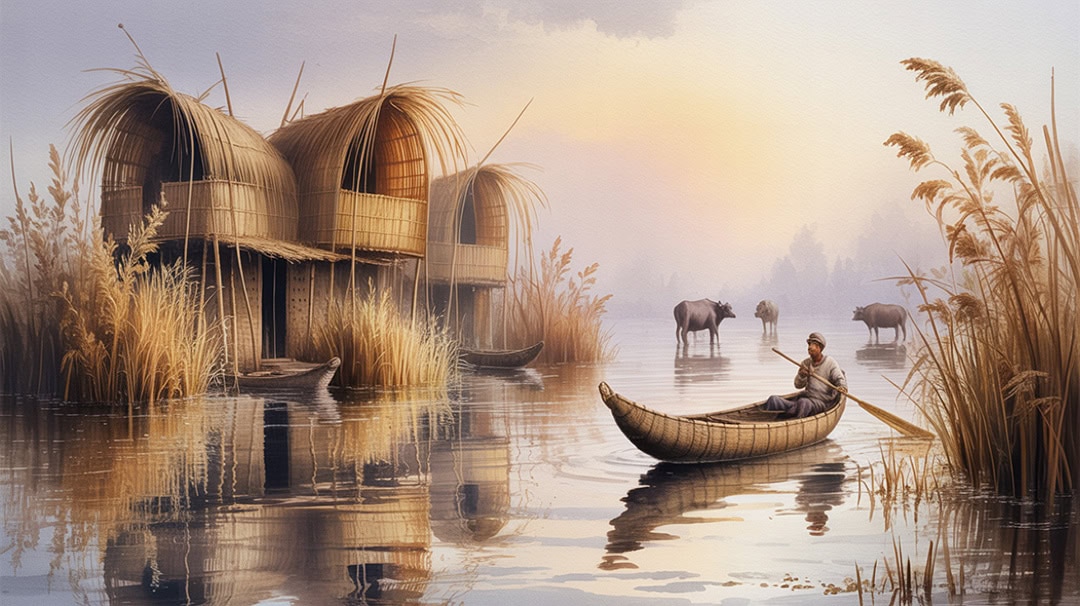
  • What use do the Madan people found for reed that grows around them?
  • How quickly can they build their houses?
  • What else can make from this plant?
  • How solid are these floating island?

part three

KEY LANGUAGE

Go through the flashcards below. Make sure you understand all the words and expressions.

VIDEO

Watch the third part of the video.

COMPREHENSION

Answer these questions. Refer to the information from the video.

  • What solution does Calcutta use to clean its water?
  • What is the added advantage of these ponds?
  • How long does the purifying process take?
  • Where is this sytem being replicated to?

part four

KEY LANGUAGE

Go through the flashcards below. Make sure you understand all the words and expressions.

VIDEO

Watch the fourth part of the video.

COMPREHENSION

Answer these questions. Refer to the information from the video.

  • What does “Ganvie” mean?
  • What did the Tofinu tribe build?
  • What can you find on the square of this unusual city?
  • How important is this place for the people that live around this lake?
  • How were some parts of Australia’s forests saved from the raging fire?
  • What does she find fascinating about these technologies?
  • What is Julia imploring us to do?

POLL

Cast your vote in the poll.

Coming Soon
Julia Watson mentions some locations in her speech. Where would you like to go, if you could visit one of them?
Total Votes : 1
w

DISCUSSION

DIALOGUE

Alita and Pete are standing near a living root bridge in a lush forest in India. The sound of rushing water fills the air as they admire the structure.

Read or role-play their dialogue.

Alita:
Wow, Pete, this bridge is unbelievable! It looks like something out of a fantasy movie — but it’s real and alive!

Pete:
I know! The idea that people here trained the roots of trees to grow into bridges over rivers — that’s just mind-blowing. It’s the perfect example of using nature instead of fighting against it.

Alita:
Exactly. It makes me think of other ancient technologies that worked with the environment. For example, the reed islands in Iraq. The Madan people still build their floating homes from plants that grow around them.

Pete:
Oh, I saw that too! It’s amazing how sustainable it is — no waste, no pollution, and everything can return to nature. I think we could learn a lot from them about resilience and adaptation.

Alita:
Totally. And don’t forget about the water-purifying ponds in Kolkata. They clean the city’s wastewater naturally. It’s incredible that something so simple can be so effective.

Pete:
It really shows that sometimes the smartest innovations aren’t new at all — they’re just rediscovered ancient wisdom.

Alita:
Maybe that’s the real message of this lesson: to move forward, we first need to look back.

OVER TO YOU

Discuss these questions. Refer to the topic of the lesson and your own experience.

BulletWhich example of ancient technology from the lesson impressed you the most? Why do you think it has survived until today?
BulletIn what ways can modern engineers or architects learn from ancient solutions like living root bridges or floating villages?
BulletDo you think modern society relies too much on technology instead of working with nature? Can you give an example?
BulletIf your city faced frequent flooding or drought, what traditional or nature-based ideas could help people adapt?
BulletWhy do you think the idea of “resilience” is so important when we talk about the future of our planet? How can individuals be more resilient in their daily lives?

lesson glossary

How to build a resilient future using ancient wisdom

The best place to be a woman?

The best place to be a woman?

Sorry, but lessons on The Blue Tree work only on a computer or a tablet.

Bardzo mi przykro, ale lekcje na platformie The Blue Tree działają jedynie na komputerze lub tablecie.

Do zobaczenia na większym ekranie 🙂

Zespół The Blue Tree

The best place to be a woman?
Learn more words

THE BLUE TREE

Man & Society

CEF B1

CEFR B2

Upper
Intermediate

warm up

Answer the questions below. Then listen to the model answers and think about how you could improve yours.

Should men and women be paid equally for the same type of work?
TRANSCRIPT

Absolutely, men and women should be paid equally for the same type of work. It’s a matter of fairness and equality. If two people are doing the same job with the same level of skill, experience, and responsibility, there’s no reason why their gender should affect their pay. Equal pay ensures that everyone gets what they deserve based on their work, not on outdated biases.

TRANSCRIPT

This is still an issue in many countries because of deep-rooted cultural norms and stereotypes. For years, men were seen as the primary breadwinners, and women’s work was often undervalued, especially in jobs traditionally held by women. Even today, many industries still reflect these old ideas. Plus, unconscious bias plays a role, with employers sometimes unknowingly favoring men when it comes to promotions and salaries.

What do you think governments should do to tackle this problem?
TRANSCRIPT

Governments should introduce stronger policies that enforce transparency in pay, like Iceland has done. Pay gap legislation is a good start, but governments also need to promote gender-neutral education and shared parental leave, so men and women both have opportunities to contribute at home and at work. It’s also important to raise awareness and address unconscious biases through education and workplace training.

part one

KEY LANGUAGE

Go through the flashcards below. Make sure you understand all the words and expressions.

VIDEO

Watch the first part of the video.

COMPREHENSION

Answer these questions. Refer to the information from the video.

  • What are the three areas of inequality between men and women?
  • Which country is bridging these gaps successfully?
  • What is their secret?
  • How are kindergartens organised on Iceland?
  • What do these special schools aim at?
  • What do they teach girls and boys?
  • Does this bring positive results?

part two

KEY LANGUAGE

Go through the flashcards below. Make sure you understand all the words and expressions.

VIDEO

Watch the second part of the video.

COMPREHENSION

Answer these questions. Refer to the information from the video.

  • What are men encouraged to do in Iceland?
  • What is a Daddy Quota and how does it work?
  • Do other countries have a similar scheme?
  • How is this creating more equal field on the labour market?

part three

KEY LANGUAGE

Go through the flashcards below. Make sure you understand all the words and expressions.

VIDEO

Watch the third part of the video.

COMPREHENSION

Answer these questions. Refer to the information from the video.

  • What legislation was passed in Iceland?
  • What do companies have to prove from now on?
  • How does this pay calculator work?
  • What did the featured company find out?

POLL

Cast your vote in the poll.

Coming Soon
Is gender inequality a serious issue?
Total Votes : 9

lesson glossary

The best place to be a woman

COMMENTS

How do you feel the issue of gender inequality should be fixed?