How to Disagree Without Being Divisive

How to Disagree Without Being Divisive

Sorry, but lessons on The Blue Tree work only on a computer or a tablet.

Bardzo mi przykro, ale lekcje na platformie The Blue Tree działają jedynie na komputerze lub tablecie.

Do zobaczenia na większym ekranie 🙂

Zespół The Blue Tree

How to Disagree Without Being Divisive
Learn more words

THE BLUE TREE

Better
Communicator

CEF B1

CEFR B2

Upper
Intermediate

Practise speaking by describing this image

warm up

Answer the questions below. Then listen to the sample answers and report back on what you’ve heard.

Do you usually agree or disagree with your workmates?
TRANSCRIPT

I think it depends on the situation. Most of the time, I tend to agree with my workmates because we’re usually aligned on the same goals. But when I do disagree, I try to focus on the facts and the bigger picture. It’s not about being right, but about reaching the best outcome for everyone involved.

What’s your strategy for expressing opposing opinions?
TRANSCRIPT

My strategy when expressing a different opinion is to be respectful and open. I start by acknowledging the other person’s point of view before sharing mine. Something like, ‘I see where you’re coming from, but have you considered…’ That way, it doesn’t feel like I’m shutting them down, but rather opening up the conversation for both sides.

How can we help people see our point of view?
TRANSCRIPT

Helping people see your point of view can be tricky, but I think it’s all about listening and understanding first. If you show genuine interest in their perspective, they’ll be more open to hearing yours. Asking questions to explore their reasoning, and then presenting your ideas with evidence or examples, can bridge the gap between differing opinions.

LISTENING

Listen to the audio. What is the main message of this HBR Management Tip?

reading

Read the article below. Check the meaning of some difficult words by moving your mouse over them.

How to Disagree Without Being Divisive

Many of us try to avoid conversations with those who have a sharply different point of view, or we try to convince them that they’re wrong. Neither approach is very productive. It’s possible to have healthy disagreements by employing a few tactics. Start by acknowledging the other person’s perspective, whether you agree with it or not. Say something like, “I understand where you’re coming from,” or, “Thank you for sharing your position,” before you state your point of view. Also, demonstrate 1. humility. While confidence is important in making persuasive arguments, too much of it can be 2. abrasive and even offensive. And be sure to phrase your argument in positive terms. For instance, you could say something like, “Let’s consider the possible benefits of having fewer people working on the marketing initiative,” rather than “We shouldn’t have any more people working on the marketing initiative.” Finally, if things start to get heated, 3. reiterate areas of agreement — even if they’re small and obvious. Something simple, such as “We both want this pandemic to end,” or “We agree that social distancing is presenting 4. unprecedented challenges,” can reestablish common ground. These strategies can help loosen 5. gridlock, 6. animosity, and 7. resentment and open the door for connection.

This tip is adapted from “Disagreement Doesn’t Have to Be Divisive,” by Francesca Gino

pokora, skromność

szorstki, zgryźliwy, opryskliwy

powtarzać coś wielokrotnie (w celu podkreślenia znaczenia lub wyjaśnienia)
bezprecedensowy, niespotykany
zator, korek
niechęć, uraza
gniew, niechęć, frustracja

COMPREHENSION

Answer the questions below. Try to throw some of the newly learned words into your answers.

  • How do many people approach others who disagree with them?
  • Is it possible to disagree without being divisive?
  • How can we acknowledge other person’s perspective?
  • How can we demonstrate humility?
  • How can we phrase our arguments in positive terms?
  • What can we do if things get heated?
  • What are the possible advantages of employing these tactics?

POLL

Cast your vote in the poll.

Which tactic(s) for disagreeing productively do you find most practical?

×

STUDY SECTION

LANGUAGE OF AGREEMENT AND DISAGREEMENT

Study and learn these ways of agreeing, disagreeing and showing reservations.

AGREE

  • Yes, I agree completely.
  • I’d go along with that.
  • Yes, you have a point there.
  • That’s exactly how I feel.
  • I entirely agree with you.

DISAGREE

  • That’s out of the question.
  • I’m afraid, I can’t agree with that.
  • That’s not how I see this.
  • I couldn’t agree less.
  • I think it misses the point.

DOUBTS

  • I agree up to a point.
  • I agree to some extent.
  • I think that’s going a bit too far.
  • I don’t think it’s as simple as that.
  • You could be right but, …

SAMPLE DIALOGUES

Complete these dialogues with the words from the expressions above.

Complete these dialogues with the words for agreement, disagreement and showing doubts.

Dialogue 1

Anna: We need to finalise the presentation for tomorrow. I think we should simplify the data section so the board doesn’t get lost in details.
Mark: Yes, you have a there. A cleaner structure would definitely make our message stronger.
Anna: Great. So let’s remove two of the charts and keep only what really supports the recommendation.
Mark: Absolutely. That’s how I feel.

Dialogue 2

Julia: I’m thinking of signing up for yoga classes again. I’ve been feeling stiff and tired lately.
Marek: I entirely agree you. Some regular stretching would really help your energy levels.
Julia: Exactly. And it’s also a good way to disconnect from work.
Marek: Yes, I’d go with that. Let me know which group you choose.

Dialogue 3

Ewa: I believe we should delay the product launch by at least two months. The marketing team still isn’t ready.
Tomasz: I’m I can’t agree with that. A delay would hurt our sales targets for the entire quarter.
Ewa: But launching unfinished materials might damage our brand.
Tomasz: That’s not I see this. I think we can polish the campaign while the product goes live.

Dialogue 4

Adam: I’m telling you, we don’t need a guide for this mountain trail. It looks easy enough.
Ola: I couldn’t agree . The weather can change quickly, and we’re not familiar with the area.
Adam: Come on, it’s just a short walk.
Ola: That’s of the question. Safety first. Let’s hire a guide and avoid unnecessary risks.

Dialogue 5

Kasia: We should switch entirely to remote work. It would cut costs and boost productivity.
Paweł: I agree to a point, but I don’t think it’s as simple as that. Some teams really need face-to-face collaboration.
Kasia: Maybe a hybrid model, then?
Paweł: Yes, that could work. You could be , but we’d need clear guidelines to avoid confusion.

Dialogue 6

Marta: I’m thinking of adopting two dogs at once. They won’t feel lonely, and it will be more fun.
Piotr: I agree to extent, but I think that’s going a bit too . Two puppies mean twice the training and twice the cost.
Marta: True… I didn’t think about the workload.
Piotr: Maybe start with one and see how it goes?

COMMENTS

What do you think of the ideas presented in this HBR Management Tip?

Share your views and experience here.

How to talk about forgetting and remembering

How to talk about forgetting and remembering

Sorry, but lessons on The Blue Tree work only on a computer or a tablet.

Bardzo mi przykro, ale lekcje na platformie The Blue Tree działają jedynie na komputerze lub tablecie.

Do zobaczenia na większym ekranie 🙂

Zespół The Blue Tree

Learn more words

THE BLUE TREE

Everyday English

CEF B1

CEFR B1

Intermediate

Practise speaking by describing this picture

warm up

Answer the questions below.

TRANSCRIPT

I think my memory is quite good for faces and events, but terrible for names. Sometimes I meet someone and remember exactly where we met, but not their name! I’d love to improve my memory, especially for small details. I guess training it like a muscle — with reading, learning, and practice — could really help.

TRANSCRIPT

When I need to remember something important, I always write it down. I use notes on my phone or sticky notes on my desk. I also repeat things several times in my head. It may sound old-fashioned, but it works! If something is emotional or funny, I usually remember it without any effort.

TRANSCRIPT

My most pleasant memory is from a summer trip to the seaside with my family. We spent the whole day swimming and watching the sunset. I can still hear the sound of the waves and smell the sea air. It was a simple day, but it felt perfect. I like remembering moments like that when life gets stressful.

part one

READING

Ingrid arrives late for her appointment with Inspector Gordon. How does he get from her the information that he needs?

Read or role play this dialogue. Notice the language of remembering and forgetting.

Inspector:Ingrid. You’re late. Did you forget our appointment?
Ingrid:I’m sorry. It must have slipped my mind.
Inspector:OK, Ingrid. We want you to tell us where Biggs is hiding.
Ingrid:I’m sorry. I seem to be drawing a blank.
Inspector:I see. Maybe this will help refresh your memory.
The inspector gives Ingrid fifty dollars.
Ingrid:Come to think of it, I do seem to remember something about a bridge.
Inspector:Which bridge?
Ingrid:The name escapes me.
The inspector hands Ingrid another fifty dollars.
Hmm … it’s on the tip of my tongue.
He gives her a hundred dollars.
Oh. yes! The Bay Bridge.
Inspector:One last thing, Ingrid. Is there a shipment coming in tonight?
Ingrid:Now that you mention it, I think there is, but for the life of me I can’t remember at what time.
Inspector:Maybe you need a little inspiration.
He hands her fifty dollars.
Ingrid:Wait. It’s coming to me now.
He gives her a hundred dollars.
That’s right! There’s a shipment coming in at 11:30 tonight.
Inspector:Thanks. Ingrid. You’ve been a big help. Remind me to take you out to dinner sometime.
Ingrid:Your treat?

KEY LANGUAGE

Study the language for talking about forgetting and remembering.

SPOKEN EXAMPLES

Study and role play these short dialogues and notice how these people used expressions for remembering and forgetting.

Sara: Did you send the report to the client?
Tom: Oh no, it completely slipped my mind!
Sara: Seriously, Tom? That’s the third time this week.
Tom: Wait… now that you mention it, I did prepare the file. I just forgot to hit “send”!

Liam: What was the name of that Italian place we went to last month?
Nora: Hmm… the name escapes me. Was it “Bella Something”?
Liam: It’s on the tip of my tongue! Wait — it just dawned on me! It was Bella Roma!
Nora: That’s it! Their tiramisu was unforgettable.

Teacher: Emma, what’s the answer to question three?
Emma: I studied it yesterday, but I’m drawing a blank right now.
Teacher: Don’t worry. Let me refresh your memory — it’s related to the Industrial Revolution.
Emma: Oh, right! It’s coming to me now!

Marta: Honey, did you water the plants today?
Jack: Uh… for the life of me I can’t remember.
Marta: Typical. You only remember when they’re dying!
Jack: Come to think of it, I did water them this morning — before my coffee.
Marta: Miracles do happen.

Zoe: Do you remember where we parked the car?
Ben: It went in one ear and out the other when you told me.
Zoe: Great. Now we’ll never find it.
Ben: Wait — suddenly, it all came back to me! It’s near the bakery.
Zoe: Thank goodness your brain finally decided to cooperate!

OVER TO YOU

Create your own short dialogue and role play it in class.

part two

MEMORY GAME

Match the Polish translation with the English version of the expression. Make sure you complete this game under 30 seconds.

MATCHING HALVES

Match the two halves of the expressions of remembering and forgetting. 

REMEMBER VS FORGET

Now, organize the expressions into two categories: forgetting and remembering.

PARAPHRASE IT

Decide how else you could express the ideas in this exercise. Choose one option for each sentence from the drop down list.

If you get more than 60%, you will receive a beautiful certificate.


Let's practise the language of forgetting and remembering a bit more, shall we?

1.

"To help someone remember."

2.

"I am very close to remembering and saying something."

3.

"Right now I am remembering."

4.

"It is difficult for me to remember the name."

5.

"I'm trying very hard to remember, but it's not working."

6.

"I now remember!"

7.

"To forget to do something."


Well done! You're almost there!

8.

"My memory right now is failing me completely."

9.

"I would not have thought of it otherwise, but what you have just said has made me remember."

10.

"At first I did not remember, but after some more thought, now I do"

POLL

Answer the question in the poll.

Which expression for forgetting and remembering do you like the most?

×
w

DISCUSSION

Dialogue: “A Battle of Memories”

Read or role play this dialogue between Alita and Pete.

Alita: Pete, do you remember what we were supposed to discuss in class today?

Pete: Uh… give me a second. It’s on the tip of my tongue… Oh no, I’m drawing a blank.

Alita: Again? You really need a bigger hard drive in your head.

Pete: Hey, it’s not my fault! It just… slipped my mind.

Alita: Right. Like the meeting last week, the homework, and your mother’s birthday?

Pete: Exactly! Wait… no, not exactly! Come to think of it, I did remember my mum’s birthday! I just forgot to call her.

Alita: That’s even worse, Pete.

Pete: The name of this topic… what was it again? “How to talk about…” something?

Alita: Forgetting and remembering!

Pete: Ah yes, the story of my life. The name escapes me half the time.

Alita: (laughing) Don’t worry. Can I refresh your memory? You were supposed to bring flashcards for this lesson.

Pete: Oh no! It completely slipped my mind!

Alita: Typical. But at least now you can remember how to forget in perfect English!

OVER TO YOU

Discuss the questions below.

CONTRIBUTE

Choose a question and share your views and experience below.

  • How can we improve our memory?
  • Why do we remember some stuff, but completely forget other things?
  • Have you ever forgotten anything important?
  • What’s your system of remembering important information?
How to Give Advice

How to Give Advice

Learn more words

THE BLUE TREE

Better
Communicator

CEF B1

CEFR B2

Upper
Intermediate

warm up

  • Are you good at giving people advice?
  • Do you like when somebody gives you unsolicited advice?
  • What can we do to help others follow our advice?

part one

key language

watch the video

COMPREHENSION

  • ⌚ 00:17 Are people generally good at giving advice?
  • ⌚ 00:56 What happens when we give advice in a bad way?
  • ⌚ 01:28 What are the three roles we need to consider when we give advice?
  • ⌚ 02:20 What is the first question we need to answer before we give advice to someone?
  • ⌚ 02:46 What should we do when someone needs social support?

part two

key language

watch the video

COMPREHENSION

  • ⌚ 03:39 What is the second question you should ask yourself before you offer advice to someone?
  • ⌚ 03:57 What is autonomy?
  • ⌚ 04:08 How do people with high autonomy react when we give them advice?
  • ⌚ 04:25 What is our role when someone is a high autonomy person?
  • ⌚ 04:39 What does it mean to be an aide?
  • ⌚ 05:35 What is a ‘boomerang effect”?

part three

key language

watch the video

COMPREHENSION

  • ⌚ 06:33 When can we become an advisor to someone?
  • ⌚ 07:40 What kind of advice can you offer to someone who is low in autonomy?
  • ⌚ 08:54 How can we tell if someone needs a friend, an aide or an adviser?

POLL

Which role is the most difficult when you offer someone advice?

×

lesson glossary

COMMENTS

How do you feel about Al’s lecture? Is this idea of a friend/aide/adviser practical? What is your experience with offering advice?

How to Give Advice with Al Pittampalli

How to Give Advice with Al Pittampalli

Sorry, but lessons on The Blue Tree work only on a computer or a tablet.

Bardzo mi przykro, ale lekcje na platformie The Blue Tree działają jedynie na komputerze lub tablecie.

Do zobaczenia na większym ekranie 🙂

Zespół The Blue Tree

How to Give Advice with Al Pittampalli
Learn more words

THE BLUE TREE

Better
Communicator

CEF B1

CEFR B2

Upper
Intermediate

warm up

Answer the questions below. Then listen to the model answers and think about how you could improve yours.

TRANSCRIPT

I think I’m fairly good at giving advice, but it really depends on the situation. I always try to listen carefully before saying anything because I’ve realized that people don’t always need direct advice—sometimes they just want someone to listen. If I feel like they truly want my opinion, I give it in a way that supports their decision-making, rather than just telling them what to do.

Do you like when somebody gives you unsolicited advice?
TRANSCRIPT

I’m not a big fan of unsolicited advice, to be honest. It can feel like the person giving it assumes they know more about my situation than I do. It’s much better when people ask if I want their input first. Then, I’m more open to considering their advice because I feel like I have the choice in whether or not to accept it.

What can we do to help others follow our advice?
TRANSCRIPT

To help others follow our advice, I think we need to frame it in a way that resonates with them. It’s about understanding what matters most to the person and aligning the advice with their goals or values. Also, giving them options rather than pushing one solution makes it easier for them to feel like they’re still in control of the decision.

part one

KEY LANGUAGE

Go through the flashcards below. Make sure you understand all the words and expressions.

VIDEO

Watch the first part of the video.

COMPREHENSION

Answer these questions. Refer to the information from the video.

  • ⌚ 00:17 Are people generally good at giving advice?
  • ⌚ 00:56 What happens when we give advice in a bad way?
  • ⌚ 01:28 What are the three roles we need to consider when we give advice?
  • ⌚ 02:20 What is the first question we need to answer before we give advice to someone?
  • ⌚ 02:46 What should we do when someone needs social support?

part two

KEY LANGUAGE

Go through the flashcards below. Make sure you understand all the words and expressions.

VIDEO

Watch the second part of the video.

COMPREHENSION

Answer these questions. Refer to the information from the video.

  • ⌚ 03:39 What is the second question you should ask yourself before you offer advice to someone?
  • ⌚ 03:57 What is autonomy?
  • ⌚ 04:08 How do people with high autonomy react when we give them advice?
  • ⌚ 04:25 What is our role when someone is a high autonomy person?
  • ⌚ 04:39 What does it mean to be an aide?
  • ⌚ 05:35 What is a ‘boomerang effect”?

part three

KEY LANGUAGE

Go through the flashcards below. Make sure you understand all the words and expressions.

VIDEO

Watch the third part of the video.

COMPREHENSION

Answer these questions. Refer to the information from the video.

  • ⌚ 06:33 When can we become an advisor to someone?
  • ⌚ 07:40 What kind of advice can you offer to someone who is low in autonomy?
  • ⌚ 08:54 How can we tell if someone needs a friend, an aide or an adviser?

POLL

Cast your vote in the poll.

Which role is the most difficult when you offer someone advice?

×
w

DISCUSSION

Dialogue

Read or role play this conversation.

Pete: I watched this talk today about giving advice. The speaker, Al Pittampalli, said there are three roles: a friend, an aide, and an adviser. It made me think I often choose the wrong one.

Alita: What do you mean?

Pete: When Sarah complained about her job, I immediately gave her advice—update her CV, change companies, network more. But she only got more frustrated.

Alita: Because maybe she didn’t want advice—just support.

Pete: Exactly. He says we should first ask: Does this person need support? and How independent are they? Sarah is very independent, so I should have been an aide, not an adviser.

Alita: Meaning?

Pete: Instead of telling her what to do, I should have asked questions like, “What options do you see?”

Alita: That reminds me of my sister during her divorce. My mum gave her constant advice, and my sister stopped calling. Too much pressure.

Pete: That’s the “boomerang effect.” With high-autonomy people, unwanted advice can push them away.

Alita: But sometimes advice is necessary—like when someone really doesn’t know what to do.

Pete: Right. Then you become an adviser. Like when Tom asked me about fixing his car—he had no idea what he was doing.

Alita: So sometimes people need a friend, sometimes an aide, and sometimes an adviser.

Pete: Exactly. And the hardest one is being the aide—because it’s easier to tell than to ask.

Alita: I think I’ll try this with Emma and her college stress. I always jump into solution mode.

Pete: And she’ll probably tell you to let her handle it.

Alita: Which will tell me everything about her autonomy level.

Pete: Sometimes the best advice is no advice at all.

OVER TO YOU

Discuss these questions.

BulletDo you agree with Pete that Al’s system is practical? Why or why not?
BulletCan you think of a time when you gave advice that wasn’t well received? What role were you trying to play, and what role might have been more appropriate?
BulletAlita raises a good point about cultural differences. How might advice-giving vary across different cultures or family backgrounds?
BulletWhen, if ever, do you think it’s appropriate to give unsolicited advice, even to someone with high autonomy?
BulletPete suggests that being an “aide” is the most difficult role. Do you agree? Which role do you find most challenging?

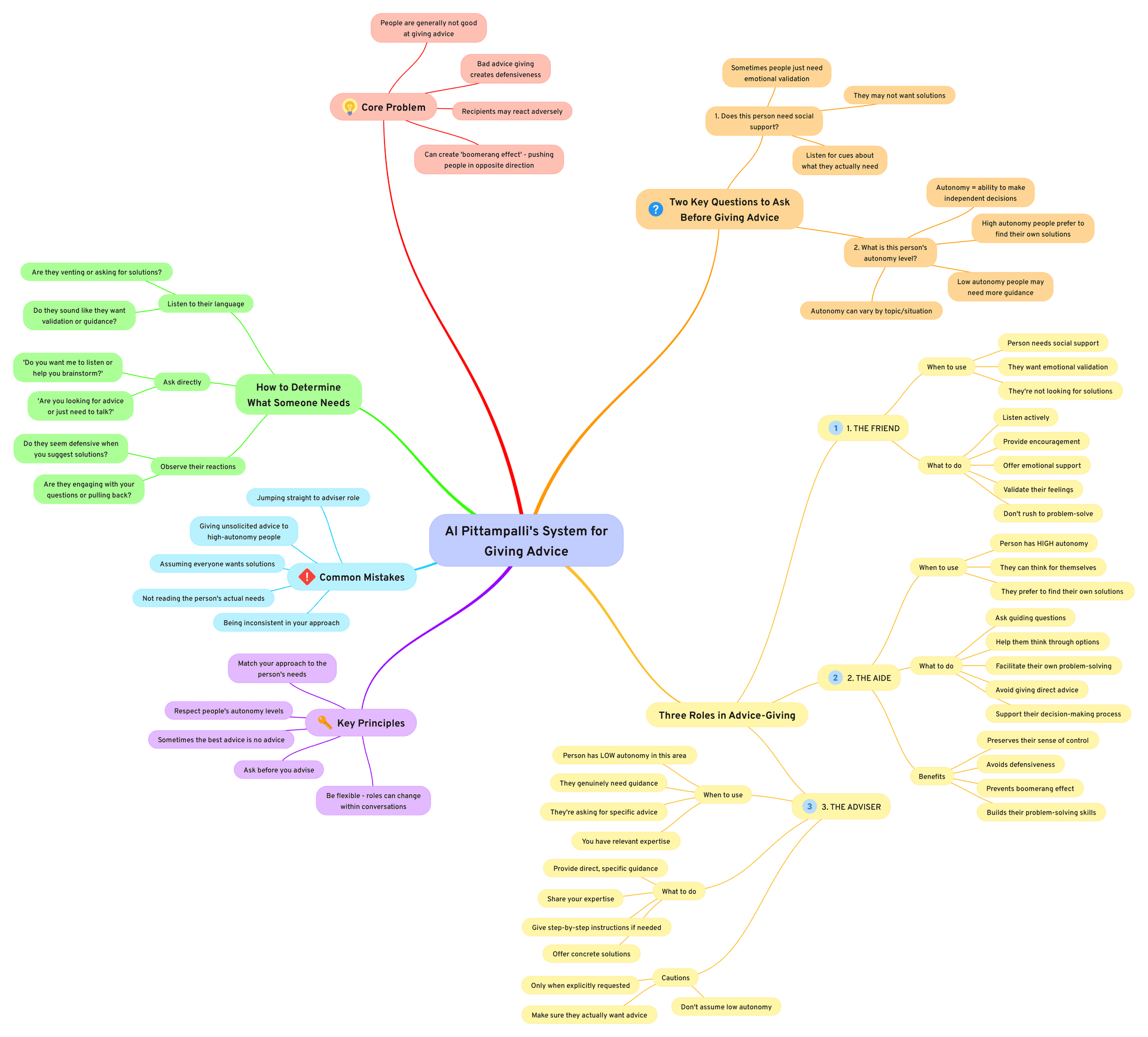
MIND-MAP

Use the mind-map below to have a more in-depth conversation about this topic.

Be respectful to your co-workers

lesson glossary

COMMENTS

How do you feel about Al’s lecture? Is this idea of a friend/aide/adviser practical? What is your experience with offering advice?

Would you like to be famous

Would you like to be famous

Sorry, but lessons on The Blue Tree work only on a computer or a tablet.

Bardzo mi przykro, ale lekcje na platformie The Blue Tree działają jedynie na komputerze lub tablecie.

Do zobaczenia na większym ekranie 🙂

Zespół The Blue Tree

Would you like to be famous
Learn more words

THE BLUE TREE

Opinions

CEF B1

CEFR B1

Intermediate

warm up

Answer the questions below.

  • Would you like to be famous? Explain your answer.
  • What are the pros and cons of being famous?
  • Does being famous guarantee a happy life?

key language

Go through the flashcards below. Memorize as many words and their translations as you can.

watch the video

Watch the video below.

COMPREHENSION

  • What question does Will’s niece ask him?
  • How does he feel about being famous?
  • Was it easy for him to become famous?
  • When did he first feel the impact of fame?
  • What are some of the downsides of being famous according to Will Smith?

POLL

Cast your vote in the poll.

What would you like to be famous for?

×

lesson glossary

CONTRIBUTE

What is it about fame that so many people want to have it? Why are people drawn to the idea of being famous? Is it really such a desireable thing? Express your views here.