An ER doctor on triaging your “crazy busy” life by Darria Long

An ER doctor on triaging your “crazy busy” life by Darria Long

An ER doctor on triaging your “crazy busy” life by Darria Long
Learn more words

THE BLUE TREE

Entertainment

CEF B1

CEFR B2

Upper
Intermediate

Practise speaking by describing this image

warm up

Answer the questions. Listen to the sample answers. 

What are some common signs or indicators that suggest you may be experiencing burnout from a hectic lifestyle?
TRANSCRIPT

For me, common signs of burnout are feeling constantly exhausted, struggling to stay productive, and noticing that I’m emotionally detached from things I usually enjoy. It often feels like I can’t fully disconnect from work, even during my downtime, which makes it tough to recharge. I’ve tried different time management methods, but staying consistent can be challenging when things get hectic. I’m still looking for practical ways to handle stress better and find a healthier balance.

In your opinion, what are the key challenges in balancing work, personal life, and self-care in today’s fast-paced world?
TRANSCRIPT

You know, for me, the biggest challenge is managing my time between work, relationships, and self-care. As a single guy focused on my career, I often find myself neglecting my social life without even realizing it. Plus, after long days at work, I usually don’t have the energy left to properly take care of myself. I’d really like to find a healthier balance so I’m not just surviving but actually enjoying all parts of my life.

Have you tried any time management techniques or strategies in the past? If so, how effective were they in helping you regain control over your busy schedule?
TRANSCRIPT

I’ve tried a few time-management techniques, especially ideas from Covey’s 7 Habits. Things like prioritizing tasks and focusing on what’s really important have helped me get better organized. But honestly, making these habits stick has been tricky, especially during busy periods at work. I sometimes slip back into old habits. Still, I see clear benefits whenever I apply these techniques, so I’m determined to keep trying.

part one

KEY LANGUAGE

Go through the flashcards below. Make sure you understand all the words and expressions.

VIDEO

Watch the first part of the video.

COMPREHENSION

Answer these questions. Refer to the information from the video.

  • ⌚ 0:20 Would you have risen your hand to the question: “Have you ever used the phrase “Crazy Busy””?
  • ⌚ 0:34 Does Darria use this word in the ER?
  • ⌚ 1:11 How does the Crazy Mode diminish our capability of handling the ‘busy’?
  • ⌚ 1:37 What does the research show about our ability to react to a stressful situation?
  • ⌚ 1:48 What does Darria contrast the “Crazy Mode’ with?
  • ⌚ 2:19 What does being in the “Ready Mode” mean in general?

part two

KEY LANGUAGE

Go through the flashcards below. Make sure you understand all the words and expressions.

VIDEO

Watch the second part of the video.

COMPREHENSION

Answer these questions. Refer to the information from the video.

  • ⌚ 2:35 What is the first step to go from Crazy Mode to Ready Mode?
  • ⌚ 2:50 What does it mean to triage? 
  • ⌚ 2:58 What does the work of Dr. Robert Sapolsky show?
  • ⌚ 3:15 What are the colours of triage? What do they mean?
  • ⌚ 3:34 What is part of the problem with Crazy Mode?
  • ⌚ 4:11 How does noise make triaging more difficult?

part three

KEY LANGUAGE

Go through the flashcards below. Make sure you understand all the words and expressions.

VIDEO

Watch the third part of the video.

COMPREHENSION

Answer these questions. Refer to the information from the video.

  • ⌚ 5:19 How does Darria approach the green tasks?
  • ⌚ 5:34 What does the black colour mean in triage?
  • ⌚ 5:51 What are black tasks in our lives?
  • ⌚ 6:12 What is the next step in moving from Crazy Mode to Ready Mode?
  • ⌚ 6:28 What does science tell us about the relationship between a number of choices and our decisions?
  • ⌚ 6:40 What is the second step about?
  • ⌚ 7:39 How does planning, autonomating, collocating, and decreasing temptations help with designing?

part four

KEY LANGUAGE

Go through the flashcards below. Make sure you understand all the words and expressions.

VIDEO

Watch the fourth part of the video.

COMPREHENSION

Answer these questions. Refer to the information from the video.

  • ⌚ 8:09 What is the third step of getting from Crazy Mode to Ready Mode?
  • ⌚ 8:44 What matters when we get scared?
  • ⌚ 8:59 How can being scared derail us?
  • ⌚ 9:18 How does Darria get our of her head?
  • ⌚ 9:42 What effect does compassion have on tunnel vision and negative internal monologue?

part five

KEY LANGUAGE

Go through the flashcards below. Make sure you understand all the words and expressions.

VIDEO

Watch the fifth part of the video.

COMPREHENSION

Answer these questions. Refer to the information from the video.

  • ⌚ 11:04 How did the other patients react when Darria helped deliver a baby?
  • ⌚ 11:13 What happens when you go from Crazy Mode into Ready Mode?
  • ⌚ 11:29 What does Darria encourage us to do?
w

DISCUSSION

Answer the questions below. Try to throw some newly learned words and phrases.

BulletHave you ever been in “crazy busy mode”? How did it affect you at work or at home?
BulletCan you think of a time when prioritizing tasks better would have helped you?
BulletHow do you manage daily decisions, and where could you simplify things?
BulletWhen could focusing on others instead of yourself help you make better choices?
BulletHow could you use “ready mode” in your life to face busy times with more confidence?

POLL

Cast your vote in the poll below. How does your answer compare with the other respondents?

Which part of Darria Long's advice on how to get into a Ready Mode do you find the most practical?

×

lesson glossary

COMMENTS

Have you got your own strategies for dealing with Crazy Mode?

Share your views and experience here.

5 questions to guide your career choices

5 questions to guide your career choices

Sorry, but lessons on The Blue Tree work only on a computer or a tablet.

Bardzo mi przykro, ale lekcje na platformie The Blue Tree działają jedynie na komputerze lub tablecie.

Do zobaczenia na większym ekranie 🙂

Zespół The Blue Tree

5 questions to guide your career choices
Learn more words

THE BLUE TREE

Personal
Productivity

CEF B1

CEFR B2

Upper
Intermediate

Practise speaking by describing this image

warm up

WARM UP QUESTIONS

Answer the questions below. Listen the other people’s answers before you answer yourself.

How satisfied are you with the way your career is developing?
TRANSCRIPT

I’m somewhat satisfied with my career so far. I really enjoy working in the bank’s marketing team, where I can be creative and use my people skills. However, I do wish I could be more focused and disciplined to achieve my long-term goals. There’s definitely more I could be doing to grow and develop, and that’s something I’m working on.

What do you like the most/the least about your current position?
TRANSCRIPT

What I like the most about my job in HR is the ability to combine my passion for psychology with fostering positive relationships at work. I get to help create a supportive environment, which is really fulfilling. The least favorite part might be the occasional challenges that come with handling conflicts or difficult situations, but I try to approach them with a calm and composed mindset.

If you could have any job in the world, what would you choose and why?
TRANSCRIPT

If I could have any job in the world, I’d probably choose to be an environmental technologist or work on projects that combine technology and sustainability. I’m passionate about problem-solving and innovation, and I care deeply about environmental conservation. Working on something that helps protect our planet while using my skills in tech would be ideal.

Alita and Pete

WHAT DO YOU THINK

Alita and Pete are discussing the questions above. Read (role play) their dialogue. Check out all the language you might not know.

Alita: “Yo Pete, how’s it going? I’ve been thinking a lot about my career lately, and I’m not sure if I’m in the right place.”

Pete: “What’s been on your mind, Alita? Are you having doubts about your current job?”

Alita: “Yeah, I just feel like I’m not challenged enough in my role. And I don’t really like some of the tasks I have to do. But I don’t know what else I could see myself doing.”

Pete: “I hear ya. It can be tough to figure out what you want to do with your career. But let me ask you, what do you like the most about your job?”

Alita: “I love the people I work with. They’re all really cool and we get along great. But that’s about it, to be honest.”

Pete: “Well, that’s something. And what about the least? What don’t you like about your job?”

Alita: “I just feel like I’m not learning anything new, and I’m not contributing to the company in a meaningful way. It’s just a dead-end job, you know?”

Pete: “I understand where you’re coming from, but don’t give up hope just yet. If you could have any job in the world, what would you choose and why?”

Alita: “I’ve always been interested in sustainability and the environment. So if I could have any job, I’d want to work in a company that is making a real impact in that area. I want to feel like I’m making a difference.”

Pete: “That’s great, Alita. It’s important to find a job that aligns with your values and passions. Keep exploring and don’t be afraid to take risks. You’ll find the right path for you.”

key language

Check the words and expressions in this Quizlet. Do you know them all? Do you know how to pronounce them?

LISTENING

Listen to the recording of the article. What is the main idea behind it?

reading

Read the article you have just heard. Play the recording again and follow the speaker when you read. 

5 Questions to Guide Your Career Choices

Careers evolve and unfold over many years — even decades. So how can you be sure that you’re on the right path and you’ll achieve your definition of success? To take control of your future, step back and reflect on your present. Ask yourself the following five questions:

How fulfilled do I feel? This is often about whether you’re able to express your values at work. Identify what’s most important to you and then consider, “On a scale of 1-10, where 10 is the ideal, how well am I able to express this value in my job?”

How am I learning and growing? To what extent are you building competence or expertise in your sector or function? What competencies do you want to develop further in the year ahead?

Am I headed toward a long-term goal? While everyone hates the question “Where do you want to be in 10 years?” stepping back to figure out a broad vision can help you pursue opportunities more proactively, versus reactively. You might ask yourself “What do I want in my (work) life in three to five years?” which is a more manageable chunk of time.

What seeds can I plant today that will benefit me tomorrow? Career success is often the result of the cumulative effects of small, regular actions.

What relationships do I need to build to help me realize my vision? You can’t do it alone, no matter what the “it” is. Given your goals, who are the people who can help you get there?

This tip is adapted from “Ask These 5 Questions to Decide Your Next Career Move,” by Rebecca Zucker

poświęcają

ulec (np. chorobie, obrażeniom)

niezauważalny, niedostrzegalny

uzupełnić

obietnica, postanowienie

trzymać się

COMPREHENSION

Answer the questions below. Refer to the information from the text and your own experience and opinions. 

  • How can someone be sure they are on the right career path?
  • What is the importance of expressing one’s values in a job?
  • Why is it important to consider building competence and expertise in one’s sector or function?
  • How can thinking about a long-term goal help in pursuing opportunities?
  • What is the significance of planting seeds for future career success?
  • Why are relationships important for realizing one’s career vision?
  • How does the author suggest someone should evaluate their level of fulfillment in their job?
  • How does the text suggest that one should approach setting short-term and long-term career goals?
  • What are the 5 questions that someone should ask themselves to guide their career choices?

PRACTICE

Practise some language for talking about being satisfied. 

Create some sentences with these words and idioms. How can you use them to describe your level of satisfaction?

Listen to the model answer provided by Pete. 

POLL

Cast your vote in this poll. 

Which of the five questions from this lesson do you find the most interesting and insightful?
6 votes

×

COMMENTS

How satisfied are you at work? 

Unlimited memory by Kevin Horsley

Unlimited memory by Kevin Horsley

Sorry, but lessons on The Blue Tree work only on a computer or a tablet.

Bardzo mi przykro, ale lekcje na platformie The Blue Tree działają jedynie na komputerze lub tablecie.

Do zobaczenia na większym ekranie 🙂

Zespół The Blue Tree

Unlimited memory by Kevin Horsley
Learn more words

THE BLUE TREE

Personal
Productivity

CEF B1

CEFR B1

Intermediate

Practise speaking by describing this image

warm up

Answer the questions below. After each question there is an audio with a model answer Listen to it and use it to improve yours. Remember: never be content with your first attempt 🙂

Is memory an innate talent or a creative skill?
TRANSCRIPT

I believe memory is more of a creative skill. Just like how I learned to be creative in my marketing job, we can train our memory by forming new habits. The idea that memory isn’t something you’re just born with is actually pretty liberating. It means that with practice, anyone can improve their memory, just like Kevin Horsley talks about in his book. It’s all about creating vivid images in your mind and associating them with places you know well.

TRANSCRIPT

Improving memory, in my view, is similar to cultivating any other skill—it requires consistent practice and the right techniques. From what I’ve gathered, two methods stand out: first, the ‘seeing’ method, where you create strong mental images of what you want to remember. Second, the ‘placing’ method, where you link these images to specific places you’re familiar with. It’s almost like building a mental map, and each piece of information has its own spot on that map. With time, this approach can significantly enhance how well we remember things.

What are the benefits of having good memory?
TRANSCRIPT

Having a good memory is like having a superpower in your everyday life! It can make everything from work tasks to social interactions smoother and more enjoyable. For me, as a graphic designer, remembering client preferences or specific design details without having to constantly look them up saves so much time and energy. Plus, it’s really helpful in keeping track of all the little things in life, like names, birthdays, and even creative ideas that pop into my head. It just makes life flow better.

part one

INTRODUCTION

What is this lesson about. Read and listen to the introduction.

Welcome to our lesson on memory improvement! Today we’re going to be discussing some powerful techniques that you can use to boost your memory, based on the principles outlined in Kevin Horsley’s book “Ultimate Memory.” Whether you’re a student looking to improve your study habits, a professional looking to stay ahead in your field, or just someone who wants to keep your brain sharp, these techniques will help you do just that. You’ll learn about mnemonics, visualization, and other methods for remembering information more effectively. By the end of this lesson, you’ll have a solid understanding of how to improve your memory and be well on your way to achieving your goals. So, let’s get started!

KEY LANGUAGE

Go throught the flashcards below.

VIDEO

Watch the first part of the video.

COMPREHENSION

Answer the questions.

  • ⌚ 0:41 What do the examples of a lawyer, surgeon and a speaker mean?
  • ⌚ 0:47 How important is it to have good memory for our careers?
  • ⌚ 0:56 Is good memory an innate talent or a creative habit?

part two

KEY LANGUAGE

Go through the flashcards below. Make sure you understand all the words and expressions.

VIDEO

Watch the second part of the video.

COMPREHENSION

Answer these questions. Refer to the information from the video.

  • ⌚ 1:05 What does it mean that memory is ‘not something that happens to us’?
  • ⌚ 1:12 What’s the secret of having good memory?
  • ⌚ 1:23 What has Kevin Horsely achieved as regards improving his memory?
  • ⌚ 1:40 What are the two methods we will learn about in this lesson?

part three

KEY LANGUAGE

Go through the flashcards below. Make sure you understand all the words and expressions.

watch the video

VIDEO

Watch the third part of the video.

COMPREHENSION

COMPREHENSION

Answer these questions. Refer to the information from the video.

  • ⌚ 2:00 What does SEE stand for?
  • ⌚ 2:18 How can we use our senses to remember better?
  • ⌚ 2:28 What is the goal behind the ‘exaggerate’ step in SEE?
  • ⌚ 2:37 Does learning need to be serious?
  • ⌚ 2:46 How can we energize the information we want to remember?
  • ⌚ 3:25 How did Nathan use the SEE method in his studies?

part four

KEY LANGUAGE

Go through the flashcards below. Make sure you understand all the words and expressions.

VIDEO

Watch the fourth part of the video.

COMPREHENSION

Answer these questions. Refer to the information from the video.

  • ⌚ 3:46 How did he remember the relation between Dopamine and Cocaine?
  • ⌚ 4:06 What did he imagine to remember the connection between Anandamide & Marijuana?
  • ⌚ 4:25 Do you remember what Serotonin does and how it relates to Prozac?
  • ⌚ 4:51 What helped him remember Norepinethrine & Ritalin?
  • ⌚ 5:08 Do you remember what endorthins do?
  • ⌚ 5:21 What else helped him remember this information?

part five

KEY LANGUAGE

Go through the flashcards below. Make sure you understand all the words and expressions.

VIDEO

Watch the fifth part of the video.

COMPREHENSION

Answer these questions. Refer to the information from the video.

  • ⌚ 5:36 How can we remember a long list of items using the Placing method?
  • ⌚ 5:52 What is our mind good at?
  • ⌚ 6:40 What does it mean that “the journey is like the paper, and the images are like the ink?
  • ⌚ 6:56 What kind of places can we use to remember things better?
  • ⌚ 7:19 Will we ever run out of places in our mind to store new information?
  • ⌚ 7:33 Do you agree with Nathan, that “perfect memory is a skill, not a special gift”

POLL

Cast your vote in the poll below.

Which idea from this lesson on memory do you agree with?
3 votes

×
w

DISCUSSION

Discuss the questions below. 

  • How effective do you think the ideas from this lesson are in the context of remembeing things better?
  • Can you think of a specific time when you had to use a mnemonic device to remember something important? How did it work for you?
  • How do you think our emotions affect our ability to remember things? Give an example.
  • How do you think you can improve your memory?
    Can you think of a time when your memory failed you? What do you think caused the failure and how can it be prevented in the future?
  • How does the process of memorization differ for different types of information (e.g. facts, names, faces, etc.)?
  • How do you think technology has impacted our ability to remember things?

lesson glossary

COMMENTS

What do you think of the ideas presented in this lesson? Have you ever worked on improving your memory in any systemic way? Would you like to have better memory? How would having better memory help you in personal and professional life?

Share your views and experience here.

What we wear at -71°C in Yakutia

What we wear at -71°C in Yakutia

Sorry, but lessons on The Blue Tree work only on a computer or a tablet.

Bardzo mi przykro, ale lekcje na platformie The Blue Tree działają jedynie na komputerze lub tablecie.

Do zobaczenia na większym ekranie 🙂

Zespół The Blue Tree

What we wear at -71°C in Yakutia
Learn more words

THE BLUE TREE

Travel & Nature

CEF B1

CEFR B1

Intermediate

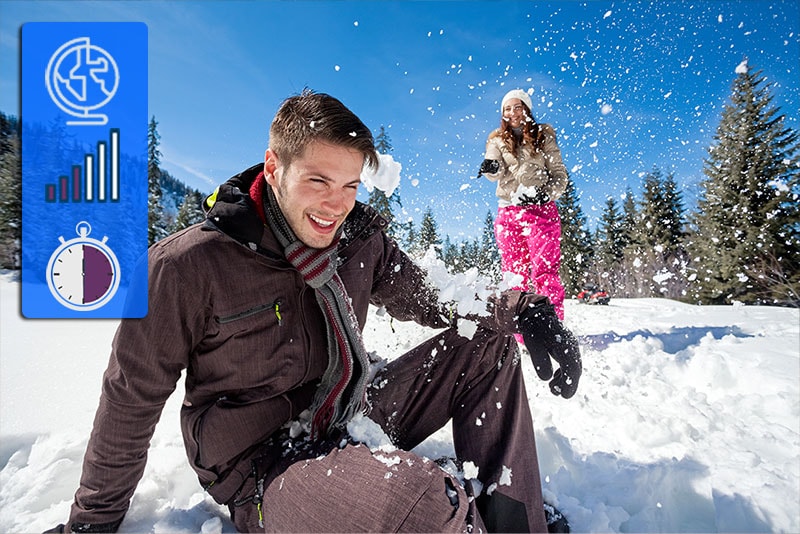
Practise speaking by describing this image

warm up

Answer the questions below.

TRANSCRIPT

I love autumn the most. The air feels fresh and crisp, and the colours of the trees are amazing. I also enjoy wearing cozy clothes, drinking warm tea, and reading when it gets dark early. For me, autumn is the most peaceful and inspiring season.

Why do people live in places which are so inhospitable for humans, like Yakutsk?
TRANSCRIPT

Well, I guess it’s a mix of history, culture, and family roots. People often stay where they were born because they feel connected to the land and the community. In places like Yakutsk, life may be hard, but people learn how to manage. They have their traditions, warm homes, and strong social ties. And sometimes, jobs in mining or other industries keep them there too.

Imagine you were given a choice: to live in the Sahara Desert or in Yakutsk. Which place would you choose? Why?
TRANSCRIPT

Hmm, tough choice! But I think I’d go for Yakutsk. I don’t mind the cold if I have the right clothes and a warm house. The extreme heat of the Sahara would be much harder for me. Also, I’ve always found snowy landscapes beautiful, and the way people survive in Siberia is really fascinating.

part one

KEY LANGUAGE

Go through the flashcards below. Make sure you understand all the words and expressions.

VIDEO

Watch the first part of the video.

COMPREHENSION

Answer these questions. Refer to the information from the video.

  • ⌚ 0:08 What is Yakutsk famous for?
  • ⌚ 0:30 What’s the first rule for keeping warm in cold weather?
  • ⌚ 0:40 Which part of the body is particularly prone to freezing in extreme cold?
  • ⌚ 0:56 What was special about the boots Dayana was wearing?
  • ⌚ 1:10 What two looks do women have in Yakutsk?
  • ⌚ 1:32 How do they protect their hands from frostbite?

part two

KEY LANGUAGE

Go through the same words once again. This time play a matching game. Try to get the shortest time possible, ideally somewhere in the region of 10 seconds.

VIDEO

Watch the second part of the video.

COMPREHENSION

Answer these questions. Refer to the information from the video.

  • ⌚ 1:49 Where did Dayana go?
  • ⌚ 3:09 What is the mean temperature in January?
  • ⌚ 3:24 Why is it a bad idea to wear glasses in such cold weather?
  • ⌚ 3:33 What happens to people when they stay outdoors in such extreme cold weather?
  • ⌚ 3:39 What is the longest time people can  stay outdoors when it’s -70C?
  • ⌚ 3:34 How do people get to work or school?
  • ⌚ 4:00 How do the drivers protect their vehicles?
  • ⌚ 4:08 What type of clothes is best for keeping them warm?

part three

Collocations are words that are often used together in a particular way. For example, we say “a cup of coffee” instead of “a coffee of cup.” It is important to learn collocations because they help us speak and write more naturally in a particular language.

Here are some more examples of collocations:

  • make a mistake” instead of “do a mistake”
  • have a conversation” instead of “have a talk”
  • do homework” instead of “make homework”

Learning collocations can help you sound more fluent and natural when you speak or write in a language, and it can also help you understand native speakers better.

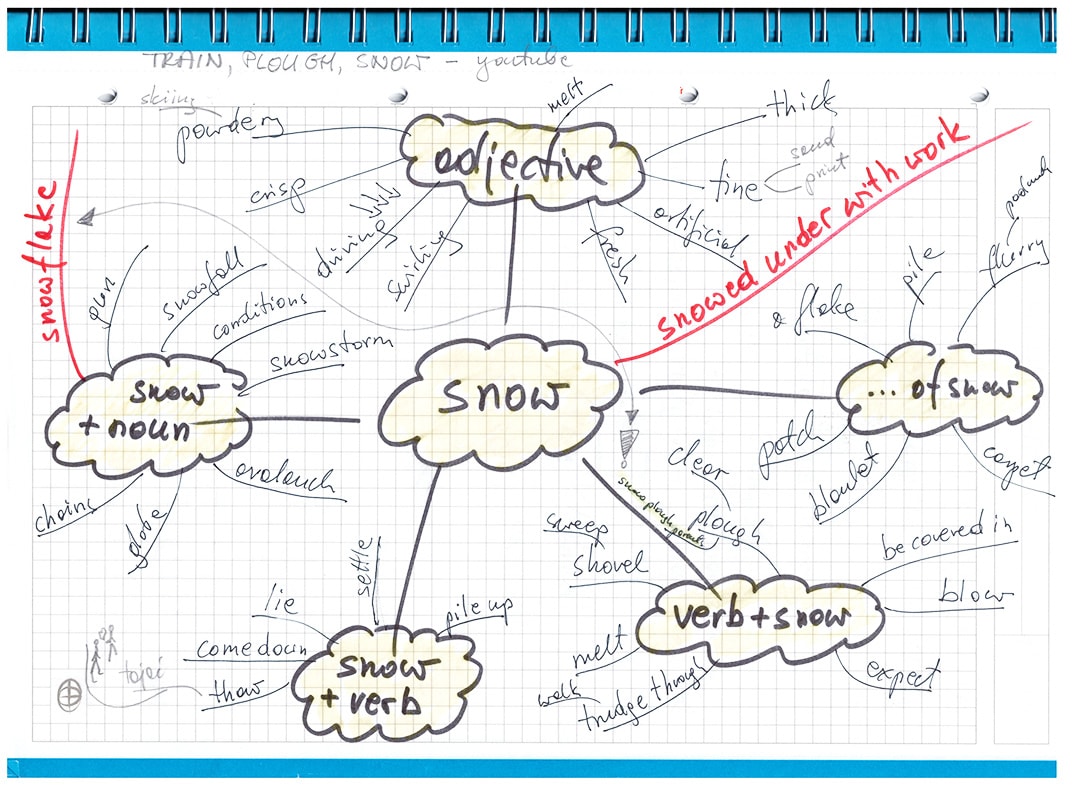
Study the entry from the Oxford Learner’s Dictionary (Collocations) about snow and do the exercises that follow. Your teacher will share their screen with you.

Create a mind-map similar to the one below. 

Complete the sentences in this Wordwall game with the most appropriate collocation. Check the dictionary or refer to your mind-map for help. 

Two friends (Joana) and (Greg) are meeting in the street. They haven’t seen each other for a long time. The weather is cold and snowy. They are talking about life using many idioms and collocations with the word ‘snow’.

Read this dialogue aloud with a pertner or your teacher. Do you understand what all these idioms and collocations mean in this context?

Joana: Hey Greg, long time no see! How have you been?

Greg: Hey Joana, I’ve been good. How about you?

Joana: I’ve been busy as a one-armed paperhanger.

Greg: Ha, that’s a new one. So what have you been up to?

Joana: Just trying to stay on top of things. How about you?

Greg: Same old, same old. Just trying to keep my head above water.

Joana: Yeah, it’s been a rough winter. I feel like I’ve been shoveling snow every day.

Greg: Tell me about it. It’s been snowing nonstop for weeks. I’m sick of the white stuff.

Joana: I know what you mean. I’m ready for spring to come and melt all this snow away.

Greg: Me too. Let’s hope for a warm thaw soon.

Now, create a similar dialogue. Make sure your characters use collocations and idioms connected with snow and cold weather. 

w

DISCUSSION

DIALOGUE

Alita and Pete are chatting over coffee after watching a documentary about Yakutia, one of the coldest inhabited places on Earth. Fascinated by how people survive there, they reflect on what it takes to live in such a harsh environment.

Read or role play their dialogue.

Alita: Can you believe people live in Yakutia, where the mean temperature in winter can be below -50°C?

Pete: I know, right? I’d probably get frostbite just by stepping outside. You really need to wear the right layers to survive there.

Alita: Absolutely. I was surprised to see how many of them wear fleece, down jackets, and even wadded pants. They must be incredibly insulated.

Pete: And let’s not forget the mittens. Your fingers would be the first to freeze! Did you see that woman with a coat made from reindeer and mink fur?

Alita: Yeah, I noticed the beaded patterns too—so beautiful and traditional. But it’s not just about looks. In that kind of cold, every detail is crucial.

Pete: For sure. I’d be so prone to complaining in that weather. I can’t even handle a Polish winter without a decent jacket!

Alita: Same here! I only have a rough idea of what -71°C must feel like. But the residents there seem so hardy. It’s impressive.

Pete: And did you notice how tired they looked after going outside? The cold must cause real fatigue. Even starting a vehicle is a challenge.

Alita: I read they sometimes tear off parts of their clothing when it gets stuck to the frozen metal. I can’t imagine dealing with that every day.

Pete: Honestly, I think I’ll stop complaining about icy mornings here. Compared to Yakutia, we’re living in a tropical paradise!

Alita: Haha, exactly. Still, it’s inspiring to see how humans adapt—even in the coldest corners of the world.

OVER TO YOU

Discuss these questions. Refer to the topic of the lesson and your own experience.

BulletDo you own a down jacket or other insulated clothing? How effective is it in winter?
BulletWhy do you think layers are important when dressing for extreme cold?
BulletWould you ever consider wearing reindeer or mink fur if you lived in a place like Yakutia?
BulletWhat’s your rough idea of how it feels to live in a place with temperatures below -50°C?
BulletWhat do you think makes the residents of Yakutia so hardy and resilient?

POLL

Cast your vote in the poll below.

Would you like to live in Yakutsk?
1 vote

×

lesson glossary

COMMENTS

What do you think of life in Yakutsk? Is this something you would like to experience yourself? Why do you think people live in places like that? Is there anything else they could do to keep warm?

Share your thoughts and ideas below.

Seven habits of highly effective people by Stephen Covey

Seven habits of highly effective people by Stephen Covey

Sorry, but lessons on The Blue Tree work only on a computer or a tablet.

Bardzo mi przykro, ale lekcje na platformie The Blue Tree działają jedynie na komputerze lub tablecie.

Do zobaczenia na większym ekranie 🙂

Zespół The Blue Tree

Seven habits of highly effective people by Stephen Covey
Learn more words

THE BLUE TREE

Personal
Productivity

CEF B1

CEFR B1

Intermediate

Practise speaking by describing this image

warm up

Answer the questions below.

What qualities should parents pass on to their kids to help them in adult life?
TRANSCRIPT

I think parents should teach their kids to be proactive and responsible. Growing up, my parents always encouraged me to take ownership of my actions and not wait for things to happen. They also stressed the importance of setting goals and thinking about the bigger picture, which is something I’m still working on. I believe those qualities—being proactive, setting clear goals, and staying focused—can really help kids when they become adults.

TRANSCRIPT

A decent person, to me, is someone who practices empathy and honesty. Someone who listens first and tries to understand others before speaking, like in Covey’s habit of ‘seek first to understand, then to be understood.’ It’s about being kind and fair in your actions and treating people with respect. Integrity is huge for me, too—it’s important to stick to your values, even when it’s hard.

What’s the most important lesson you have taken from your parents?
TRANSCRIPT

The most important lesson I’ve taken from my parents is to prioritize self-care and balance. My dad always told me to ‘sharpen the saw,’ even before I read about it in Covey’s book. Whether it’s taking care of your body, mind, or just spending time outdoors, I’ve learned that you need to recharge to stay effective. It’s something I try to apply not just in work, but in life in general.

part one

KEY LANGUAGE

Go through the flashcards below, and memorize as many words and their translations as you can.

video

Watch the first part of the video.

COMPREHENSION

Answer these questions. Refer to the information from the video.

  • ⌚ 00:20 What was his grandma’s favourite story?
  • ⌚ 00:32 What do reactive people focus on?
  • ⌚ 00:50 What’s the proactive people’s mindset?
  • ⌚ 01:10 What question do proactive entrepreneurs ask themselves?
  • ⌚ 01:29 What is the first habit of highly effective people?

part two

KEY LANGUAGE

Go through the flashcards below. Make sure you understand all the words and expressions.

VIDEO

Watch the second part of the video.

COMPREHENSION

Answer these questions. Refer to the information from the video.

  • ⌚ 01:44 What is the most powerful question you can ask yourself?
  • ⌚ 02:13 What will most of us have to do when we ask ourselves this question?
  • ⌚ 02:18 What is the second habit? 

part three

KEY LANGUAGE

Go through the flashcards below. Make sure you understand all the words and expressions.

VIDEO

Watch the third part of the video.

COMPREHENSION

COMPREHENSION

Answer these questions. Refer to the information from the video.

  • ⌚ 2:30 What are some of the things people say are the most important to them?
  • ⌚ 2:50 What is the disconnect about?
  • ⌚ 2:54 What is the third habit?

part four

KEY LANGUAGE

Go through the flashcards below. Make sure you understand all the words and expressions.

VIDEO

Watch the fourth part of the video.

COMPREHENSION

Answer these questions. Refer to the information from the video.

  • ⌚ 3:59 What is the first scenario about authors about?
  • ⌚ 3:42 What is the second scenario about? How is it different from the first one?
  • ⌚ 3:47 What is the fourth habit?
  • ⌚ 3:54 How do we need to stop thinking? 

part five

KEY LANGUAGE

Go through the flashcards below. Make sure you understand all the words and expressions.

VIDEO

Watch the fifth part of the video.

COMPREHENSION

Answer these questions. Refer to the information from the video.

  • ⌚ 4:08 What aren’t we going to hear from the creator of this video?
  • ⌚ 4:15 What is the most important question we should ask about such videos?
  • ⌚ 4:32 What is the fifth habit about?

part six

KEY LANGUAGE

Go through the flashcards below. Make sure you understand all the words and expressions.

VIDEO

Watch the sixth part of the video.

COMPREHENSION

Answer these questions. Refer to the information from the video.

  • ⌚ 4:45 What example can be used to illustrate synergy?
  • ⌚ 4:51 What does synergy mean?
  • ⌚ 4:55 Can we achieve synergy with anyone?
  • ⌚ 5:05 What is the benefit of looking for synergistic opportunities?
  • ⌚ 5:09 What is the sixth habit?

part seven

KEY LANGUAGE

Go through the flashcards below. Make sure you understand all the words and expressions.

VIDEO

Watch the seventh part of the video.

COMPREHENSION

Answer these questions. Refer to the information from the video.

  • ⌚ 5:22 What advice did a neighbour give to a guy who was cutting down a tree?
  • ⌚ 5:28 Why didn’t he want to sharpen the saw?
  • ⌚ 5:42 In what sense do some of us do something similar as shown in this story?
  • ⌚ 5:56 Why does he say that we have ‘the audacity to ask for tips on how to be effective’?
  • ⌚ 6:05 How do you understand the ‘floating bricks’ illustration?
  • ⌚ 6:08 What is the seventh habit of highly effective people by Stephen Covey?

POLL

Cast your vote in the poll below.

Which habit(s) do you think is/are the most practical? You can choose more than one.
6 votes

×
w

DISCUSSION

DIALOGUE

Read, or role-play, this dialogue between Alita and Pete.

Alita:
So, after going through the Seven Habits again, I realised how practical they actually are. They’re not big theories — they’re more like daily choices.

Pete:
Exactly. For me, Be proactive made the biggest difference at work. I used to wait for instructions or complain about things I couldn’t change. Once I focused on what I could influence, my job became much less frustrating.

Alita:
I had a similar experience. Being proactive helped me personally too. Instead of reacting emotionally, I started pausing and choosing my response — especially in difficult conversations.

Pete:
That links nicely to Seek first to understand. I used to jump straight into defending my point. Now I try to really listen first. It’s improved my relationships at work — fewer conflicts, more trust.

Alita:
Same here. And it’s helped at home as well. When I actually listen instead of preparing my reply, conversations become calmer and more meaningful.

Pete:
Another habit I rely on is Put first things first. Once I started planning my week around what’s important — not just urgent — I felt more in control. Less stress, better results.

Alita:
That one changed my work–life balance. I realised I was always busy, but not always effective. Prioritising helped me protect time for health and learning — which is basically Sharpen the saw.

Pete:
Yes! Sharpening the saw felt like a luxury at first. But investing time in rest and development actually made me more productive. Funny how that works.

Alita:
I also like Begin with the end in mind. Having a clear sense of what kind of person I want to be has guided my decisions — both professionally and personally.

Pete:
And when you combine that with Think win-win, teamwork becomes much easier. I stopped seeing success as a competition. Collaboration started paying off.

Alita:
That’s true. Once you stop trying to “win” every situation, you often gain much more in the long run.

Pete:
So in the end, the habits kind of build on each other. You don’t have to master all seven at once — but even applying one or two can change a lot.

Alita:
Exactly. They’re not about being perfect — just more conscious. And that already makes a huge difference.

discussion questions

Discuss these questions. Refer to the content of this lesson and your onw experience. 

BulletBeing proactive often means taking responsibility. Why do some people avoid this?
(Habit 1: Be proactive)
BulletHaving a clear goal can guide decisions. Why do many people struggle to define one?
(Habit 2: Begin with the end in mind)
BulletDaily life is full of urgent tasks. What happens when important things are always postponed?
(Habit 3: Put first things first)
BulletSuccess is often seen as competition. Why is a win–win approach difficult to accept?
(Habit 4: Think win–win)
BulletListening is essential for understanding. What usually prevents people from listening well?
(Habit 5: Seek first to understand)
BulletTeamwork can produce better results than individual work. Why doesn’t this always happen?
(Habit 6: Synergize)
BulletRest and renewal improve effectiveness. Why do many people treat them as a waste of time?
(Habit 7: Sharpen the saw)

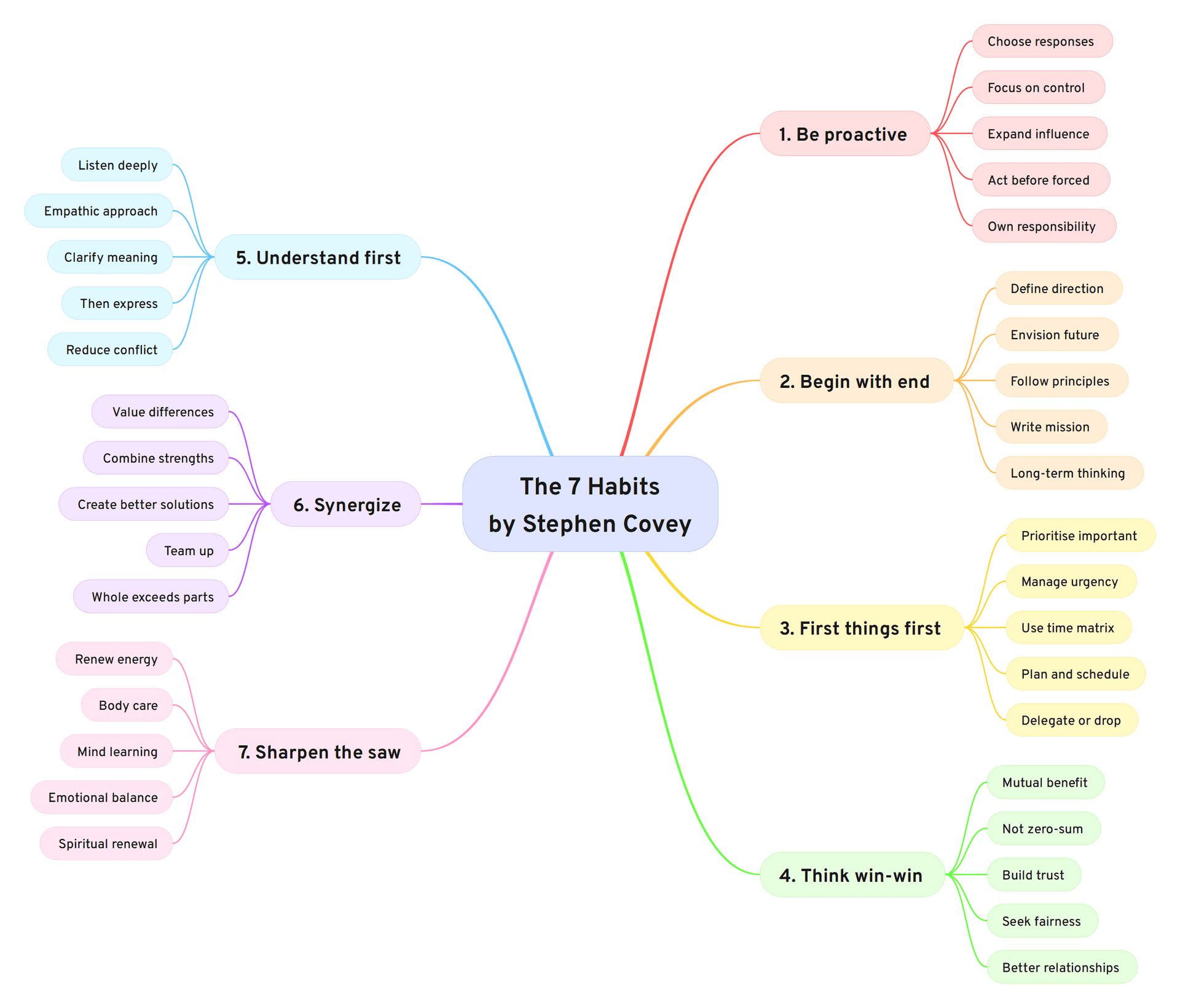
DIVE DEEPER

Use the mind-map below to dive deeper into this topic.

lesson glossary

COMMENTS

What do you think of the Seven Habits of Highly Effective People? Which of the habits would you like to implent in your life? What you add any other habits?

Share your views and experience here.