
Bardzo mi przykro, ale lekcje na platformie The Blue Tree działają jedynie na komputerze lub tablecie.
Do zobaczenia na większym ekranie 🙂
Zespół The Blue Tree
back to HOME > Learning English > Everyday English >

THE BLUE TREE
Everyday English

CEFR B1
Intermediate
TALKING PICTURE
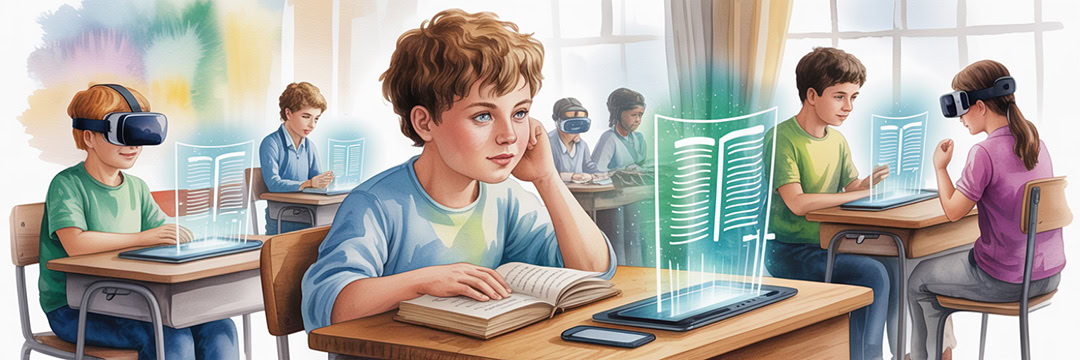
Answer the questions. Move your mouse over the icons to see the questions.
model answers

QUESTION #1
Do you like reading books? Has it changed over time?
wziąć się za coś, zacząć coś
zrelaksować się, rozluźnić się
ćwiczyć umysł

QUESTION 2
Do you think there is a difference between reading paper books and digital e-books?
That said, e-books have their advantages too. They’re super convenient when you’re travelling—you can carry dozens of books in one small device. I also like that you can adjust the font size or read in the dark without needing a lamp. I still stick to printed books when I want to relax at home, but I rely on e-books when I’m on the go. In the end, I think both formats have their place, and it really depends on the situation and your personal habits.
podkreślenie, zaznaczenie
przyswajać (treść) / wchłaniać informacje
rozpraszać się / tracić koncentrację
wygodny / praktyczny
dostosować (rozmiar czcionki) / zmienić ustawienia
mieć swoje miejsce

Question #3
Do you have a favourite character from a book, somebody you were looking up to, or who inspired you somehow in life?
Reading about Atticus made me think more deeply about how I behave and what I believe in. Of course, I’m not a lawyer like him, but I try to follow his example in small ways—by listening before judging, speaking up when I see something wrong, and trying to be fair, even when it’s hard. He’s not just a character in a book; for me, he became a kind of role model. His story showed me that you don’t need to shout to be strong—you just need to stay true to your values.
podziwiać kogoś / brać z kogoś przykład
stanąć w obronie czegoś/kogoś
zabierać głos / wypowiadać się otwarcie
pozostać wiernym swoim wartościom

QUESTION #4
Many books were turned into films. Do you think it is a good idea? Do you have your favourite book adaptation?
One of my favourite book adaptations is The Lord of the Rings trilogy. The books are quite long and full of details, so I was curious how they would translate to the screen. In my opinion, Peter Jackson did an amazing job. The films stayed true to the spirit of the books, and the visuals were breathtaking. I especially loved the music and how the characters were portrayed. Of course, some parts were skipped or shortened, but overall, the movies captured the main ideas and feelings. Watching them made me want to dive back into that world.
psuć coś / umniejszać wartość czegoś / odbierać coś (czemuś wartość)
ożywić historię / tchnąć życie w historię
sięgnąć po książkę
pozostać wiernym (czemuś)
ponownie zanurzyć się w (coś) / wrócić z zaangażowaniem do (czegoś)

Question #5
Do you think books will exist in a hundred years? Will people still acquire knowledge mainly by reading?
When it comes to gaining knowledge, reading will probably still play a role, but maybe not the main one. People are already learning a lot through podcasts, videos, and interactive apps. Some students prefer to look things up on YouTube or ChatGPT instead of reading a long article. It’s faster and more visual. But in the end, reading helps you deepen your understanding and develop your thinking skills, so I hope it won’t be replaced entirely. Maybe in the future, we’ll mix all methods—reading, listening, watching—to learn in a more balanced way.
przekładać kartki (książki) / kartkować książkę
zdobywanie wiedzy
wyszukiwać informacje / sprawdzać coś (np. w internecie)
pogłębić zrozumienie
zrównoważony sposób
FREE PRACTICE
Choose one question from the Talking Picture and write your own answer to it. Paste your answer in the comments section or send it to your teacher.

COMMENTS
Paste your upgraded answers here.
0 Comments