
Bardzo mi przykro, ale lekcje na platformie The Blue Tree działają jedynie na komputerze lub tablecie.
Do zobaczenia na większym ekranie 🙂
Zespół The Blue Tree
back to HOME > General Interest > Travel and Nature >

THE BLUE TREE
Travel & Nature

CEFR B1
Intermediate
warm up
Answer the questions below.
| What is your preferred means of transport when you are commuting around town? |
TRANSCRIPT
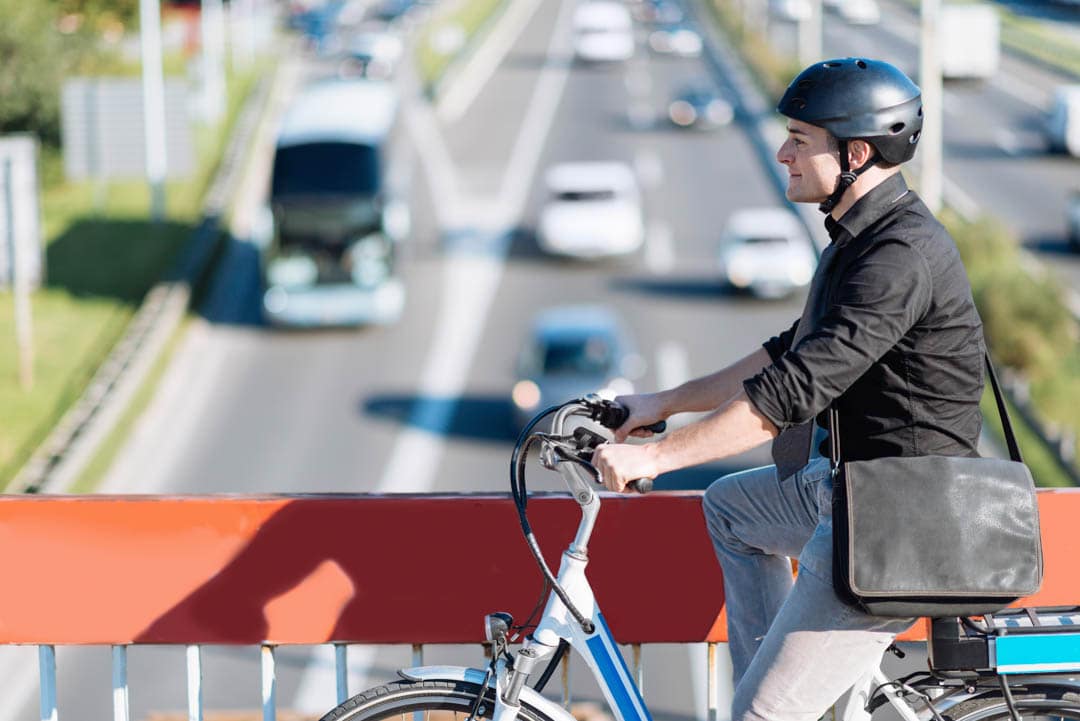
I usually ride my bike to work because it’s fast, cheap, and good for my health. I enjoy the freedom it gives me—I don’t have to sit in traffic or look for parking. On warmer days, it’s actually the best part of my routine. Of course, when the weather is bad or I have to carry something heavy, I take public transport. But in general, the bike is my favorite way to commute.
| Do you think there should be more infrastructure for bikes and pedestrians in your city? |
TRANSCRIPT
Definitely. In my city, cars still dominate, and there aren’t enough bike lanes or wide pavements for pedestrians. I often feel unsafe when cycling, especially near busy roads. I think if the city built more cycling infrastructure—like protected bike paths and proper bike parking—more people would leave their cars at home. It would also improve air quality and reduce traffic jams. Investing in pedestrian-friendly streets would make daily life easier and healthier for everyone.
| How will cities look like in the future? What will change, in your opinion? |
TRANSCRIPT
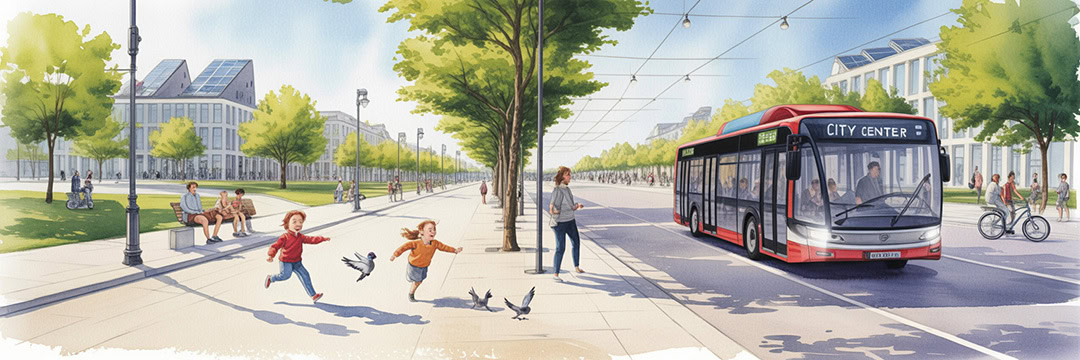
I think cities in the future will be designed for people, not cars. There will be more green areas, fewer private vehicles, and cleaner air. I believe e-bikes and electric buses will become the main way of getting around. Shopping and deliveries might be done by robots or drones. Also, streets could be quieter and safer, with more public spaces where people can walk, meet, and relax. Technology will help cities become more efficient and more human-friendly.
part one

KEY LANGUAGE
Go through the flashcards below. Make sure you understand all the words and expressions.

VIDEO
Watch the first part of the video.

COMPREHENSION
Answer these questions. Refer to the information from the video.
- ⌚ 00:16 How popular are e-bikes these days?
- ⌚ 00:22 How big is the European market for e-bikes?
- ⌚ 00:54 How much has the sales of e-bikes risen since last year?
- ⌚ 01:04 Who is buying e-bikes?
- ⌚ 01:18 How expensive are e-bikes?
- ⌚ 01:38 What is Bosch famous for?
- ⌚ 02:04 What innovations sped the trend for electric bikes?
- ⌚ 02:16 What’s the possible range on an e-bike these days?
part two
KEY LANGUAGE
Go through the flashcards below. Make sure you understand all the words and expressions.
VIDEO
Watch the second part of the video.
COMPREHENSION
Answer these questions. Refer to the information from the video.
- ⌚ 2:57 How many Germans own an e-bike?
- ⌚ 3:15 What makes a city of Vechta special?
- ⌚ 3:40 How are e-bikes changing the city infrastructure?
- ⌚ 3:52 What is Bremen famous for?
- ⌚ 4:17 What is Bremen building to make cycling safer?
- ⌚ 4:32 What caused an increase in the use of e-bikes in London?
- ⌚ 4:47 What is transforming the way people do their shopping?
- ⌚ 5:21 How are e-bikes replacing vans on the road?
part three
KEY LANGUAGE
Go through the flashcards below. Make sure you understand all the words and expressions.
VIDEO
Watch the third part of the video.
COMPREHENSION
Answer these questions. Refer to the information from the video.
- ⌚ 5:44 How are delivery companies like FedEx taking advantage of e-bikes?
- ⌚ 5:59 What are the advantages of these vehicles?
- ⌚ 6:31 What have architects realized in the last decade?
- ⌚ 6:38 How popular were bikes in 1949?
- ⌚ 6:46 How did the situation change by 1974?
- ⌚ 7:04 How are cities around the world changing accoring to Peter Murray?
- ⌚ 7:11 How has the position of e-bikes changes as a mode of transport?
POLL
Cast your vote in the poll.
DISCUSSION
DIALOGUE
Alita and Pete are having coffee after work, chatting about how their city has changed lately.
Read or role-play their dialogue.
Alita: Have you noticed how many people are riding e-bikes these days?
Pete: Yeah, it’s hard to miss. I read that e-bike ownership has quadrupled in just a few years. It’s crazy!
Alita: It’s actually exciting. They’re perfect for a city like ours—with so much congestion, we really need a better way to get around.
Pete: True. I used to drive every day, but now I’ve started a trial period with an e-bike rental scheme. It’s cheaper, and it really helps me blend into the city traffic better.
Alita: That’s great! I think e-bikes really cater for people who want flexibility. Like, you can still ride without sweating too much and accelerate easily at lights.
Pete: Exactly. And I like that they don’t take up much space. Cars occupy so much of the road. If more people used e-bikes, I bet we’d see the roads shrink in car traffic.
Alita: Not to mention the broad range of people using them. From students to gig workers, they’re everywhere. It feels like e-bikes are finally going mainstream.
Pete: I think this is just the beginning. With the advent of better batteries and more bike lanes, they’ll soon outstrip cars for short city trips.
Alita: Totally agree. It’s a small shift, but it gives me hope. I just hope the city continues to tap into this trend and improves infrastructure.
Pete: Me too. If we want cleaner air and healthier lives, embracing e-bikes is a great step.
Alita: Let’s both stick with it. Maybe next week we ride to work together?
Pete: Deal! Let’s make it a habit.
OVER TO YOU
Discuss these questions. Refer to the topic of the lesson and your own experience.
 | What do you think accounts for the rising popularity of e-bikes in cities? |
| In your opinion, will e-bikes ever outstrip cars for daily transport? Why or why not? |
| How does congestion in your city affect your daily routine or travel choices? |
| Do you think e-bikes should be made more accessible to cater for different types of users? What should cities do? |
| How has the advent of new technology like e-bikes or scooters changed the way people blend into urban environments? |
COMMENTS
How do you feel about e-bikes? Do you think they will be the future of personal transport in cities?
Share your thoughts and ideas below.
0 Comments