


Secrets of Adulthood

Sorry, but lessons on The Blue Tree work only on a computer or a tablet.
Bardzo mi przykro, ale lekcje na platformie The Blue Tree działają jedynie na komputerze lub tablecie.
Do zobaczenia na większym ekranie 🙂
Zespół The Blue Tree

THE BLUE TREE
Opinions

CEFR B2
Upper
Intermediate
warm up
Answer the questions below. Listen to some model answers. Read the transcript.
| Do you have a favorite proverb or saying that you try to live by? Why do you like it? |
TRANSCRIPT
Yes, I really like the saying “What goes around comes around.” I believe that our actions have consequences, and if we treat people well, it will come back to us in some way. It helps me stay kind and respectful, even in difficult situations.
| Do you think folk wisdom is still useful in modern life, or is it outdated? |
TRANSCRIPT
I think it’s still useful. Many proverbs contain basic truths about human nature or daily life. For example, “Don’t put all your eggs in one basket” is still good advice for finances, business, or even relationships. It’s simple, but it makes sense.
| Can you think of a quote that changed the way you see the world—or made you think? |
TRANSCRIPT
Yes, I once read, “You can’t control the wind, but you can adjust your sails.” It reminded me that I can’t always change my circumstances, but I can change how I react. That idea helped me during a stressful time at work.

key language
Study the words in this flashcard game. Make sure you know them all.
part one

SECRETS OF ADULTHOOD
Read the aphorism and the following comment.
Express your own opinion. Use the FUNCTIONS tab in the left menu for some useful language of expressing opinions.
1. Happiness doesn’t always make us feel happy.
Voice: Older, experienced woman from the U.S.
Funny thing about happiness — it doesn’t always come with a smile. Waking up early to exercise? Miserable. Studying late to finally get that degree? Exhausting. Even family holidays can feel more like marathons than joyrides. But all these things build a kind of happiness that lasts longer than a good mood. Sometimes real happiness looks a lot like hard work, awkward conversations, or saying no when you’d rather say yes.
2. There is no right way to create a happier life, just as there’s no best way to cook an egg.
Voice: Young man, beginner cook, UK.
Look, I can barely boil water, but even I know people are picky about eggs. Scrambled, poached, sunny-side up — ask five people, get ten opinions. Life’s the same. My mum thinks happiness is a spotless kitchen; my friend Pete thinks it’s owning three guitars and no kitchen at all. There’s no recipe — just crack the shell, have a go, and hope you don’t end up with egg on your face.
3. Accept yourself and expect more from yourself.
Voice: Middle-aged manager, Germany.
For years, I lived with a constant, silent frustration. I kept chasing goals that didn’t fit me — trying to be the loudest in meetings, trying to network at every event, even though I hated small talk. I thought success meant changing who I was. But all it brought me was exhaustion and self-doubt. When I learned to accept myself — an introvert who prefers quiet focus — and expect more on my terms, everything changed. I built a reputation for being dependable, thoughtful, and strategic. Accepting myself didn’t mean lowering the bar — it meant raising it in the right direction.
4. It’s easier to change our surroundings and schedules than to change ourselves.
Voice: University student, Brazil.
I used to believe that willpower alone could make me a morning person. Every January, I set the same resolution — wake up early, study at dawn. But it never stuck. Then I remembered something James Clear wrote in Atomic Habits — that environment is stronger than willpower. So, I stopped fighting myself. I switched my classes to later hours and found a study group that met in the evenings. By changing my surroundings and schedule, my habits improved naturally. It wasn’t about changing who I was — it was about making my world fit me better.
5. We can’t make people change, but when we change, our relationships change, and so others may also change.
Voice: Retired teacher, Japan.
When I was young, I believed that if I just spoke the right words, I could change others. As a teacher, I tried — raising my voice, giving long lectures — but the students only grew colder. One autumn, as the leaves fell outside the classroom window, I decided to change instead. I softened my tone, listened more, smiled even when I was tired. Slowly, without force, the air in the room shifted. The students sat straighter, spoke kinder words. Like a ripple on still water, my small change traveled further than I ever could by pushing. Change begins quietly, like spring warming the earth — unseen at first, but powerful all the same.
6. We can’t change our children’s natures by nagging them or signing them up for classes.
Voice: Mother from Nigeria.
I pushed my son hard to become a doctor. In our family, we already had one doctor — his uncle — and he was doing well for himself, respected and comfortable. I thought following that path would give my son the same kind of life. I signed him up for extra science classes, nagged him about studying, even bought him medical textbooks. But his heart was always in music — writing songs, playing the guitar late into the night. The more I pushed, the more he pulled away. Only when I stepped back did I see him grow into himself, and now he’s a music teacher, inspiring others. Children don’t bloom by force; they bloom when you water what’s already inside them.
7. Before declaring something superficial, unhealthy, inefficient, dangerous, disgusting, or immoral, consider: maybe it just doesn’t suit my taste.
Voice: Young woman, France.
It’s easy to judge what you don’t understand. I used to roll my eyes at video games — until I realized they’re not for me, but they bring joy and even jobs to others. And if you look at history, it’s clear: things change. People once thought wearing bright colors was vulgar — now it’s fashion. Tattoos used to be seen as criminal — today, they’re art and self-expression. Even women wearing trousers was shocking a hundred years ago — now it’s completely normal. Not everything has to suit me. It’s good to remember that what seems strange today might be ordinary tomorrow.
8. By trying to save things for a special occasion, we may squander them (spices go stale, shirts yellow, wine turns to vinegar).
Voice: Elderly man, rural Poland.
Years ago, I bought a dark blue suit — fine wool, perfect cut. I told myself I’d save it for a really important wedding, maybe my niece’s or my neighbor’s daughter’s. But when those weddings came, I thought, “No, not yet. I’ll save it for something even more special.” The years went by, the suit stayed in its box, and life moved on. When I finally tried it on again, it was tight in the waist and out of style. Looking back, I missed so many chances to wear it proudly — birthdays, anniversaries, even Sunday church. Special occasions aren’t rare — they’re hidden in everyday life.
9. To respect us, people must first notice us — we can’t earn trust and admiration from the sidelines.
Voice: Young entrepreneur, India.
In the early days of my business, I worked hard behind the scenes, thinking good work would speak for itself. It didn’t. Clients didn’t even know who was behind the projects. One day, I pushed myself to give a short talk at a local networking event, even though I was nervous. After that, people started reaching out, not just for my services but for advice and partnerships. Being visible earned me respect — as we say, if you don’t blow your own trumpet, no one will blow it for you.
10. Do you need more time or do you need to make a decision?
Voice: Office worker, Canada.
A few years ago, I was stuck in a job that didn’t make me happy. Every day, I told myself I just needed more time to figure things out. But deep down, I already knew I wanted to leave — I was just scared to make the jump. One weekend, after too much thinking, I sat down and asked myself honestly: Do I really need more time or do I need to decide? I updated my resume that night. Two months later, I started a new job that challenged me and made me excited again. Sometimes, hesitation feels like preparation, but it’s really just fear wearing a disguise.
11. When uncertain about how to proceed, make the choice that allows you to choose the bigger life.
Voice: Teacher, Kenya.
A few years ago, I had the chance to move from my small village to Nairobi for a teaching job. I hesitated. The city seemed too busy, too expensive. But then I thought: what would give me a bigger life? For me, it wasn’t about having more money or a bigger house — it meant more opportunities, more experiences, more ways to grow. A “bigger life” is different for everyone. It’s not about size — it’s about space to stretch yourself. I chose Nairobi, and though it was hard at first, I met new people, learned new things, and found new purpose. Looking back, it was the right choice.
12. To understand a new place, visit a grocery store.
Voice: Traveler, Spain.
Every time I travel, I skip the tourist spots at first and head to a grocery store. In Japan, I was amazed to see so many types of rice and beautiful packaging — even the apples were wrapped like gifts. In Sweden, the stores were full of crispbread and dozens of kinds of pickled herring, things we don’t usually see in Spain. In Mexico, the colors were incredible — bright fruits, chili powders, and candies we’d never imagine at home. Grocery stores show you what people really eat and care about day to day — it’s like reading the soul of a place without needing words.
13. Once a group includes five people, a single conversation is very hard to maintain.
Voice: Event organizer, Australia.
I learned this the hard way when I hosted a birthday barbecue last summer. We pulled a few tables together, and before the first sausages hit the grill, the group split into little pockets. Some mates chatted about football, others about travel — it was like herding cats. That’s when I realized: once you’ve got more than four at a table, a single conversation goes out the window. Now, I keep gatherings small and cozy — as we say here, “fewer cooks make a better broth.” It makes for a better time and no one feels left out.
14. If you don’t know what to do with yourself, go outside or go to sleep.
Voice: Young woman, student, South Korea.
Whenever I feel lost or anxious, I go outside. There’s something about being close to nature — trees, fresh air, even just a bit of sky — that calms me down in a way nothing else can. Nature doesn’t rush you; it reminds you that life has its seasons. A short walk often gives me clarity when my mind feels stuck. Being close to nature reconnects me with something bigger than myself and helps me see my problems from a better perspective.
part two
Poll
Go through the aphorisms again. This time decide how much you agree with each one.



HOW DOES IT END
Read some beginnings of famous proverbs and aphorisms. How do they finish? Make up your own endings.
1. If everything matters, ...
then nothing does. Prioritize.
2. Just because someone is good at something doesn’t mean ...
… they enjoy it.
3. If you want something to last, ...
… make it a habit, not a one-time effort.
4. People often want to feel heard more than ...
… they want advice.
5. The best way to learn something is to ...
… try teaching it.
part three
WHAT’S THE MISSING WORD
Complete some aphorisms with missing words. Be careful, some words are there to mislead you.
MATCH THE HALVES
Match the beginning of an aphorism with its ending.

What an amazing person

Chairing a Meeting

Managing up

THE BLUE TREE
Business English

CEFR B1
Intermediate

warm up
Answer the questions below. Listen to some people answering these questions. Report back or read the transcript to practise speaking.
| Think about a really good boss you have had. Why was he or she so good? |
TRANSCRIPT
I once had a boss named Joanna, and she was amazing. She always listened to our ideas and made us feel like we were part of the team. She was also very clear about what she expected, so we never felt lost or confused. I think what made her so good was that she trusted us, but she was also there when we needed help. She gave feedback in a kind way and really cared about our growth.
| Is it easy to manage people? What is the biggest challenge in managing other employees, in your opinion? |
TRANSCRIPT
No, I don’t think it’s easy to manage people. In my opinion, the biggest challenge is that everyone is different. Some people need more support, others like to work on their own. As a manager, you have to understand how each person works best. Also, if there is a problem or conflict in the team, it’s the manager who has to deal with it. That can be stressful.
| Would you like to be responsible for the work of other employees? What would you like the most and least about this position of authority? |
TRANSCRIPT
Yes, I would like that one day. I enjoy helping others and I think I’m good at organizing tasks. What I would like the most is seeing the team succeed and knowing I helped make that happen. But what I wouldn’t like is having to give negative feedback. I don’t enjoy telling people they made a mistake—it feels uncomfortable. Still, I think it’s part of growing as a leader.

part one
KEY LANGUAGE
Go through the flashcards below. Make sure you understand all the words and expressions.
VIDEO
Watch the first part of the video.

COMPREHENSION
Answer these questions. Refer to the information from the video.
- 1. What’s the first rule of “Managing Up”?
- 2. What should we learn about our bosses as regards: communication?
- 3. What should we learn about our bosses as regards: amount of information?
- 4. What should we learn about our bosses as regards: personality?
- 5. What is the value of learning the answers to these questions?
part two
KEY LANGUAGE
Go through the flashcards below. Make sure you understand all the words and expressions.
VIDEO
Watch the second part of the video.
COMPREHENSION
Answer these questions. Refer to the information from the video.
- 1. Why isn’t the office a place to be modest?
- 2. Is it about being arrogant?
- 3. Why should others know about your accomplishments?
- 4. What’s an “Accomplishments File”?
- 5. When should you send it to your boss?
- 6. Why shouldn’t you call those accomplishments but completions?
POLL
How well do you know your boss? How many questions can you answer in this poll?
How can knowing the answers to these questions help you manage up your boss?
DISCUSSION
MANAGING UP
Follow the conversation between three colleagues. They are talking about the idea on “managing up”.
Read (role play) their dialogue.
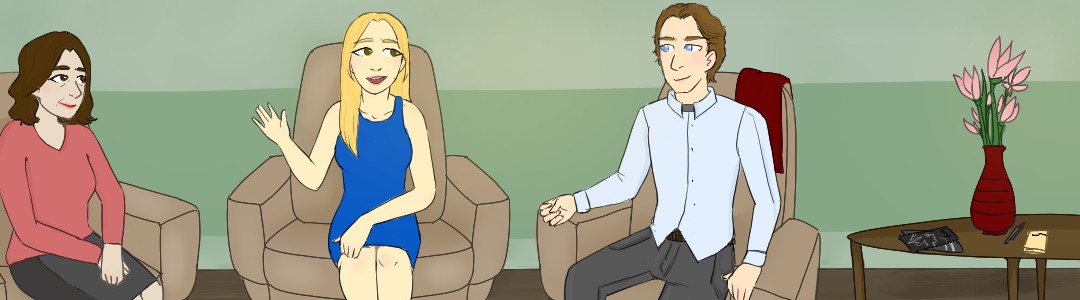
Anna: So… our new boss is starting next week. Are you two ready?
Mike: Not really. It feels strange not knowing anything about them.
Julia: I know what you mean. But I’ve been thinking about that video our English teacher showed us—Managing Up. I think we can use some of those tips.
Anna: Yeah, like the idea of learning about your boss. It sounds simple, but it’s actually smart.
Mike: Right. I wrote down some of the questions from the video. Like: What style of communication does my boss prefer? Do they like emails, calls, or face-to-face?
Julia: Good one. My last manager hated long emails. He always said, “Just give me the main point.”
Anna: That’s another question: How much information does my boss want from me? Should we prepare a lot of details, or just a short summary?
Mike: We’ll probably need to test and observe. Some managers want to be involved in every step, others just want results.
Julia: Also: Do they want me to bring a solution, or do they prefer to decide? It’s good to know if we should share ideas or just explain the problem.
Anna: Exactly. If we bring too much or too little, it can be a problem. We have to learn their style.
Mike: Another idea from the video was toot your own horn. I used to think it was a bad thing, but now I see it differently.
Julia: Same here. It’s not about showing off. It’s just letting your boss know what you and your team are doing well.
Anna: Yeah, like saying: “The report I worked on helped the client a lot,” or “The team finished the task early.”
Mike: I think we should also keep a list of our achievements. Then it’s easier to talk about them during meetings or reviews.
Julia: And we can send short updates, like once a week. It helps the boss know what’s going on and shows we’re reliable.
Anna: We can even ask the new boss directly: “Would you like weekly updates from us?” That way we don’t have to guess.
Mike: I like that. It shows respect and makes everything clear.
Julia: So we’re all agreed—we’ll try to manage up. Ask smart questions, learn how they work, and gently share our wins.
Anna: Yes! A new boss is a chance to grow. Let’s make the most of it.
DISCUSSION QUESTIONS
Discuss the questions below. Refer to the information from the video and your own life experience.
 | Why do you think managing your relationship with your boss is important for your success at work? |
| What are some effective ways to understand your manager’s communication and decision-making style? |
| Can you think of a time when you or someone you know successfully “managed up”? What did they do, and what was the result? |
| What challenges might people face when trying to share their accomplishments with their boss without sounding arrogant? |
| How can keeping your boss informed about your work help build trust and improve teamwork? |
LESSON GLOSSARY
Check out the language from this lesson.
FREE PRACTICE
Describe the best boss you have ever had.
Write your answer in the comments below or send it to your teacher.

COMMENTS
Share your views and opinions here.
COMMENTS
Which of the aphorisms from this lesson do you like the most? Why?