
Tips for handling disagreements

Tips for handling disagreements

Sorry, but lessons on The Blue Tree work only on a computer or a tablet.

Bardzo mi przykro, ale lekcje na platformie The Blue Tree działają jedynie na komputerze lub tablecie.

Do zobaczenia na większym ekranie 🙂

Zespół The Blue Tree

Tips for handling disagreements
Learn more words

THE BLUE TREE

Better
Communicator

CEF B1

CEFR B2

Upper
Intermediate

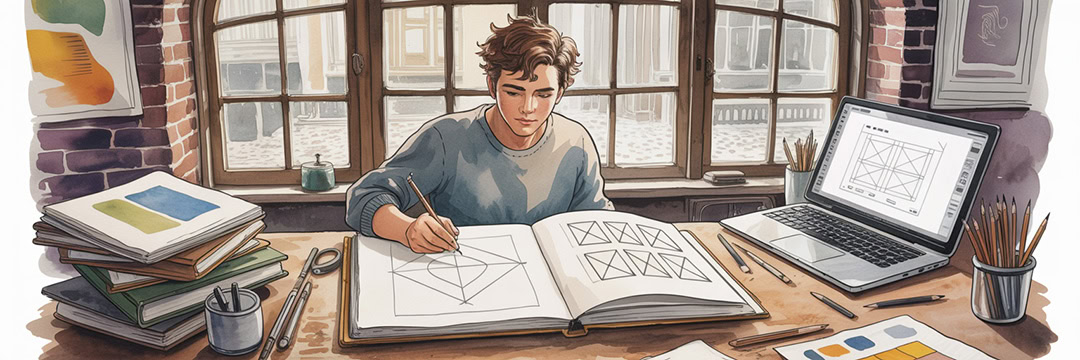
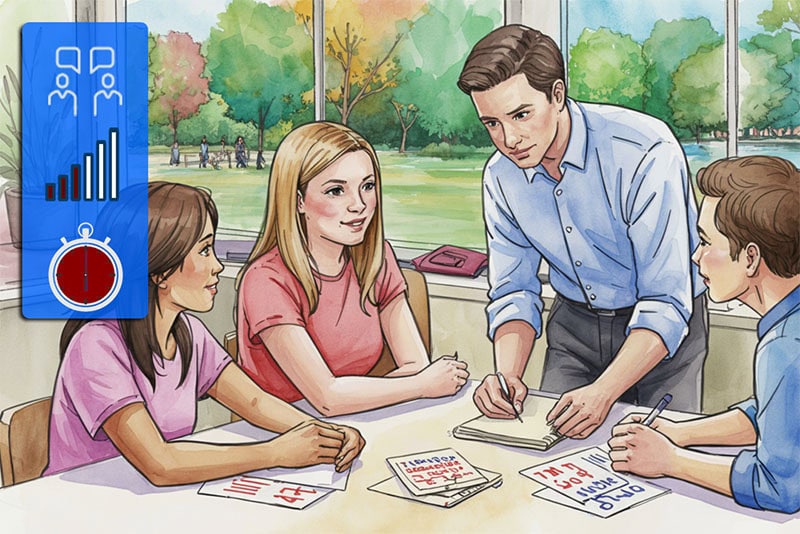
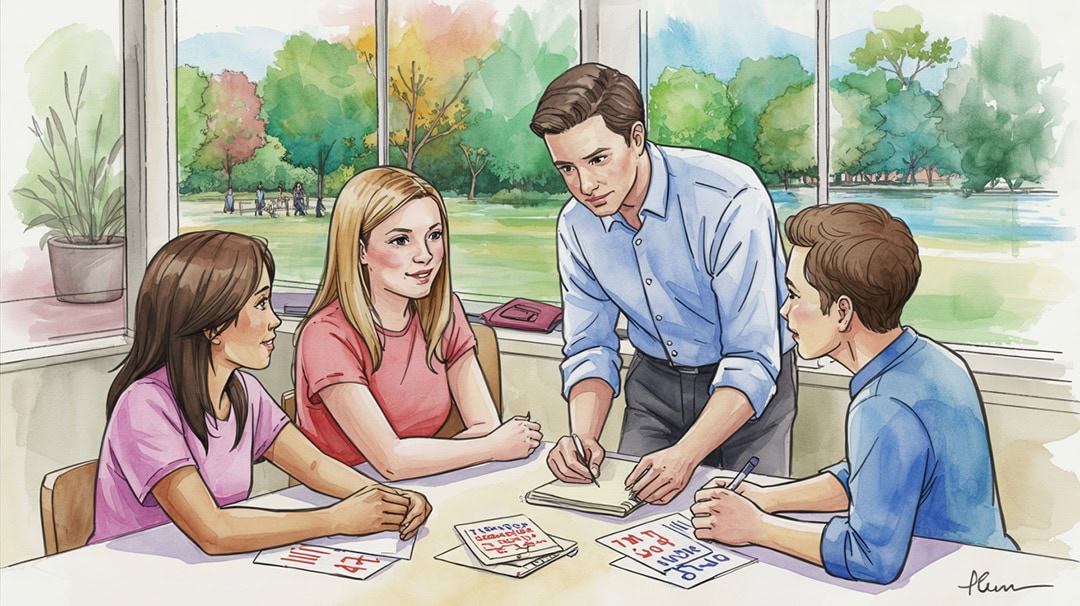
Practise speaking by describing this image

warm up

Answer the questions below. Listen to model answers and read the transcript to get some more practice in conversational English.

From your experience, what can prevent a disagreement from escalating into a fight?
TRANSCRIPT

“In my experience, the best way to stop a disagreement from turning into a fight is to slow down and really listen. People often get louder because they feel ignored. If you repeat back what they said or ask a clarifying question, it shows you’re taking them seriously. Even if you don’t agree, they feel heard, and the conversation becomes calmer instead of more aggressive. Respect usually cools things down.”

Do you believe it’s possible to argue with someone and still build a better relationship? Why or why not?
TRANSCRIPT

“Yes, I believe it’s not only possible but sometimes very helpful. Julia Dhar, in her TED Talk, explained that we should separate the person from the idea. If we focus on discussing the idea, not attacking the person, arguments can actually strengthen trust. When I show curiosity about another perspective, the other person often appreciates it, even if we disagree. In the end, the relationship can grow stronger because we proved we can disagree respectfully.”

What’s more important in a disagreement: proving you’re right or keeping the relationship strong? Why?
TRANSCRIPT

“For me, keeping the relationship strong is much more important. Being right in one situation doesn’t matter if the argument damages the trust between people. I’ve seen many cases where someone ‘won’ the discussion but lost respect. If you focus on the relationship, you can return to the topic later and maybe solve it together. Proving you’re right feels good for a moment, but healthy relationships are what really last in the long run.”

part one

KEY LANGUAGE

Go throught the flashcards below. Make sure you understand all the language.

READING

Read an adaptation of the article from Harvard Business Review “A Smarter Way do Disagree” by by  and 

The link to the original article is here.

Tips for Handling Disagreements

These ideas come from years of research about how language shapes the outcome of conflicts. The main point is simple: words can help us escape the vicious cycle of arguing and fighting for control. To do that, we sometimes need to show a bit of vulnerability. That’s not easy—most of us go into disagreements ready to fight our corner. But if you rely on the right words, you can prove to yourself and others that you’re trying to build understanding instead of just dodging the tough moment.

  1. Show curiosity

In many studies, people assumed their opponents weren’t interested in hearing their side. But when someone clearly shows they want to understand, it changes the whole tone of the conversation. The easiest way? Just say you’re curious:

  • “It looks like we see this differently. I’m curious to hear how you see it.”
  • “I think there are a few ways of looking at this. I believe XYZ, but I’d love to know more about your point of view.”

You don’t have to give up your own opinion—you’re just opening the door to a real exchange.

💬 “When I said I was curious about my colleague’s view, she relaxed immediately, and the meeting stopped feeling like a battle.”

  1. Acknowledge the other side

Everyone wants to feel heard. In conflicts, people often worry that their words don’t even register. A simple way to show respect is to restate the key point:

  • “I hear you—the team has been putting in crazy hours, and the client is very demanding. But here’s why we can’t add more staff right now…”

Even if you disagree, acknowledgment proves you were listening. And if you don’t understand, don’t fake it—just ask for clarification.

💬 “I repeated my teammate’s main point back to him, and you could almost see the tension leave his face.”

  1. Find common ground

Even when you strongly disagree, you usually share some values, beliefs, or goals. It helps to zoom out and point to what you have in common:

  • “I agree with part of what you’re saying…”
  • “We both want the project to succeed…”
  • “I noticed the same thing in that meeting…”

Highlighting common ground reminds everyone why you’re working together in the first place.

💬 “As soon as I said, ‘We both want the project to succeed,’ the whole conversation became more cooperative.”

  1. Hedge your claims

In fact-based arguments, half the time we’re wrong. Instead of sounding overconfident, show some humility. Use hedging expressions:

  • “From my perspective…”
  • “Sometimes it seems…”

This makes you sound thoughtful and open-minded. You can also combine hedging with acknowledgment:

  • “I understand you’re concerned about staffing, and yes, this client is really important. On the other hand, we need to be careful not to stretch our resources too thin. What do you think?”

💬 “When I started saying things like ‘from my perspective,’ people stopped treating me like I was stubborn and started taking my ideas more seriously.”

  1. Share your story

Our strongest beliefs usually come from personal experience, not just data. Sharing your own story can build more trust than throwing facts and figures at someone. For example, instead of quoting research, you might say:

  • “I once worked on a project where we took on too much, and it really burned people out. That’s why I feel so strongly about this issue.”

Stories make your argument human and relatable. They can break the cycle of battling facts with more facts and open the door to collaboration.

💬 “When I shared a personal story instead of statistics, people leaned in and actually listened.”

👉 In short: be curious, show you’re listening, look for common ground, hedge your claims, and don’t be afraid to tell your story. These moves can turn a heated argument into a constructive conversation.

comprehension questions

Answer the questions below using the information from the article and your own experience. 

Show curiosity

  • Why does showing curiosity change the tone of a disagreement?
  • What simple phrase can you use to signal that you’re interested in the other person’s perspective?

Acknowledge the other side

  • Why is acknowledgment important in a conflict, even if you don’t agree?
  • What should you do if you don’t fully understand the other person’s point of view?

Find common ground

  • What kinds of things can people usually find in common, even if they disagree?
  • How does pointing out common ground help during an argument?

Hedge your claims

  • Why is it risky to sound overconfident in fact-based arguments?
  • Which phrases can you use to hedge your claims and sound more open-minded?

Share your story

  • Why can sharing personal stories be more effective than quoting data or research?
  • How can stories change the way people listen during a disagreement?

part two

real-life snippets

Use the scenarious below to practise using tips on handling disagreements. 

1. Show Curiosity

Anna: I think we should spend more money on marketing. That’s the only way we’ll reach new customers.
Tom: I don’t agree. I feel our budget is already stretched too thin.
Anna: It seems we’re looking at this differently. I’m curious to hear how you see it.
Tom: Well, in my view, we should improve the product first before spending on ads.
Anna: That’s interesting. So for you, quality comes before promotion. Thanks for explaining—let’s explore how we could balance both.


2. Acknowledge the Other Side

Sara: Honestly, the client is too demanding. We’ve been working evenings and weekends, and the team is exhausted.
David: I hear you—the workload has been crazy, and everyone is tired.
Sara: Exactly, so I think we really need to hire more people.
David: I understand, but at the same time, the budget doesn’t allow for new staff right now.
Sara: Okay, I don’t like it, but I see you’ve understood my point. That helps me accept the decision a bit more.


3. Find Common Ground

Mark: I don’t think your plan for the project will work. It’s too risky.
Julia: I see your point, but we both want this project to succeed, right?
Mark: Of course, that’s true. I just don’t want us to fail.
Julia: And I share the same worry. That’s why I think we need a creative solution.
Mark: Fair enough. Let’s focus on what we agree on and then discuss how to reduce the risks.


4. Hedge Your Claims

Lisa: We must hire more people immediately, or this project will collapse.
Paul: From my perspective, it might not be the best moment to expand the team.
Lisa: Why not? Can you explain?
Paul: Because sometimes when we take on too many new staff, we lose focus. I’m not saying I’m 100% right, but I think we should weigh the risks. What do you think?
Lisa: I see. You’re cautious about resources. That makes sense. Let’s check the numbers before we decide.


5. Share Your Story

Emma: I don’t understand why you’re so strongly against taking this client. It’s a big opportunity.
James: I get that. But I once worked on a project where we accepted a big client, and it burned the team out completely. That’s why I’m cautious now.
Emma: Okay, that explains your point of view. I didn’t know you had that experience.
James: Exactly. For me, it’s personal. I don’t want us to repeat the same mistake.
Emma: Fair enough. Thanks for sharing—it helps me see the bigger picture.

YOUR OWN EXAMPLE

Create your own dialogue which illustrates the use of these tips for handling disagreements.

w

DISCUSSION

which is the most practical

Read (role-play) a dialogue between Alita and Pete. They are discussing the practical value of these tips.

(In the office lounge. Alita is sitting with arms crossed, looking slightly frustrated. Pete is leaning back in his chair, calm but engaged.)

Alita (frowning): You know, I don’t think all those strategies from the article are practical. In real life, people don’t have time to hedge their claims or share stories.

Pete (leaning forward, open hands): I see what you mean, but I disagree. I think those small things actually change the atmosphere of a conversation.

Alita (shrugs, slightly defensive): Really? To me, it feels like wasting time. If I’m sure I’m right, why not just say it directly?

Pete (smiling slightly): Because sounding too confident can make you look stubborn. Remember the section about humility? If you admit you might be wrong, people see you as thoughtful instead of arrogant.

Alita (pauses, tilts head): Hmm, maybe. But I still think curiosity is the only tip that really matters. If I say “I’m curious to hear your view,” it opens the door. The rest feels unnecessary.

Pete (nodding, calm tone): Curiosity is powerful, yes. But imagine you’re in a heated argument and someone says, “I hear you, the team is tired.” That acknowledgment can lower the tension immediately.

Alita (relaxes a bit, uncrosses arms): Okay, I admit that would help. Maybe I was too quick to dismiss the other tips.

Pete (smiles warmly): And maybe you’re right that curiosity is the easiest place to start.

Alita (smiling now): So we agree—curiosity first, but the other strategies also have their place.

Pete (laughs softly): Exactly. Looks like we’ve just practiced what the article teaches!

DISCUSSION QUESTIONS

Discuss these questions. Refer to the lesson and your own experience.

BulletCan you describe a time when a disagreement at work or school turned out better than you expected? What made the difference?
BulletHave you ever managed to calm down an argument by choosing your words carefully? What exactly did you say or do?
BulletThink of a time when you and a friend or colleague strongly disagreed. How did it affect your relationship afterwards?
BulletHave you ever changed your opinion after hearing someone else’s story or personal experience? What was the situation?
BulletWas there ever a moment when you realized that being right was less important than keeping the peace? How did you handle it?

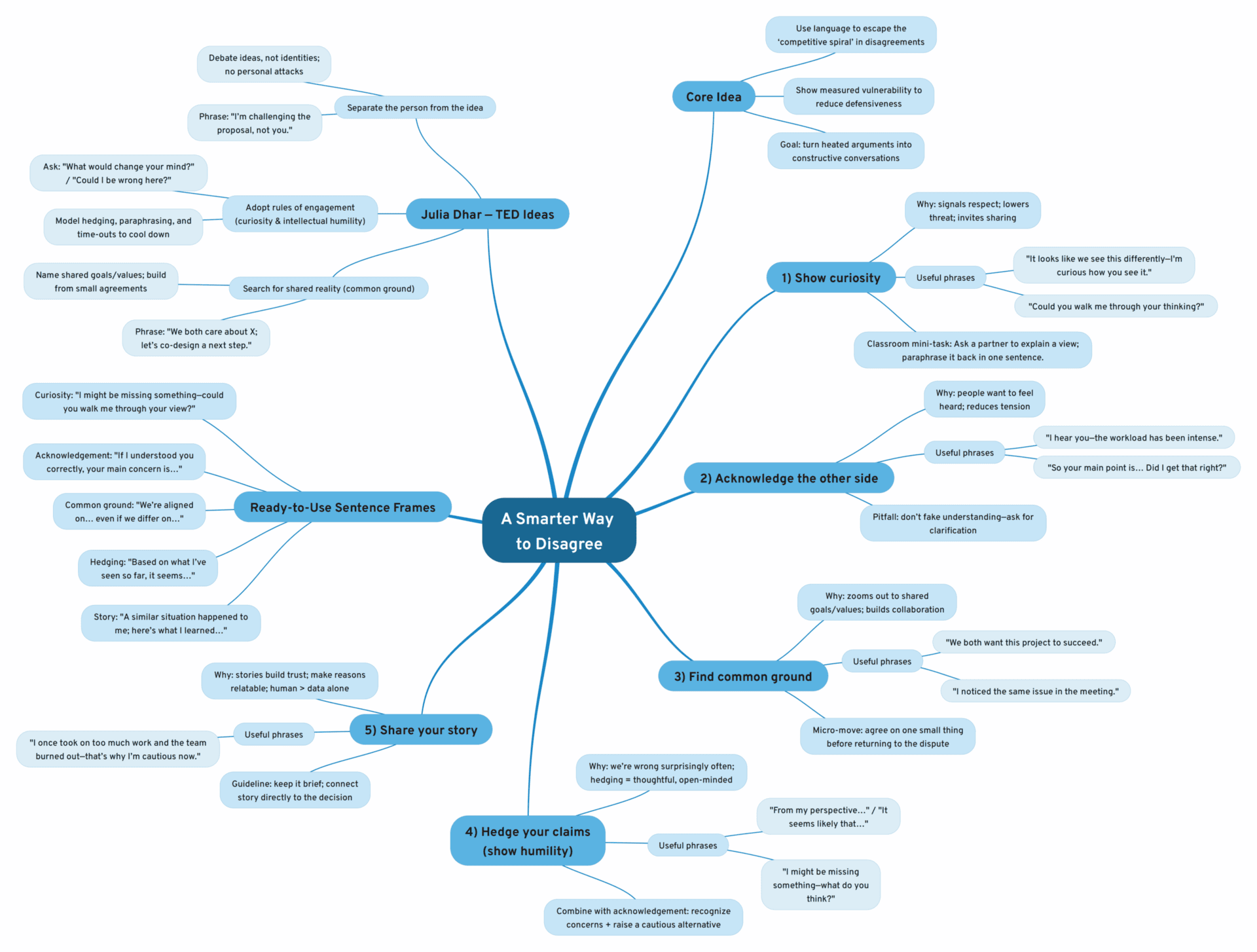
MIND-MAP

Use the mind-map below to learn, revise and remember the key points on how to handle disagreements.
POLL

Cast your vote in the poll below.

1. Which of the five tips do you find the most practical in your daily life?
2. Which strategy do you think is the hardest to use when you are in the middle of a disagreement?
3. If you had to practice just one of these tips this week, which one would you choose first?
1 vote

×

COMMENTS

Add your own dialogue that shows the use of these tips on handling disagreements.

Share your views and experience here.

Idioms with parts of the body

Idioms with parts of the body

Sorry, but lessons on The Blue Tree work only on a computer or a tablet.

Bardzo mi przykro, ale lekcje na platformie The Blue Tree działają jedynie na komputerze lub tablecie.

Do zobaczenia na większym ekranie 🙂

Zespół The Blue Tree

Idioms with parts of the body
Learn more words

THE BLUE TREE

Learn Words

CEF B1

CEFR B2

Upper
Intermediate

Practise English by describing this image

warm up

Answer the questions below. Listen to same people answering these questions. Report back or read the transcript to practise speaking.

TRANSCRIPT

Oh yes, when I tried investing in cryptocurrencies a couple of years ago. At first, it looked like I was making money, but then the market crashed, and I lost hand over fist. It felt like money was just slipping through my fingers. It taught me to be more cautious with risky investments and to do proper research before jumping into something just because everyone else is doing it.

TRANSCRIPT

That was during a hiking trip in the mountains last summer. I hadn’t trained properly, and the climb turned out to be much tougher than I expected. By the time I reached the final stretch, I was completely on my last legs. My body ached, and I could hardly breathe. Still, I pushed through, and the view at the top made the effort worthwhile. It was exhausting but also strangely rewarding.

TRANSCRIPT

Absolutely. I’ve set my heart on starting my own design studio one day. I’ve worked for agencies for years, and while it’s been good experience, I’d love to create a space where I can follow my own creative vision. It won’t be easy, but I’m motivated to gain the skills and build the network I need. Having such a clear goal makes me more focused and helps me stay disciplined with my choices.

part one

KEY LANGUAGE

There are many expressions and idioms with parts of the body. 

Study these flashcards. Flip the card to see a definition of each of the idioms.

DIVE DEEPER

Let’s dive deeper into the meaning of these idioms. Go through these flachacards. Check out the phonetic script, a Polish translation and an English example for each of these body idioms.

part two

TALKING POINTS

Discuss the questions below. 

Make sure you use the newly learnt idioms with parts of the body.

Category 1: Relationships and Social Situations

BulletDescribe a time when someone was “a pain in the neck” to you. How did you handle the situation, and what did you learn from it?
BulletHave you ever “fallen head over heels in love“? What was that experience like, and how did it change your perspective on relationships?
BulletWhen was the last time you had to “give someone a hand“? Why do you think helping others is important in building strong relationships?
BulletCan you think of a situation where someone “stuck their nose into your business“? How did you feel, and what’s the difference between being helpful and being intrusive?
BulletDescribe a moment when you had to “keep a straight face” in a serious situation. Why is it sometimes challenging to control our facial expressions?

Category 2: Personal Growth and Independence

BulletWhat does it mean to “learn to stand on your own two feet“? Share an example from your life when you had to become more independent.
BulletThink about a time when you had to “put your foot down” about something important. What was at stake, and how did people react to your firmness?
BulletDescribe a situation where you had to “think on your feet.” What skills do you think are most important when facing unexpected challenges?
BulletHave you ever “gotten cold feet” about a major decision? What caused your hesitation, and how did you overcome it or decide not to proceed?
BulletWhen have you needed to “get something off your chest“? Why is it important to share our worries and concerns with others?

Category 3: Money, Value, and Priorities

BulletTell us about something that “cost an arm and a leg.” Was it worth the expense? How do you decide when something expensive is justified?
BulletHave you ever had to “foot the bill” for others unexpectedly? How did that make you feel, and what did you learn about generosity and financial responsibility?
BulletWhat’s something you’ve “set your heart on” that seemed out of reach? How do you balance wanting something badly with being realistic about your goals?
BulletDescribe something you’ve “had your eye on” for a while. What makes you want it, and how do you decide when to make a purchase?
BulletThink about a time when someone was “making money hand over fist.” What do you think about rapid financial success, and how should it be handled responsibly?

Category 4: Awareness and Observation

BulletShare an experience where something important happened “under your nose” without you noticing. What does this teach us about paying attention to our surroundings?
BulletDescribe a place you “know like the back of your hand.” What makes a location become so familiar, and why do we form strong connections to certain places?
BulletWhen have you had to “keep an eye on” someone or something? What are the challenges and responsibilities that come with watching over others?
BulletTell us about a time when you couldn’t “put your finger on” what was wrong in a situation. How do you handle uncertainty when you sense something isn’t right?
BulletThink of someone you “set eyes on” and immediately knew would be important in your life. Do you believe in first impressions, and how reliable do you think they are?

MODEL ANSWERS

Complete five model answers to some of the questions from the previous exercise.

COMMENTS

Which of the idioms do you like the most?

Share your views and opinions below.

You need to be bored

You need to be bored

Sorry, but lessons on The Blue Tree work only on a computer or a tablet.

Bardzo mi przykro, ale lekcje na platformie The Blue Tree działają jedynie na komputerze lub tablecie.

Do zobaczenia na większym ekranie 🙂

Zespół The Blue Tree

You need to be bored
Learn more words

THE BLUE TREE

Personal
Productivity

CEF B1

CEFR C1

Advanced

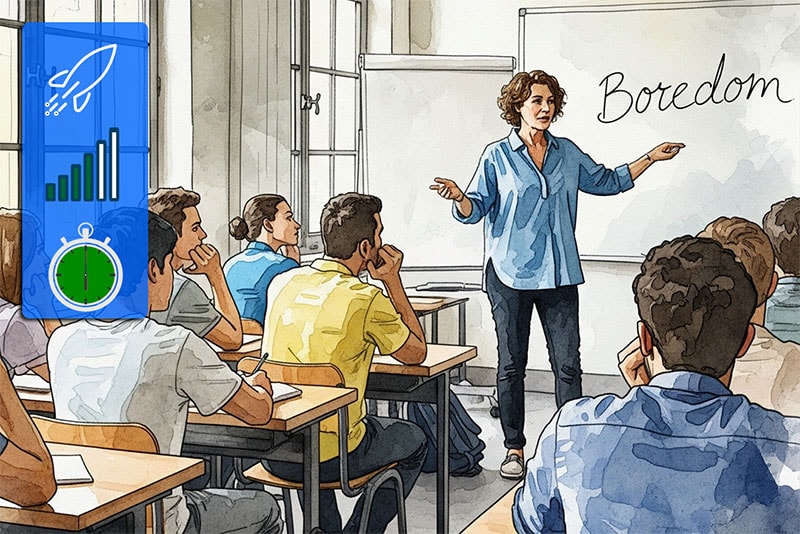
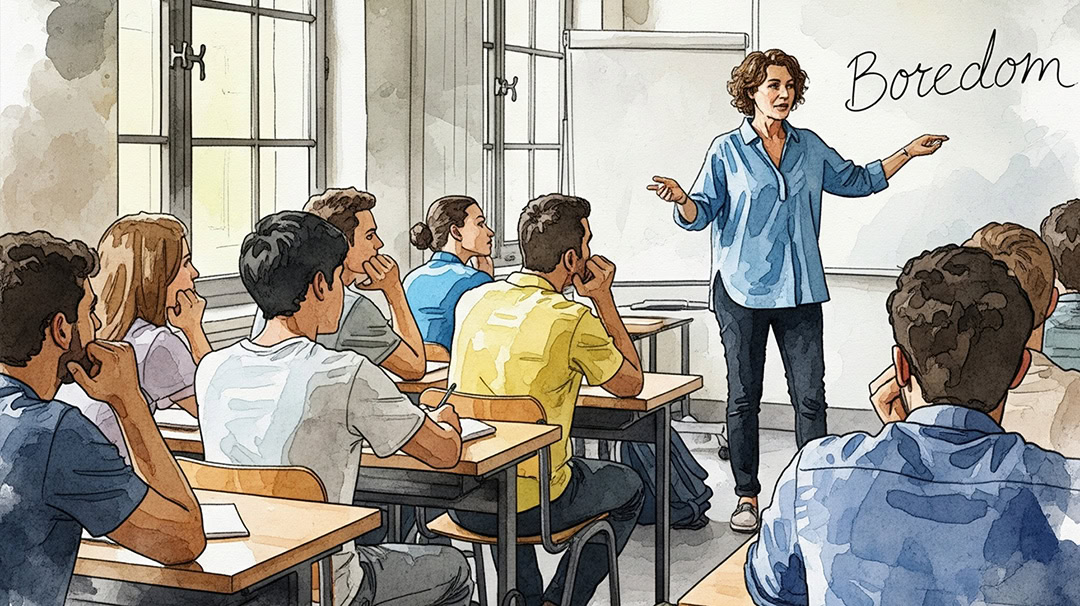
Practise speaking by describing this image

warm up

Answer the questions below. Then listen to the model answers and think how you could improve yours.

TRANSCRIPT

The last time I felt really bored was during a long bus ride last month. I had already finished my book, and my phone battery was almost dead, so I couldn’t use it. At first, I felt restless and annoyed. But then I started looking out of the window, daydreaming, and thinking about my plans for the future. Surprisingly, the time passed more quickly than I expected.

TRANSCRIPT

I think boredom can be both good and bad. On the one hand, it feels uncomfortable, and people usually want to escape from it quickly, for example by checking their phone. On the other hand, boredom gives our brain time to relax and wander. Sometimes the best ideas come when we are not busy. So I believe boredom is useful if we don’t run away from it immediately.

TRANSCRIPT

I probably spend too much time on my phone every day, maybe around four hours. I use it to check the news, scroll through social media, and chat with friends. Some of this time is important, but I know a lot of it is just a habit. I’ve noticed that when I put my phone aside in the evening, I feel calmer and sleep much better.

part one

Lecture on boredom

Read this short lecture on boredom. It is based on the video material we are going to see later in this lesson. 

So, imagine your brain is like a very busy city. When you’re constantly on your phone, watching videos, or scrolling through social media, all the roads are full of traffic. Your brain is working hard, but it’s just reacting to things.

But what happens when you get bored? That’s when something really cool happens. The traffic clears up, and your brain’s “default mode network” kicks in. Think of this like a special highway for your deep thoughts. It’s when you can think about important life questions, get creative, and maybe even figure out what you really want to do with your life.

The problem is, we’ve gotten so used to having our phones with us that we get uncomfortable with this quiet time. There is this study where people would rather give themselves a little electric shock than just sit with their own thoughts for 15 minutes! Can you believe that?

So, what’s the solution? You can try leaving your phone at home when you go to the gym, or maybe have a rule that you don’t use devices after a certain time in the evening. The idea is to give your brain a break from the constant noise and let it wander a bit.

The big takeaway here is that boredom isn’t a bad thing. It’s actually a gift that can help you feel happier and find more meaning in your life. So next time you’re bored, don’t reach for your phone. Just let your mind do its thing!

COMPREHENSION

Answer these questions about boredom.

1 How is our brain like a busy city?

2 What happens when we are bored?

3 How do people feel about this quiet time and why is it a problem?

4 What did people choose in one study not to feel bored?

5 What is the main message or “big takeaway” from this lecture?

part two

KEY LANGUAGE

Stude these words. Make sure you understand them well before you watch the video.

VIDEO

Watch the first part of the video.

COMPREHENSION

Answer these questions. Refer to the information from the video.

  • ⌚ 0:06 What will we lack if we are not bored?
  • ⌚ 0:26 What does being bored activate in our brain?
  • ⌚ 0:44 How do people feel when the Default Mode Network is switched on?
  • ⌚ 1:07 How did people react in the empty room experiment?
  • ⌚ 1:29 What does our mind start to think about when it is bored?
  • ⌚ 1:42 What do current generation doesn’t know about in comparison to previous ones?

part three

KEY VOCABULARY

Go through this set of flashcards.

VIDEO

Watch the second part of the video.

COMPREHENSION

Answer these questions. Refer to the information from the video.

  • ⌚ 1:51 Why aren’t we even looking for these answers?
  • ⌚ 2:03 How did we almost completely shut down the Default Mode Network?
  • ⌚ 2:26 Is this good or bad that we have eliminated boredom?
  • ⌚ 2:35 What may be a remedy for depression and anxiety?
  • ⌚ 3:00 What does the speaker promise will happen if we leave our phones away?
  • ⌚ 3:15 What experiment does he encourage us to do?
  • ⌚ 3:39 What are the benefits of getting bored?

part four

KEY VOCABULARY

Make sure you know all the vocabulary items from these flashcards. Read the examples aloud.

VIDEO

Watch the last part of the video.

COMPREHENSION

Answer these questions. Refer to the information from the video.

  • ⌚ 3:46 Does the speaker follow his own advice?
  • ⌚ 3:59 What’s the No Device Policy about?
  • ⌚ 4:09 Why don’t they use phones during meals?
  • ⌚ 4:18 What’s the third strategy that the speaker mentioned?
  • ⌚ 4:44 What does these periods of social media fasting remind him of?
  • ⌚ 5:03 What do people worry about when they are disconnected?
  • ⌚ 5:23 What is not an emergency?
  • ⌚ 5:43 What message does he have for his kids?

POLL

Cast your vote in the poll below.

1. How do you usually react when you start feeling bored?
2. How much time do you spend on your phone every day (outside of work/school)?
3. Do you believe boredom can be useful for you?
3 votes

×
w

DISCUSSION

Dialogue

Read or role-play this dialogue.

Pete: (chuckling) Alita, you walk around glued to your phone as if it were an extra limb. Don’t you ever switch off?

Alita: Oh, come on, Pete. You make it sound worse than it is. But honestly, I do get a bit anxious without it. Silence feels so dull these days.

Pete: That’s exactly the point. We’re so used to constant distraction that even five minutes of peace feels tedious. I was bored to death waiting for the bus yesterday, but then I actually started thinking about some new ideas for work.

Alita: That’s interesting. When I’m fed up, I normally just scroll through social media to kill time. But I suppose boredom has its benefits—it forces the mind to wander.

Pete: Exactly. It’s not always a bad thing. Having a short attention span because of our phones makes it harder to just sit with our own thoughts.

Alita: You’re right. Maybe we should make a pact: next time we feel restless, we’ll resist the urge to check our phones straight away.

Pete: Deal. Let’s give boredom a fair chance. Who knows? It might even make life a bit more meaningful.

OVER TO YOU

Discuss these questions.

BulletPete says Alita is “glued to her phone.” Do you know anyone like that? How do you feel when you spend too much time on your phone?
BulletWhat’s the most tedious or dull task you’ve had to do recently? Did you find a way to make it less boring?
BulletSome people say they are “bored to death” during long meetings or classes. Do you think boredom in these situations can actually spark creativity, or is it just wasted time?
BulletHow do you usually kill time when you are waiting for something (e.g., at the bus stop, in a queue, during a commute)?
BulletAlita and Pete make a promise to give boredom “a fair chance.” Would you be willing to do the same? How would you cope with the restlessness of not checking your phone?

MIND-MAP

Use the mind-map below to have a more in-depth conversation about this topic.

Be respectful to your co-workers

lesson glossary

COMMENTS

Share your views and experience here.

Speaking Cards – Breaking the ice

Speaking Cards – Breaking the ice

Sorry, but lessons on The Blue Tree work only on a computer or a tablet.

Bardzo mi przykro, ale lekcje na platformie The Blue Tree działają jedynie na komputerze lub tablecie.

Do zobaczenia na większym ekranie 🙂

Zespół The Blue Tree

Speaking Cards – Breaking the ice
Learn more words

THE BLUE TREE

Everyday English

CEF B1

CEFR B1

Intermediate

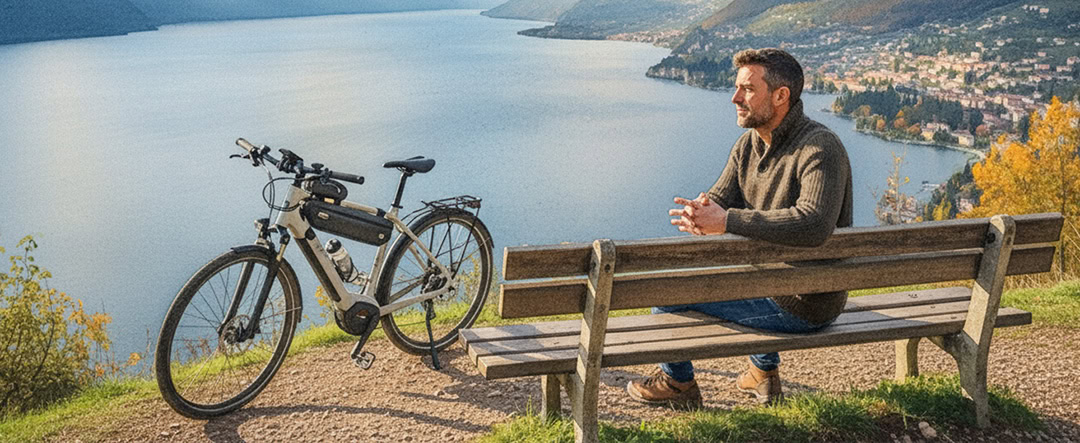
Practise English by describing this image

part one

Play this game. Answer the questions from the cards. Ask follow up questions to learn more about your partner.

part two

Model answers

Read and listen to a model answer to some of the questions from this game. The first one is for the question: What’s the biggest risk you have taken in your life?

Move your mouse over the bold words to see their meaning in Polish.

The biggest risk I have taken in my life was moving to another country to study and work. I didn’t know anyone there, and my English was not very strong at that time. I was worried about feeling lonely and failing, but I decided to try anyway. At first, everything was difficult, but little by little I made friends and learned new skills. Looking back, it was a big challenge, but it changed me and made me much stronger.

czuć się samotnym

krok po kroku / stopniowo

patrząc wstecz

Question #2

Now, do the same with this question: If you could relive one day in your life, which day would you choose and why?

If I could relive one day in my life, I would choose my graduation day. It was a once-in-a-lifetime experience, because all my family was there to support me. I had studied hard for years, and finally everything paid off. I remember standing on the stage and feeling nervous, but when I heard my name, I was over the moon. That day showed me that if you keep working hard, you can finally reach the light at the end of the tunnel.

niepowtarzalne przeżycie

opłaciło się / przyniosło efekty

zobaczyć światełko w tunelu (po trudnym okresie)

Question 3

Study the model answer for the question: Do you think climate change will change how we live in the next 20 years? How?

Yes, I think climate change will strongly affect our lives in the next 20 years. Many people may have to move because of rising sea levels, and we will probably need to cut down on waste and energy use. Some countries might experience extreme weather more often. But I also believe new technology can help. If we cooperate and make better choices, maybe we will turn the tide before it’s too late.

podnoszący się poziom mórz

ograniczyć / zmniejszyć

odwrócić bieg wydarzeń

Question #4

Study the model answer to the question: 

One small daily habit that improves my mood is going for a short walk in the morning. Fresh air always gives me a positive boost before the day begins. During the walk, I usually listen to music or a podcast, which helps me switch off from stressful thoughts. Sometimes I meet neighbors and exchange a few words. It may seem simple, but this routine helps me to start the day on the right foot.

pozytywny zastrzyk energii

odciąć się / wyłączyć się

zacząć dzień dobrze / pomyślnie

Question #5

Study the model answer to the question: What makes a good friend: honesty, loyalty, or a sense of humor?

For me, a good friend is someone who shows unconditional loyalty. Of course, honesty and humor are also important, but loyalty means that your friend will stay by your side even when life gets hard. A true friend won’t let you down when you need support the most. At the same time, a sense of humor helps you see the funny side of problems, which makes difficult moments much easier to handle together.

bezwarunkowa lojalność

zawieść kogoś

zobaczyć zabawną stronę sytuacji

COMMENTS

Choose one or more questions from this game and write your own answer. Post it here or send it to your teacher.