

The Story of Ada Lovelace: The World’s First Computer Programmer

Bardzo mi przykro, ale lekcje na platformie The Blue Tree działają jedynie na komputerze lub tablecie.
Do zobaczenia na większym ekranie 🙂
Zespół The Blue Tree
back to HOME > General Interest > Science stuff >

THE BLUE TREE
Science Stuff

CEFR B1
Intermediate
warm up
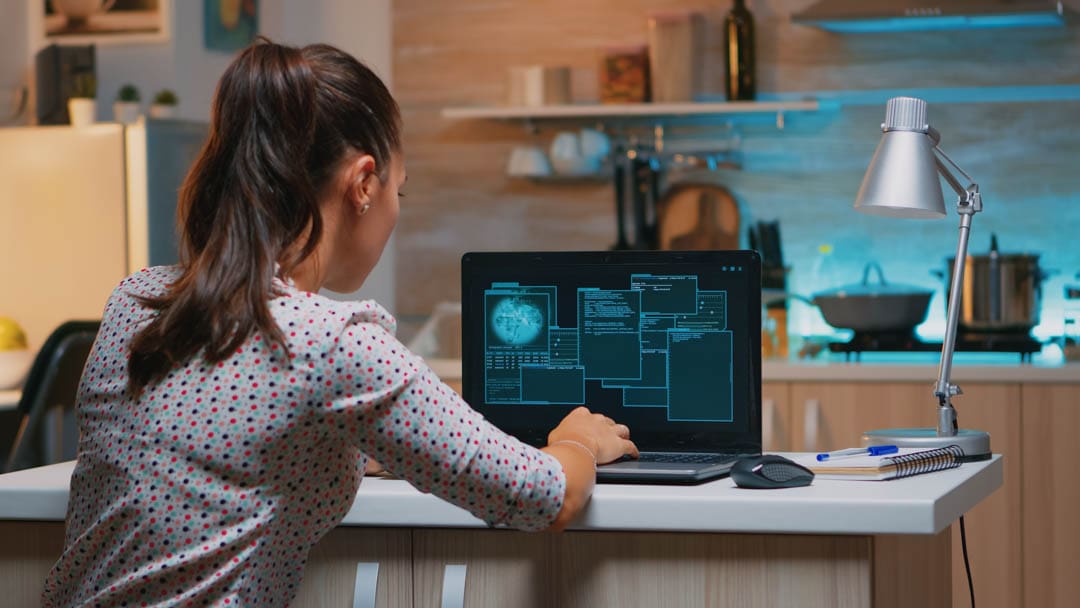
Answer the questions below. Then listen to the model answers and think about how you could improve yours.
| How good are you with computers? Do you like using a computer? |
TRANSCRIPT
I’d say I’m pretty comfortable with computers! I like using them, especially for creative work like graphic design or writing. They’re such versatile tools, and I love how you can do so many things from just one device. Plus, it’s fun to explore new programs and learn little tech tricks!
| How important are computers in your work/life? |
TRANSCRIPT
Computers are essential in my work and life. Nearly everything I do is either on a computer or heavily reliant on them—from managing projects to keeping in touch with colleagues and clients. They streamline so many tasks and make complex work much more manageable. I really can’t imagine working without them.
| What do you think the future holds as regards computer development? |
TRANSCRIPT
I think we’re going to see computers continue to become even more integrated into our daily lives. With advancements in AI, quantum computing, and machine learning, it’s likely that computers will be able to assist us in ways we can’t fully predict yet. They might get more intuitive, almost like having a personal assistant that understands our needs and habits. It’s exciting but also a bit humbling to think about where technology could lead us!

part one
key language
watch the video
COMPREHENSION
- ⌚ 0:10 Who was Ada Lovelace?
- ⌚ 0:18 What was she the first person to recognize?
- ⌚ 0:31 What is she famous for?
- ⌚ 0:55 What do we know about Ada’s early childhood?
- ⌚ 1:16 Who did she get in touch with when she was in her twenties?
- ⌚ 1:20 How did she use these contacts?

Andrew Cross
Crosse was an early pioneer and experimenter in the use of electricity.

Charles Babbage
A mathematician, philosopher, inventor and mechanical engineer, Babbage originated the concept of a digital programmable computer.

Sir David Brewster
He was a British scientist, inventor, author, and academic administrator. In science he is principally remembered for his experimental work in physical optics, mostly concerned with the study of the polarization of light

Charles Weston
He was an Australian horticulturist and was responsible for the afforestation of Canberra.

Micheal Faraday
He was an English scientist who contributed to the study of electromagnetism and electrochemistry. His main discoveries include the principles underlying electromagnetic induction, diamagnetism and electrolysis.
part two
key language
watch the video
COMPREHENSION
- ⌚ 1:24 How did Ada describe her approach to science?
- ⌚ 1:31 Who was her good friend and fellow mathematician?
- ⌚ 1:36 What was Ada particularly interested in?
- ⌚ 1:51 Why are Ada’s notes on Babbage’s article important?
- ⌚ 2:01 What happened to Ada in 1852?
- ⌚ 2:10 What is Ada’s contribution in the development of modern computers?
- ⌚ 2:25 What questions was she asking in relation to the analytical engine? Is this question valid today?
DISCUSSION

DIALOGUE
Alita and Pete meet at a café after reading about Ada Lovelace. They discuss her remarkable achievements and reflect on how her story still inspires us today.

OVER TO YOU
Discuss these questions. Refer to the topic of the lesson and your own experience.
 | Have you ever been a keen student of something? |
| What kind of achievements do you think should be regarded as important in today’s world? |
| Have you ever carried out a difficult task or project successfully? |
| What’s your opinion about working in a collaborative way versus working alone? |
| Do you think it’s sometimes okay to cut short your plans or goals? |
POLL
Cast your vote in the poll.













COMMENTS
How important are computers in today’s world? How do you see the development of the computer sciences? What are the pros and cons of computers and the Internet?
Share your views and opinions below.