
Bardzo mi przykro, ale lekcje na platformie The Blue Tree działają jedynie na komputerze lub tablecie.
Do zobaczenia na większym ekranie 🙂
Zespół The Blue Tree

THE BLUE TREE
Learn from TED

CEFR B2
Upper
Intermediate

warm up
Answer these questions. Use the model answers to practice listening and reading.
| We spend much of the day with people at work. How important is it for you to have a good rapport with them? |
TRANSCRIPT
Having a good rapport with my coworkers is really important to me. It makes the workday more enjoyable and helps us solve problems together more easily. When we understand and trust each other, there’s less stress and more teamwork. Even small things like saying hello or asking how someone is can improve the atmosphere and make work feel more positive.
| In any team there are people who can be a bit annoying. How do you deal with such people? |
TRANSCRIPT
I try to stay calm and professional. If someone annoys me, I remind myself that we’re all different and that I probably irritate others sometimes too! I focus on our common goals and try to talk to the person politely if the problem continues. Often, just being kind and respectful helps improve the situation without creating more conflict.
| What are the benefits of being on good terms with your workmates? |
TRANSCRIPT
There are many benefits. When you get on well with your colleagues, you can work faster because you help each other more. You also feel more relaxed, which is great for your mental health. It’s easier to ask for help, share ideas, and even enjoy a few laughs. Being friendly doesn’t mean you have to be best friends, but it really makes a difference.

part one

KEY LANGUAGE
Go through the flashcards below. Make sure you understand all the words and expressions.

VIDEO
Watch the first part of the video.

COMPREHENSION
Answer these questions. Refer to the information from the video.
- ⌚ 0:22 How do you answer the question: “Who do you want to be?”
- ⌚ 0:33 How important is the way we treat people?
- ⌚ 0:42 What does it mean to lift people up?
- ⌚ 0:51 What does it mean to hold people down?
part two
KEY LANGUAGE
Go through the flashcards below. Make sure you understand all the words and expressions.
VIDEO
Watch the second part of the video.
COMPREHENSION
Answer these questions. Refer to the information from the video.
- ⌚ 1:14 What kind of behaviour does incivility include?
- ⌚ 1:26 What does the example of texting while others are talking illustrate?
- ⌚ 2:10 Why did her father end up in hospital?
part three
KEY LANGUAGE
Go through the flashcards below. Make sure you understand all the words and expressions.
VIDEO
Watch the third part of the video.
COMPREHENSION
Answer these questions. Refer to the information from the video.
- ⌚ 2:33 How did her colleagues treat her?
- ⌚ 2:38 What did she decide to do about this situation?
- ⌚ 2:43 What theory does Christine Pearson have on this topic?
- ⌚ 2:57 Does incivility affect the bottom line?
- ⌚ 3:31 What were some answers they got for their survey on incivility?
- ⌚ 3:44 Explain what this date mean: 66%, 80%, 12%
- ⌚ 4:02 How much money was Cisco losing due to incivility?
- ⌚4:32 What did they find as regards people who experience incivility?
part four
KEY LANGUAGE
Go through the flashcards below. Make sure you understand all the words and expressions.
VIDEO
Watch the fourth part of the video.
COMPREHENSION
Answer these questions. Refer to the information from the video.
- ⌚ 5:20 What happened to the performance of witnesses of incivility?
- ⌚ 5:33 Why does Christine say that incivility is like a bug?
- ⌚ 5:44 Where can we catch this ‘bug’?
- ⌚ 5:55 Do you remember the areas that incivility affect us?
- ⌚ 6:26 What are some words that can trigger rudeness?
- ⌚ 6:41 How did seeing “rude” words affect the participants of this study?
- ⌚ 7:41 What happened when a doctor shouted at his team?
part five
KEY LANGUAGE
Go through the flashcards below. Make sure you understand all the words and expressions.
VIDEO
Watch the fifth part of the video.
COMPREHENSION
Answer these questions. Refer to the information from the video.
- ⌚ 8:22 What is the number one reason for incivility?
- ⌚ 8:31 What is the second reason for lack of civility?
- ⌚8:53 Do ‘jerks’ get ahead in the long run?
- ⌚ 9:08 What is the main factor behind executive failure according to research?
- ⌚ 9:34 Does civility pay?
- ⌚ 9:53 What does it mean to be truly civil?
- ⌚ 10:04 What is “radical candour”?
- ⌚ 10:23 How do people view others who are civil towards them?
- ⌚ 10:35 What are the two characteristics of a civil person?
part six
KEY LANGUAGE
Go through the flashcards below. Make sure you understand all the words and expressions.
VIDEO
Watch the sixth part of the video.
COMPREHENSION
Answer these questions. Refer to the information from the video.
- ⌚ 11:11 What do people want from their leaders?
- ⌚ 11:31 Explain this data: 56%, 92%, 1.1x, 55%
- ⌚ 11:58 How can we make people feel more respected?
- ⌚ 12:15 What is the 10-5 way?
- ⌚ 13:16 How does Doug’s story illustrate the fact that civility can improve company performance?
- ⌚ 13:37 What kind of leader was Doug?
- ⌚ 14:06 How did Doug show his employees that he valued them?
- ⌚ 15:22 What does Christine Porath encourage us to do in the end?
POLL
Cast your vote in the poll.
DISCUSSION
Dialogue
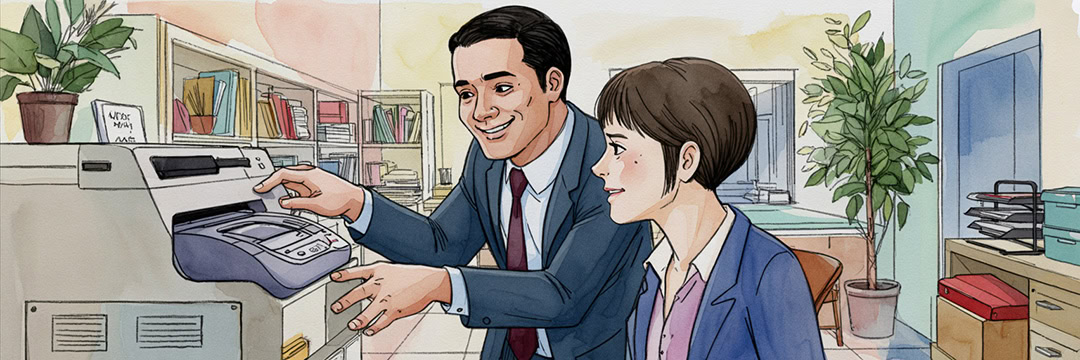
Alita and Pete are having lunch together in the office kitchen. Earlier that morning, a colleague snapped at someone during a team meeting. This leads them into a discussion about civility and respect in the workplace.
Alita:
Did you notice what happened in the meeting today? I felt bad for Marta. She didn’t deserve that reaction.
Pete:
Yeah, I saw it too. It was completely uncalled for. Even if someone’s having a bad day, that’s no excuse to be rude.
Alita:
Exactly. A little kindness goes a long way. We all have our own stress, but we still need to treat each other with respect.
Pete:
And it affects the whole atmosphere. After that moment, the mood in the room totally changed.
Alita:
True. People became quiet and less engaged. It shows how one negative comment can impact the entire team.
Pete:
I think we sometimes underestimate the power of small, respectful actions. Saying “thank you,” or even just smiling, can change how people feel at work.
Alita:
Absolutely. Civility is more than just being polite—it builds trust and makes collaboration easier.
Pete:
And the best part? It doesn’t cost a thing.
Alita:
Right! It’s free and makes everyone’s day better. We should all be more mindful of how we speak to each other.
OVER TO YOU
Discuss these questions.
 | Why do you think some people behave rudely at work? |
| What are some small things we can do each day to show respect to our coworkers? |
| Do you think people are more or less respectful today than they were in the past? Why? |
| Have you ever witnessed or experienced a situation where someone’s kindness changed the atmosphere? What happened? |
| Do you agree with the idea that civility improves teamwork? Why or why not? |
MIND-MAP
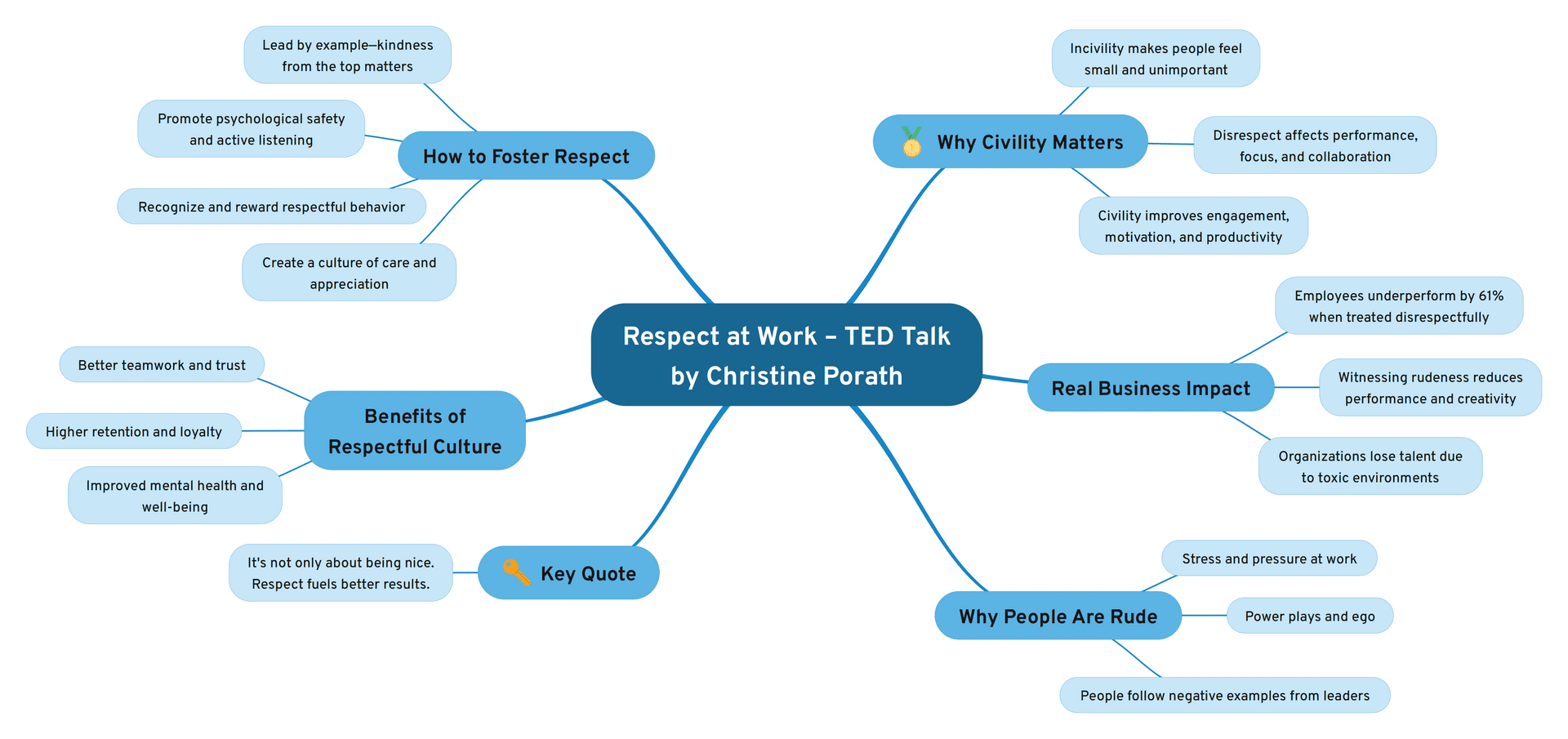
Use the mind-map below to have a more in-depth conversation about this topic.
COMMENTS
Share your views and experience here.
0 Comments