




Bardzo mi przykro, ale lekcje na platformie The Blue Tree działają jedynie na komputerze lub tablecie.
Do zobaczenia na większym ekranie 🙂
Zespół The Blue Tree
back to HOME > Personal Development > Better Communicator >

THE BLUE TREE
Better
Communicator

CEFR B1
Intermediate

warm up
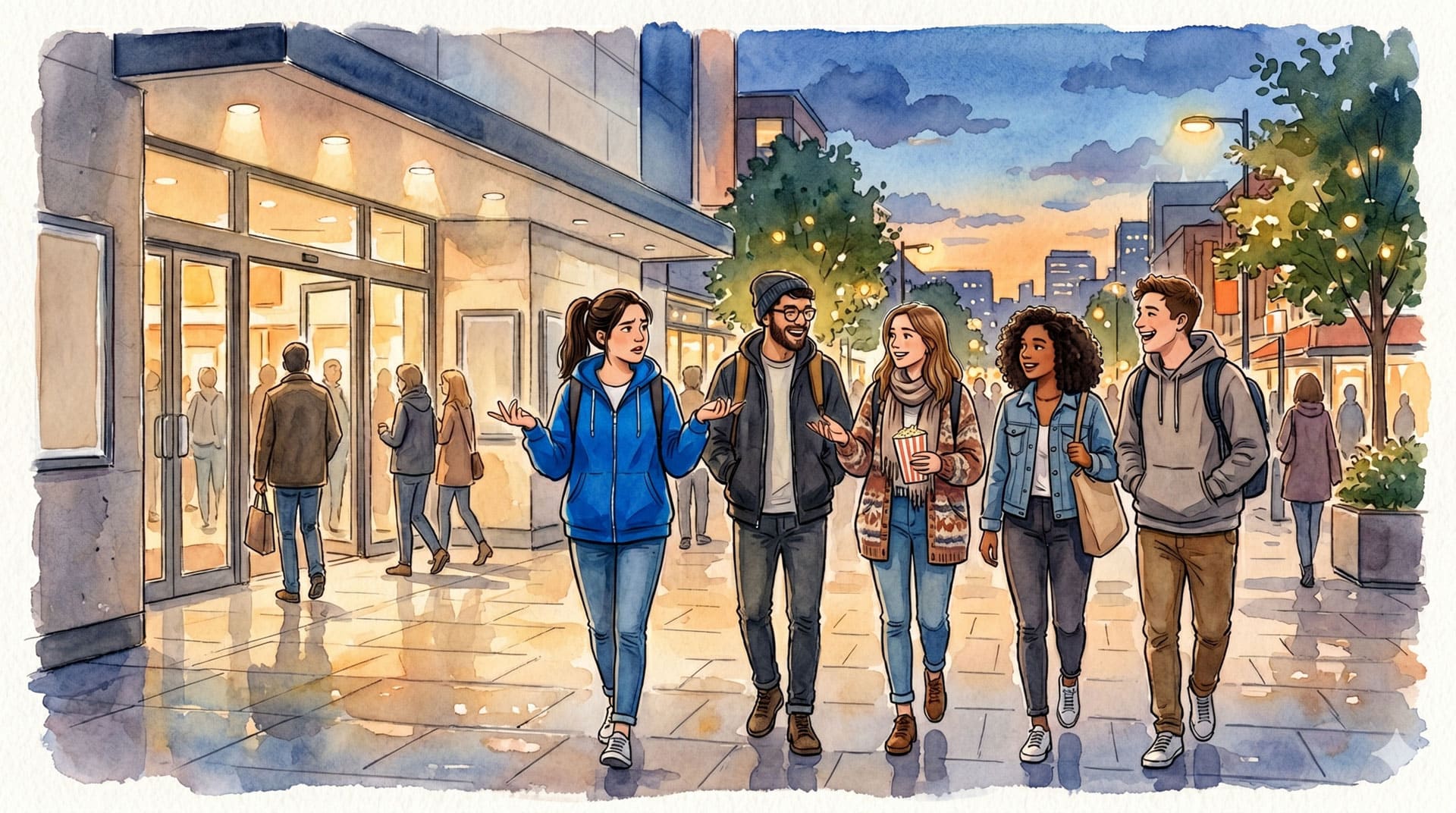
Answer the questions below. Listen to model answers and read the transcript to get some more practice in conversational English.
| Why does language change so quickly today compared with in the past? |
TRANSCRIPT
Language probably changes faster today because communication itself has changed. In the past, new words spread slowly through books or formal channels, but now a word can travel across the world in a single day. Social media, streaming, and global content seem to accelerate everything. From an analytical perspective, the more connected we are, the faster anything spreads — including expressions, jokes, and ways of speaking.
| What role do young people and online culture play in creating new words? |
TRANSCRIPT
I find this fascinating, because young people often experiment with language in really creative ways. They shorten words, mix meanings, and turn jokes into expressions everyone starts using. Online culture gives them a huge platform — a single video can introduce a new word to millions overnight. I think it shows that language belongs to people who actually use it, not just to dictionaries or grammar books.
| Why do some new words disappear quickly while others stay in everyday use? |
TRANSCRIPT
I think the words that survive usually fill a real gap in communication. If an expression captures something useful that older words don’t quite express, people keep using it naturally. Words that are too tied to a specific trend or moment tend to fade quickly because the context disappears with them. In a way, language has its own quiet selection process — the most useful expressions simply last longer.

part one

READING
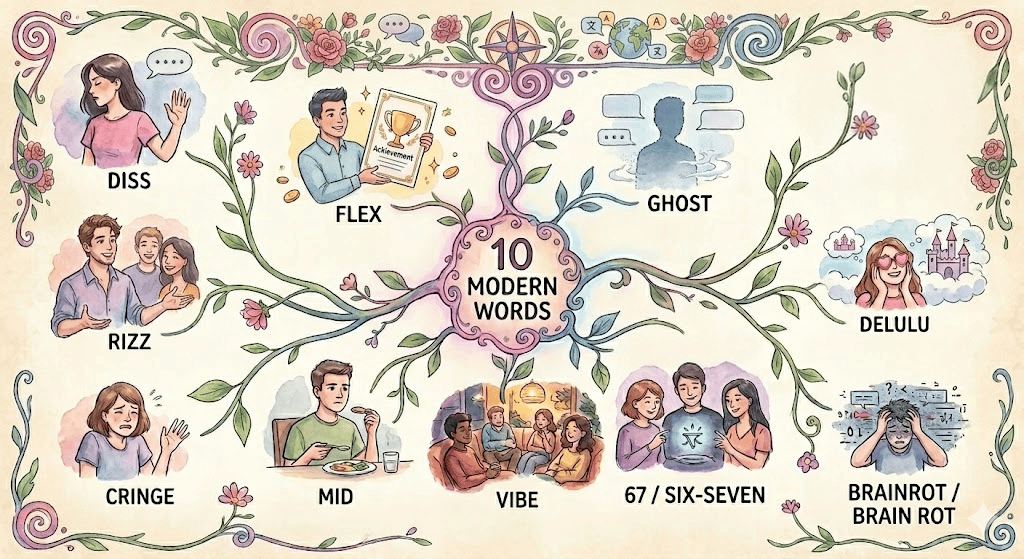
Read an article about ten new words. How many of them did you know before?
🌍 How Language Is Changing Today
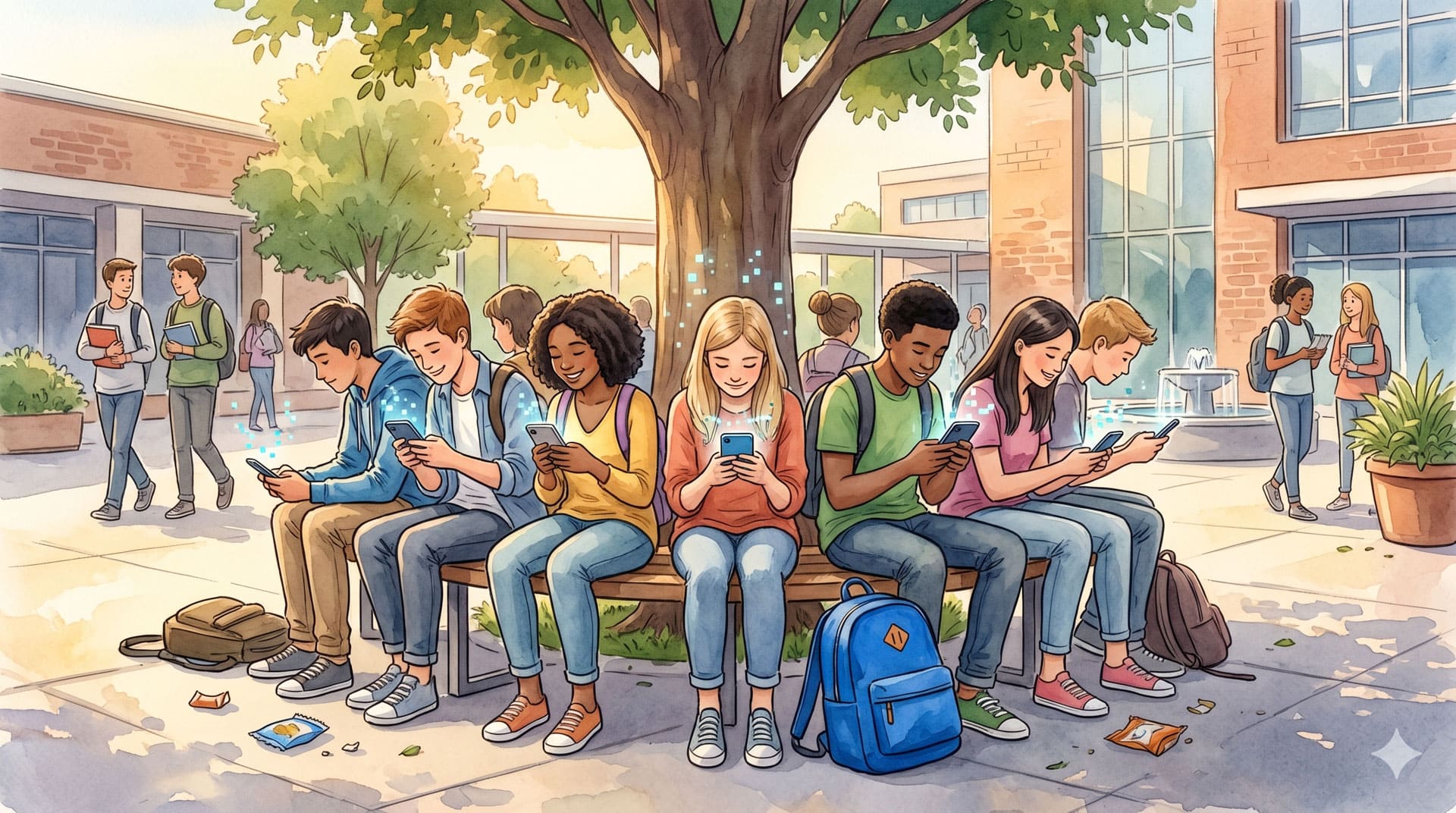
Language is never still. It moves, grows, and adapts to the world around us. In the past, new words came slowly, often from books, science, or formal communication. Today, things are different. Social media, music, and online culture create and spread new words almost overnight. Young people especially enjoy playing with language, shortening words, and giving old words new meanings. Some of these expressions may sound strange at first, but they quickly become part of everyday English. Let’s look at some popular modern words and see where they come from and how people use them.
Question: According to the introduction, how has the way new words appear and spread changed compared with the past?
1. Diss
The word “diss” comes from “disrespect.” It started in African American communities and became popular through hip-hop culture in the 1980s and 1990s. In rap music, artists often “dissed” each other in songs to show dominance or express anger. Today, the word is used more generally.
Meaning: to insult someone or show a lack of respect
Dialogue:
– Did you hear what Tom said about your presentation?
– Yeah… I think he was trying to diss me in front of everyone.
Question: Where did the word “diss” originate, and how did it become widely known?
2. Rizz
The word “rizz” is a shortened form of “charisma.” It became popular thanks to internet personalities and streamers, especially young creators online. It spread quickly through platforms like TikTok.
Meaning: natural charm, especially in romantic situations
Dialogue:
– How did he get her number so easily?
– I don’t know, he’s just got rizz, I guess.
Question: Who helped make the word “rizz” popular, and on which platform did it spread most quickly?
3. Ghost
The word “ghost” is not new, but its modern meaning is. Traditionally, a ghost is a spirit. However, in digital communication, it took on a new sense.
Meaning: to suddenly stop replying to messages without explanation
Dialogue:
– Are you still talking to Anna?
– No, she just ghosted me last week.
Question: How has the meaning of “ghost” changed in the context of digital communication?
4. Flex
Originally, “flex” meant to bend a muscle. In hip-hop culture, it began to mean showing strength or success. Over time, the meaning changed again.
Meaning: to show off something, often in a proud or exaggerated way
Dialogue:
– Why did he post that photo with his new car?
– He’s just flexing, nothing more.
Question: How has the meaning of “flex” developed from its original sense to the way it is used today?
5. Cringe
The word “cringe” has existed for a long time and originally meant to move back in fear or embarrassment. Online culture gave it a stronger emotional meaning.
Meaning: something very embarrassing or awkward
Dialogue:
– Did you see his dance video?
– Yeah… it was kind of cringe, to be honest.
Question: How did online culture change the meaning of the word “cringe”?
6. Mid
The word “mid” comes from “middle.” It became popular online as a quick way to describe something that is neither good nor bad.
Meaning: average, not very interesting or impressive
Dialogue:
– What did you think of the movie?
– It was mid. Not terrible, but not great either.
Question: Where does the word “mid” come from, and what kind of opinion does it usually express?
7. Vibe
The word “vibe” comes from “vibration.” In the past, it was used in music and spiritual contexts. Today, it is very common in everyday English.
Meaning: the general feeling or atmosphere of a person, place, or situation
Dialogue:
– Do you like this café?
– Yeah, I love the vibe here. It’s really relaxed.
Question: Where was the word “vibe” originally used, and how has its use changed over time?
8. 67 / Six-seven
The expression “67” is usually pronounced “six-seven.” It became popular online in 2025, especially on TikTok and Instagram Reels. It is connected with the rap song “Doot Doot (6 7)” by Skrilla, and also with basketball videos, especially because LaMelo Ball is 6 feet 7 inches tall. Later, young people started repeating it as a joke, often with a hand gesture.
Meaning: this is the difficult part — 67 does not have one clear meaning. It can be used as a funny reaction, an inside joke, or a way of saying something is “so-so,” “random,” or hard to explain. More than meaning something precise, it shows that someone knows the meme and belongs to the online moment.
Dialogue:
– What did you think of that new advert?
– Honestly? It was kind of 67.
– You mean strange but funny?
– Exactly. I don’t even know if I liked it, but I’ll remember it.
Question: Where does the expression “67” come from, and why is its meaning hard to define?
9. Delulu
The word “delulu” comes from “delusional.” It became popular online, especially on TikTok, where people use it in a playful way. Originally, delusional is a serious word connected with believing things that are not true. However, delulu is usually softer, funnier, and less formal.
Meaning: to believe something unrealistic, often because it feels exciting, romantic, or comforting
Dialogue: – She liked one of his photos, and now he thinks they’re going to get married. – That’s a bit delulu, don’t you think? – Maybe, but at least he’s optimistic.
Question: How does the meaning of “delulu” differ from the original word “delusional”?
10. Brainrot / Brain rot
The expression “brainrot” combines the words “brain” and “rot.” It became popular in online culture as a humorous way to talk about spending too much time with low-quality internet content, especially short videos and memes. It suggests that too much scrolling can make someone’s mind feel tired, unfocused, or full of nonsense.
Meaning: a funny way to describe the negative effect of too much online content on attention, thinking, or taste
Dialogue: – I watched two hours of random videos about cats arguing with printers. – That sounds like pure brainrot. – I know, but I couldn’t stop watching.
Question: What does the word “brainrot” describe, and why has it become popular in online culture?
🌱 Final Thought
These words may seem informal or even strange at first, but they tell us something important. Language is not just a tool for communication—it reflects how people live, think, and connect with each other. When society changes, language changes with it. In a way, language is like the soul of society. It grows, adapts, and expresses the spirit of its time.

MODERN LANGUAGE IN USE
Read or role play this short dialogue. These people are using the words you have just learnt about.
– Did you see that influencer talking about climate change?
– Yeah, but honestly, it felt like he was just flexing his lifestyle, not really helping.
– Exactly. And when people disagreed, he kind of dissed them in the comments.
– That’s the problem. If you want people to listen, you need some rizz, not attitude.
– True. Also, I noticed he stopped replying after a while.
– Yeah, he basically ghosted the whole discussion.
– And the video itself?
– Hmm… the message was important, but the delivery was mid.
– I agree. Some parts were even a bit cringe.
– Yeah, especially that dramatic ending. It was almost delulu, like he thought one video would save the whole planet.
– And the comment section was full of brainrot. People were arguing with memes instead of facts.
– True. Someone even replied “67” under a serious comment, and nobody knew what it meant.
– Still, I think people care about the topic.
– Definitely. The vibe is changing. People want real action now.

DISCUSSION QUESTIONs
Discuss these questions.
| 1 | Many people believe that older generations resist new words while younger ones welcome them. Why might this difference between generations be so noticeable today? |
| 2 | Slang often expresses complex ideas in a single short word. Does this make everyday communication clearer, or does something get lost along the way? |
| 3 | Children today use words their parents have never heard before. Why does this kind of language gap appear so quickly within families? |
| 4 | Some employers say slang has no place in professional communication, while others see it as a normal part of modern life. What’s best — keeping work language formal, or allowing it to evolve naturally? |
| 5 | Advise a parent who feels confused or even excluded when their teenage children use slang at home. |

part two
modern words quiz
Do this quiz.


LEADERBOARD
LEADERBOARD CHART
Check your score on the leaderboard below.
LEADERBOARD GRAPH
Have a look at the leaderboard graph below.

COMMENTS
Share your views and experience here.
0 Comments