
Dwoję się i troję, żeby lekcje na TBT były skuteczne
How Paul Nation’s Four Strands Can Help Us Design Better Language Lessons
The title of this post is based on a Polish idiom: “dwoić się i troić”, which means trying very hard, doing everything you can, almost multiplying yourself, to make something work. In the case of The Blue Tree, it captures a simple idea: I do not want TBT lessons to be only attractive. I want them to be effective.

Every English teacher knows this small, uncomfortable moment.
You finish a lesson and think: That went well.
The students talked. The materials looked good. The video was interesting. The discussion was lively. Nobody fell asleep. Small victory, right?
But then another question quietly appears in the back of your mind:
Was the lesson only attractive, or was it also effective?
This question matters more and more today. We have beautiful slides, videos, apps, games, flashcards, AI tools, interactive platforms, quizzes, images, mind maps and colourful materials. We can make almost any lesson look engaging. But attractiveness is not the same as learning.
A lesson may be fun and still unbalanced.
A lesson may look modern and still give students too little speaking practice.
A lesson may be full of vocabulary and still give students too few chances to use it fluently.
A lesson may be very communicative and still give students too little help with accuracy.
This is where Paul Nation’s model of the four strands becomes extremely useful.
It gives us a simple but powerful question:
Does my language programme give learners a balanced diet of language learning?
I like the word diet here. A good diet is not one magic ingredient. You cannot live on protein alone. You cannot live on fruit alone. And, sadly, you cannot live on coffee alone, although many teachers have tried.
In the same way, a good language course should not be based only on grammar, only on speaking, only on vocabulary, or only on attractive content. It needs balance.
Paul Nation, a well-known researcher in vocabulary and language teaching, suggests that a strong language programme should include four main strands:
- Meaning-focused input
- Meaning-focused output
- Language-focused learning
- Fluency development
Let’s look at these four strands first.
1. Meaning-focused input: students need to receive meaningful language
The first strand is meaning-focused input.
This means that students read or listen to English in order to understand a message. The focus is not mainly on analysing the language. The focus is on meaning.
Students may read an article, listen to a story, watch a short video, follow a dialogue, or explore an idea. They are not just looking at English as a system. They are using English to understand something.
In a good lesson, students should receive language that is:
- interesting enough to deserve attention,
- understandable enough not to become frustrating,
- rich enough to expose them to useful vocabulary and structures,
- connected to ideas, stories, problems or real-life situations.
This is especially important because language learning is not only about learning rules. Learners need contact with living language. They need to see how words behave in context. They need to hear natural patterns. They need examples of how people express ideas, opinions, emotions, doubts and decisions.
For English teachers, this may include:
- reading texts,
- short articles,
- stories,
- interviews,
- podcasts,
- TED-style talks,
- dialogues,
- video lessons,
- book excerpts,
- listening tasks.
The key question is:
Do my students regularly receive English that carries real meaning?
Not just disconnected sentences. Not just grammar examples. Not just artificial textbook lines about Tom going to the bank. Real meaning.
Of course, “real” does not always mean “authentic and difficult”. For lower-level learners, we often need graded or adapted material. But the material should still communicate something worth thinking about.
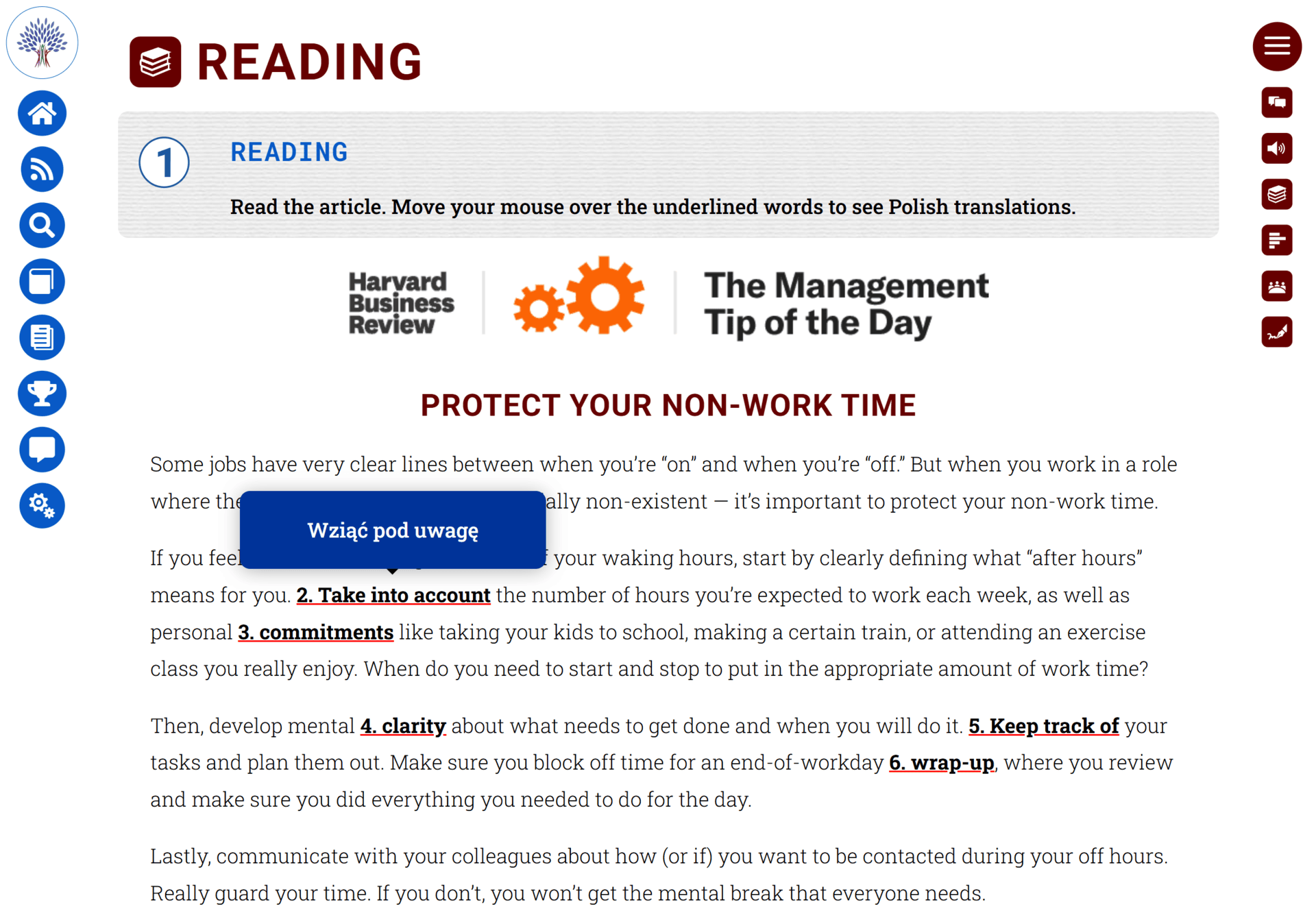
2. Meaning-focused output: students need to express something
The second strand is meaning-focused output.
This is where students use English to speak or write. Again, the main focus is meaning. They want to say something, explain something, react to something, share an opinion, tell a story, solve a problem or respond to another person.
This is where many lessons claim to be communicative. But we need to be careful.
A lesson is not communicative simply because students say a few words in English. A lesson becomes meaningfully communicative when students have something to express and a reason to express it.
Good output tasks may include:
- discussion questions,
- pair work,
- role-plays,
- short presentations,
- written reflections,
- email writing,
- storytelling,
- problem-solving tasks,
- opinion sharing,
- comparing different viewpoints.
The key question is:
Do my students regularly use English to communicate their own thoughts?
This is important because students cannot become confident speakers only by listening to good English. They need to produce language themselves. They need to try, hesitate, reformulate, search for words, make mistakes, receive help and try again.
Output also shows teachers what students can actually do. A learner may recognise a phrase in a text but fail to use it in speech. A learner may understand a grammar structure but avoid it when speaking. Output reveals the gap between passive knowledge and active use.
That gap is not a failure. It is where teaching becomes interesting.
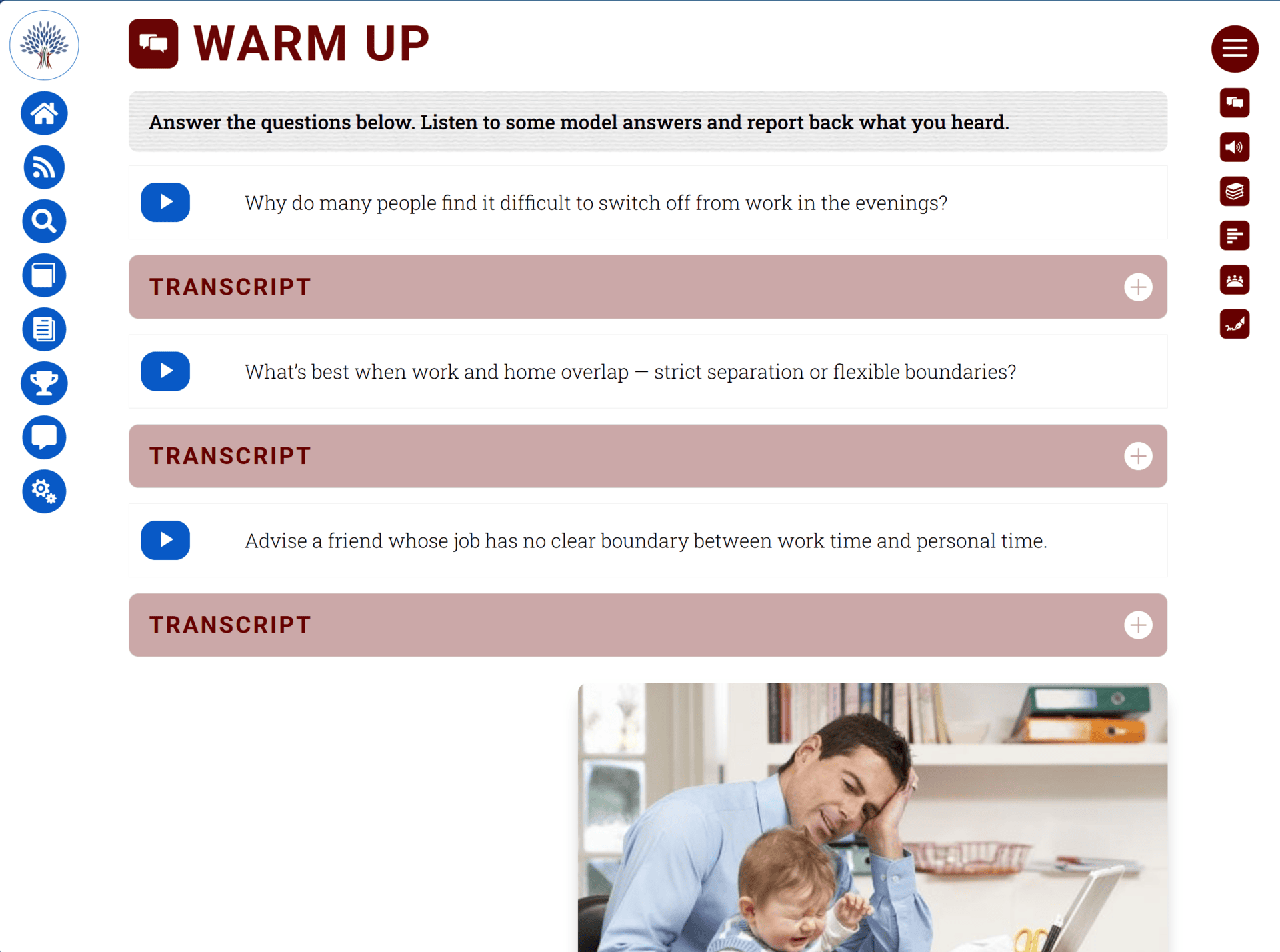
3. Language-focused learning: students need conscious attention to language
The third strand is language-focused learning.
This is the strand most teachers know very well. It includes direct work on vocabulary, grammar, pronunciation, spelling, word formation, collocations, sentence patterns and accuracy.
In other words, students stop for a moment and look at how the language works.
This strand may include:
- vocabulary explanations,
- grammar focus,
- pronunciation practice,
- phonetic transcription,
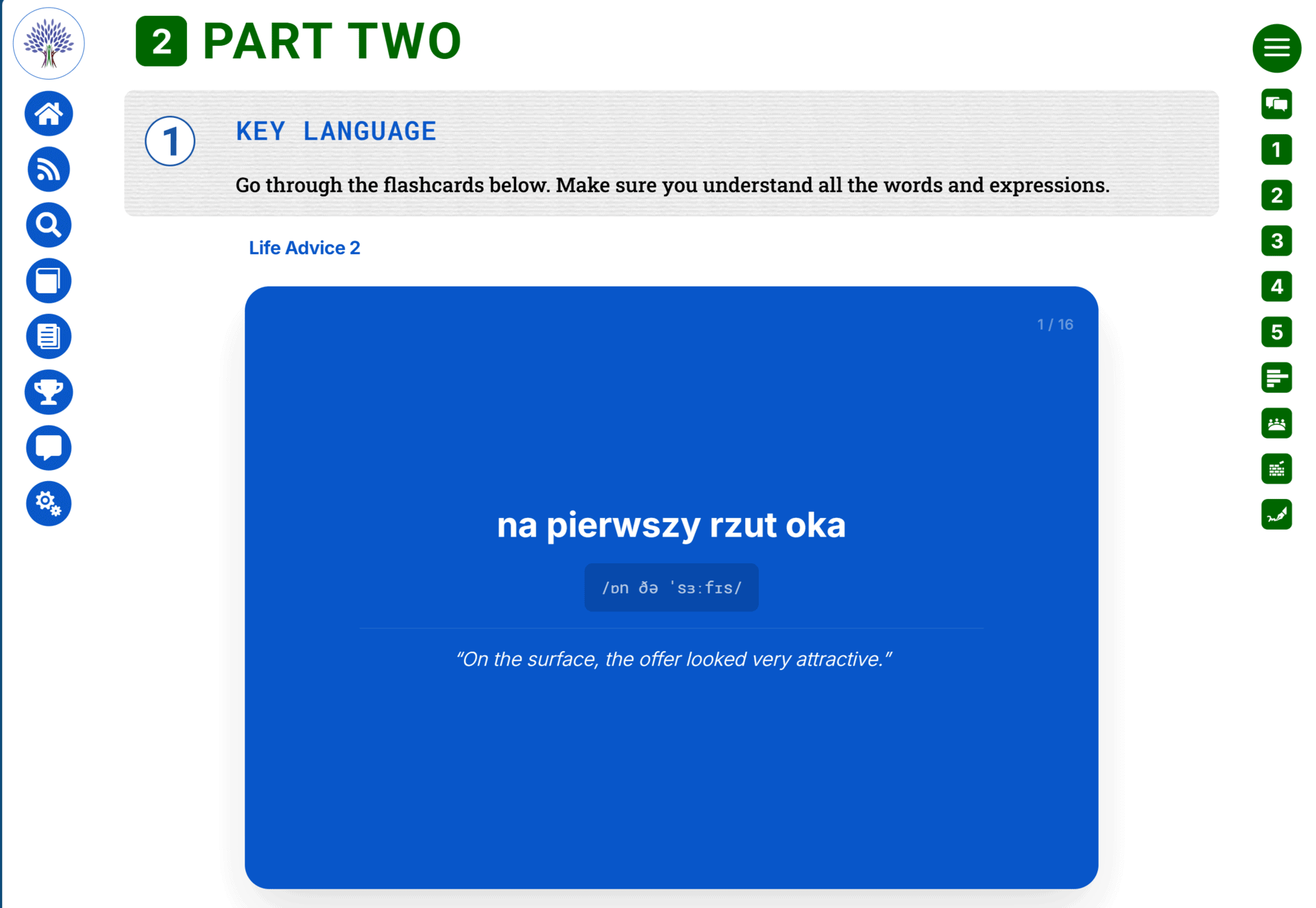
- flashcards,
- translation activities,
- gap-fill tasks,
- sentence transformation,
- error correction,
- work on collocations and chunks,
- noticing useful expressions in a text.
Some modern teaching conversations almost make teachers feel guilty about doing direct language work. As if every minute spent on grammar or vocabulary was somehow old-fashioned.
I do not think this is helpful.
Students need meaning, yes. They need communication, yes. But they also need clarity. They need help seeing patterns. They need vocabulary organised in a way they can remember and use. They need to notice why one phrase works and another sounds unnatural.
The problem is not language-focused learning itself. The problem appears when it becomes the whole lesson.
If a course is only grammar explanation, translation, word lists and exercises, students may know a lot about English without being able to use it comfortably. But if we remove focused language work completely, students may communicate freely but inaccurately, with the same limited vocabulary for years.
So the question is not: Should we teach language directly?
The better question is:
Do we teach language directly as part of a balanced learning experience?
In my opinion, this is where well-designed vocabulary work becomes extremely powerful. Especially when we teach not only isolated words but also:
- collocations,
- chunks,
- useful phrases,
- natural examples,
- pronunciation,
- translation where helpful,
- patterns students can immediately use in speech or writing.
4. Fluency development: students need to get faster and more confident with language they already know
The fourth strand is often the easiest to forget.
It is fluency development.
This does not mean “just speaking”. It means practising language that is already familiar, so that students can use it more quickly, more smoothly and with less mental effort.
This is an important distinction.
If a student is trying to understand a difficult new text, that is not fluency development.
If a student is learning ten new expressions for the first time, that is not fluency development.
If a student is struggling to build every sentence from zero, that is not fluency development.
Fluency practice should usually be based on material that students already know or mostly know. The goal is not to add a lot of new language. The goal is to help students access known language faster.
Fluency tasks may include:
- speaking for 60 seconds about a familiar topic,
- repeating the same answer and improving it,
- retelling a story,
- quick vocabulary recall,
- timed speaking,
- easy extensive reading,
- repeated reading,
- short writing under time pressure,
- saying the same idea in a clearer or more natural way.
The key question is:
Do my students get regular chances to become faster and more confident with language they have already met?
This is the strand that can make a big difference in real-life communication.
Many students know more English than they can use. They recognise words, understand explanations and complete exercises — but when they need to speak, everything becomes slow and heavy. It is like having a beautiful library in your head, but no clear path to the right shelf.
Fluency practice builds those paths.
It helps students move from:
“I know this phrase somewhere…”
To:
“I can actually use this phrase when I speak.”
This is also how I want to keep developing lessons on The Blue Tree. Not as collections of attractive activities, but as balanced learning experiences. A good TBT lesson should give teachers something practical, students something meaningful, and the learning process a clear structure.
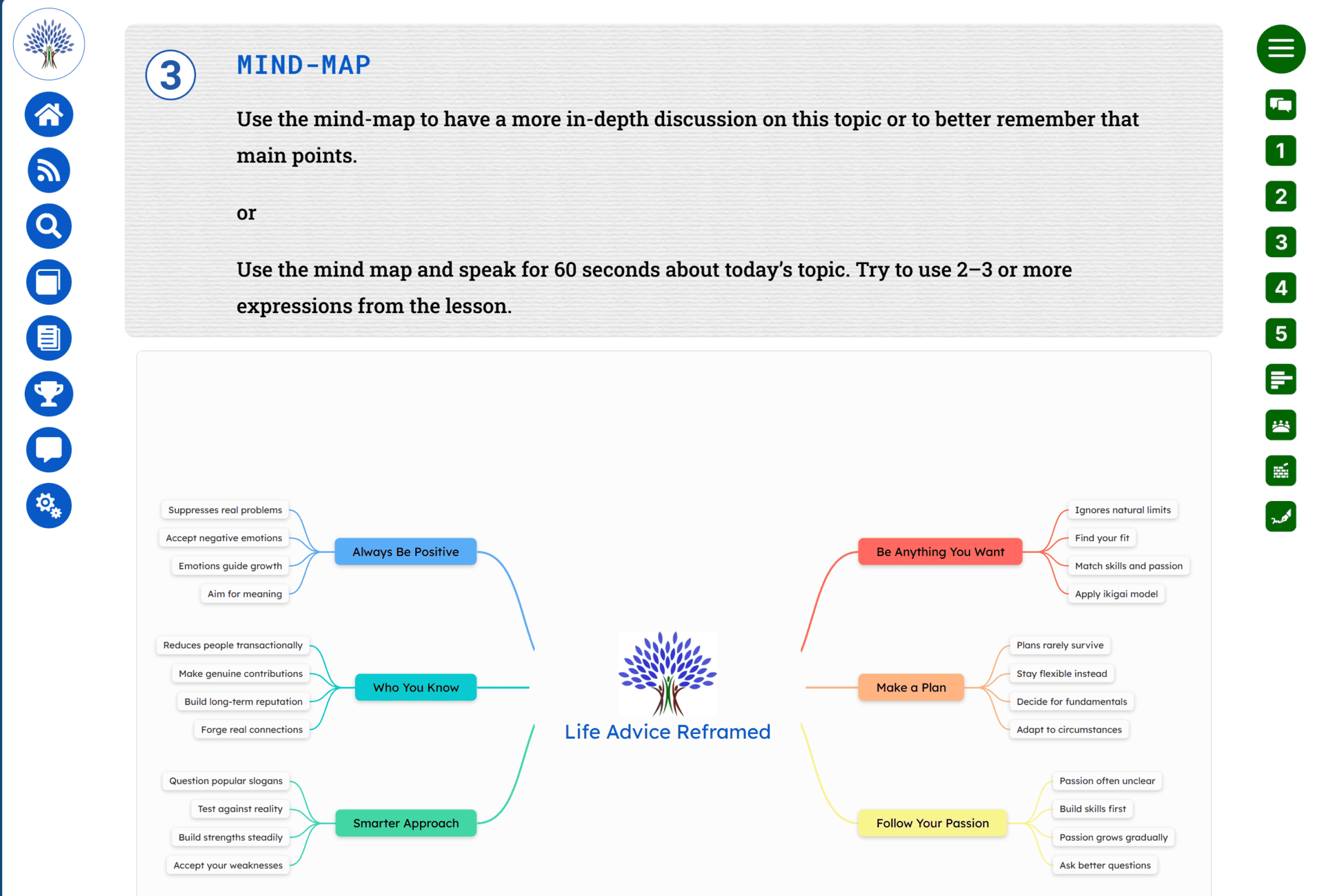
A simple TBT checklist based on Nation’s four strands
For teachers, theory becomes useful when it leads to better decisions.
So here is a simple checklist we can use when designing or reviewing a lesson.
1. Meaning-focused input
Ask:
Do students read or listen to something meaningful?
This may be a text, video, story, dialogue, article, interview or short explanation. The important thing is that students are receiving English in order to understand a message.
2. Meaning-focused output
Ask:
Do students speak or write in order to express their own thoughts?
This may happen through discussion, role-play, reflection, presentations, written answers or problem-solving tasks.
3. Language-focused learning
Ask:
Do students consciously notice and practise useful language?
This includes vocabulary, grammar, pronunciation, collocations, chunks, sentence patterns and feedback.
4. Fluency development
Ask:
Do students practise using familiar language more smoothly and confidently?
This may include timed speaking, repeated answers, quick recall, retelling, easy reading or short writing tasks.
If a lesson touches all four areas, it has a much better chance of being not only enjoyable but also effective.
Of course, not every single lesson must divide time into perfect 25% sections. Real teaching is more flexible than that. Some lessons may focus more on input. Some may focus more on speaking. Some may be revision-heavy. Some may prepare students for an exam.
But over time, a course should not become one-sided.
The checklist helps us notice imbalance.
If students receive a lot of input but rarely speak, we know what to add.
If students speak a lot but never receive focused language help, we know what to add.
If students learn vocabulary but do not recycle it, we know what to add.
If students understand everything slowly but cannot use it fluently, we know what to add.
This is the practical value of Nation’s model.
It does not replace teacher intuition. It sharpens it.
Attractive is good. Effective is better.
I love attractive lessons.
I love beautiful visuals, good stories, smart questions, clean design, mind maps, flashcards, interactive activities and lessons that make students curious.
But attractiveness should serve learning.
A lesson should not only make students think:
“That was nice.”
It should also help them feel:
“I understood something.”
“I noticed useful language.”
“I said something meaningful.”
“I can use this better now.”
That is the difference.
As teachers, we are constantly balancing many things: motivation, accuracy, fluency, confidence, exam needs, classroom energy, time pressure, mixed levels and real human moods on a Tuesday morning.
No model will solve all of that for us.
But a good model can give us a compass.
Paul Nation’s four strands are one such compass.
They remind us that a strong English lesson should give students:
- meaningful language to receive,
- meaningful language to produce,
- focused attention to how language works,
- practice that makes known language more fluent.
That is a beautifully simple idea.
And it is also a useful challenge.
When we design our next lesson, we can ask:
Is this lesson attractive?
Good question.
But then we should ask the better one:
Is this lesson balanced enough to help students actually grow?
That is where real teaching begins.