


In a Rut. Try These Simple Approaches to Re-Energize Yourself

Sorry, but lessons on The Blue Tree work only on a computer or a tablet.
Bardzo mi przykro, ale lekcje na platformie The Blue Tree działają jedynie na komputerze lub tablecie.
Do zobaczenia na większym ekranie 🙂
Zespół The Blue Tree
back to HOME > Personal Development > Personal Productivity >
In a Rut. Try These Simple Approaches to Re-Energize Yourself

THE BLUE TREE
Personal
Productivity

CEFR B1
Intermediate

warm up
Answer the questions below.
| Is it important to do work that you enjoy? |
TRANSCRIPT
Absolutely! I think it’s really important to do work that you enjoy, or at least find meaning in. When I’m working on something creative or something that challenges me in a good way, I feel so much more energized. It’s tough to stay motivated if you’re not passionate about what you’re doing.
| How can recognition help us to enjoy our work more? |
TRANSCRIPT
Recognition can make a big difference. When people acknowledge your efforts, it boosts your morale and makes you feel like your work matters. I’ve seen how a simple thank you or feedback from a colleague can make the work feel more rewarding. It doesn’t have to be a big gesture—just knowing you’re making a positive impact is motivating.
| Is it a good idea to have a clear purpose for doing your job? |
TRANSCRIPT
Yes, having a clear purpose for doing your job is really important. It helps keep you focused, especially during challenging times. Personally, I like to remind myself why I started a project or how it fits into my bigger goals. It’s like having a compass—it guides your energy and decisions in the right direction, so you don’t get lost in the day-to-day stress.

part one

AT A GLANCE
Listen to a short version of the article that you will read later. Answer the questions that follow.

TRUE OR FALSE
Do the task below.


part two
FULL ARTICLE
Now read the full article and do the tasks that follow.

In a Rut at Work? Try These Simple Ways to Feel Re-Energized
We all have moments at work when everything feels heavy. You sit at your desk, look at your tasks, and think: “I just don’t have the energy today.” That’s completely normal.
Instead of trying to power through and force yourself to work harder, try something different: manage your energy, not your time. Small changes can make a big difference.
Here are three simple ideas that many people use to feel more motivated and positive at work.
1. Write Your Purpose on a Post-it 📝
Take a small piece of paper and write down why you do your job.
This can be:
your big purpose – why you chose this career
or a small purpose – why this one task or project matters right now
Put the note somewhere you can see it every day: on your desk, computer screen, or notebook.
“I wrote ‘I help people feel confident in meetings’ on a post-it and stuck it to my screen. On bad days, it reminds me that my work has meaning,” says Anna, a project coordinator.
When work feels stressful or tiring, this simple reminder can help you reconnect with what really matters.
2. Create a “Wall of Encouragement” 🌟
Collect things that make you feel good:
kind emails from colleagues or clients
positive feedback
awards or certificates
funny pictures or memes
You can put them on the wall near your desk or save them in a digital folder.
“When I feel tired or unappreciated, I open my ‘good moments’ folder. It reminds me that my work is noticed,” says Marek, an IT specialist.
Looking at these messages can give you a quick emotional boost and help you feel valued.
3. Make a “To-Don’t” List 🚫
Instead of only writing a to-do list, try writing a to-don’t list.
Ask yourself:
What activities drain my energy?
Which habits don’t help me anymore?
What tasks could be automated or given to someone else?
These might be:
unnecessary meetings
checking emails too often
tasks that are boring and repetitive
“I realized I was saying yes to everything. My to-don’t list helped me stop doing things that weren’t important,” says Kasia, a team leader.
Removing just one energy-draining habit can make your day feel much lighter.
Final Thought
You don’t always need more time. Very often, you just need more energy.
Small actions—like a post-it note, a kind message, or a better boundary—can help you feel more focused, motivated, and calm at work.
Sometimes, working smarter starts with being kinder to yourself 💙
COMPREHENSION
Answer these questions on the basis of the article.
What do people often fall into at work, according to the article?
What two kinds of purpose can someone write on a post-it note?
Why is it helpful to keep your purpose visible at your desk, especially on difficult days?
What kinds of things can be included in a “wall of encouragement”?
Why is it important to identify activities, habits, or people that drain your energy?
What actions should you take after making a “to-don’t” list?

POLL
Cast your vote in the poll.
DISCUSSION
DIALOGUE
Read or role-play this dialogue.
Alita:
You know, I really liked the idea of writing your purpose on a post-it. When work gets stressful, I sometimes forget why I’m doing what I’m doing in the first place.
Pete:
Yeah, I get that. I’m more skeptical, though. I used to think a post-it wouldn’t change much. But when I wrote a short sentence about helping my team work better, it actually helped me refocus on bad days.
Alita:
Exactly. It’s not about motivation in a big, dramatic way. It’s more like a quiet reminder. I also liked the idea of a wall of encouragement. I tend to focus too much on what goes wrong.
Pete:
Same here. I saved a few positive emails from clients, and when I read them again, I realize that my work is appreciated more than I think. It really changes my mood.
Alita:
What about the to-don’t list? That one felt very practical to me.
Pete:
Honestly, that’s my favourite idea. I noticed that too many meetings were draining my energy. Once I started saying no to some of them, my days felt much lighter.
Alita:
I agree. We usually add more and more to our to-do lists, but we rarely stop and ask what we should stop doing.
Pete:
Exactly. For me, managing energy is about small decisions, not big changes. And these ideas are simple enough to actually use.
OVER TO YOU
Discuss these questions.
 | What usually drains your energy the most at work or in everyday life, and how do you normally deal with it? |
| When you feel tired or unmotivated, what helps you recover your energy faster: rest, a change of activity, or a sense of purpose? Why? |
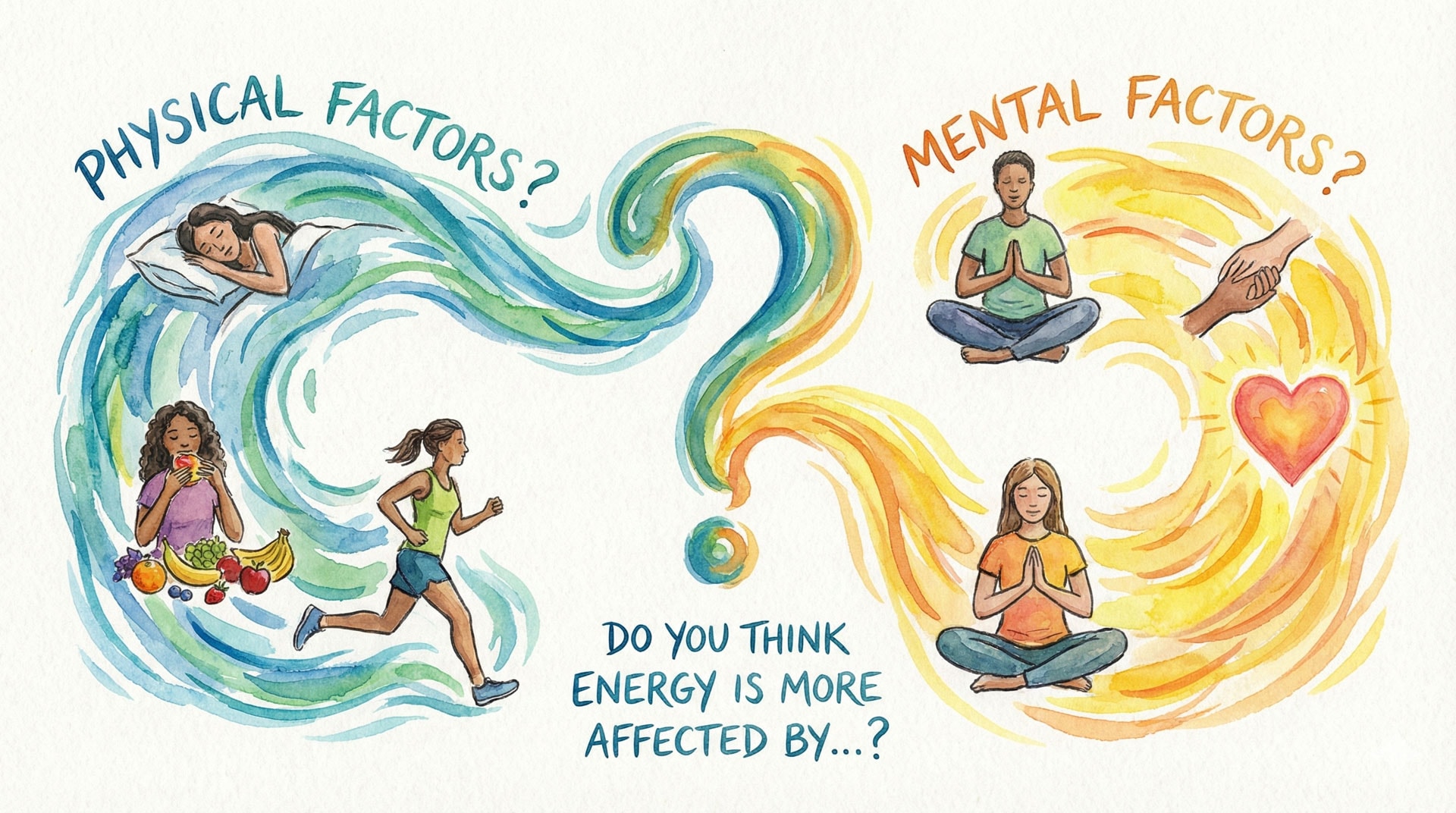
| Do you think energy is more affected by physical factors (sleep, food, movement) or mental factors (stress, meaning, relationships)? Explain your opinion. |
| Can being busy sometimes feel energizing instead of exhausting? In what situations does that happen for you? |
| If you had to give one piece of advice to a colleague who feels burned out, what would it be and why? |

The Trick to Regaining Your Childlike Wonder by Zach King
Sorry, but lessons on The Blue Tree work only on a computer or a tablet.
Bardzo mi przykro, ale lekcje na platformie The Blue Tree działają jedynie na komputerze lub tablecie.
Do zobaczenia na większym ekranie 🙂
Zespół The Blue Tree
back to HOME > General Interest > Surprise me >
The Trick to Regaining Your Childlike Wonder by Zach King

THE BLUE TREE
Surprise Me

CEFR A2
Pre-Intermediate

warm up
Answer the questions below.
| In what ways are children different from adults? |
TRANSCRIPT
Children are usually more curious and open-minded than adults. They ask many questions and are not afraid of making mistakes. For them, the world feels new and full of possibilities. Adults, on the other hand, often focus on routines, responsibilities, and problems. We think more about consequences and what others might say, which can make us more cautious and less adventurous.
| What helps children be so imaginative and creative? |
TRANSCRIPT
I’d say it mostly comes down to curiosity and play. Kids don’t overthink things — they just jump in and see what happens. A cardboard box isn’t just a box; in no time it becomes a spaceship, a castle, or a secret hideout. Because children aren’t afraid of looking silly or making mistakes, they experiment freely. Their imagination is allowed to run wild, without rules or limits getting in the way.
| How could adults benefit from being more creative? |
TRANSCRIPT
Honestly, creativity can be a real game changer for adults. It helps you think outside the box instead of feeling stuck or hitting a brick wall. Creative thinking also adds some colour to everyday life, which often feels repetitive. When you approach problems with curiosity rather than stress, things don’t seem so heavy. In a way, creativity helps adults slow down, see things differently, and reconnect with the sense of wonder they once had.

part one
KEY LANGUAGE
Go through the flashcards below. Make sure you understand all the words and expressions.
VIDEO
Watch the first part of the video.

COMPREHENSION
Answer these questions. Refer to the information from the video.
- ⌚ 00:28 Why was Zach late for his talk?
- ⌚ 00:42 How did Zach eventually get on the stage?
- ⌚ 00:49 Who is Zach King?
- ⌚ 01:01 How did you answer Zach’s question at the beginning?
- ⌚ 01:26 Who doesn’t see it as a box?
- ⌚ 01:47 How are adults different from children?
part two
KEY LANGUAGE
Go through the flashcards below. Make sure you understand all the words and expressions.
VIDEO
Watch the second part of the video.
COMPREHENSION
Answer these questions. Refer to the information from the video.
- ⌚ 01:52 What has Zach been trying to find out over the past decade?
- ⌚ 2:20 Which example of imaginative thinking did you like the most?
- ⌚ 2:23 Does Zach believe adults can regain this childlike wonder?
- ⌚ 3:56 How did Zach play with the box when he was a small boy?
- ⌚ 4:19 What happened when Zach found winter jackets in his box?
- ⌚ 4:39 What happened to the box over the years?
part three
KEY LANGUAGE
Go through the flashcards below. Make sure you understand all the words and expressions.
VIDEO
Watch the third part of the video.
COMPREHENSION
Answer these questions. Refer to the information from the video.
- ⌚ 05:02 What happened when he heard some noise coming from the garage?
- ⌚ 05:37 Who did they meet in space and what did they show them?
- ⌚ 5:52 What is the key to regaining childlike wonder?
- ⌚ 06:03 What does it mean not to hold any assumptions about things?
- ⌚ 06:13 How could this ability help us in life?
part four
KEY LANGUAGE
Go through the flashcards below. Make sure you understand all the words and expressions.
VIDEO
Watch the fourth part of the video.
COMPREHENSION
Answer these questions. Refer to the information from the video.
- ⌚ 06:35 What did Zach show us and what was your first thought when you saw it?
- ⌚ 7:32 How did Zach return on stage?
- ⌚ 7:52 When can new ideas enter the world?
POLL
Cast your vote in the poll.
lesson glossary
UPS! Ta sekcja jest dostępna tylko dla moich uczniów. Zapraszam na wyjątkowe lekcje angielskiego online lub na Mokotowie w Warszawie. Napisz do mnie na hi@thebluetree i umów się na darmową lekcję próbną.
COMMENTS
How important is creativity and imagination? What are the benefits of keeping childlike wonder? Do you agree with Zach that we need to get rid our assumptions to regain childlike wonder?
Share your thoughts and ideas below.

Break your procrastination habit
Sorry, but lessons on The Blue Tree work only on a computer or a tablet.
Bardzo mi przykro, ale lekcje na platformie The Blue Tree działają jedynie na komputerze lub tablecie.
Do zobaczenia na większym ekranie 🙂
Zespół The Blue Tree
back to HOME > Personal Development > Personal Productivity >
Break your procrastination habit
THE BLUE TREE
Personal
Productivity

CEFR B2
Upper
Intermediate

warm up
Answer the questions below.
| Do you have a problem with procrastination? |
TRANSCRIPT
Yeah, I do struggle with procrastination sometimes, especially when the task feels overwhelming or boring. I’ve learned that I tend to avoid things that make me anxious, so I’ve been trying to break tasks down into smaller, easier steps. That helps me get started and build momentum.
| Why is it hard to complete some tasks on time sometimes? |
TRANSCRIPT
I think it can be hard to complete tasks on time because of our own emotions or mindset. Sometimes a task feels more difficult or stressful than it really is, which leads to putting it off. Also, if the work seems boring, we naturally avoid it. I try to manage this by focusing on the positive outcome of finishing the task, or by rewarding myself after I complete it.
| Do you organize your work tasks according to priority or difficulty? |
TRANSCRIPT
I organize my work tasks based on priority. I like to start with the most important tasks first, even if they’re difficult. I’ve found that once I tackle the high-priority tasks, it feels like a weight is lifted, and the rest of my day goes more smoothly. I also try to keep my systems simple, so I don’t feel overwhelmed by everything on my plate.

LISTENING
Listen to the audio. What is the main message of this HBR Management Tip?
reading
Break Your 1. Procrastination Habit |
| Do you keep 2. postponing work you need to do? Most of us procrastinate from time to time. Rather than feeling guilty about it, or 3. beating yourself up, try these strategies to break the habit. Schedule your deep work. It’s easier to put off work that requires concentration. So build time in your daily calendar to focus on your most important long-term project. Having a regular pattern each day will make it less challenging and help make progress feel automatic, rather than 4. cumbersome. Learn to accept demanding work. Don’t make the mistake of 5. equating easy work with productivity. The more tolerant you become of demanding tasks, the less you’ll procrastinate. This takes practice; commit to 6.tackling 90 minutes of at least one demanding task each day — not just busy work. Create a system for starting new tasks. You’ll be less likely to delay 7. novel tasks if you have a system for approaching them. Have consistent steps you take when you 8. encounter something new to reduce decision 9. fatigue about how to start. Use self-compassion. We tend to avoid tasks that stir up negative emotions. Try to identify what you’re feeling exactly, so you can address the emotion 10.head on. Sometimes the negative feelings about a task are driven by a prior experience. You can heal these wounds with compassionate self-talk. Tell yourself, “It’s normal to be disappointed in my past performance. I’m learning through experience.” |
| This tip is adapted from “How to Stop Procrastinating,” by Alice Boyes |
odkładać zadania na ostatnią chwilę
zwlekać, odkładać, przekładać (na później)
obwiniać się
nieporęczny (np. styl), nieudolny (np. o przeprosinach)
stawiać znak równości pomiędzy
uporać się (z czymś), stawiać czoło (problemom)
nowy, nieznany
napotkać, natknąć się (na coś)
zmęczenie
bezpośrednio, z determinacją
COMPREHENSION
Answer the questions below. Throw some newly learned words and phrases into your answers.
- How common is the habit of procrastinating?
- What do some people do when they procrastinate?
- Why should we schedule time for deep work?
- How does it help to have a regular pattern for deep work?
- What mistake do some people make as regards productivity?
- What do we have to learn to tolerate?
- What can we do to approach difficult tasks easier?
- What tasks do we tend to avoid more often?
- How can compassionate self-talk help us?

POLL
Cast your vote in the poll.
COMMENTS
What is your method of dealing with procrastination? How do you make yourself do difficult tasks?
Share your views and experience here.

Let’s touch base. 15 English idioms to use at work
Sorry, but lessons on The Blue Tree work only on a computer or a tablet.
Bardzo mi przykro, ale lekcje na platformie The Blue Tree działają jedynie na komputerze lub tablecie.
Do zobaczenia na większym ekranie 🙂
Zespół The Blue Tree

THE BLUE TREE
Everyday English
CEFR B1
Intermediate

warm up
Answer the questions below.
| Do you prefer to act by the book, or rather bend some rules from time to time? |
TRANSCRIPT
“Honestly, I try to stick to the rules most of the time—like going ‘by the book’—but sometimes, you just have to bend a few rules to get things done. For example, when there’s a tight deadline and cutting a few corners doesn’t hurt anyone, I think it’s okay. Of course, I’m not talking about skipping something essential, just being a bit flexible. It’s like finding shortcuts on a steep learning curve—makes things a lot smoother! So yeah, I guess I’m a mix of both. What about you?”
| When you need to communicate something important, do you prefer to cut to the chase or rather beat around the bush for a while before? |
TRANSCRIPT
“Oh, I’m all about cutting to the chase. I mean, why waste time beating around the bush when you can just say what needs to be said, right? Especially at work, where everyone’s busy putting out fires and juggling tasks, it’s better to get straight to the point. That said, I do try to lighten the mood first—maybe a quick chit-chat—so it doesn’t feel too abrupt. But yeah, clear and direct is my go-to. How about you—do you ease into it or go straight for the big stuff?”
| What’s your favourite way of lightening your mood? What can you or others do to help me feel better? |
TRANSCRIPT
“For me, the best way to lighten my mood is to take a break and have a good laugh. Honestly, nothing beats a quick chit-chat with someone who knows how to crack a joke or share a funny story. Music works wonders too—something upbeat can totally change the vibe. And if someone else wants to help, even a small gesture like bringing me a coffee or saying something kind can really make a difference. It’s the little things, you know?

part one
KEY LANGUAGE
Go through the flashcards below. Make sure you understand all the words and expressions.
VIDEO
Watch the first part of the video.
COMPREHENSION
Answer these questions. Refer to the information from the video.
- ⌚ 0:11 Where does Emma believe are English idioms used most often?
- ⌚ 0:21 How important is it to be able to use idiom when we communicate in English?
- ⌚ 0:33 What are some of the benefits of knowing and using idioms?
part two
KEY LANGUAGE
Go through the flashcards below. Make sure you understand all the words and expressions.
VIDEO
Watch the second part of the video.
COMPREHENSION
Answer these questions. Refer to the information from the video.
- ⌚ 1:24 What does it mean to ‘get your foot in the door‘?
- ⌚ 1:54 What are some of the ways we can get our foot in the door of a company we really want to work for?
- ⌚ 2:26 What does it mean to ‘show someone the ropes‘?
- ⌚ 2:47 What does the idiom ‘thrown in the deep end‘ mean?
- ⌚ 3:03 How was Emma thrown in the deep end on her first teaching job?
- ⌚ 3:49 When do we use the expressions ‘a steep learning curve‘?
part three
KEY LANGUAGE
Go through the flashcards below. Make sure you understand all the words and expressions.
VIDEO
Watch the third part of the video.
COMPREHENSION
Answer these questions. Refer to the information from the video.
- ⌚ 5:23 What does it mean to do something ‘by the book‘?
- ⌚ 5:50 How is ‘to cut corners‘ different from ‘by the book‘?
- ⌚ 6:15 What situation does the idiom ‘have one’s work cut out‘ describe?
- ⌚ 6:43 What does it mean to ‘make light/short work (of something)’?
- ⌚ 7:10 Can we use this idiom outside of the work context? How?
part four
KEY LANGUAGE
Go through the flashcards below. Make sure you understand all the words and expressions.
VIDEO
Watch the fourth part of the video.
COMPREHENSION
Answer these questions. Refer to the information from the video.
- ⌚ 8:00 What happens when we ‘touch base‘ with someone?
- ⌚ 8:28 What does it mean to ‘cut to the chase‘?
- ⌚ 9:02 Why do we need to be careful when we are using this idiom?
- ⌚ 9:54 What does it mean ‘to bite your tongue‘?
part five
KEY LANGUAGE
Go through the flashcards below. Make sure you understand all the words and expressions.
VIDEO
Watch the fifth part of the video.
COMPREHENSION
Answer these questions. Refer to the information from the video.
- ⌚ 10:21 What does it mean to ‘rock the boat‘?
- ⌚ 11:26 When can we use the idiom ‘to put out fires‘?
- ⌚ 12:10 What happens when someone ‘is in hot water‘?
- ⌚ 12:28 When is the right time to use the idiom ‘let’s call it a day‘?
PRACTICE

15 idioms for work
Play this Multidecker game. How many idioms from this lesson do you already remember?
CUT TO THE CHASE
Choose the correct answer in each of these 15 items of the multiple choice quiz below.
MEETING ABOUT DECLINING SALES
Complete three contributions on a meeting about declining sales. All the missing words are idioms we were learning in this lesson.
It appears that this quiz is not set up correctly.
LESSON GLOSSARY
UPS! Ta sekcja jest dostępna tylko dla moich uczniów. Zapraszam na wyjątkowe lekcje angielskiego online lub na Mokotowie w Warszawie. Napisz do mnie na hi@thebluetree i umów się na darmową lekcję próbną.
COMMENTS
Write your own examples with the idioms you learnt in this lesson.
COMMENTS
How do you re-energize yourself when you are feeling down at work? Would you like to give any of these ideas a try?
Share your views and experience here.