FUNCTIONS:

Agreeing

Disagreeing

Hesitating

Introducing your opinion

Asking for opinions

Expressing preferences

Asking for clarification

Expressing likelihood

Speculating, guessing

Advice and recommendations

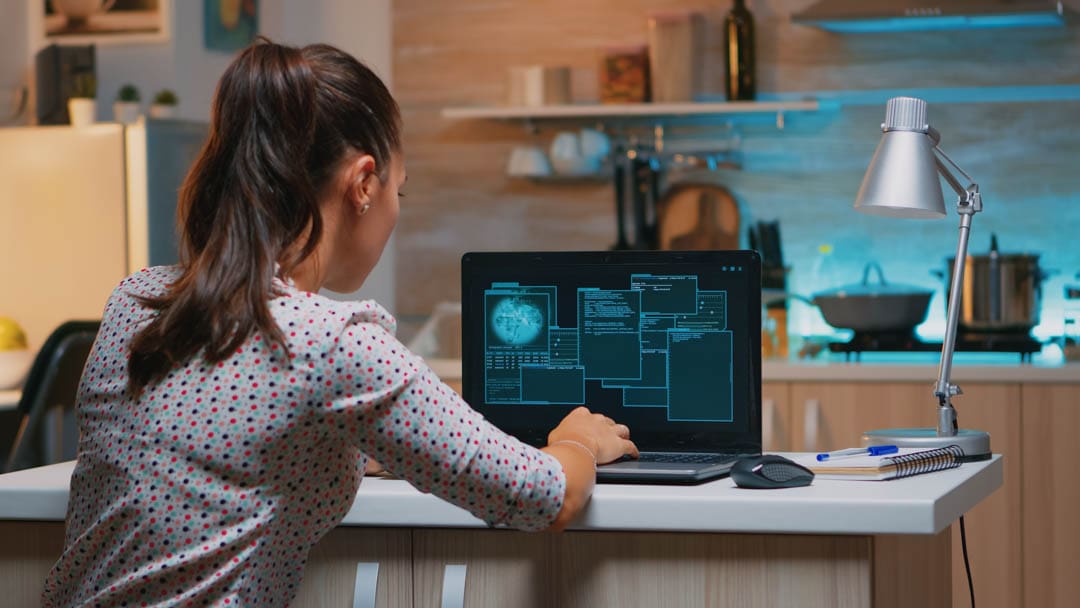
Describing a picture

Agreeing

I think you’re right

I would go along with the idea

I completely agree with you

That makes perfect sense

You have a point there

Absolutely, that’s spot on!

I couldn’t agree more

Disagreeing

That’s not how I see it

I couldn’t agree less

You must be kidding

That’s a ridiculous idea, don’t you think?

With all due respect, I must disagree

I’m afraid I can’t see it that way

No way, that’s nonsense!

Hesitating

I’m in two minds about it

I have some reservations regarding that

I’m not entirely convinced

There’s something that gives me pause

While I’m not entirely opposed, I do have some doubts

Introducing your opinion

To my mind

I reckon

In my opinion

As I see it

It seems to me

I would argue

From my point of view

Asking for opinions

Don’t you think …?

What’s your attitude to …?

What’s your opinion of …?

Are you in favour of …?

What’s your position as regards …?

You don’t support …, do you?

Expressing preferences

I prefer…

I would rather…

My preference would be…

I tend to favour…

If I had to choose, I would…

I lean towards…

I am inclined to…

I’m a big fan of…

I really enjoy…

I’m into…

I absolutely love…

I’m crazy about…

I’m fond of…

It’s right up my alley

It’s my thing

I can’t get enough of…

It appeals to me

It’s growing on me

I wouldn’t miss it for the world

I’m not a big fan of…

I don’t really enjoy…

I’m not into…

I can’t stand…

I’m not fond of…

It’s not my cup of tea

It doesn’t do anything for me

I’m sick of…

It gets on my nerves

It puts me off

I’d rather not…

It leaves me cold…

Asking for clarification

Could you please elaborate on that?

Would you mind explaining that further?

I’m not quite sure I understand. Could you clarify?

Could you provide more details?

Can you expand on that point?

Expressing likelihood

“It’s a foregone conclusion that…”

“There’s no doubt in my mind that…”

“I am almost certain that…”

“It’s highly likely that…”

“Chances are that…”

“I wouldn’t be surprised if…”

“It’s possible that…”

“There’s a chance that…”

“It’s unlikely that…”

“I doubt that…”

Speculating, guessing

“It seems to me that…”

“My gut feeling is that…”

“From what I gather…”

“If I were to guess…”

“It would appear that…”

“I reckon that…”

“I suspect that…”

“In all likelihood…”

“There’s a distinct possibility that…”

“It’s plausible that…”

Advice and recommendations

“You might want to consider…”

“Perhaps you could try…”

“If I were you, I would…”

“One thing you could do is…”

“Have you thought of…”

“May I suggest…”

“It might be beneficial to…”

“Consider this approach…”

“Why not give this a go…”

“If it were up to me, I’d…”

Describing a picture

“In the foreground…”

“In the background…”

“In the center of the image…”

“On the left side of the picture…”

“On the right side of the picture…”

“At the top of the picture…”

“At the bottom of the picture…”

“The picture depicts…”

“The image illustrates…”

“The photograph shows…”

“One can see…”

“Notice how…”

“This scene captures…”

“This photograph highlights…”

DICTIONARY

Add new and interesting words from this lesson to your English dictionary.

Store your words and expressions in this handy dictionary. You can create groups and play games based on your entries. There is also a practical importing feature.

You must log in to see content.

Sorry, but lessons on The Blue Tree work only on a computer or a tablet.

Bardzo mi przykro, ale lekcje na platformie The Blue Tree działają jedynie na komputerze lub tablecie.

Do zobaczenia na większym ekranie 🙂

Zespół The Blue Tree

The Story of Ada Lovelace: The World’s First Computer Programmer
Learn more words

THE BLUE TREE

Science Stuff

CEF B1

CEFR B1

Intermediate

Practise speaking by describing this image

warm up

Answer the questions below. Then listen to the model answers and think about how you could improve yours.

How good are you with computers? Do you like using a computer?
TRANSCRIPT

I’d say I’m pretty comfortable with computers! I like using them, especially for creative work like graphic design or writing. They’re such versatile tools, and I love how you can do so many things from just one device. Plus, it’s fun to explore new programs and learn little tech tricks!

How important are computers in your work/life?
TRANSCRIPT

Computers are essential in my work and life. Nearly everything I do is either on a computer or heavily reliant on them—from managing projects to keeping in touch with colleagues and clients. They streamline so many tasks and make complex work much more manageable. I really can’t imagine working without them.

What do you think the future holds as regards computer development?
TRANSCRIPT

I think we’re going to see computers continue to become even more integrated into our daily lives. With advancements in AI, quantum computing, and machine learning, it’s likely that computers will be able to assist us in ways we can’t fully predict yet. They might get more intuitive, almost like having a personal assistant that understands our needs and habits. It’s exciting but also a bit humbling to think about where technology could lead us!

part one

key language

watch the video

COMPREHENSION

  • ⌚ 0:10 Who was Ada Lovelace?
  • ⌚ 0:18 What was she the first person to recognize?
  • ⌚ 0:31 What is she famous for?
  • ⌚ 0:55 What do we know about Ada’s early childhood?
  • ⌚ 1:16 Who did she get in touch with when she was in her twenties?
  • ⌚ 1:20 How did she use these contacts?

Andrew Cross

Crosse was an early pioneer and experimenter in the use of electricity.

Charles Babbage

A mathematician, philosopher, inventor and mechanical engineer, Babbage originated the concept of a digital programmable computer.

Sir David Brewster

He was a British scientist, inventor, author, and academic administrator. In science he is principally remembered for his experimental work in physical optics, mostly concerned with the study of the polarization of light

Charles Weston

He was an Australian horticulturist and was responsible for the afforestation of Canberra.

Micheal Faraday

He was an English scientist who contributed to the study of electromagnetism and electrochemistry. His main discoveries include the principles underlying electromagnetic induction, diamagnetism and electrolysis.

part two

key language

watch the video

COMPREHENSION

  • ⌚ 1:24 How did Ada describe her approach to science?
  • ⌚ 1:31 Who was her good friend and fellow mathematician?
  • ⌚ 1:36 What was Ada particularly interested in?
  • ⌚ 1:51 Why are Ada’s notes on Babbage’s article important?
  • ⌚ 2:01 What happened to Ada in 1852?
  • ⌚ 2:10 What is Ada’s contribution in the development of modern computers?
  • ⌚ 2:25 What questions was she asking in relation to the analytical engine? Is this question valid today?
w

DISCUSSION

DIALOGUE

Alita and Pete meet at a café after reading about Ada Lovelace. They discuss her remarkable achievements and reflect on how her story still inspires us today.

Alita: Hey Pete! I just finished reading the story of Ada Lovelace. What a woman! Did you know she was the daughter of a countess and the poet Lord Byron?

Pete: Yeah, I read that too! And even though her life was cut short, she really made an impact. She’s often regarded as the world’s first computer programmer!

Alita: Exactly! And what amazed me most was how she supplemented Babbage’s work. He had the idea, but she saw the bigger picture. Her notes were so elaborate—she really understood the capability of the machine.

Pete: Right? She even imagined the machine doing more than just numbers—like music! That’s not mere calculation, that’s vision. And to think some people at the time saw her ideas as insanity…

Alita: I know! Maybe it’s because she was a woman. In her time, women weren’t seen as legitimate scientists or mathematicians.

Pete: True. But she deftly managed to get her work noticed. She was a keen student, always learning and thinking ahead.

Alita: And I liked how her work was so collaborative. She didn’t just work alone—she built on others’ ideas and helped carry out a new vision of computing.

Pete: Yeah, even if it wasn’t fully understood at the time, her work is now perceived as genius.

Alita: We should talk about her more, especially in schools. She’s a great example of someone who broke barriers.

Pete: Agreed. I think her story teaches us that big ideas need courage—and sometimes, time—to be appreciated.

Alita: So, next time we talk about tech pioneers, let’s make sure Ada’s name is always on the list.

Pete: Absolutely. She wasn’t just ahead of her time—she helped shape ours.

OVER TO YOU

Discuss these questions. Refer to the topic of the lesson and your own experience.

BulletHave you ever been a keen student of something?
BulletWhat kind of achievements do you think should be regarded as important in today’s world?
BulletHave you ever carried out a difficult task or project successfully?
BulletWhat’s your opinion about working in a collaborative way versus working alone?
BulletDo you think it’s sometimes okay to cut short your plans or goals?

POLL

Cast your vote in the poll.

How important are computers in our lives these days?

×

lesson glossary

COMMENTS

How important are computers in today’s world? How do you see the development of the computer sciences? What are the pros and cons of computers and the Internet?

Share your views and opinions below. 

1 Comment

  1. Katarzyna

    As far as I am concerned, computers are quite important in today’s world. Most of jobs cannot be performed without them, but still fortunately there are some fields which require human being such as human care, gardening etc.
    I think that the key factor for the world’s future development is a good balance between the development of the computer sciences (maybe which can not be stopped) and manual input in work as far as we think about limiting unemployment. Sometimes I am afraid that computers deprive us of work. And this concern keeps me from enjoying working on a computer.
    But, of course, there are also a lot of advantages such as easier work, time reduction of performing some tasks, easy access to knowledge, or sharing experiences on social media, to name a few.

Submit a Comment

THE END OF THE LESSON

Świetnie! Lekcja ukończona!

Pamiętaj, żeby dodać lekcję do zrobionych.

W ten sposób zapiszesz lekcję w swojej historii nauki. Możesz ją sprawdzić z poziomu swojego profilu.

[wp_customcalendar_single]