FUNCTIONS:

Agreeing

Disagreeing

Hesitating

Introducing your opinion

Asking for opinions

Expressing preferences

Asking for clarification

Expressing likelihood

Speculating, guessing

Advice and recommendations

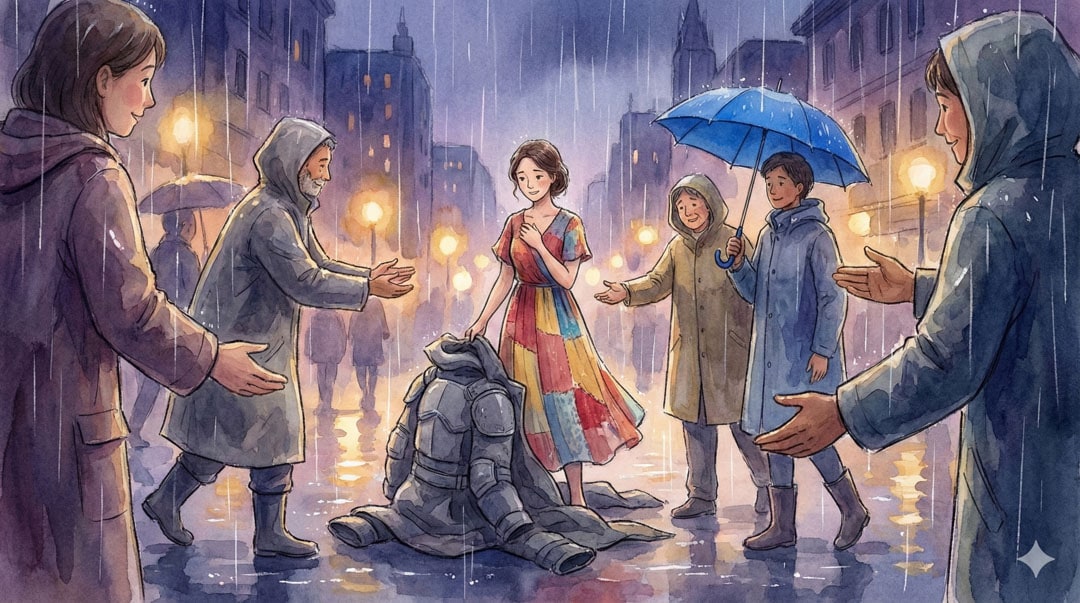
Describing a picture

Agreeing

I think you’re right

I would go along with the idea

I completely agree with you

That makes perfect sense

You have a point there

Absolutely, that’s spot on!

I couldn’t agree more

Disagreeing

That’s not how I see it

I couldn’t agree less

You must be kidding

That’s a ridiculous idea, don’t you think?

With all due respect, I must disagree

I’m afraid I can’t see it that way

No way, that’s nonsense!

Hesitating

I’m in two minds about it

I have some reservations regarding that

I’m not entirely convinced

There’s something that gives me pause

While I’m not entirely opposed, I do have some doubts

Introducing your opinion

To my mind

I reckon

In my opinion

As I see it

It seems to me

I would argue

From my point of view

Asking for opinions

Don’t you think …?

What’s your attitude to …?

What’s your opinion of …?

Are you in favour of …?

What’s your position as regards …?

You don’t support …, do you?

Expressing preferences

I prefer…

I would rather…

My preference would be…

I tend to favour…

If I had to choose, I would…

I lean towards…

I am inclined to…

I’m a big fan of…

I really enjoy…

I’m into…

I absolutely love…

I’m crazy about…

I’m fond of…

It’s right up my alley

It’s my thing

I can’t get enough of…

It appeals to me

It’s growing on me

I wouldn’t miss it for the world

I’m not a big fan of…

I don’t really enjoy…

I’m not into…

I can’t stand…

I’m not fond of…

It’s not my cup of tea

It doesn’t do anything for me

I’m sick of…

It gets on my nerves

It puts me off

I’d rather not…

It leaves me cold…

Asking for clarification

Could you please elaborate on that?

Would you mind explaining that further?

I’m not quite sure I understand. Could you clarify?

Could you provide more details?

Can you expand on that point?

Expressing likelihood

“It’s a foregone conclusion that…”

“There’s no doubt in my mind that…”

“I am almost certain that…”

“It’s highly likely that…”

“Chances are that…”

“I wouldn’t be surprised if…”

“It’s possible that…”

“There’s a chance that…”

“It’s unlikely that…”

“I doubt that…”

Speculating, guessing

“It seems to me that…”

“My gut feeling is that…”

“From what I gather…”

“If I were to guess…”

“It would appear that…”

“I reckon that…”

“I suspect that…”

“In all likelihood…”

“There’s a distinct possibility that…”

“It’s plausible that…”

Advice and recommendations

“You might want to consider…”

“Perhaps you could try…”

“If I were you, I would…”

“One thing you could do is…”

“Have you thought of…”

“May I suggest…”

“It might be beneficial to…”

“Consider this approach…”

“Why not give this a go…”

“If it were up to me, I’d…”

Describing a picture

“In the foreground…”

“In the background…”

“In the center of the image…”

“On the left side of the picture…”

“On the right side of the picture…”

“At the top of the picture…”

“At the bottom of the picture…”

“The picture depicts…”

“The image illustrates…”

“The photograph shows…”

“One can see…”

“Notice how…”

“This scene captures…”

“This photograph highlights…”

DICTIONARY

Add new and interesting words from this lesson to your English dictionary.

Store your words and expressions in this handy dictionary. You can create groups and play games based on your entries. There is also a practical importing feature.

You must log in to see content.

Sorry, but lessons on The Blue Tree work only on a computer or a tablet.

Bardzo mi przykro, ale lekcje na platformie The Blue Tree działają jedynie na komputerze lub tablecie.

Do zobaczenia na większym ekranie 🙂

Zespół The Blue Tree

Learn more words

THE BLUE TREE

Man & Society

CEF B1

CEFR C1

Advanced

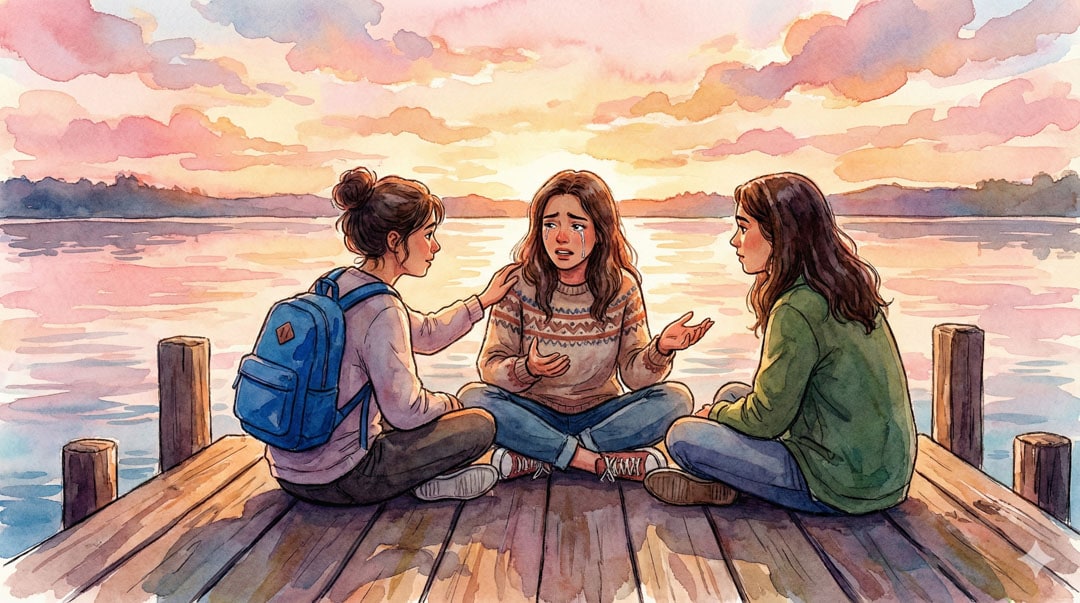
Practise speaking by describing this image

warm up

Answer the questions below. Listen to some people answering these questions. Report back or read the transcript to practise speaking.

TRANSCRIPT

For me, vulnerability means allowing yourself to be seen as you really are, not just as you’d like others to see you. It’s admitting that you don’t have everything under control and being okay with that. I think it takes quiet courage to say, “This matters to me,” or “I’m struggling.” But it also means choosing carefully who you open up to. It’s honesty with awareness, not emotional chaos.

TRANSCRIPT

I wouldn’t naturally describe myself as a vulnerable person. I’m open, but I don’t show my doubts or emotions easily, especially at work. I’ve always felt that being too emotionally exposed in a professional setting can weaken your position. I prefer to build trust through competence and results first. Once that foundation is there, I can open up more. For me, vulnerability works best when it’s balanced with confidence and self-control.

TRANSCRIPT

Yes, I think it can. If you open up at the wrong moment or share too much with the wrong people, it might create awkwardness instead of connection. In a professional context, credibility really matters. If vulnerability starts to look like insecurity or a lack of direction, people may lose trust. For me, real courage also means knowing when to speak honestly and when it’s wiser to hold something back.
part one

KEY LANGUAGE

Go through the flashcards below. Make sure you understand all the words and expressions.

VIDEO

Watch the first part of the video.

COMPREHENSION 

Answer the questions. Use the information from this part of the movie. 

  • ⌚ 1:30 Why wasn’t Brene happy with the way this person wanted to call her?
  • ⌚ 2:32 How was Brené’s approach to life different from other students?
  • ⌚ 3:12 Brene has found the perfect career. What do you find most appealing about your work?

part two

KEY LANGUAGE

Go through the flashcards below. Make sure you understand all the words and expressions.

VIDEO

Watch the second part of the video.

COMPREHENSION 

Answer the questions. Use the information from this part of the movie. 

  • ⌚ 3:43 What did she realise about connection after working for 10 years as a social worker?
  • ⌚ 4:22 What’s the tendency in how we respond to personal questions?
  • ⌚ 4:55 What’s the definition of shame?
  • ⌚ 5:34 What obstacle do we have to overcome in order for connection to happen?

part three

KEY LANGUAGE

Go through the flashcards below. Make sure you understand all the words and expressions.

VIDEO

Watch the third part of the video.

COMPREHENSION 

Answer the questions. Use the information from this part of the movie. 

  • ⌚ 6:06 What was the plan? Did it work out well?
  • ⌚ 7:29 What’s the one variable that separated the two groups of interviewed people?
  • ⌚ 7:56 How did her focus shift after she understood what really keeps us out of connection?
  • ⌚ 8:42 What was her next research on? How did she approach it?

part four

KEY LANGUAGE

Go through the flashcards below. Make sure you understand all the words and expressions.

VIDEO

Watch the fourth part of the video.

COMPREHENSION 

Answer the questions. Use the information from this part of the movie. 

  • ⌚ 9:41 How did courage help the wholehearted group to feel connection?
  • ⌚ 10:16 What view of vulnerability did the wholehearted group have?
  • ⌚ 10:46 How did vulnerability help them to form connections?
  • ⌚ 12:05 How did Brené feel after her new discovery? What did she decide to do?

part five

KEY LANGUAGE

Go through the flashcards below. Make sure you understand all the words and expressions.

VIDEO

Watch the fifth part of the video.

COMPREHENSION

Asnwer these questions using the information from the film.

  • ⌚ 13:21 What was her approach to therapy at first?
  • ⌚ 14:18 What changed after a year of therapy?
  • ⌚ 15:26 How do we deal with vulnerability?
  • ⌚ 16:48 What happens when we numb vulnerability?

part six

KEY LANGUAGE

Go through the flashcards below. Make sure you understand all the words and expressions.

VIDEO

Watch the sixth part of the video.

COMPREHENSION

Answer these questions using the information from the film.

  • ⌚ 17:35 What’s the problem with making uncertain things certain?
  • ⌚ 18:31 Why is perfectionism dangerous?
  • ⌚ 20:13 Why is it important to let ourselves be seen and loved?

POLL

Cast your vote in the poll below.

1️⃣ What makes real connection possible?
2️⃣ How do people usually deal with uncomfortable emotions?
3️⃣ What is the healthiest attitude toward imperfection?
0 votes

×
w

DISCUSSION

MOTIVATION THAT WORKS

Context: Alita and Pete are having coffee after work. They start talking about vulnerability and connection after watching a TED Talk together.

Read their dialogue. Whose views do you lean towards?

Alita: I’ve been thinking about what real connection means. For me, it’s when you feel safe enough to show your vulnerability.

Pete: I agree, but I think it also needs trust. In HR, I see that people want belonging, but they’re afraid of being judged.

Alita: Yes, that fear can really numb emotions. Sometimes we pretend everything is fine just to protect our sense of worthiness.

Pete: True. But if we believe we are worthy of respect and kindness, it takes real courage to open up.

Alita: And maybe we are hardwired for connection, even if it feels uncomfortable.

Pete: It probably boils down to balance — being authentic but also respecting boundaries.

Alita: So real connection means accepting imperfection?

Pete: Exactly. We don’t need to be perfect. We just need honesty and compassion.

Alita: I like that. Maybe embracing vulnerability is not weakness — it’s strength.

Pete: Yes. When we stop trying to prove ourselves, connection happens naturally.

OVER TO YOU

Discuss these questions.

BulletWhy can a strong sense of worthiness influence the quality of connection between people?
BulletMany people believe vulnerability is a weakness. What arguments support this view, and what arguments challenge it?
BulletWhat’s best for building trust in a team: showing vulnerability early or developing competence first? Explain your reasoning.
BulletAdvise a company that wants to improve connection among employees. What principles should it focus on?
BulletMany people believe perfectionism leads to success. How might this belief affect connection and belonging?

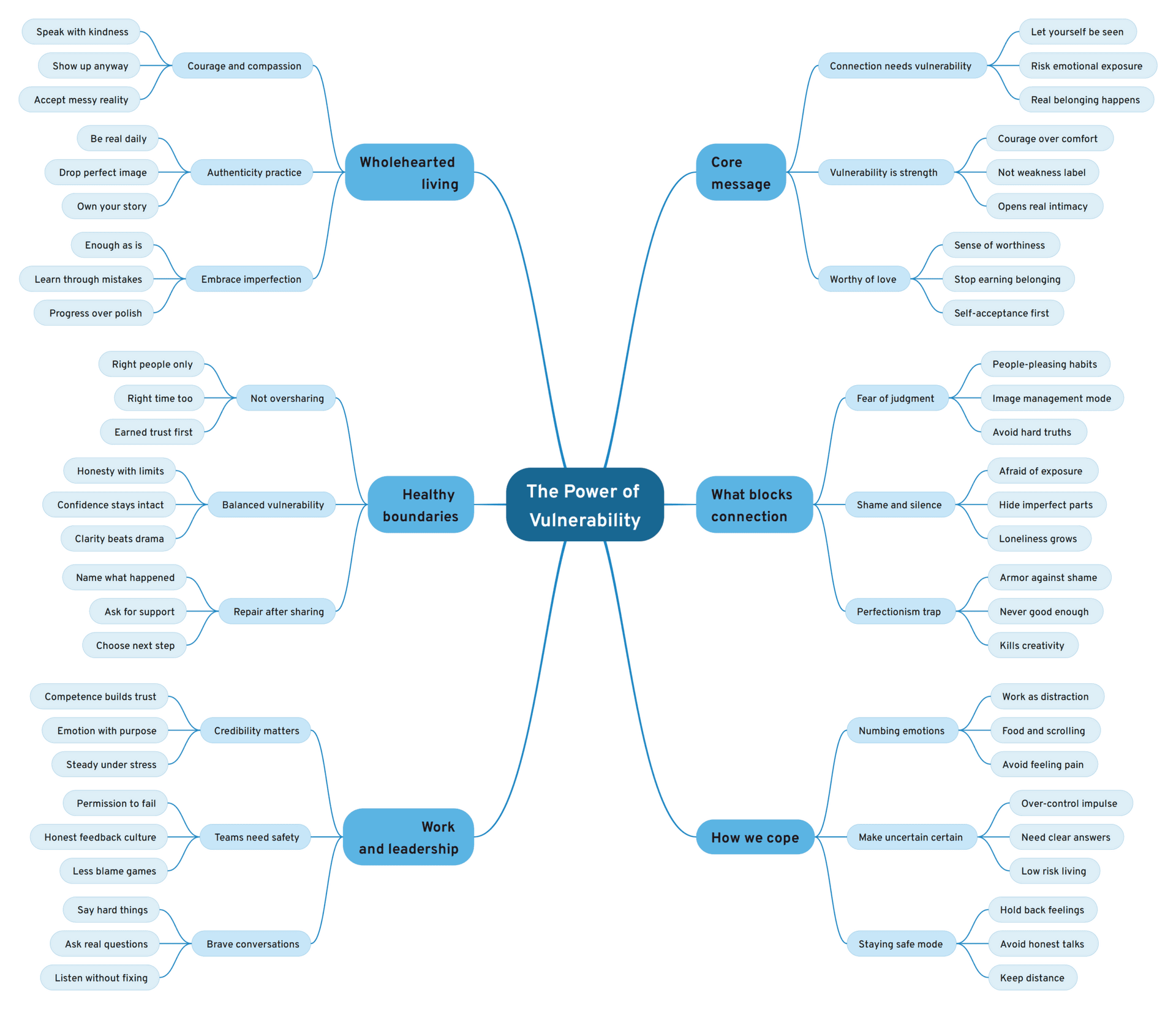
MIND-MAP

Use the mind-map to have a more in-depth discussion on this topic or to better remember that main points.
lesson glossary

COMMENTS

What do you think of the ideas presented in this lesson?

Share your views and experience here.

0 Comments

Submit a Comment