


Bardzo mi przykro, ale lekcje na platformie The Blue Tree działają jedynie na komputerze lub tablecie.
Do zobaczenia na większym ekranie 🙂
Zespół The Blue Tree

THE BLUE TREE
Business English

CEFR B1
Intermediate

warm up
Answer the questions below. Listen to sample answers. Report back what you heard.
What is one building you would love to visit in person? Why? |
TRANSCRIPT
I would love to visit the Fallingwater House by Frank Lloyd Wright. It’s amazing how the house is built over a waterfall and blends into the natural surroundings. The way Wright used cantilevers and local materials is so inspiring. I think seeing it in person would give me a new perspective on organic architecture.
| What is your favorite type of building to design or look at? (e.g., houses, museums, skyscrapers, etc.) |
TRANSCRIPT
I really enjoy designing modern residential houses. I love working with open floor plans and large windows that bring in natural light. In my opinion, good residential design should create a balance between aesthetics and functionality. A home should be comfortable but also beautiful to look at.
| If you could redesign any famous building, which one would you choose and what would you change? |
TRANSCRIPT
I think I would redesign the Pompidou Centre in Paris. It’s a very bold building, but I never liked how the structural elements and mechanical systems are exposed on the outside. If I could change something, I would try to integrate those elements in a way that still feels innovative but maybe a bit more elegant.
| What is an architectural detail or material you love using in your designs? |
TRANSCRIPT
I love using exposed concrete in my designs. It has a raw, industrial look, but at the same time, it can feel warm when combined with wood or soft lighting. It’s also very durable and low-maintenance, which is important for sustainable architecture.
| If you could collaborate with any famous architect (past or present), who would it be and why? |
TRANSCRIPT
I would love to work with Zaha Hadid. Her designs are so fluid and dynamic, almost like sculptures. I admire how she used parametric design to create forms that seemed impossible to build. I think I could learn a lot from her approach to geometry and space.

part one

KEY LANGUAGE
Go through the flashcards below. Make sure you understand all the words and expressions.

VIDEO
Watch the first part of the video.

COMPREHENSION
Answer these questions. Refer to the information from the video.
- What are some of the roles an architect can perform besides design?
- According to the video, what are the three main things that an architect does?
- How does Wikipedia define the role of an architect?
part two
VIDEO
Watch the second part of the material.
COMPREHENSION
Answer these questions.
- What motivates an inventor to create things?
- What condition needs to be met for a building to be an invention?
- What is utility in the context of a building?
part three
VIDEO
Watch the third part fo the material.
COMPREHENSION
Answer these questions.
- What does “to design” mean?
- Does “designing” apply only to buildings?
- What happens first: invention or design?
part four
VIDEO
Watch the last part of the video.
COMPREHENSION
Answer these questions.
- What is the third role of an architect?
- What does an architect discuss with a client?
- What is a program in the context of architecture?
- What are some of the things a program may include?
POLL
Cast your vote in the poll below.
DISCUSSION
SO YOU WANT TO BE AN ARCHITECT
Jessica and Heather are two architecture interns discussing the three roles of an architect and thier career paths.
Read (role play) their dialogue.
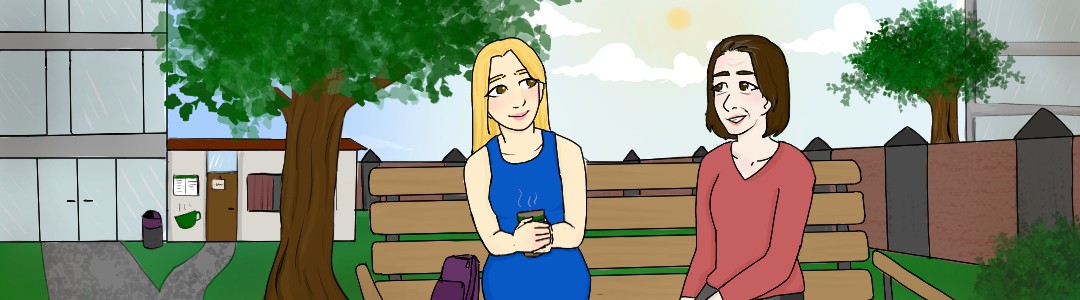
[Scene: A modern architecture studio. Jessica and Heather are sitting at a drafting table, reviewing some sketches.]
Jessica: You know, the more I learn about architecture, the more I realize how much we do. We’re not just designers—we’re inventors and translators too.
Heather: Exactly! I used to think it was all about sketching and designing beautiful buildings, but now I see that every project starts with an idea that doesn’t exist yet. That’s why architects are inventors.
Jessica: Yeah, like Santiago Calatrava—his buildings are so unique, almost futuristic. Look at the City of Arts and Sciences in Valencia! That’s pure invention.
Heather: True! But invention alone isn’t enough. You have to take that idea and actually design something functional. Otherwise, it’s just a concept.
Jessica: That’s why I love Zaha Hadid’s work. Her designs are bold and fluid, but she always found a way to make them work structurally. Like the Heydar Aliyev Center in Baku—it looks almost impossible, but it’s real!
Heather: I admire her too. But for me, the most interesting part is the translator role. Architects take a client’s ideas and turn them into a real space. It’s like solving a puzzle—figuring out the materials, the budget, the regulations, and making it all fit together.
Jessica: That’s why I see myself more as a designer. I love coming up with new shapes, experimenting with light and space. Maybe one day, I’ll design a landmark like the Guggenheim Museum in Bilbao!
Heather: That’s amazing! I think I’m more drawn to the translation part. I like working with clients, understanding their needs, and making their vision a reality. Maybe I’ll focus on urban planning or sustainable architecture.
Jessica: Whatever we choose, I guess we’ll always be a mix of all three—an inventor, a designer, and a translator. You can’t separate them.
Heather: Exactly! Whether you’re creating something new, designing the details, or making a client’s dream come true, it’s all part of being an architect.
Jessica: Well, first, we have to survive this internship… then the real work begins!
Heather: And maybe one day, someone will mention our names when talking about great architects!
[They laugh and continue working on their sketches.]
DISCUSSION QUESTIONS
Discuss the questions below. Refer to the information from the video and your own life experience.
 | How do you think architecture influences the way people live and interact with their environment? Can you give examples of buildings or urban spaces that shape behavior? |
| Which of the three roles—inventor, designer, or translator—do you find most interesting or challenging? Why? |
| Do you think architects should focus more on aesthetics or functionality? Or is it always a balance? Can you think of a building that successfully combines both? |
| How has modern technology changed the role of an architect? What tools or innovations do you think will shape the future of architecture? |
| If you had unlimited resources and no restrictions, what kind of building or space would you design, and why? |
FREE PRACTICE
What does being an architect mean for you?
Write your answer in the comments below or send it to your teacher.
LESSON GLOSSARY
Check out the language from this lesson.
COMMENTS
Share your views and opinions here.
0 Comments