


Bardzo mi przykro, ale lekcje na platformie The Blue Tree działają jedynie na komputerze lub tablecie.
Do zobaczenia na większym ekranie 🙂
Zespół The Blue Tree

THE BLUE TREE
Opinions

CEFR B2
Upper
Intermediate

warm up

Talking about money
Answer these questions. Listen to Warren, a man from the US, answer these questions. Report back what you heard.
| Can money buy happiness? |
TRANSCRIPT
Can money buy happiness? Well, in my opinion, money can make life easier but it can’t buy true happiness. Sure, it’s good to have enough to pay bills and have some savings. It’s nice to not worry about money all the time. But real happiness comes from things you can’t buy, like spending time with family and friends, enjoying hobbies, or helping others. Those things make me truly happy, not just having money.
| How much money would you like to have? Same as now, a little more, much more? |
TRANSCRIPT
How much money would I like to have? I’d say a little more than I have today would be nice. It’s always good to have a bit extra for unexpected things or to enjoy some small luxuries. But, honestly, I wouldn’t mind having less money! Just kidding, of course. I know being really rich can have its own problems. Sometimes, more money means more worries. I’m happy with having enough without all the extra stress that too much money can bring.
| What does being rich mean to you? |
TRANSCRIPT
What does being rich mean to me? To me, being rich isn’t just about the amount of money you have. It’s more about feeling secure and being able to enjoy life without constant worry about finances. Being rich means having enough to take care of my needs, help out others when I can, and having some left for enjoying life’s little pleasures. It’s also about being rich in non-material things, like having good relationships, health, and happiness. Those are priceless and make me feel truly wealthy.
part one
KEY LANGUAGE
Go through the flashcards below. Make sure you understand all the words and expressions.

VIDEO
Watch the first part of the video.

COMPREHENSION
Answer these questions. Refer to the information from the video.
| 1 | 00:08 | What did turn out as regards their budget? |
| 2 | 00:10 | How does he want to spend this extra money? |
| 3 | 00:17 | What will be the focus of this episode? |
| 4 | 00:20 | What do many people believe about money and happiness? |
| 5 | 00:22 | What does he mean when he says: “Sort of”? |
part two
KEY LANGUAGE
Go through the flashcards below. Make sure you understand all the words and expressions.
VIDEO
Watch the second part of the video.
COMPREHENSION
Answer these questions. Refer to the information from the video.
| 1 | 00:28 | What did the studies find out about people living in poverty? |
| 2 | 00:35 | How much money does one need to earn for his happiness to flatten out? |
| 3 | 00:42 | Does making 200 000 a year make you twice as happy as when you earn 80 000? |
| 4 | 00:55 | If having money doesn’t make us happy, what does? |
part three
KEY LANGUAGE
Go through the flashcards below. Make sure you understand all the words and expressions.
VIDEO
Watch the second part of the video.
COMPREHENSION
Answer these questions. Refer to the information from the video.
| 1 | 01:01 | What is Dr Waldinger a director of? |
| 2 | 01:12 | What’s special about this study? |
| 3 | 01:35 | What was the surprising finding from this research? |
| 4 | 01:49 | What was the strongest predictor of one’s health and happiness in the old age? |
| 5 | 02:17 | In what way are relationships like doing physical exercises? |
part four
KEY LANGUAGE
Go through the flashcards below. Make sure you understand all the words and expressions.
VIDEO
Watch the second part of the video.
COMPREHENSION
Answer these questions. Refer to the information from the video.
| 1 | 02:42 | What were these two researchers studying? |
| 2 | 02:48 | Why is studying spending so interesting? |
| 3 | 03:15 | What is the first finding from this research? |
| 4 | 03:35 | Giving somebody $5 might not make them like us. What might? |
| 5 | 03:47 | What do we get when we spend money on doing things with others? |
part five
KEY LANGUAGE
Go through the flashcards below. Make sure you understand all the words and expressions.
VIDEO
Watch the second part of the video.
COMPREHENSION
Answer these questions. Refer to the information from the video.
| 1 | 03:151 | What should we spend more money on? |
| 2 | 04:01 | What did the researchers at Cornell find out? |
| 3 | 04:23 | How does the graph of happiness develop when we buy something for ourselves? |
| 4 | 04:44 | What happens to happiness chart when we buy experiences? |
part six
KEY LANGUAGE
Go through the flashcards below. Make sure you understand all the words and expressions.
VIDEO
Watch the second part of the video.
COMPREHENSION
Answer these questions. Refer to the information from the video.
| 1 | 04:54 | What should we know about ourselves? |
| 2 | 05:05 | What do our spending needs to be aligned with in order to make us happy? |
| 3 | 05:14 | What can extroverts spend their money on to increase their satisfaction? |
| 4 | 05:20 | How can introverts increase their happiness using money? |
| 5 | 05:26 | What does it mean that we should do an audit of our spending? |
DISCUSSION
DIALOGUE
Alita and Pete are sitting in a quiet café after work. They recently watched a video about the relationship between money and happiness. The video presented three main conclusions: use money to build social relationships, choose experiences over things, and know yourself.
Read or role-play their dialogue.
Alita: I’ve been thinking about that video we watched. The idea that we should use money to build relationships really stood out to me.
Pete: Same here. It makes sense when you think about it. Taking a friend out for dinner creates a shared memory. Buying another gadget doesn’t.
Alita: Exactly. And I loved the point about choosing experiences over things. I remember trips I took years ago, but I can’t even recall what phone I had back then.
Pete: That’s a good example. Experiences become part of who we are. Things just… sit there.
Alita: But what about the third point — knowing yourself? That one feels harder to apply.
Pete: I think it means your spending should be aligned with your values. If you love music, maybe concert tickets make you happier than a new watch.
Alita: So it’s not about spending less, but spending smarter?
Pete: Right. The research suggests we’d be better off doing a little audit of where our money goes.
Alita: That’s actually a helpful way to look at it. Small shifts, not big sacrifices.
Pete: Exactly. And if I were to recap — spend on people, choose memories, and know what truly matters to you.
OVER TO YOU
Discuss these questions. Refer to the topic of the lesson and your own experience.
 | Why do many people believe that buying things will make them happy? |
| What makes experiences more memorable than material possessions? |
| How can spending money on others strengthen relationships? |
| Why is it important to understand your own values before making spending decisions? |
| What prevents people from changing their spending habits even when they know what would make them happier? |
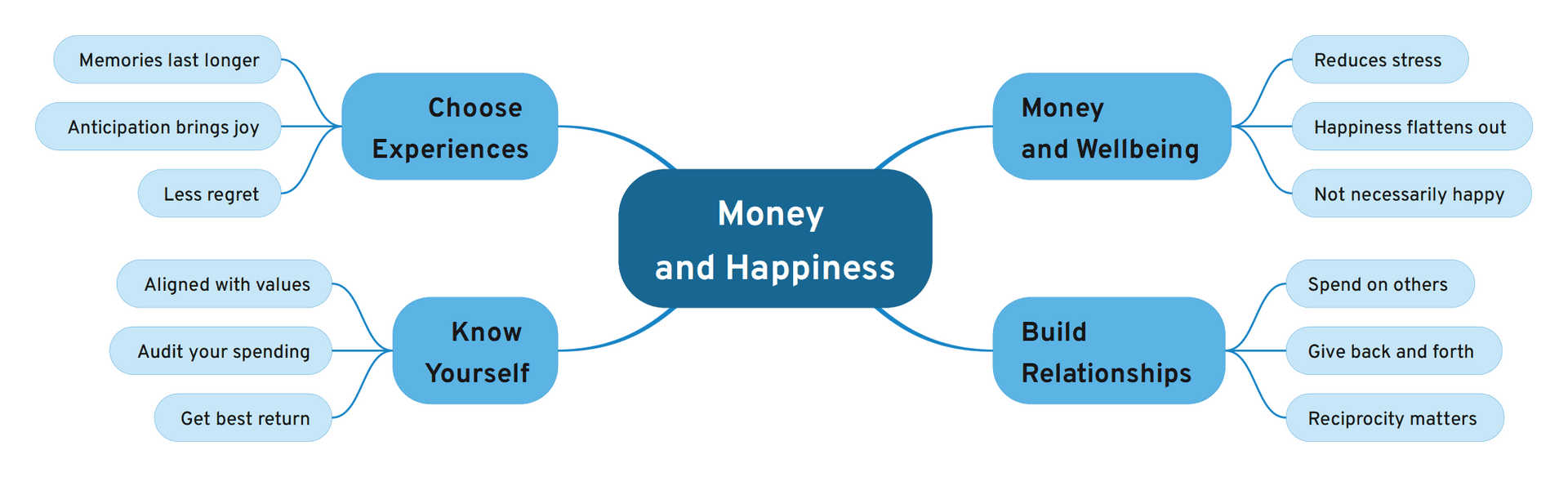
DIVE DEEPER WITH A MIND-MAP
Study this mind-map to dive deeper into this topic and remember more from this lesson.
POLL
Cast your vote in the poll below.
lesson glossary
Go through the main vocabulary items from this lesson using this practical glossary.
| Expression | Phonetic | Translation | Example |
|---|---|---|---|
| it turns out | /ɪt tɜːnz aʊt/ | okazuje się | It turns out that money alone doesn't make people happy. |
| figure out | /ˈfɪɡə aʊt/ | zrozumieć, rozgryźć | I'm trying to figure out why some people are happier than others. |
| sort of | /sɔːt əv/ | poniekąd, w pewnym sensie | Money can sort of buy happiness, but only if you spend it wisely. |
| poverty | /ˈpɒvəti/ | ubóstwo, bieda | Many people living in poverty struggle to meet their basic needs. |
| flatten out | /ˈflætn aʊt/ | wyrównać się, ustabilizować się | After a certain income level, happiness tends to flatten out. |
| to make (number) a year | /meɪk ... ə jɪə/ | zarabiać (kwotę) rocznie | She makes around 80,000 dollars a year working as a consultant. |
| necessarily | /ˌnesəˈserəli/ | koniecznie, niekoniecznie (w przeczeniach) | Having more money doesn't necessarily mean you'll be happier. |
| to conduct a study | /kənˈdʌkt ə ˈstʌdi/ | przeprowadzić badanie | Researchers conducted a study on the relationship between money and happiness. |
| predict | /prɪˈdɪkt/ | przewidywać | It's difficult to predict how people will react to sudden wealth. |
| abuse alcohol | /əˈbjuːz ˈælkəhɒl/ | nadużywać alkoholu | Some people abuse alcohol when they feel unhappy or stressed. |
| marital satisfaction | /ˈmærɪtl ˌsætɪsˈfækʃn/ | zadowolenie z małżeństwa | The study found that marital satisfaction was more important than income. |
| by far | /baɪ fɑː/ | zdecydowanie, bez wątpienia | Good relationships are by far the most important factor in happiness. |
| the strongest predictor | /ðə ˈstrɒŋɡɪst prɪˈdɪktə/ | najsilniejszy wskaźnik/predyktor | Social connections are the strongest predictor of long-term wellbeing. |
| to get at causation | /ɡet æt kɔːˈzeɪʃn/ | dotrzeć do przyczyny, ustalić związek przyczynowy | Scientists try to get at causation, not just correlation. |
| to tend to something | /tend tuː/ | dbać o coś, zajmować się czymś | We should tend to our relationships if we want to be happy. |
| wither away | /ˈwɪðər əˈweɪ/ | zanikać, obumierać | Friendships can wither away if we don't invest time in them. |
| to affect | /əˈfekt/ | wpływać na | How we spend money can affect our level of happiness. |
| ubiquitous | /juːˈbɪkwɪtəs/ | wszechobecny | The desire for more money is ubiquitous in modern society. |
| methodology | /ˌmeθəˈdɒlədʒi/ | metodologia | The study used a careful methodology to track happiness over time. |
| findings | /ˈfaɪndɪŋz/ | wyniki, wnioski (z badań) | The findings suggest that experiences bring more joy than things. |
| to boil down | /bɔɪl daʊn/ | sprowadzać się do | Happiness often boils down to the quality of our relationships. |
| takeaway | /ˈteɪkəweɪ/ | wnioski, najważniejsze przesłanie | The main takeaway from this research is to invest in experiences. |
| reciprocity | /ˌresɪˈprɒsəti/ | wzajemność | Strong friendships are built on reciprocity and trust. |
| give back and forth | /ɡɪv bæk ənd fɔːθ/ | dawać i brać, wymieniać się wzajemnie | Healthy relationships involve giving back and forth over time. |
| on average | /ɒn ˈævərɪdʒ/ | średnio, przeciętnie | On average, people who spend money on experiences are happier. |
| spike in happiness | /spaɪk ɪn ˈhæpinəs/ | nagły wzrost szczęścia | Buying a new car gives you a spike in happiness, but it doesn't last. |
| to some extent | /tə sʌm ɪkˈstent/ | do pewnego stopnia | Money can buy happiness, but only to some extent. |
| regret | /rɪˈɡret/ | żałować, żal | People rarely regret spending money on meaningful experiences. |
| whereas | /weərˈæz/ | podczas gdy, natomiast | Experiences bring lasting joy, whereas material things lose their appeal. |
| anticipated | /ænˈtɪsɪpeɪtɪd/ | oczekiwany, wyczekiwany | The anticipated holiday brought her more joy than the trip itself. |
| look forward to | /lʊk ˈfɔːwəd tuː/ | nie móc się doczekać, cieszyć się na | I always look forward to spending time with my friends. |
| every once in a while | /ˈevri wʌns ɪn ə waɪl/ | od czasu do czasu | Every once in a while, it's good to treat yourself to something special. |
| aligned with | /əˈlaɪnd wɪð/ | zgodny z, dopasowany do | Your spending should be aligned with your personal values. |
| to be better off | /bi ˈbetər ɒf/ | być w lepszej sytuacji | You'd be better off spending money on experiences than on things. |
| me time | /miː taɪm/ | czas dla siebie | Everyone needs some me time to relax and recharge. |
| it's up to you | /ɪts ʌp tə juː/ | to zależy od ciebie | How you spend your money is up to you. |
| to shift | /ʃɪft/ | przesunąć, zmienić | Try to shift your focus from buying things to creating memories. |
| to recap | /riːˈkæp/ | podsumować | Let me recap the three main points from the research. |
| first off | /fɜːst ɒf/ | po pierwsze, na początek | First off, let's talk about how money affects happiness. |
| put an emphasis on | /pʊt ən ˈemfəsɪs ɒn/ | kłaść nacisk na | The study puts an emphasis on the quality of relationships. |
| if I were to | /ɪf aɪ wɜː tuː/ | gdybym miał/miała | If I were to give you one piece of advice, it would be to invest in experiences. |
| to get the best return | /ɡet ðə best rɪˈtɜːn/ | uzyskać najlepszy zwrot/efekt | To get the best return on your money, spend it on others. |
| for the purposes of | /fə ðə ˈpɜːpəsɪz əv/ | na potrzeby, w celu | For the purposes of this study, happiness was measured through surveys. |
| what are we looking at? | /wɒt ɑː wiː ˈlʊkɪŋ æt/ | co my tam mamy? (idiom) | So, what are we looking at here? Three key findings about spending. |
| Olive Garden | /ˈɒlɪv ˈɡɑːdn/ | Olive Garden (amerykańska sieć restauracji włoskich) | Taking a friend to Olive Garden can bring more happiness than buying a new gadget. |
| Expression | Phonetic | Translation | Example |
COMMENTS
Can money buy happiness? Write your answer to this question. Use the languge and information presented in this lesson and your own experience.
8 Comments
Submit a Comment
You must be logged in to post a comment.
It is a tricky question to begin with. Of course, money cannot buy happiness. But it is not the end of the story. Money is powerful in its own right. It can make our lives safer and more comfortable. We can experience more in life if we have more money – that goes without saying. So, the way I see this, money won’t make you happy, but it may – if spent well – make you richer.
Money can’t buy happiness, but with money is easier to get happiness. We can make our dreams come true without any worries. Focus on experiences and relationships. Live not vegetation from first to first 🙂
Money cannot buy happiness. But having money helps a lot. You can but things or you can use money to experience something that you will remember for a long time. And this can bring a bit of happiness to your life. Sometimes even if you live on a breadline you can experience something that will live with you and make you happy for a long time. Investing in relationships with others can also help to feel happier. I also think that it is important to think what makes us happy and than spent money to things or experiences that are worth it and will bring happiness. This would limit spending money on things that are not worth.
Generally, we cannot buy happiness. Love or health are not for sale. There are some priceless things we cannot posses with money. Money helps a lot in life, but it is not a source of happiness. People should use it wisely. Buying things is just a short term invest. We can get the best return just when we share our assets with other people.
Money cannot buy happiness but can make life better. Thanks to money, we have access to better medical care, we can buy better quality things and experiences that make us happy. We can also help other people. Money well spent can make us happier but the most important things in life (love, smile, friendship, family) are still for free.
What is happiness really? For each person this word means something different. For a child, for example, it is: the love of parents, a toy, for an adult it is health, housing, travel, professional fulfilment.
For each person, depending on their expectations, money is essential for building happiness. Nowadays, even to be healthy, money is necessary.
For some, happiness is simply stability and such people probably think that happiness cannot be bought. I believe that money can buy happiness. It can provide us with peace of mind, fulfilment of dreams, happiness for our loved ones in the good and bad moments of life.
Let’s reverse the question: Can lack of money make You happy? If You are not a Buddhist monk or a hermit living in a cave, no money in Your wallet would surely make You rather unhappy (to put it mildly). Let us no kid ourselves, money can buy happiness but it doesn’t mean that it has to – as everything in this world: “it depends”. For a homeless person struggling to find a warm shelter in winter, for a (Polish) teacher living with two kids and a bedridden parent, for a graduate in US that’s living from hand to mouth with a giant student loan to be paid, for two million Poles who live in extreme poverty, for two billion people that don’t have access to fresh water… money can make them happy. Money is the means (not the only one) to make You happy. If You have it and You use it wisely, it makes Your life easier: Your tummy is full, rain is not falling on Your head, You have a warm bed, You can take a shower whenever You want, You have access to healthcare and education, You live in a crime-free district, in a region not so drastically affected by climate changes, in a war-free – and probably democratic – country. Once those Maslowian needs are met (not mentioning the need to belong, to love, to self-develop and the rest of this intangible needs) money starts to offer us just add-ons: a yacht, a bigger yacht, a faster car, a house on the countryside, plastic surgery, and all the stuff we buy on a whim. Those things may make us happy but just for a second – it’s a short-term, endorphin-based happiness. The true happiness that money can offer is the long-lived happiness, a kind of attitude, a peace of mind. My answer to the main question is obviously Eurocentric. I can imagine that a poor family living in a cottage in war-driven Congo can be really happy – in the end it is usually the matter of the things that we see around us. We crave for what we see, for things that, hypothetically, we might have access to. We see our boss driving a Ferrari – we want one. Our favourite actor spends his vacation on Bali – we want to go there too. The bigger the stratification of a society, the inequalities, the bigger the crave on things that give us the abovementioned short-term happiness.
So, again, it depends, but generally speaking: YES, money can make us happy (it can make us miserable too, but that’s a completely different story).
Sorry for the long post.
In my opinion we cannot buy happiness, because this is state of mind, which is immeasurable. However, money is kind of base to be happy. Firstly, you do not need to think how to live from hand to mouth. Secondly, money gives you an opportunity to buy things which makes you happier. The only thing is to know what brings smile on your face: will it be fond memories, living like a king or blowing money on your house.