


Bardzo mi przykro, ale lekcje na platformie The Blue Tree działają jedynie na komputerze lub tablecie.
Do zobaczenia na większym ekranie 🙂
Zespół The Blue Tree
back to HOME > Learning English > Everyday English >

THE BLUE TREE
Everyday English

CEFR B2
Upper
Intermediate

warm up
Answer the questions below. Listen to same people answering these questions. Report back or read the transcript to practise speaking.
| How important is the weather forecast for you when you are planning a holiday or a trip outside? |
TRANSCRIPT
Honestly, I check the forecast every day before I travel. If it says it’s going to rain all week, I might even change my plans. I think weather can really affect how much you enjoy your trip—especially if you’re planning outdoor activities.
Plus, I like to pack properly, so knowing whether I’ll need a raincoat or sunscreen makes a big difference.
| Over the years many people wanted to predict what the future will look like. What about you? Do you have an idea how our life and work will change in the future? |
TRANSCRIPT
I think remote work is here to stay and will become even more common. AI will probably take over a lot of repetitive tasks, but I believe there will still be a strong need for creative and emotional intelligence in many jobs. Life might be faster and more connected, but also a bit more stressful.
That’s why I think people will also start paying more attention to mental health and work-life balance.
| If time travel was possible, when would you like to go and why? |
TRANSCRIPT
I’d love to visit the future—maybe the year 2200—just to see what kind of technology people will have. Will we live on Mars? Will climate change be under control? It would be fascinating to find out how humanity evolves.
And who knows, maybe I could bring back some amazing ideas or inventions to help improve life today.
part one
People in business often have to make predictions about the future: for example, to say if they think a product or idea will be successful or not.
Study these ways of talking about how likely something is.
100% – I’m completely sure this will happen
These expressions are used when you are absolutely sure that something will happen in the future.
💬 Useful expressions:
-
I’ll definitely…
-
There’s no doubt that I will…
-
I’m absolutely certain that I will…
✅ Example 1:
I’ll definitely go to the meeting tomorrow.
🟡 This means the speaker is 100% sure. The meeting is in their plans and nothing will stop them.
✅ Example 2:
There’s no doubt that I will pass the exam.
🟡 The speaker is very confident. They believe they studied enough to succeed.
✅ Example 3:
I’m absolutely certain that I will enjoy the trip.
🟡 The speaker knows what kind of trip it is and feels sure it will be fun.
80% – I’m very sure, but not completely
We use these when we are almost certain, but there’s still a small chance things might change.
💬 Useful expressions:
-
I almost definitely will…
-
There’s a strong possibility that I will…
-
I’m quite certain I will…
✅ Examples:
I almost definitely will join you for lunch.
🟡 I plan to come, but something unexpected might happen.
There’s a strong possibility that I will move to a new flat soon.
🟡 I’ve been looking for one and found a few I like.
I’m quite certain I will pass the interview.
🟡 I feel confident, but I can’t be 100% sure.
60% – It’s likely, but not guaranteed
These phrases show that something will probably happen, but we don’t know for sure.
💬 Useful expressions:
-
I may well…
-
It’s possible that I will…
-
It’s quite likely that I will…
✅ Examples:
I may well be late for the meeting.
🟡 There’s a good chance it will happen, maybe because of traffic.
It’s possible that I will visit my cousins next month.
🟡 I haven’t decided yet, but I’m thinking about it.
It’s quite likely that I will change jobs this year.
🟡 I’ve started looking and sent out some applications.
40% – I’m not sure, but maybe
We use these expressions when we are not very sure, but we think there’s a chance.
💬 Useful expressions:
-
The chances are that I will…
-
I might…
-
There’s some possibility that I will…
✅ Examples:
The chances are that I will forget something.
🟡 It’s possible. I often forget things when I travel.
I might go to the cinema tonight.
🟡 I’m thinking about it, but I haven’t decided yet.
There’s some possibility that I will work abroad next year.
🟡 It could happen, but nothing is confirmed.
20% – I think it’s unlikely
These phrases show that you don’t expect something to happen, but it’s still possible.
💬 Useful expressions:
-
There’s a slim chance that I will…
-
I don’t expect I will…
-
I doubt whether I will…
✅ Examples:
There’s a slim chance that I will finish this project today.
🟡 I’ll try, but it’s not very likely. It’s a lot of work.
I don’t expect I will see him at the party.
🟡 He usually doesn’t come to these events.
I doubt whether I will have time to call you later.
🟡 I’ll be busy, so probably not.
1% – It’s almost impossible
These are used when we are sure something won’t happen.
💬 Useful expressions:
-
There’s no chance that I will…
-
No way I will…
-
It’s almost impossible that I will…
✅ Examples:
There’s no chance that I will wake up at 5 a.m. tomorrow.
🟡 I’m not a morning person, so I know I won’t do it.
No way I will go skydiving!
🟡 I’m too scared. I would never do that.
It’s almost impossible that I will finish the book today.
🟡 I’m still on page 10 and it’s 500 pages long!
part two
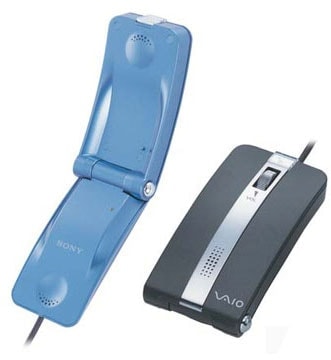
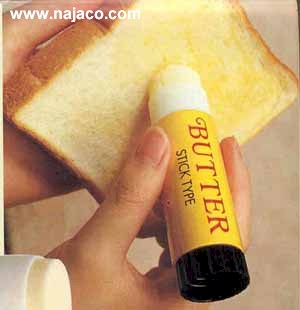
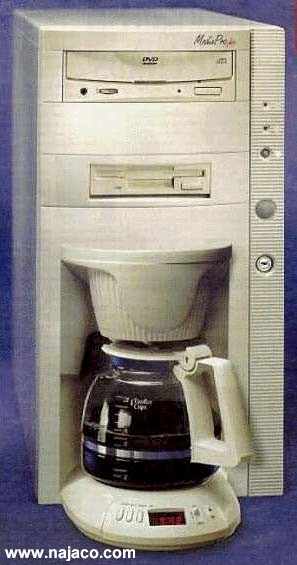
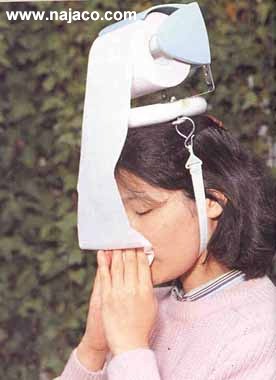
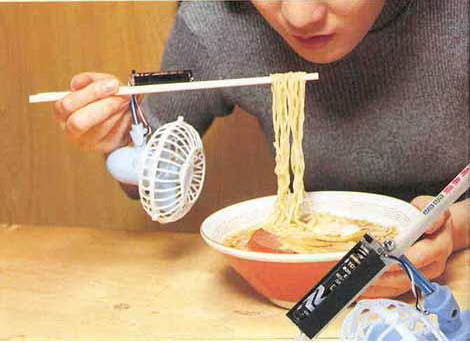
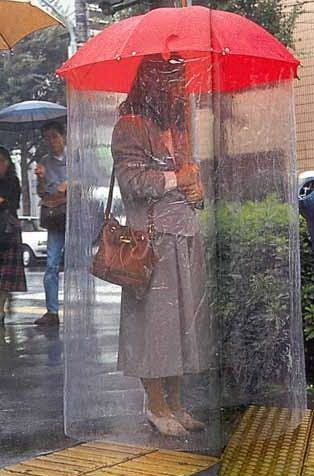
Look at these ingenious inventions and decide if they are going to be a success or a flop.
part three

READ AND LISTEN
Read and listen the following vision of the future. This article was written at the beginning of the XXI century. How many of the things mentioned in it have actually come true?

Source: In Company Photocopiable Resources, Macmillan, 2001
przewidziane / oczekiwane
zastąpione
pielęgnować / rozwijać (np. relacje z klientami)
działalność podstawowa / główny profil działalności
dostawca / usługodawca
odnosić sukces / dobrze prosperować
zmagać się / mieć trudności

TALKING ABOUT PREDICTIONS
Alita and Pete are discussing the ideas from this text. It’s 2025 and they are quite surprised how accurate some of these predictions from 2001 were.
Notice how they are using the language of predictions.
Alita:
Have you read that old article from 2001 about the future of business and technology? It’s surprising how accurate it turned out to be!
Pete:
I know, right? I mean, they predicted intelligent fridges and mobile internet. Back then, that must have sounded crazy, but now we take it for granted. I honestly didn’t expect technology to develop so fast.
Alita:
Same here. And what really surprised me was the idea of a “total experience.” It said people would want one provider for everything—gas, electricity, internet—and now look at companies like Amazon or Google. They offer everything from cloud storage to smart home devices.
Pete:
Exactly. The author said companies would succeed if they focused on building strong customer relationships. That’s still true today. I think it’s quite likely that in the next ten years, customer loyalty will matter even more than product quality.
Alita:
Yeah, and companies that don’t adapt may well disappear. Just look at what happened to brands that didn’t go digital. They struggled or disappeared completely.
Pete:
True. Also, the prediction that new products would be “superseded sooner rather than later” was spot on. These days, your new phone is old in a year. I wouldn’t have believed that back in 2001.
Alita:
I guess the only thing we can be sure of is that change will keep happening. I’m almost certain that AI will reshape even more industries very soon.
Pete:
And who knows? In a few years, we might be talking to digital assistants that are smarter than us. It sounds unlikely now, but after reading that article—I’m not so sure anymore!

OVER TO YOU
Now practise predicting future trends and events. Use the prompts below or come up with your own.
- climate change
- international travel
- globalisation
- mobile technologies
- AI
- population
- politics
part four
TIME CAPSULE
Read this short article about the idea of a time capsule.
Message to the Future: What’s in Your Time Capsule?
Imagine it’s the year 3025 and someone finds a mysterious metal box buried in a backyard. Inside? A fidget spinner, a pizza menu, and a USB stick with a password no one can crack. Welcome to the wonderful world of time capsules—those little boxes of hope, sent to the future with love, confusion, and questionable taste.
Time capsules have been around for centuries. One was hidden in the base of the Statue of Liberty in 1884. When it was opened, people found newspapers, coins, and… a calling card. (Apparently, even back then, people wanted to network.)
Perhaps the most famous time capsule isn’t even on Earth. In 1977, NASA sent the Voyager Golden Record into space—a gold-plated disc with music, greetings in 55 languages, and even whale sounds. The idea? To introduce humans to extraterrestrial life. Let’s hope aliens appreciate Chuck Berry.
Some time capsules go hilariously wrong. In 2014, one was opened after 100 years and contained… a ticket to a play, a tooth, and a pair of shoes. The future was, understandably, underwhelmed.
But still, there’s something beautiful about sending a message to people we’ll never meet. Whether it’s serious or silly, a time capsule reminds us that someone, someday, might wonder what life was like now—and hopefully, they’ll get more than just an expired chocolate bar.
So, if you were to make one today, what would you put inside?
What’s in Your Time Capsule?
Alita and Pete are sharing their ideas what they will put in a time capsule.
Read or role play their dialogue.
Alita:
Okay, Pete, imagine we’re making a time capsule today. It will be opened in the year 3025. What would you put inside?
Pete:
Easy. My old smartphone. I want future humans—or aliens—to laugh at how we thought this little thing was the height of technology.
Alita:
Great idea! And I’d include a handwritten recipe for banana bread. Let’s remind them there was once a global obsession with baking during a pandemic.
Pete:
Oh yes, the Great Banana Bread Boom of 2020. I’d also put in a mask. Just one. Let them wonder if it was a fashion statement, a medical tool, or part of some strange ritual.
Alita:
Nice. I think I’d add a photo of people sitting next to each other without their phones. That alone might shock them.
Pete:
True. Or maybe a Spotify playlist on a CD, just to confuse them completely.
Alita:
We should definitely write a note, too: “Dear Future, sorry about the climate, we did try… a bit.”
Pete:
And maybe a coffee cup that says, “But first, coffee.” Just to prove caffeine addiction is timeless.
Alita:
Perfect. Funny, isn’t it? What seems normal now might look totally ridiculous—or deeply meaningful—in a thousand years.
Pete:
Exactly. Maybe the most valuable thing in the capsule won’t be the objects… but the stories behind them.
OVER TO YOU
Discuss these questions.
 |
If you had to choose only one object to represent life in 2025, what would it be and why? Think about what symbolises our daily life, habits, or technology. |
|
Do you think people in the future will understand the meaning of the things we leave in time capsules? Why or why not? What might be confusing or surprising to them? |
|
Is it more important to include funny or serious items in a time capsule? What balance would you choose? Explain your reasoning and give examples. |
|
What kind of message would you write to future generations? What do you think they need to hear from us? Would you apologise, warn them, or give advice? |
|
If you could open a time capsule from 100 years ago, what would you hope to find inside? What would you be curious about from the past? |
DOWNLOAD
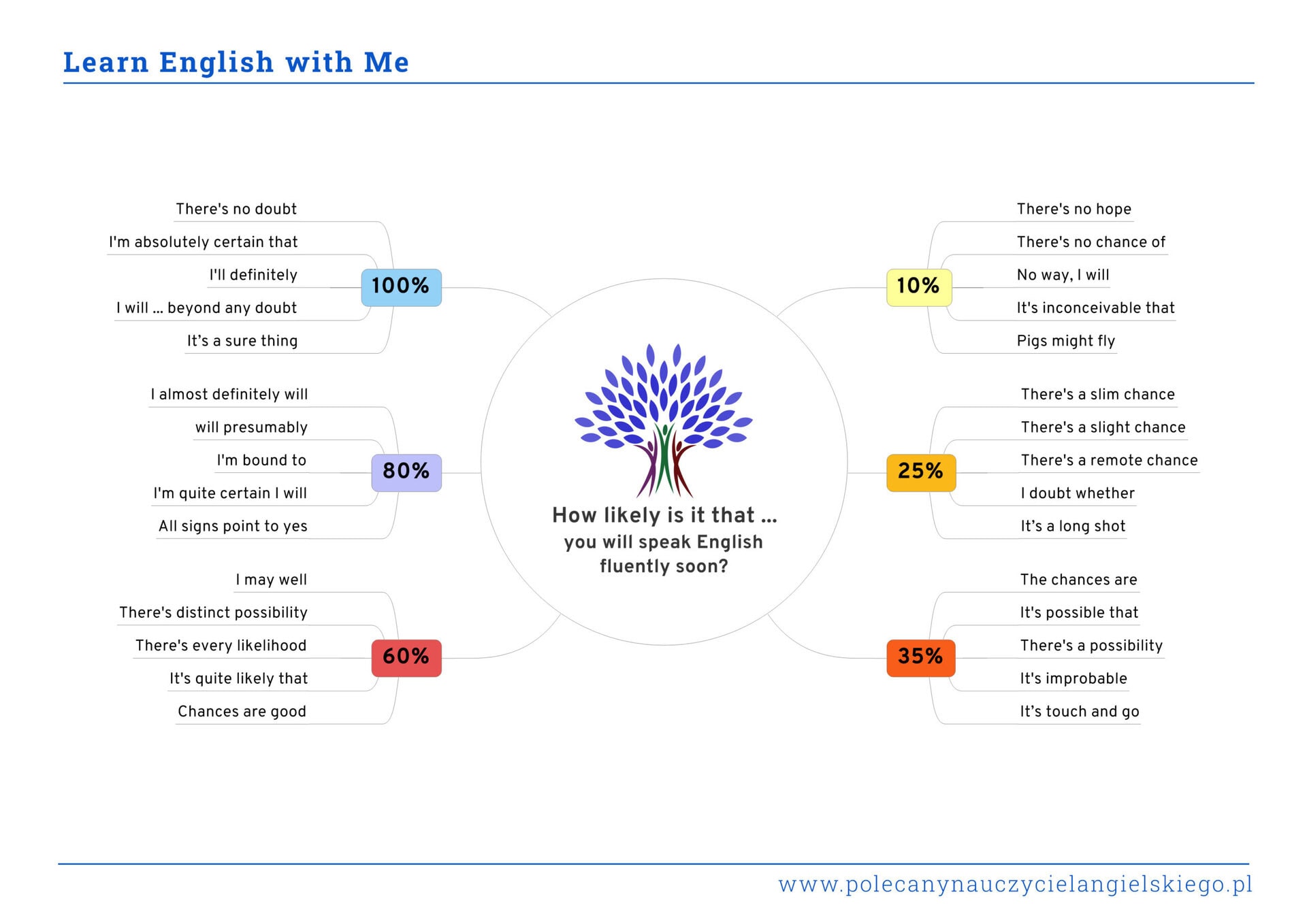
Check out the mind-map below. It contains all the language of making predictions and expressing likelihood from this lesson plus some extra expressions.
Click on the mind-map to see a bigger version. Right click to save the mind-map to your computer.
COMMENTS
What is your outlook on the future? Are you excited about future developments or rather anxious and worried? Do we have reasons to be optimistic about the future?
Share your views and experience here.
1 Comment
Submit a Comment
You must be logged in to post a comment.
Just before the COVID-19 pandemic, international travel has become a widely accessible product for almost everybody. In a few years, long-distance travel will almost definitely be a privilege, if not a luxury. Prces of plane tickets are very likely to increase because airlines will have to cover rising costs of environmental investments and get back on their feet following th pandemic crisis.
I have no doubt that short-distance travel will be based exclusively on trains and buses, as short-distance flights will be deemed environmentally harmful and may even be completely banned.