


Bardzo mi przykro, ale lekcje na platformie The Blue Tree działają jedynie na komputerze lub tablecie.
Do zobaczenia na większym ekranie 🙂
Zespół The Blue Tree

THE BLUE TREE
Everyday English

CEFR B1
Intermediate
warm up
Answer the questions below.
| Do you think you have a good memory? Would you like to improve it? |
TRANSCRIPT
I think my memory is quite good for faces and events, but terrible for names. Sometimes I meet someone and remember exactly where we met, but not their name! I’d love to improve my memory, especially for small details. I guess training it like a muscle — with reading, learning, and practice — could really help.
| What is your strategy for remembering important information? |
TRANSCRIPT
When I need to remember something important, I always write it down. I use notes on my phone or sticky notes on my desk. I also repeat things several times in my head. It may sound old-fashioned, but it works! If something is emotional or funny, I usually remember it without any effort.
| What is your most pleasant memory? |
TRANSCRIPT
My most pleasant memory is from a summer trip to the seaside with my family. We spent the whole day swimming and watching the sunset. I can still hear the sound of the waves and smell the sea air. It was a simple day, but it felt perfect. I like remembering moments like that when life gets stressful.
part one

READING
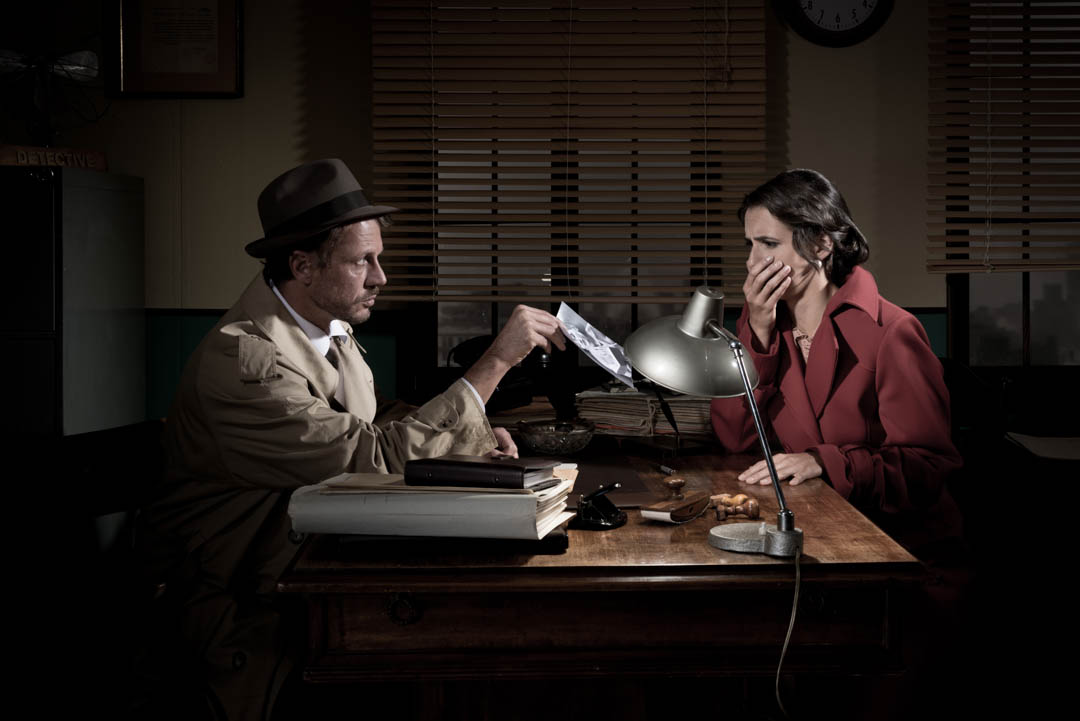
Ingrid arrives late for her appointment with Inspector Gordon. How does he get from her the information that he needs?
Read or role play this dialogue. Notice the language of remembering and forgetting.
| Inspector: | Ingrid. You’re late. Did you forget our appointment? |
| Ingrid: | I’m sorry. It must have slipped my mind. |
| Inspector: | OK, Ingrid. We want you to tell us where Biggs is hiding. |
| Ingrid: | I’m sorry. I seem to be drawing a blank. |
| Inspector: | I see. Maybe this will help refresh your memory. The inspector gives Ingrid fifty dollars. |
| Ingrid: | Come to think of it, I do seem to remember something about a bridge. |
| Inspector: | Which bridge? |
| Ingrid: | The name escapes me. The inspector hands Ingrid another fifty dollars. Hmm … it’s on the tip of my tongue. He gives her a hundred dollars. Oh. yes! The Bay Bridge. |
| Inspector: | One last thing, Ingrid. Is there a shipment coming in tonight? |
| Ingrid: | Now that you mention it, I think there is, but for the life of me I can’t remember at what time. |
| Inspector: | Maybe you need a little inspiration. He hands her fifty dollars. |
| Ingrid: | Wait. It’s coming to me now. He gives her a hundred dollars. That’s right! There’s a shipment coming in at 11:30 tonight. |
| Inspector: | Thanks. Ingrid. You’ve been a big help. Remind me to take you out to dinner sometime. |
| Ingrid: | Your treat? |


KEY LANGUAGE
Study the language for talking about forgetting and remembering.
SPOKEN EXAMPLES
Study and role play these short dialogues and notice how these people used expressions for remembering and forgetting.
Sara: Did you send the report to the client?
Tom: Oh no, it completely slipped my mind!
Sara: Seriously, Tom? That’s the third time this week.
Tom: Wait… now that you mention it, I did prepare the file. I just forgot to hit “send”!
Liam: What was the name of that Italian place we went to last month?
Nora: Hmm… the name escapes me. Was it “Bella Something”?
Liam: It’s on the tip of my tongue! Wait — it just dawned on me! It was Bella Roma!
Nora: That’s it! Their tiramisu was unforgettable.
Teacher: Emma, what’s the answer to question three?
Emma: I studied it yesterday, but I’m drawing a blank right now.
Teacher: Don’t worry. Let me refresh your memory — it’s related to the Industrial Revolution.
Emma: Oh, right! It’s coming to me now!
Marta: Honey, did you water the plants today?
Jack: Uh… for the life of me I can’t remember.
Marta: Typical. You only remember when they’re dying!
Jack: Come to think of it, I did water them this morning — before my coffee.
Marta: Miracles do happen.
Zoe: Do you remember where we parked the car?
Ben: It went in one ear and out the other when you told me.
Zoe: Great. Now we’ll never find it.
Ben: Wait — suddenly, it all came back to me! It’s near the bakery.
Zoe: Thank goodness your brain finally decided to cooperate!

OVER TO YOU
Create your own short dialogue and role play it in class.
part two
MEMORY GAME
Match the Polish translation with the English version of the expression. Make sure you complete this game under 30 seconds.
MATCHING HALVES
Match the two halves of the expressions of remembering and forgetting.
REMEMBER VS FORGET
Now, organize the expressions into two categories: forgetting and remembering.

PARAPHRASE IT
Decide how else you could express the ideas in this exercise. Choose one option for each sentence from the drop down list.
If you get more than 60%, you will receive a beautiful certificate.


POLL
Answer the question in the poll.
DISCUSSION
Dialogue: “A Battle of Memories”
Read or role play this dialogue between Alita and Pete.
Alita: Pete, do you remember what we were supposed to discuss in class today?
Pete: Uh… give me a second. It’s on the tip of my tongue… Oh no, I’m drawing a blank.
Alita: Again? You really need a bigger hard drive in your head.
Pete: Hey, it’s not my fault! It just… slipped my mind.
Alita: Right. Like the meeting last week, the homework, and your mother’s birthday?
Pete: Exactly! Wait… no, not exactly! Come to think of it, I did remember my mum’s birthday! I just forgot to call her.
Alita: That’s even worse, Pete.
Pete: The name of this topic… what was it again? “How to talk about…” something?
Alita: Forgetting and remembering!
Pete: Ah yes, the story of my life. The name escapes me half the time.
Alita: (laughing) Don’t worry. Can I refresh your memory? You were supposed to bring flashcards for this lesson.
Pete: Oh no! It completely slipped my mind!
Alita: Typical. But at least now you can remember how to forget in perfect English!
OVER TO YOU
Discuss the questions below.
CONTRIBUTE
Choose a question and share your views and experience below.
- How can we improve our memory?
- Why do we remember some stuff, but completely forget other things?
- Have you ever forgotten anything important?
- What’s your system of remembering important information?
1 Comment
Submit a Comment
You must be logged in to post a comment.
Why do we remember some stuff, but completly forget other things? That is a question, which is not an easy one, but I think most of the people have an explanation for this. In my opinion it is connected with emotions. If we are strongly connected with some situation, thing or with a person, we will remember it for long time. If some event is really strong like for example a happy one: meeting a love of your life or a sad one: death of someone you were close with, it boosts our emotions, and we remember it for a long, we know how we felt during this event.