


Bardzo mi przykro, ale lekcje na platformie The Blue Tree działają jedynie na komputerze lub tablecie.
Do zobaczenia na większym ekranie 🙂
Zespół The Blue Tree
back to HOME > General Interest > Science stuff >

THE BLUE TREE
Science Stuff

CEFR B2
Upper
Intermediate
warm up
Answer the questions below. Listen to the sample answers.
| What do you like learning about new technologies? |
TRANSCRIPT
I really enjoy learning about how different technologies can solve everyday problems and make life easier. It’s fascinating to see how something as simple as an invention or process can have such a big impact. I’m especially interested in how technology can improve sustainability and help us live more efficiently without harming the environment. The way we innovate always inspires me.
| Do you believe that technological innovation is going to help us save the planet from climate change? |
TRANSCRIPT
I do believe that technological innovation can help us fight climate change, but it can’t be the only solution. We need to combine technology with changes in behavior, policy, and global cooperation. Technologies like renewable energy, electric vehicles, and sustainable agriculture are promising, but they need to be implemented on a large scale. The real challenge is making sure they’re accessible and adopted quickly enough.
| Can you think of any ancient technology that people are still using? |
TRANSCRIPT
One ancient technology that’s still used today is the qanat system in Iran. It’s an underground channel that brings water from mountains to dry areas. It’s a smart way to use gravity to transport water over long distances without losing much to evaporation. Even though it’s been around for centuries, it’s still effective and shows how ancient innovations can address modern problems like water scarcity.
part one

KEY LANGUAGE
Go through the flashcards below. Make sure you understand all the words and expressions.

VIDEO
Watch the first part of the video.

COMPREHENSION
Answer these questions. Refer to the information from the video.
part two
KEY LANGUAGE
Go through the flashcards below. Make sure you understand all the words and expressions.
VIDEO
Watch the second part of the video.
COMPREHENSION
Answer these questions. Refer to the information from the video.
part three
KEY LANGUAGE
Go through the flashcards below. Make sure you understand all the words and expressions.
VIDEO
Watch the third part of the video.
COMPREHENSION
Answer these questions. Refer to the information from the video.
part four
KEY LANGUAGE
Go through the flashcards below. Make sure you understand all the words and expressions.
VIDEO
Watch the fourth part of the video.
COMPREHENSION
Answer these questions. Refer to the information from the video.
POLL
Cast your vote in the poll.
DISCUSSION
DIALOGUE
Alita and Pete are standing near a living root bridge in a lush forest in India. The sound of rushing water fills the air as they admire the structure.
Read or role-play their dialogue.
Alita:
Wow, Pete, this bridge is unbelievable! It looks like something out of a fantasy movie — but it’s real and alive!
Pete:
I know! The idea that people here trained the roots of trees to grow into bridges over rivers — that’s just mind-blowing. It’s the perfect example of using nature instead of fighting against it.
Alita:
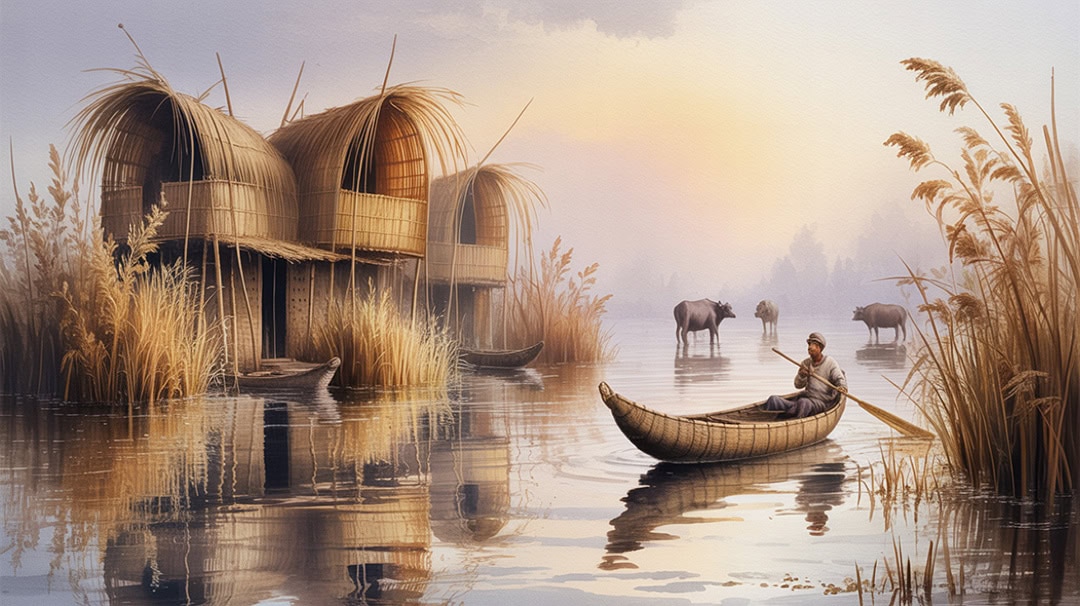
Exactly. It makes me think of other ancient technologies that worked with the environment. For example, the reed islands in Iraq. The Madan people still build their floating homes from plants that grow around them.
Pete:
Oh, I saw that too! It’s amazing how sustainable it is — no waste, no pollution, and everything can return to nature. I think we could learn a lot from them about resilience and adaptation.
Alita:
Totally. And don’t forget about the water-purifying ponds in Kolkata. They clean the city’s wastewater naturally. It’s incredible that something so simple can be so effective.
Pete:
It really shows that sometimes the smartest innovations aren’t new at all — they’re just rediscovered ancient wisdom.
Alita:
Maybe that’s the real message of this lesson: to move forward, we first need to look back.
OVER TO YOU
Discuss these questions. Refer to the topic of the lesson and your own experience.
 | Which example of ancient technology from the lesson impressed you the most? Why do you think it has survived until today? |
| In what ways can modern engineers or architects learn from ancient solutions like living root bridges or floating villages? |
| Do you think modern society relies too much on technology instead of working with nature? Can you give an example? |
| If your city faced frequent flooding or drought, what traditional or nature-based ideas could help people adapt? |
| Why do you think the idea of “resilience” is so important when we talk about the future of our planet? How can individuals be more resilient in their daily lives? |