


Bardzo mi przykro, ale lekcje na platformie The Blue Tree działają jedynie na komputerze lub tablecie.
Do zobaczenia na większym ekranie 🙂
Zespół The Blue Tree
back to HOME > Personal Development > How to learn >

THE BLUE TREE
How to Learn

CEFR B2
Upper
Intermediate

key language
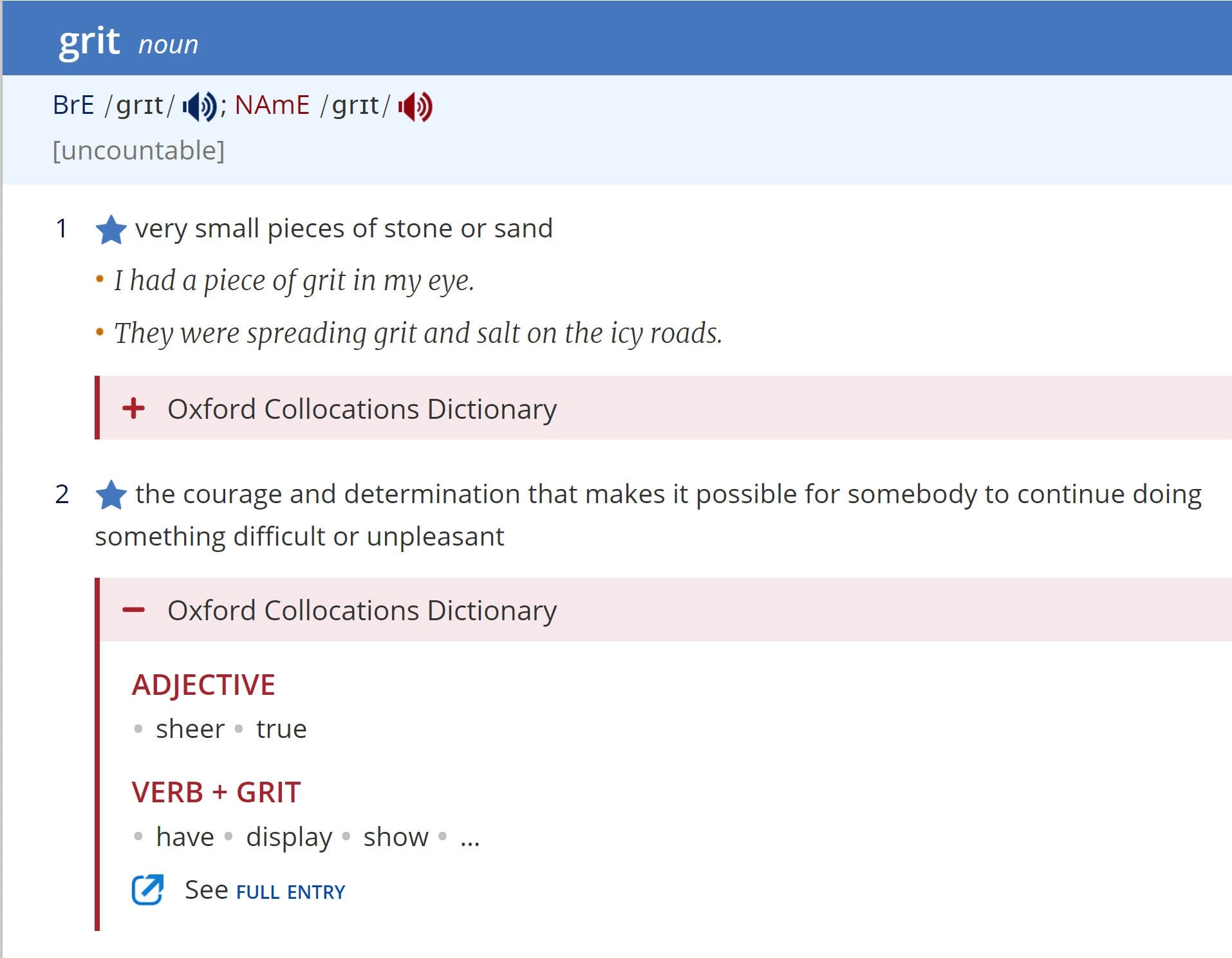
Read this extract from an English dictionary about the word ‘grit’. What does it mean?
warm up
Answer the questions below. Listen to sample answers. Report back what you heard.
| Think of something you’ve always wanted to learn — maybe skiing, riding a bike, or coding a website Did you ever think of quitting? |
TRANSCRIPT
I remember when I was learning to ride a bike as a kid. It wasn’t easy! I fell so many times, and there were moments when I thought, ‘Maybe I’ll never get it.’ But I kept trying because I really wanted that sense of freedom. I didn’t quit, and eventually, I got the hang of it. That feeling of accomplishment made all the falls worth it.
| You want to learn something new. You have a choice. You can choose to be talented or to have 100% grit. What would you choose and why? |
TRANSCRIPT
If I had the choice between being naturally talented and having 100% grit, I’d pick grit every time. Talent can give you a head start, but grit pushes you through the hard times. I believe that perseverance gets you further in life, especially when things get tough. Grit keeps you moving forward when talent alone might give up.
| How important is it to be passionate about something you want to be good at? Is it possible to make oneself passionate about a topic? |
TRANSCRIPT
Passion is incredibly important when you want to be good at something. It drives you to keep learning and improving, even when things get difficult. I think it’s possible to develop passion, especially if you see progress and find meaning in what you’re doing. Sometimes, the more you invest in something, the more passionate you become about it.

part one

KEY LANGUAGE
Go through the flashcards below. Make sure you understand all the words and expressions.

VIDEO
Watch the first part of the video.

COMPREHENSION
Answer these questions. Refer to the information from the video.
- What do we learn about Angela’s career?
- What did she find surprising about her work at school?
- Why did she quit her teaching job?
- What question did she want to answer through her research?
- What do you think is the answer she has found?
part two
KEY LANGUAGE
Go through the flashcards below. Make sure you understand all the words and expressions.
VIDEO
Watch the second part of the video.
COMPREHENSION
Answer these questions. Refer to the information from the video.
- How does Angela define grit?
- What effect does grit have?
- Does science know how to build grit?
- What is the relationship between grit and talent?
- What does Angela think we need to do to better understand how grit works?
DISCUSSION
DIALOGUE
Alita, and Pete are discussing the topic of grit. Read their conversation.
Scene: A cozy cafe, afternoon light filtering through the windows. Alita and Pete sit across from each other, steaming mugs of coffee in front of them.
Alita: You know, Pete, I’ve been thinking about that book you mentioned – “Grit” by Angela Duckworth. I just can’t wrap my head around the idea that talent isn’t a significant factor in success. I mean, look around – we see prodigies and naturally talented people excelling everywhere!
Pete: I get where you’re coming from, Alita. It’s a common notion that talent plays a significant role in success. But Duckworth’s research suggests otherwise. She’s not saying talent doesn’t matter; she’s emphasizing that it’s not the only or even the most critical factor.
Alita: But surely someone with natural talent in, say, music would have an edge over someone who doesn’t, right?
Pete: Initially, yes. Talent can provide a head start. But Duckworth found that in the long run, those with grit – passion and perseverance for long-term goals – outperformed their talented counterparts. It’s because they stick with things, work hard, and don’t give up, even when the going gets tough.
Alita: So you’re saying someone with less talent but more grit would eventually surpass the talented one?
Pete: Exactly. Think of it this way: talent is like having a fast car, but grit is the fuel that keeps it going. A fast car without fuel won’t get you far. Duckworth found that when you combine talent with grit, that’s when you see some truly explosive results. But if you had to choose one, grit would take you further.
Alita: But what about people who are passionate about something but don’t necessarily have the talent for it? Should they just give up?
Pete: Not at all. That’s the beauty of Duckworth’s findings. She believes that with enough grit, passion, and perseverance, you can develop and refine your skills over time. Talent might make the initial stages easier, but grit determines how far you’ll go and how much you’ll grow.
Alita: I guess I never thought of it that way. It’s a bit empowering to think that sheer determination can outweigh innate ability.
Pete: Absolutely! It’s a testament to the human spirit. Success isn’t just about the cards you’re dealt but how you play them. And as Duckworth emphasizes, grit can be developed and nurtured, no matter where you start.
Alita: You’ve given me a lot to think about, Pete. Maybe I should give that book a read after all.
Pete: I think you’ll find it enlightening. It’s a game-changer in how we perceive success and potential.
They sip their coffee, lost in thought, letting the concepts of grit and perseverance linger in the air.

DISCUSSION QUESTIONS
Now, discuss these questions. Refer to the things you learnt in this lesson and your own experience.
Can you recall a time when you had to rely on your determination and persistence (grit) rather than your natural talent? How did it make you feel and what was the outcome?
Do you believe that anyone can develop grit? Why or why not? Share any personal experiences or observations you might have.
How do you think schools and teachers can help students develop more grit? Are there specific activities or approaches you think would be effective?
Have you ever been inspired by someone who showed tremendous grit in the face of challenges? Share their story and what you learned from it.
POLL
Cast your vote in the poll below.
lesson glossary
Revise the language from the lesson using this practical glossary.
COMMENTS
Share your views and experience here.
0 Comments