


Bardzo mi przykro, ale lekcje na platformie The Blue Tree działają jedynie na komputerze lub tablecie.
Do zobaczenia na większym ekranie 🙂
Zespół The Blue Tree
back to HOME > General Interest > Surprise me >

THE BLUE TREE
Surprise Me

CEFR B1
Intermediate
warm up
Answer the questions below. Listen to Alita’s answers. Check the transcript if you have to. Report back what she said.
| Do you think parents should help their children set and follow goals and dreams? |
TRANSCRIPT
Yes, I think parents should definitely help their children with setting and following their dreams and goals. It’s like having a coach who knows you really well and always cheers you on. They can guide you and help you figure out what you want to do, especially when you’re feeling a bit lost or unsure. Plus, they can share their experiences and give advice that can save you from making common mistakes. It’s always good to have that kind of support, don’t you think? Having someone believe in you can really boost your confidence.
| Do you know anybody who has followed their childhood dream and was successful? |
TRANSCRIPT
Yes, I actually do know someone! My friend from school always dreamed of becoming a chef. Even as a kid, she was always in the kitchen, trying out recipes. She stuck with it, went to culinary school, and now she owns her own restaurant. It’s so cool to see her living her dream. It just shows that if you’re passionate and persistent, you can really make your dreams come true.
| What’s the difference between a dream and a goal? |
TRANSCRIPT
The way I see it, a dream is like a big picture or a vision of what you want in the future. It’s something you hope for, like becoming a famous writer or traveling around the world. A goal, on the other hand, is more specific and measurable. It’s like the steps you take to make your dream happen. For example, if your dream is to travel the world, your goal might be to save a certain amount of money each month or to visit one new country each year. Dreams give you direction, and goals are your way to get there!
part one
KEY LANGUAGE
Study the words and expressions on these flashcards. Put down any words in your notebook. You might want to change the view to see the word first. (check Options tab).
part two
LISTENING FOR GIST
Listen to the podcast. Focus on finding information about these three people:
- Bronnie Ware
- Daisy
- Herman
part three
LISTENING FOR COMPREHENSION
Listen to the podcast again.
Answer the questions that will appear on the screen.
DISCUSSION

BENEFITS OF SHARING
Read about some benefits of sharing. Do you agree with them? Can you see any other advantages?
It’s More Efficient
Think about it like sharing a lawnmower in your neighborhood. Instead of everyone buying their own, you just use one when you need it. This saves money, space, and is kinder to the planet since you’re making less stuff.
People Get Closer
Sharing things means you have to chat, coordinate, and work together with your neighbors. This can lead to stronger friendships and a sense of belonging, which makes everyone feel good and supported.
It’s Fairer
In Riverside, they share things so everyone gets the same amount, no matter how much they work. This way, everyone has what they need, and no one is left out or feels less important.
Helps Everyone Through Tough Times
When times are tough, like if someone loses a job or has a big unexpected expense, the community can rally around them. Everyone chips in, so no one has to go through hard times alone.
Focus on What’s Important: Instead of worrying about making money or buying the latest gadget, people in these communities focus on helping each other and enjoying life together. It’s about valuing people over things.

CHAT WITH DAISY
Read this imaginary interview between Daisy and Kasia. Kasia is a bit sceptical about Riverside community’s approach to sharing. Do you feel a bit like Kasia, too?
Kasia: So, Daisy, I keep hearing about this sharing thing you do in Riverside. How does that even work? Doesn’t it get complicated?
Daisy: It’s actually simpler than you might think, Kasia. Imagine if instead of everyone buying and owning everything separately, we all shared what we have. Like tools, cars, even books—it’s all communal.
Kasia: Interesting. But how do you decide who gets what and when?
Daisy: That’s the fun part! We use a system where you just check out items as you need them, sort of like a library. There’s a schedule for things that are in high demand, like the washing machine or the community van.
Kasia: And everyone is cool with that? What if someone wants more than their fair share?
Daisy: We really try to foster a spirit of fairness and trust. Sure, disagreements can happen, but because we all know each other pretty well, it’s easier to communicate and resolve things. Plus, everyone gets the same basic amount, regardless of how much they work, so there’s no pressure to overdo it.
Kasia: Wow, that sounds pretty freeing, actually. No rat race, huh?
Daisy: Exactly! It’s not about competing for more stuff. We focus on making life better for everyone in the community. It’s about helping each other out and enjoying life together.
Kasia: Sounds like a breath of fresh air. But do people ever call you communists or something?
Daisy: Oh, all the time! But we don’t mind. Labels aside, it’s about living in a way that makes sense to us, caring for each other, and not getting too caught up in material things. What matters is that it works for us.
Kasia: That really does put things into perspective. Maybe the rest of the world could learn a thing or two from Riverside.

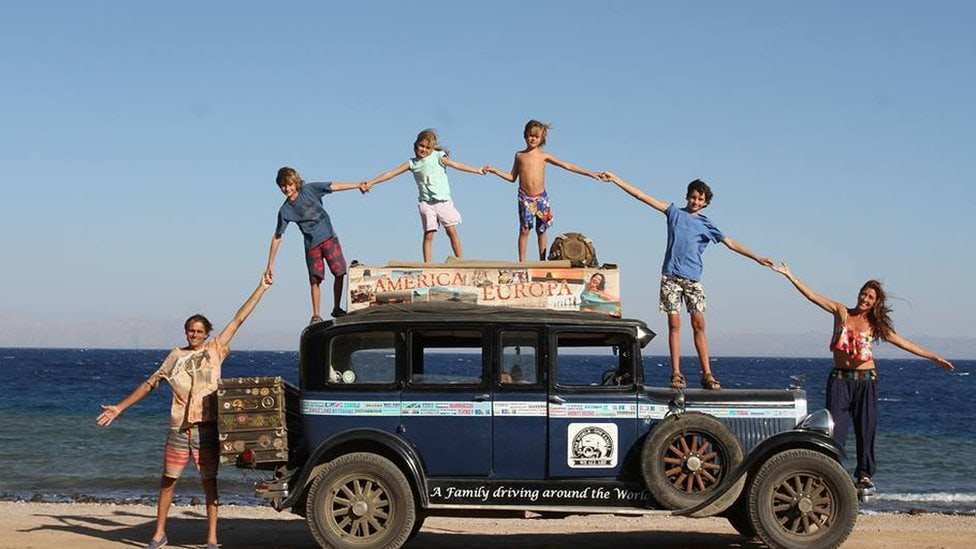
Interview with Herman and Candelaria
Read this interview with the Zapp couple. Do you have other questions you would like to ask Herman or Candelabria or their children?
Trevor: Hello, Herman and Candelaria! It’s amazing to meet you both. Let’s start with your journey. What inspired you to start this incredible adventure around the world?
Herman: Hi Trevor! Thanks for having us. It all started from a desire to see the world and not just settle down after getting married. I guess we both felt that there was so much more to see and experience. My grandfather gave us his old Graham-Paige car and some wise advice to “go slowly if you want to get far,” which really set the tone for our travels.
Candelaria: And adding to that, Trevor, once we began traveling and ran out of money, we decided to rely on the generosity of people we met along the way. This turned our journey into not just an adventure but a story of human kindness.
Trevor: That sounds incredibly fulfilling. Over the years, what have been some of the most memorable highlights from your travels?
Herman: Oh, there are so many. Driving across different continents, we’ve seen some spectacular sights. From the Atacama Desert in Chile during our early days to exploring the diverse landscapes of the US, Australia, and Asia. Each place has its unique charm and challenge.
Candelaria: For me, it’s the people we’ve met. In the Philippines, for instance, a family gave us their only piece of meat and their bed, and still apologized for not having more to offer. Those moments touch you deeply.
Trevor: With such a varied experience, how do you manage raising a family on the road?
Herman: It’s certainly not typical, but it’s our way of life now. Our children are homeschooled using an online service, and they get to learn directly from the world around them. They’ve experienced different cultures, languages, and natural wonders firsthand.
Candelaria: Yes, and they each have a story of their own, born in different countries. It adds to their unique upbringing and view of the world.
Trevor: What takeaways do you have from living such an unconventional life?
Herman: It teaches you patience, resilience, and gratitude. Living out of a vintage car and depending on the kindness of strangers has shown us the best of humanity.
Candelaria: And it shows you that life is about the journey, not just the destination. We cherish every moment, every person, and every new experience.
Trevor: Finally, any plans for the future? Are you thinking of settling down anytime soon?
Herman: Not at all, Trevor! We’ve almost driven the distance to the moon, and we plan to keep going. There’s still so much more to see and learn.
Trevor: Herman, Candelaria, thank you both so much for sharing your inspiring story. Safe travels, and who knows, maybe we’ll catch up again on another part of your journey!
Candelaria: Thank you, Trevor!
Herman: Yes, thank you. We’d love that!

OVER TO YOU
Discuss the questions below. Refer to the story from the lesson and your own experience.
 | What was your childhood dream, and how has it changed as you’ve grown older? |
| Have you ever watched a documentary that made you reflect on your life or goals? What was it about? |
| What is one dream you still want to make come true? What small step could you take toward it? |
| Is there something you struggle with when you try to follow your dreams or set new goals? |
| Do you think having an outlandish dream is a bad thing? Why or why not? |
COMMENTS
Share your thoughts and ideas below.
1 Comment
Submit a Comment
You must be logged in to post a comment.
https://youtu.be/jF5wlIGht9M?si=w5d0TalSBh3lbICC