




Bardzo mi przykro, ale lekcje na platformie The Blue Tree działają jedynie na komputerze lub tablecie.
Do zobaczenia na większym ekranie 🙂
Zespół The Blue Tree
back to HOME > Learning English > Everyday English >

THE BLUE TREE
Everyday English

CEFR A1
Elementary

warm up
Answer the questions below. Listen to some model answers to these questions. Report back what you heard or read the transcript to practise speaking.
| Which language skill would you like to be better at; speaking, listening, reading or writing? |
TRANSCRIPT
I would like to be better at speaking. I can understand a lot when I listen or read, but when I try to speak, I often feel nervous and forget words. Sometimes, I know what I want to say, but it is hard to find the right words quickly. I also want to sound more natural and confident when I speak English. To improve, I think I should practise speaking more, maybe with a teacher or a language partner. Watching movies and repeating sentences could also help me sound more fluent.
| Which of these skills is the most difficult for you to improve? |
TRANSCRIPT
“For me, speaking is the most difficult skill to improve. Listening and reading are quite easy because I can practice them every day, and there are many materials to use. Writing is also not too bad because we have tools like spell checkers and AI to help us. But when I speak, I have to think fast, and sometimes I get stuck. I worry about making mistakes or not knowing the right words. Also, I don’t always have people to practice with. That’s why speaking is the hardest for me.”
| What are some ways in which you can work on your speaking skill? |
TRANSCRIPT
“I try to work on my speaking in different ways. One thing that helps me a lot is recording myself. I choose a topic, speak about it, and then listen to my recording. This way, I can hear my mistakes and try to improve. Another thing I do is describe pictures on my phone. I look at a photo and try to say as much as I can about it in English. It helps me think in English and find the right words faster. Also, I take every chance to speak in my English classes. I always try to answer questions and take part in discussions. The more I speak, the more confident I feel.”
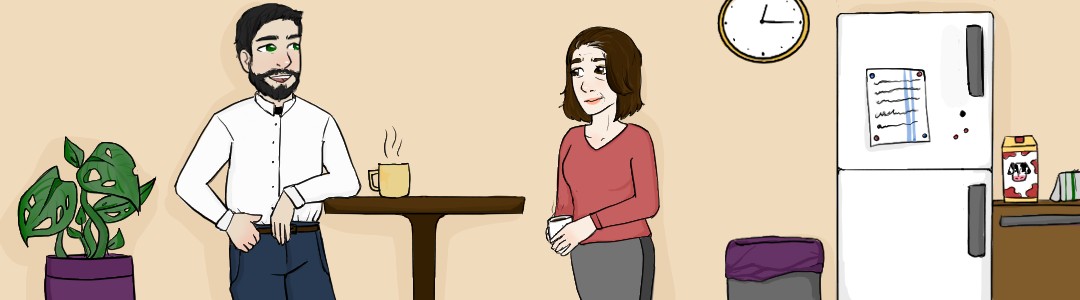

SEVEN STEPS TO SPEAKING SUCCESS
Over the years, I have helped many students improve their speaking skills in English. There are many ways to achieve this goal, but the one that, in my opinion, brings really good results is the method of the 7 STEPS.
Read about each step below and try it for yourself.

1. Choose a topic from the ones below or come up with your own.
2. If there is a picture for your topic, describe it. Otherwise, make some notes about your topic. Put Polish and English words. Then translate the Polish words. Alita recommends Diki.pl.
3. Put the notes in order you want to present them. Think of some structure or organizing idea. In rhetorhic we call it a throughline.
4. Practise saying the story to yourself or your teacher.
5. Record yourself. Listen to yourself and see if you like the way it flows.
6. Correct or upgrade your text with more words and more complex grammar. Alita recommends using ChatGPT.
7. Record your final answer and send it to your teacher. 🙂
Never be content with your first attempt


LIST OF TOPICS
Pick a topic from the list below or think about your own.

FAMILY
FAMILY & RELATIONS
Here’s how you can work with this topic. First, describe the picture below in the fullest possible way. Next, check the prompts section for ideas on what to consider. Then, go through the language section. It contains some interesting words and expressions. Finally, read some sample answers.

Portrait of an extended family with their pet dog sitting at the park
EASY PROMPTS
- Who are the members of your family? Can you describe each one briefly?
- What is your favorite family tradition and why?
- What are their jobs, habits, and hobbies?
MEDIUM PROMPTS
- How does your family celebrate holidays or special events?
- How have your family dynamics and relationships changed as you’ve grown older?
- Can you say at least one thing about each member of your immediate family?
HARD PROMPTS
- How would you say your family’s values and beliefs have influenced your personal development?
- How do you think the role of the family in society has changed over time, and what might be the reasons for this?
- In many societies, traditional nuclear families are becoming less common as other family structures increase in prevalence. Discuss the implications of this trend on society and individuals.
| Word/Phrase | Definition |
|---|---|
| Immediate family | Your closest family members, like parents, brothers, and sisters. |
| Relatives | All the people in your family, including uncles, aunts, grandparents, and cousins. |
| Close family | A family where people have strong relationships and spend a lot of time together. |
| Get along well | To have a good relationship with someone. |
| Take after (someone) | To be similar to an older family member in appearance or personality. |
| Family tradition | A special activity or way of doing things that a family follows, often for many years. |
| Growing up in (a big/small) family | A phrase to describe your childhood family experience. |
| Look up to (someone) | To admire and respect a family member, like an older sibling or parent. |
| Have things in common | To share interests or personality traits with a family member. |
| Spend time together | A simple phrase to describe family members doing things together, like eating meals or going on trips. |
Pre-Intermediate (A2)
Prompt: Who are the members of your family? Can you describe each one briefly?
“I have a small family. My immediate family includes my parents and my younger brother. My dad is a doctor, and he works in a hospital. He is very kind and always helps people. My mom is a teacher, and she loves reading books. She is very patient. My brother is 12 years old. He is funny and likes playing video games. We spend a lot of time together, and we get along well. My grandparents live in another city, but we visit them often. I love my family a lot.”
Intermediate (B1-B2)
Prompt: How have your family dynamics and relationships changed as you’ve grown older?
“When I was younger, I spent most of my time with my parents and my brother. We always ate dinner together and played games. Now, things are different. My brother and I are older, so we are both busier with school and hobbies. My parents also have work, so we don’t spend as much time together as before. However, we still try to have meals together when possible. We also talk more about serious things now, like school, future plans, and sometimes even problems. I think as I grow up, I appreciate my family more. Even though we are all busy, I know I can always count on them.”
Advanced (C1-C2)
Prompt: How do you think the role of the family in society has changed over time, and what might be the reasons for this?
“The role of the family has changed significantly over the years due to social, economic, and technological developments. In the past, families were often larger and more connected, with several generations living together and supporting one another. Today, many families are smaller, and people often move away for work or education, leading to less daily interaction. Another change is the rise of different family structures, such as single-parent families or blended families. Technology has also influenced how families communicate. In some ways, it helps us stay in touch, but it can also create distance when people spend more time on screens than with each other. Despite these changes, I believe family still plays a crucial role in shaping our values and providing emotional support, even if the ways we interact are different from the past.”

SPORT
SPORT & FITNESS
Here’s how you can work with this topic. First, describe the picture below in the fullest possible way. Next, check the prompts section for ideas on what to consider. Then, go through the language section. It contains some interesting words and expressions. Finally, read some sample answers.
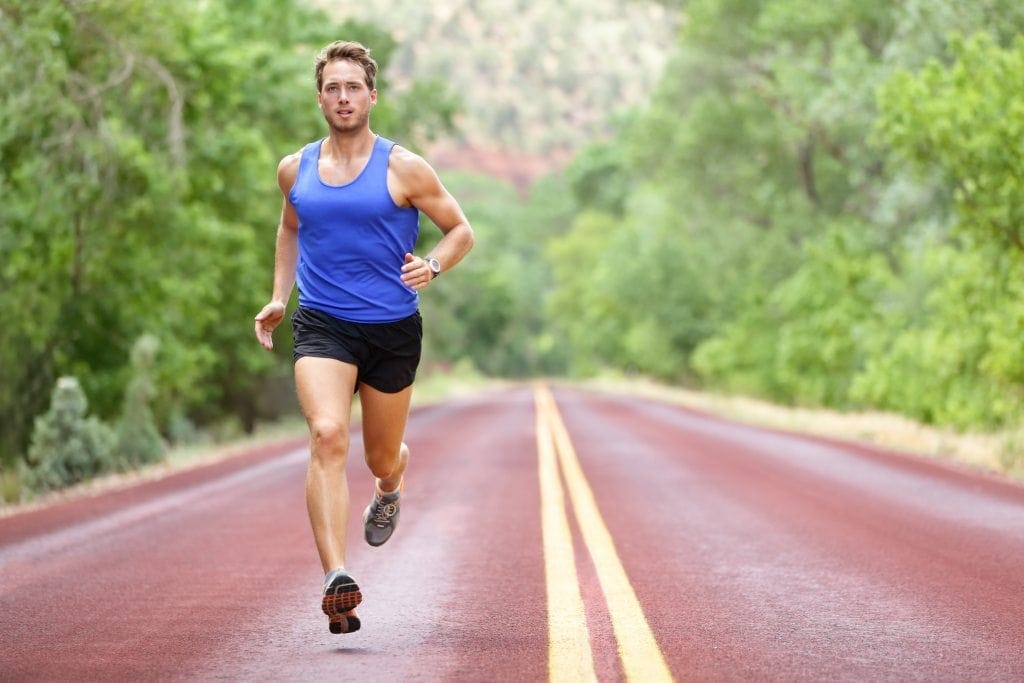
Describe this picture in the fullest way possible.
Easy Prompts (A2)
- Do you do any sport or exercise? If yes, what do you do? If no, why not?
- What is your favorite sport to watch or play? Why do you like it?
- Who is your favorite athlete or sports team? What do you like about them?
Medium Prompts (B1-B2)
- How has your attitude towards sports and exercise changed over time?
- Do you think playing team sports is better than individual sports? Why or why not?
- What are the most popular sports in your country, and why do you think they are so popular?
Hard Prompts (C1-C2)
- How do you think sports can influence a person’s character and personal development?
- What are the biggest challenges in professional sports today, and how can they be solved?
- Should all children be required to participate in sports at school, or should it be optional? Explain your opinion.
| Word/Phrase | Definition |
|---|---|
| Stay in shape | To keep your body fit and healthy. |
| Work out | To do exercises to keep fit. |
| Team sport | A sport played with teammates, like football or basketball. |
| Individual sport | A sport you play alone, like tennis or swimming. |
| Warm-up | Exercises done before a workout to prepare the body. |
| Cool down | Exercises done after a workout to relax the body. |
| Cardio | Exercises that improve the heart and lungs, like running or cycling. |
| Strength training | Exercises that make muscles stronger, like lifting weights. |
| Set a record | To achieve the best result ever in a sport. |
| Be into (a sport) | To really like and enjoy a sport. |
Pre-Intermediate (A2)
Prompt: Do you do any sport or exercise? If yes, what do you do? If no, why not?
“Yes, I do some exercise. I like to go jogging in the park three times a week. It helps me stay in shape and feel good. I also enjoy playing football with my friends on the weekend. We play in a small team, and it is a lot of fun. Sometimes, I do a short workout at home, but I don’t always have time. I think sport is important because it keeps you healthy and happy.”
Intermediate (B1)
Prompt: How has your attitude towards sports and exercise changed over time?
“When I was younger, I didn’t like sports very much. I preferred staying at home and watching TV. But now, I try to stay active because I know it is good for my health. I go to the gym twice a week and do strength training. I also enjoy running because it helps me relax. In the past, I only did sports in school, but now I do them because I want to feel good and have more energy. I think it is important to find a sport that you enjoy.”
Advanced (C1)
Prompt: How do you think sports can influence a person’s character and personal development?
“I believe that sports play a crucial role in shaping a person’s character and mindset. Firstly, they teach discipline and perseverance. Whether you’re training for a marathon or working towards a fitness goal, you need to stay consistent and motivated. Secondly, sports, especially team sports, help develop teamwork and communication skills. You learn to cooperate, trust others, and handle both success and failure. Additionally, sports can improve mental resilience. Athletes often push themselves beyond their limits, which helps them build confidence and a strong work ethic. Overall, engaging in sports is not just about physical fitness—it shapes who you are as a person.”

FASHION
fashion & appearance
Here’s how you can work with this topic. First, describe the picture below in the fullest possible way. Next, check the prompts section for ideas on what to consider. Then, go through the language section. It contains some interesting words and expressions. Finally, read some sample answers.
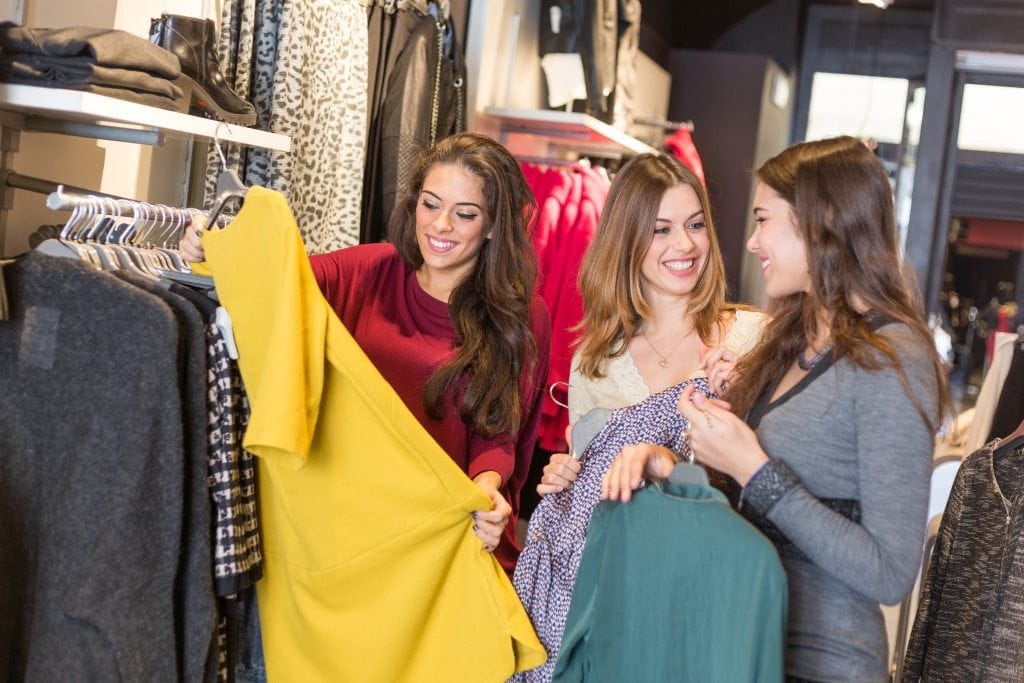
Describe this picture in the fullest way possible.
Easy Prompts (A2)
- What clothes do you usually wear every day?
- Do you prefer casual or formal clothes? Why?
- What is your favorite piece of clothing, and why do you like it?
Medium Prompts (B1-B2)
- How has your style changed over the years?
- Do you think fashion is important in everyday life? Why or why not?
- What do you usually wear for special occasions like weddings or parties?
Hard Prompts (C1-C2)
- How does fashion influence people’s confidence and self-expression?
- What impact does fast fashion have on the environment, and what can be done to improve the situation?
- In some professions, people are required to follow a strict dress code. Do you think this is necessary or outdated? Why?
| Word/Phrase | Definition |
|---|---|
| Casual wear | Comfortable, everyday clothes like jeans and T-shirts. |
| Formal attire | Elegant clothing worn for special events, such as suits and dresses. |
| Trendy | Fashionable and popular at the moment. |
| Outfit | A set of clothes worn together. |
| Accessories | Extra items like bags, belts, and jewelry that complete an outfit. |
| Dress code | Rules about what people should wear in a certain place or situation. |
| Mix and match | To combine different clothes to create a stylish look. |
| Designer clothes | Expensive clothing made by famous fashion brands. |
| Second-hand | Clothes that have been owned and worn by someone else before. |
| Fast fashion | Cheap, trendy clothes made quickly by big brands but often bad for the environment. |
Pre-Intermediate (A2)
Prompt: What clothes do you usually wear every day?
“I usually wear casual clothes. I like jeans, T-shirts, and sneakers because they are comfortable. In summer, I wear shorts and light dresses. In winter, I wear warm sweaters and a big coat. When I go to school or work, I wear something more formal, like a nice shirt and trousers. I don’t like wearing high heels or very fancy clothes. I prefer to feel comfortable.”
Intermediate (B1-B2)
Prompt: How has your style changed over the years?
“When I was younger, I didn’t care much about fashion. I just wore whatever my parents bought for me. But now, I try to choose my own style. A few years ago, I liked trendy clothes, and I wanted to wear what was popular. Now, I prefer clothes that are comfortable and match my personality. I also care more about quality, so I buy fewer but better clothes. I have also started to mix and match my outfits more to create different looks. Fashion is fun, but I think it’s important to feel good in what you wear.”
Advanced (C1-C2)
Prompt: How does fashion influence people’s confidence and self-expression?
“Fashion is more than just clothing; it is a way to express personality and emotions. The way we dress can influence our confidence and how others see us. Wearing a stylish outfit that fits well can make someone feel more self-assured, while uncomfortable or poorly chosen clothes might have the opposite effect. Additionally, fashion allows people to show their individuality. Some prefer classic and elegant styles, while others enjoy experimenting with bold colors and patterns. In a professional setting, fashion can also send a message of competence and seriousness. Ultimately, while clothes do not define a person, they can certainly play a role in shaping first impressions and personal confidence.”

SCHOOL & EDUCATION
SCHOOL & EDUCATION
Here’s how you can work with this topic. First, describe the picture below in the fullest possible way. Next, check the prompts section for ideas on what to consider. Then, go through the language section. It contains some interesting words and expressions. Finally, read some sample answers.

Describe this picture in the fullest way possible.
Easy Prompts (A2)
- What was your favourite subject at school? Why did you like it?
- Did you like your school? What do you remember most about it?
- What did a typical school day look like for you?
Medium Prompts (B1-B2)
- How did your experience at school shape who you are today?
- What makes a great teacher? Can you think of a teacher who had a big impact on you?
- Do you think the education system in your country prepares young people well for adult life? Why or why not?
Hard Prompts (C1-C2)
- Some people argue that schools focus too much on grades and not enough on developing real-life skills. To what extent do you agree?
- How should education change to keep up with the demands of the modern world, especially with the rise of AI and technology?
- Is university education still worth the investment, or are there better alternatives for young people today? Discuss.
| Word/Phrase | Definition |
|---|---|
| Classmate | A person who is in the same class as you at school. |
| Get good/bad grades | To receive high or low marks in school subjects. |
| Pay attention | To listen carefully and focus on what the teacher is saying. |
| Skip a class | To not go to a lesson on purpose. |
| Learn something by heart | To memorise something so you can say it without looking. |
| Fall behind | To make less progress than others in your class. |
| Curriculum | The subjects and topics that are taught at a school. |
| Hands-on learning | A way of learning by doing things, not just reading or listening. |
| Have a knack for something | To be naturally good at a particular subject or skill. |
| Cram for an exam | To study a lot in a very short time just before a test. |
Pre-Intermediate (A2)
Prompt: What was your favourite subject at school? Why did you like it?
“My favourite subject at school was history. I liked it because the teacher was very interesting and told us stories about the past. I also liked learning about different countries and famous people. I was not very good at maths because I found it difficult, but history was easy for me. I always got good grades in this subject. I think it is important to learn about the past because it helps us understand the world today. I also liked art, but history was always my number one.”
Intermediate (B1-B2)
Prompt: What makes a great teacher? Can you think of a teacher who had a big impact on you?
“I think a great teacher is someone who can explain things clearly and make lessons interesting. But more than that, a great teacher is someone who really cares about their students. I had an English teacher in secondary school who had a big impact on me. She always encouraged me to speak, even when I made mistakes. She never made me feel stupid. Instead, she would say, ‘That’s a good try, now let’s make it even better.’ She also used a lot of real-life examples, which made the language feel useful and not just something from a textbook. Because of her, I started to enjoy learning English and became more confident. I think the best teachers are the ones who believe in you, sometimes even more than you believe in yourself.”
Advanced (C1-C2)
Prompt: Some people argue that schools focus too much on grades and not enough on developing real-life skills. To what extent do you agree?
“I largely agree with this view. While grades serve as a convenient way to measure academic progress, they often fail to reflect what truly matters in adult life. Schools tend to prioritise memorisation and test performance over skills such as critical thinking, financial literacy, communication, and emotional intelligence. As a result, many young people leave school with impressive qualifications but struggle with basic real-world challenges, such as managing a budget, resolving conflicts, or working effectively in a team. Of course, academic knowledge has its place, and subjects like science, literature, and mathematics develop important cognitive abilities. However, I believe the education system would benefit greatly from a more balanced approach — one that combines traditional academics with practical, hands-on learning. Some countries have already begun to move in this direction, and the results are promising. Ultimately, the goal of education should not be to produce students who are good at passing exams, but rather individuals who are well-prepared to navigate the complexities of modern life.”

HEALTH & DIET
HEALTH & DIET
Here’s how you can work with this topic. First, describe the picture below in the fullest possible way. Next, check the prompts section for ideas on what to consider. Then, go through the language section. It contains some interesting words and expressions. Finally, read some sample answers.

Describe this picture in the fullest way possible.
Easy Prompts (A2)
- What do you usually eat during the day? Do you think your diet is healthy?
- How often do you exercise? What kind of exercise do you do?
- How many hours do you sleep at night? Do you think it is enough?
Medium Prompts (B1-B2)
- How have your eating habits changed compared to when you were younger?
- Why do so many people find it hard to live a healthy lifestyle even though they know what they should do?
- What role does mental health play in overall well-being? Do people in your country talk about it openly?
Hard Prompts (C1-C2)
- To what extent should governments be responsible for promoting healthy lifestyles, for example through taxes on unhealthy food or banning certain ingredients?
- Modern life offers more health information than ever before, yet people seem to be less healthy. What might explain this paradox?
- Some experts believe that our relationship with food has become too complicated. How has diet culture and social media influenced the way people think about eating?
| Word/Phrase | Definition |
|---|---|
| Balanced diet | A way of eating that includes the right amounts of different types of food. |
| Junk food | Food that is quick and easy to eat but not good for your health, like chips or burgers. |
| Cut down on something | To eat or drink less of something, for example sugar or coffee. |
| Be in good/bad shape | To be physically fit or unfit. |
| Skip a meal | To not eat breakfast, lunch, or dinner when you normally would. |
| Food intolerance | When your body has difficulty digesting a certain type of food. |
| Sedentary lifestyle | A way of living with very little physical activity, for example sitting most of the day. |
| Boost your immune system | To make your body stronger at fighting illness and disease. |
| Comfort eating | Eating food to feel better emotionally, not because you are hungry. |
| Everything in moderation | The idea that it is fine to eat anything as long as you do not have too much of it. |
Pre-Intermediate (A2)
Prompt: What do you usually eat during the day? Do you think your diet is healthy?
“I usually have toast and coffee for breakfast. For lunch, I eat a sandwich or some soup at work. In the evening, I cook dinner at home. I try to eat vegetables, but sometimes I am tired and I just order pizza or eat something quick. I also like sweets, especially chocolate. I know it is not very healthy, but I find it hard to stop. I drink a lot of water during the day, which I think is good. I would say my diet is okay, but not perfect. I would like to eat more fruit and less junk food.”
Intermediate (B1-B2)
Prompt: Why do so many people find it hard to live a healthy lifestyle even though they know what they should do?
“I think the biggest problem is time. Most people know that they should eat well and exercise, but their daily routine makes it very difficult. After a long day at work, it is much easier to order fast food than to cook a healthy meal from scratch. The same goes for exercise — people are often too tired or too busy to go to the gym. Another problem is comfort eating. When people feel stressed or unhappy, they often reach for unhealthy food because it makes them feel better in the moment. I also think that advertising plays a role. We are constantly surrounded by ads for junk food and sugary drinks, which makes it harder to resist. In the end, I believe it comes down to building small habits over time rather than trying to change everything at once.”
Advanced (C1-C2)
Prompt: Modern life offers more health information than ever before, yet people seem to be less healthy. What might explain this paradox?
“This is a fascinating contradiction. We live in an age where health information is available at our fingertips — there are countless apps, podcasts, articles, and influencers devoted to nutrition and fitness. Yet rates of obesity, diabetes, and mental health problems continue to rise. One reason might be information overload. People are bombarded with so much conflicting advice that they become confused or simply give up trying to follow any of it. One day coffee is good for you, the next day it is harmful. This constant noise makes it difficult to know what to believe. Another factor is the way modern life is structured. Many jobs are sedentary, commutes are long, and convenience food is cheaper and more accessible than fresh produce. Even people with the best intentions find it hard to make healthy choices when their environment works against them. Finally, I think we underestimate the role of mental health. Stress, anxiety, and loneliness drive people towards unhealthy coping mechanisms, and no amount of nutritional knowledge can fix that. Until we address the root causes — including work-life balance, social connection, and emotional well-being — more information alone will not make us healthier.”

HOME & LIVING
HOME & LIVING
Here’s how you can work with this topic. First, describe the picture below in the fullest possible way. Next, check the prompts section for ideas on what to consider. Then, go through the language section. It contains some interesting words and expressions. Finally, read some sample answers.
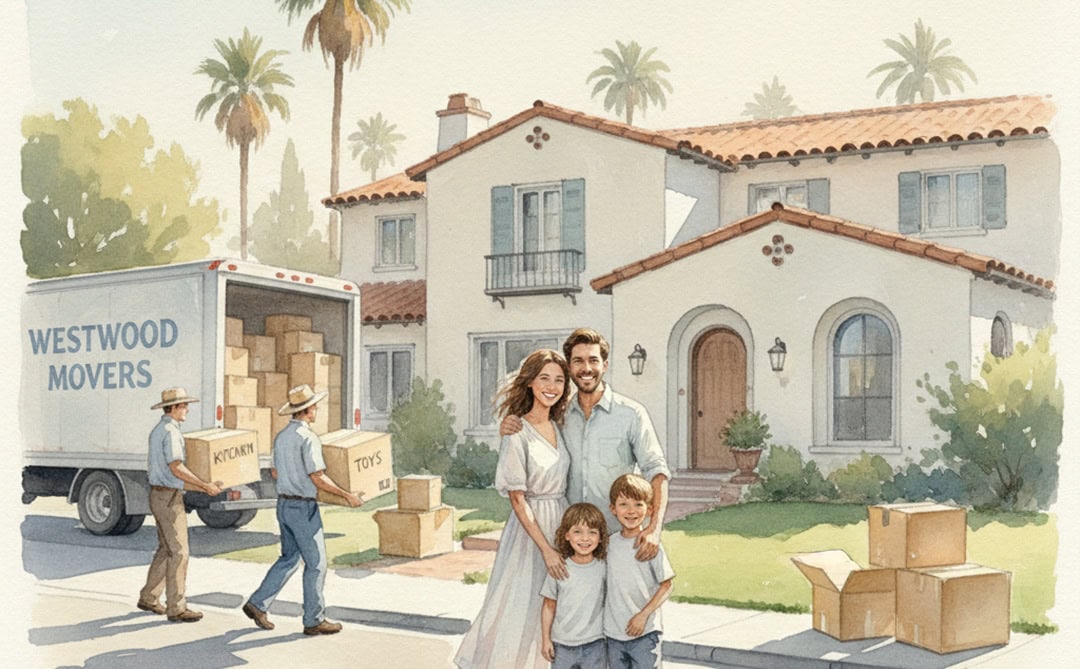
Describe this picture in the fullest way possible.
Easy Prompts (A2)
- Can you describe your home? What is your favourite room and why?
- Do you live in a house or a flat? What do you like and dislike about it?
- Do you prefer living in a big city or a small town? Why?
Medium Prompts (B1-B2)
- How has the place where you live changed over the last ten years? Is it better or worse?
- If you could design your perfect home, what would it look like and where would it be?
- What are the biggest challenges people face when looking for a place to live in your country?
Hard Prompts (C1-C2)
- How does the place where we live influence our happiness, productivity, and overall quality of life?
- In many cities, housing has become so expensive that young people can no longer afford to buy their own home. What are the causes of this problem and what could be done about it?
- Some people say that remote work will completely change where and how people choose to live. Do you agree with this prediction? Why or why not?
| Word/Phrase | Definition |
|---|---|
| Move in / move out | To start living in a new place / to leave the place where you live. |
| Flatmate / roommate | A person you share a flat or a room with. |
| Neighbourhood | The area around your home and the people who live there. |
| Commute | The journey you make every day from home to work or school and back. |
| Cosy | Warm, comfortable, and making you feel relaxed, especially about a small space. |
| Cost of living | How much money you need to pay for basic things like rent, food, and transport in a place. |
| Do up a place | To repair and decorate a house or a flat to make it look better. |
| On the outskirts | In the area on the edge of a city, away from the centre. |
| Get on the property ladder | To buy your first home, usually a small or cheap one. |
| Settle down | To start living in a place where you plan to stay for a long time, often with a family. |
Pre-Intermediate (A2)
Prompt: Can you describe your home? What is your favourite room and why?
“I live in a small flat in the centre of the city. It has two bedrooms, a kitchen, a bathroom, and a living room. My favourite room is the kitchen because I like cooking and I spend a lot of time there. It is not very big, but it is cosy and has a nice window. I also like my living room because I watch films there in the evening. I would like to have a bigger flat one day, maybe with a balcony, but for now I am happy with what I have. The neighbourhood is nice and quiet, and there are shops and a park nearby.”
Intermediate (B1-B2)
Prompt: If you could design your perfect home, what would it look like and where would it be?
“If I could design my dream home, it would be a modern house somewhere on the outskirts of a medium-sized city. I would want to be close enough to commute to work easily, but far enough to enjoy some peace and nature. The house would have large windows to let in a lot of natural light, and an open-plan kitchen and living room where I could spend time with family and friends. I would definitely want a small garden with a terrace for summer evenings. Inside, I would keep things simple and cosy — warm colours, comfortable furniture, and lots of bookshelves. One thing I would never give up is a quiet room just for reading and working. I think the place where you live has a huge impact on how you feel, so I would want my home to be a place where I can truly relax and recharge.”
Advanced (C1-C2)
Prompt: In many cities, housing has become so expensive that young people can no longer afford to buy their own home. What are the causes of this problem and what could be done about it?
“The housing crisis in many European cities is the result of several interconnected factors. First and foremost, demand has far outpaced supply. Urban populations have grown rapidly, but construction has not kept up, partly due to strict planning regulations and a shortage of available land. At the same time, property has increasingly become an investment vehicle rather than simply a place to live. Large investors and foreign buyers have driven prices up, making it nearly impossible for young people to get on the property ladder. Low interest rates over the past decade also fuelled the problem by making borrowing cheap and pushing prices even higher. As for solutions, there is no single answer. Governments could invest more in social and affordable housing, introduce stricter regulations on short-term rental platforms, and offer financial incentives to first-time buyers. Some cities have experimented with rent caps, though the results have been mixed. On a broader level, encouraging remote work could help redistribute demand away from the most expensive cities. Ultimately, housing is a basic human need, and treating it purely as a market commodity has created a situation that is simply unsustainable for the younger generation.”

character & personality
character and personality
Here’s how you can work with this topic. First, describe the picture below in the fullest possible way. Next, check the prompts section for ideas on what to consider. Then, go through the language section. It contains some interesting words and expressions. Finally, read some sample answers.

Describe this picture in the fullest way possible.
Easy Prompts (A2)
- How would you describe yourself? What kind of person are you?
- What qualities do you think are important in a good friend?
- Are you more like your mother or your father? In what way?
Medium Prompts (B1-B2)
- If you were at a job interview and someone asked you to describe your strengths and weaknesses, what would you say?
- How has your personality changed since you were a teenager? What has stayed the same?
- Do you think personality is something you are born with, or is it shaped by your experiences and environment?
Hard Prompts (C1-C2)
- In job interviews, people are expected to “sell themselves.” To what extent does this process reveal someone’s true character, and to what extent is it just performance?
- Some personality traits that are valued in one culture may be seen differently in another. For example, being direct is admired in some countries but considered rude in others. How much does culture shape what we consider a “good” personality?
- With the rise of personality tests in recruitment, such as MBTI or DISC, do you think it is fair to judge candidates based on their personality type? Why or why not?
| Word/Phrase | Definition |
|---|---|
| Easy-going | Relaxed and not easily worried or upset. |
| Reliable | Someone you can trust and depend on. |
| Short-tempered | Getting angry quickly and easily. |
| People person | Someone who enjoys being around others and is good at talking to people. |
| Come across as | To give other people a particular impression of yourself, sometimes without meaning to. |
| Thick-skinned | Not easily hurt or offended by criticism. |
| Set in your ways | Not willing to change your habits or opinions, especially as you get older. |
| Have a good sense of humour | To be good at making people laugh or finding things funny. |
| Down-to-earth | Practical, honest, and not pretending to be more important than you are. |
| Bring out the best in someone | To make someone show their best qualities, for example a good friend or teacher. |
Pre-Intermediate (A2)
Prompt: Can you describe your home? What is your favourite room and why?
“I live in a small flat in the centre of the city. It has two bedrooms, a kitchen, a bathroom, and a living room. My favourite room is the kitchen because I like cooking and I spend a lot of time there. It is not very big, but it is cosy and has a nice window. I also like my living room because I watch films there in the evening. I would like to have a bigger flat one day, maybe with a balcony, but for now I am happy with what I have. The neighbourhood is nice and quiet, and there are shops and a park nearby.”
Intermediate (B1-B2)
Prompt: If you could design your perfect home, what would it look like and where would it be?
“If I could design my dream home, it would be a modern house somewhere on the outskirts of a medium-sized city. I would want to be close enough to commute to work easily, but far enough to enjoy some peace and nature. The house would have large windows to let in a lot of natural light, and an open-plan kitchen and living room where I could spend time with family and friends. I would definitely want a small garden with a terrace for summer evenings. Inside, I would keep things simple and cosy — warm colours, comfortable furniture, and lots of bookshelves. One thing I would never give up is a quiet room just for reading and working. I think the place where you live has a huge impact on how you feel, so I would want my home to be a place where I can truly relax and recharge.”
Advanced (C1-C2)
Prompt: In many cities, housing has become so expensive that young people can no longer afford to buy their own home. What are the causes of this problem and what could be done about it?
“The housing crisis in many European cities is the result of several interconnected factors. First and foremost, demand has far outpaced supply. Urban populations have grown rapidly, but construction has not kept up, partly due to strict planning regulations and a shortage of available land. At the same time, property has increasingly become an investment vehicle rather than simply a place to live. Large investors and foreign buyers have driven prices up, making it nearly impossible for young people to get on the property ladder. Low interest rates over the past decade also fuelled the problem by making borrowing cheap and pushing prices even higher. As for solutions, there is no single answer. Governments could invest more in social and affordable housing, introduce stricter regulations on short-term rental platforms, and offer financial incentives to first-time buyers. Some cities have experimented with rent caps, though the results have been mixed. On a broader level, encouraging remote work could help redistribute demand away from the most expensive cities. Ultimately, housing is a basic human need, and treating it purely as a market commodity has created a situation that is simply unsustainable for the younger generation.”

entertainment
entertainment
Here’s how you can work with this topic. First, describe the picture below in the fullest possible way. Next, check the prompts section for ideas on what to consider. Then, go through the language section. It contains some interesting words and expressions. Finally, read some sample answers.
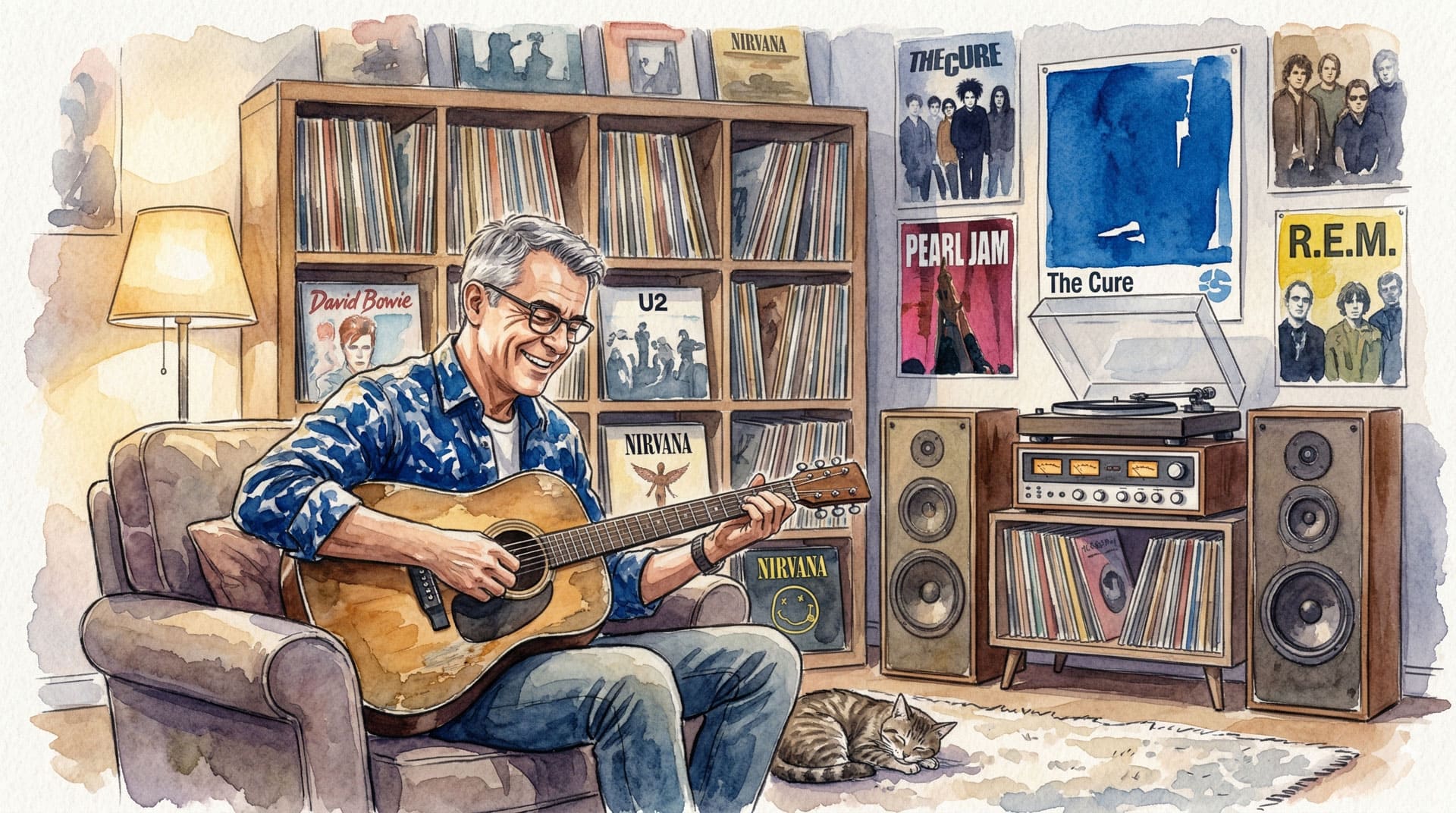
Describe this picture in the fullest way possible.
Easy Prompts (A2)
- What do you like to do in your free time? How do you usually relax after work or school?
- Do you prefer watching films at home or going to the cinema? Why?
- What kind of music do you listen to? Do you have a favourite band or singer?
Medium Prompts (B1-B2)
- How has the way people entertain themselves changed compared to twenty years ago? Is it a change for the better?
- Do you think people spend too much time on screens — phones, tablets, TV — instead of doing other things? Why or why not?
- What book, film, or TV series has had the biggest impact on you? What made it so special?
Hard Prompts (C1-C2)
- Streaming platforms have completely transformed the entertainment industry. What have we gained and what have we lost in this shift from traditional media?
- Some people argue that entertainment today is designed to be addictive rather than enriching. To what extent do you agree with this view?
- Do you think the distinction between “high culture” — such as classical music, theatre, and literature — and “popular culture” — such as pop music, video games, and social media — is still relevant today? Why or why not?
| Word/Phrase | Definition |
|---|---|
| Binge-watch | To watch many episodes of a TV series one after another without stopping. |
| Page-turner | A book that is so interesting you cannot stop reading it. |
| Catchy (song/tune) | A song or melody that is easy to remember and stays in your head. |
| Be hooked on something | To enjoy something so much that you cannot stop doing or watching it. |
| Kill time | To do something not very important while you are waiting or have nothing else to do. |
| Live up to the hype | To be as good as everyone said it would be. |
| Guilty pleasure | Something you enjoy even though you feel a little embarrassed about it. |
| Soundtrack | The music that is played during a film, TV series, or video game. |
| Unwind | To relax after a stressful or busy day, for example by listening to music or watching a film. |
| Word of mouth | When people recommend something to others by talking about it, not through advertising. |
Pre-Intermediate (A2)
Prompt: What do you like to do in your free time? How do you usually relax after work or school?
“After work, I usually like to unwind by watching something on TV. I enjoy comedies and cooking shows. Sometimes I binge-watch a series on Netflix if it is really good. I also like listening to music. I have a playlist with my favourite songs that I listen to when I am cooking or cleaning. At the weekend, I sometimes go to the cinema with friends or read a book. I am not very sporty, so I prefer quiet activities. I think it is important to have some free time every day to relax and do something you enjoy.”
Intermediate (B1-B2)
Prompt: What book, film, or TV series has had the biggest impact on you? What made it so special?
“The film that has had the biggest impact on me is probably The Shawshank Redemption. I watched it for the first time when I was about twenty, and it really stayed with me. What I loved most about it was the message of hope. The main character never gives up, even in the most terrible circumstances. It made me think about how important it is to keep going, even when life feels unfair. The acting was incredible, and the soundtrack was beautiful — there is one scene with opera music that still gives me goosebumps. I have watched it many times since then, and every time I notice something new. I think the best films are the ones that make you think about your own life, and this one certainly did that for me. I have recommended it to many people, and most of them loved it too. Sometimes word of mouth is the best way to discover great films.”
Advanced (C1-C2)
Prompt: Some people argue that entertainment today is designed to be addictive rather than enriching. To what extent do you agree with this view?
“There is a strong case to be made that much of modern entertainment is engineered for maximum engagement rather than genuine enrichment. Social media platforms use algorithms that keep us scrolling, streaming services auto-play the next episode to encourage binge-watching, and mobile games are built around reward systems designed to be hooked on. The goal is not necessarily to provide a meaningful experience, but to capture and hold our attention for as long as possible — because attention is what generates revenue. That said, I think it would be unfair to dismiss all modern entertainment as shallow or manipulative. There are more high-quality TV series, podcasts, and independent films available today than ever before. Platforms like Spotify have made it easier to discover new music, and e-readers have made books more accessible. The problem is not the entertainment itself, but the way it is delivered and consumed. We are constantly surrounded by content, and the sheer volume makes it easy to default to passive, low-effort consumption rather than seeking out something truly stimulating. I believe the responsibility lies partly with the individual. We need to be more intentional about our choices — to actively select what we watch, read, and listen to, rather than letting an algorithm decide for us. Entertainment can still be deeply enriching, but only if we treat it as something to savour rather than something to fill every empty moment.”

holidays and travelling
holidays and travelling
Here’s how you can work with this topic. First, describe the picture below in the fullest possible way. Next, check the prompts section for ideas on what to consider. Then, go through the language section. It contains some interesting words and expressions. Finally, read some sample answers.
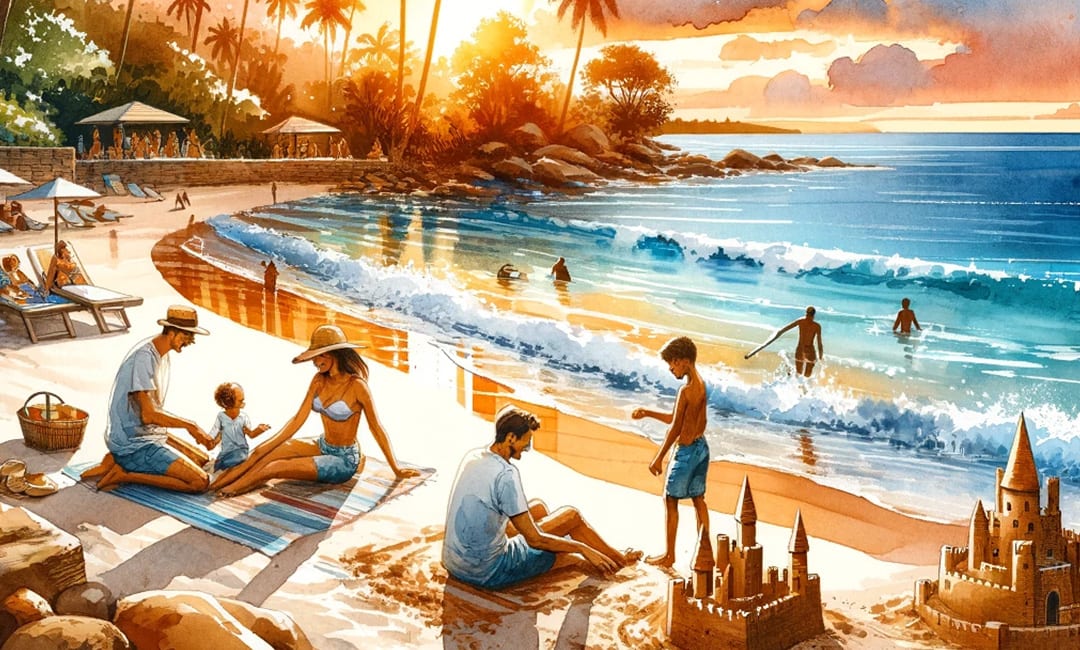
Describe this picture in the fullest way possible.
Easy Prompts (A2)
- Where did you go on your last holiday? What did you do there?
- Do you prefer beach holidays or city trips? Why?
- What is the most beautiful place you have ever visited? What made it special?
Medium Prompts (B1-B2)
- How has the way you travel changed over the years? Do you look for different things in a holiday now compared to when you were younger?
- Do you prefer to plan every detail of a trip in advance or do you like to be spontaneous? What are the advantages and disadvantages of each approach?
- What can travelling teach us that we cannot learn from books or the internet?
Hard Prompts (C1-C2)
- Mass tourism has brought economic benefits to many regions, but it has also caused serious environmental and cultural damage. How can we find a balance between the two?
- Some people say that travelling has become more about taking photos and posting on social media than about the experience itself. Do you think this is a fair criticism?
- With the rise of remote work, more people are becoming “digital nomads” — working while travelling the world. Do you think this lifestyle is sustainable in the long run, or is it just a trend?
| Word/Phrase | Definition |
|---|---|
| Get away | To go somewhere different from your normal life in order to rest and relax. |
| Off the beaten track | A place that is not well known or visited by many tourists. |
| Travel light | To travel with very little luggage. |
| Package holiday | A holiday where transport, hotel, and sometimes meals are all included in one price. |
| Breathtaking | Extremely beautiful or impressive, often used to describe views or landscapes. |
| Culture shock | The feeling of confusion or surprise when you visit a country that is very different from your own. |
| Wander around | To walk slowly around a place without a clear plan, just looking and enjoying. |
| Tourist trap | A place that attracts many tourists but is overpriced and not very authentic. |
| Broaden your horizons | To learn new things and experience new ideas by visiting different places or meeting different people. |
| Once-in-a-lifetime experience | Something so special or rare that you will probably only do it once. |
Pre-Intermediate (A2)
Prompt: Where did you go on your last holiday? What did you do there?
“Last summer, I went to Croatia with my family. We stayed in a small town near the sea for one week. The weather was very hot and sunny, so we spent a lot of time on the beach. The water was clear and beautiful. We also wandered around the old town and visited some nice restaurants. I tried some local food, and it was delicious. One day, we took a boat trip to a small island, which was a great experience. It was nice to get away from everyday life and just relax. I took many photos because the views were breathtaking. I would love to go back one day.”
Intermediate (B1-B2)
Prompt: How has the way you travel changed over the years? Do you look for different things in a holiday now compared to when you were younger?
“When I was younger, holidays were all about fun and excitement. I wanted to visit big cities, go to parties, and see as many places as possible in a short time. I did not care much about comfort — I was happy to stay in cheap hostels and travel light with just a backpack. Now, my priorities are quite different. I prefer slower, more relaxed trips. I like to stay in one place for longer and really get to know it instead of rushing from one attraction to another. I also look for places that are off the beaten track rather than typical tourist traps. I enjoy learning about local culture, trying traditional food, and talking to people who live there. I think travelling has become more meaningful for me as I have got older. It is less about ticking places off a list and more about the experience itself. I also care more about comfort now — a good hotel and a quiet location make a big difference.”
Advanced (C1-C2)
Prompt: Some people say that travelling has become more about taking photos and posting on social media than about the experience itself. Do you think this is a fair criticism?
“I think there is a great deal of truth in this observation, though it is perhaps more nuanced than it first appears. It is hard to deny that social media has fundamentally changed the way many people approach travel. Destinations are increasingly chosen not for their cultural or personal significance, but for how well they photograph. Iconic locations are flooded with visitors all trying to capture the same shot, often spending more time looking through their phone screen than actually taking in the surroundings. In that sense, the experience becomes secondary to the image. However, I do not think it is fair to say this applies to everyone. Many people still travel with genuine curiosity and a desire to broaden their horizons. They may share photos online, but that does not necessarily mean the experience was shallow. Photography has always been part of travelling — the difference is that now we share instantly rather than showing slides to friends after we return. What concerns me more is the pressure that social media creates. People see curated, idealised versions of other people’s trips and feel that their own holidays need to live up to the hype. This can lead to disappointment and a constant need for the next once-in-a-lifetime experience, rather than simply enjoying where you are. I think the key is mindfulness — being present in the moment and treating photos as a pleasant addition to the experience, not the purpose of it.”

friends
friends and relationships
Here’s how you can work with this topic. First, describe the picture below in the fullest possible way. Next, check the prompts section for ideas on what to consider. Then, go through the language section. It contains some interesting words and expressions. Finally, read some sample answers.

Describe this picture in the fullest way possible.
Easy Prompts (A2)
- Who is your best friend? How did you meet and what do you like about them?
- Do you prefer spending time with a big group of friends or just one or two close friends? Why?
- How often do you see your friends? What do you usually do together?
Medium Prompts (B1-B2)
- How have your friendships changed since you were at school? Are you still in touch with your childhood friends?
- What do you think is more important in a friendship — having a lot in common or being different from each other? Why?
- Is it harder to make new friends as an adult than it was as a child or teenager? Why do you think that is?
Hard Prompts (C1-C2)
- Social media allows us to stay connected with hundreds of people, yet many studies suggest that loneliness is increasing. How would you explain this contradiction?
- Some psychologists say that we can only maintain around 150 meaningful relationships at any one time. If that is true, how should we choose who to invest our time and energy in?
- To what extent do you agree that the quality of our relationships is the single biggest factor in our overall happiness and well-being?
| Word/Phrase | Definition |
|---|---|
| Get on well with someone | To have a good, friendly relationship with someone. |
| Drift apart | To slowly lose contact with someone over time without any argument or reason. |
| Have someone’s back | To support and protect someone, especially in a difficult situation. |
| Acquaintance | A person you know but who is not a close friend. |
| Hit it off | To like someone and become friends very quickly when you first meet. |
| Fall out with someone | To have an argument with someone and stop being friendly with them. |
| Keep in touch | To continue to communicate with someone even when you do not see them often. |
| Shoulder to cry on | A person who listens to your problems and gives you emotional support. |
| Mutual respect | When two people value and appreciate each other equally. |
| Grow apart | When people slowly become less close because their interests or lives change. |
Pre-Intermediate (A2)
Prompt: Who is your best friend? How did you meet and what do you like about them?
“My best friend is Kasia. We met at school when we were about ten years old. We sat next to each other in class and we hit it off immediately. We have a lot in common — we both like watching films, cooking, and going for long walks. What I like most about Kasia is that she is very reliable. If I need help, she is always there. She is also a great shoulder to cry on when I feel sad or stressed. We do not see each other as often as before because we live in different cities now, but we keep in touch every day. We send messages and call each other at least once a week. I think a good friend is someone who knows you very well and accepts you the way you are, and that is exactly what Kasia is for me.”
Intermediate (B1-B2)
Prompt: Is it harder to make new friends as an adult than it was as a child or teenager? Why do you think that is?
“I definitely think it is harder to make friends as an adult. When you are a child, you see the same people every day at school, you play together, and friendships happen naturally. You do not think about it — you just hit it off with someone and suddenly you are best friends. As an adult, things are very different. Most of our time is taken up by work, family, and responsibilities, so there are fewer opportunities to meet new people. Even when we do, it takes much longer to build trust and a real connection. Adults are also more cautious and selective. We know what we want from a friendship, and we are less willing to invest time in people we do not get on well with. Another problem is that many adult friendships stay at the level of acquaintances. You might have a nice chat with a colleague at work, but that does not mean you will become close friends. I think the key is to be proactive — to suggest meeting outside of work, to join clubs or groups, and to make an effort to keep in touch. Good friendships do not just happen — they need time and attention.”
Advanced (C1-C2)
Prompt: Social media allows us to stay connected with hundreds of people, yet many studies suggest that loneliness is increasing. How would you explain this contradiction?
“This is one of the most striking paradoxes of modern life. We have never had more tools to connect with others, yet the quality of those connections appears to be declining. I think the core issue is that social media has redefined what we mean by ‘staying in touch.’ Scrolling through someone’s photos or liking their posts creates an illusion of closeness, but it lacks the depth and vulnerability that real friendships require. You can follow someone’s life online for years without ever having a meaningful conversation with them. In a way, social media has replaced genuine connection with a kind of passive observation. Another factor is that the time we spend online often comes at the expense of face-to-face interaction. Instead of meeting a friend for coffee, we send a quick message. Instead of calling someone, we react to their story. These micro-interactions feel efficient, but they do not provide the emotional nourishment that comes from being physically present with another person. There is also the comparison factor. Social media shows us curated versions of other people’s social lives, which can make us feel that our own relationships are somehow lacking. This can lead to feelings of isolation even when we are, objectively, not alone. I believe the solution is not to abandon social media altogether, but to use it more intentionally. It is a useful tool for keeping in touch, but it should complement real-world relationships, not replace them. The friendships that truly sustain us are built on mutual respect, shared experiences, and honest conversation — none of which can be replicated with a like button.”
COMMENTS
Post your answers to these questions here.
0 Comments