
FUNCTIONS:

Agreeing

Disagreeing

Hesitating

Introducing your opinion

Asking for opinions

Expressing preferences

Asking for clarification

Expressing likelihood

Speculating, guessing

Advice and recommendations

Describing a picture

Agreeing

I think you’re right

I would go along with the idea

I completely agree with you

That makes perfect sense

You have a point there

Absolutely, that’s spot on!

I couldn’t agree more

Disagreeing

That’s not how I see it

I couldn’t agree less

You must be kidding

That’s a ridiculous idea, don’t you think?

With all due respect, I must disagree

I’m afraid I can’t see it that way

No way, that’s nonsense!

Hesitating

I’m in two minds about it

I have some reservations regarding that

I’m not entirely convinced

There’s something that gives me pause

While I’m not entirely opposed, I do have some doubts

Introducing your opinion

To my mind

I reckon

In my opinion

As I see it

It seems to me

I would argue

From my point of view

Asking for opinions

Don’t you think …?

What’s your attitude to …?

What’s your opinion of …?

Are you in favour of …?

What’s your position as regards …?

You don’t support …, do you?

Expressing preferences

I prefer…

I would rather…

My preference would be…

I tend to favour…

If I had to choose, I would…

I lean towards…

I am inclined to…

I’m a big fan of…

I really enjoy…

I’m into…

I absolutely love…

I’m crazy about…

I’m fond of…

It’s right up my alley

It’s my thing

I can’t get enough of…

It appeals to me

It’s growing on me

I wouldn’t miss it for the world

I’m not a big fan of…

I don’t really enjoy…

I’m not into…

I can’t stand…

I’m not fond of…

It’s not my cup of tea

It doesn’t do anything for me

I’m sick of…

It gets on my nerves

It puts me off

I’d rather not…

It leaves me cold…

Asking for clarification

Could you please elaborate on that?

Would you mind explaining that further?

I’m not quite sure I understand. Could you clarify?

Could you provide more details?

Can you expand on that point?

Expressing likelihood

“It’s a foregone conclusion that…”

“There’s no doubt in my mind that…”

“I am almost certain that…”

“It’s highly likely that…”

“Chances are that…”

“I wouldn’t be surprised if…”

“It’s possible that…”

“There’s a chance that…”

“It’s unlikely that…”

“I doubt that…”

Speculating, guessing

“It seems to me that…”

“My gut feeling is that…”

“From what I gather…”

“If I were to guess…”

“It would appear that…”

“I reckon that…”

“I suspect that…”

“In all likelihood…”

“There’s a distinct possibility that…”

“It’s plausible that…”

Advice and recommendations

“You might want to consider…”

“Perhaps you could try…”

“If I were you, I would…”

“One thing you could do is…”

“Have you thought of…”

“May I suggest…”

“It might be beneficial to…”

“Consider this approach…”

“Why not give this a go…”

“If it were up to me, I’d…”

Describing a picture

“In the foreground…”

“In the background…”

“In the center of the image…”

“On the left side of the picture…”

“On the right side of the picture…”

“At the top of the picture…”

“At the bottom of the picture…”

“The picture depicts…”

“The image illustrates…”

“The photograph shows…”

“One can see…”

“Notice how…”

“This scene captures…”

“This photograph highlights…”

DICTIONARY

Add new and interesting words from this lesson to your English dictionary.

Store your words and expressions in this handy dictionary. You can create groups and play games based on your entries. There is also a practical importing feature.

You must log in to see content.

Sorry, but lessons on The Blue Tree work only on a computer or a tablet.

Bardzo mi przykro, ale lekcje na platformie The Blue Tree działają jedynie na komputerze lub tablecie.

Do zobaczenia na większym ekranie 🙂

Zespół The Blue Tree

Learn more words

THE BLUE TREE

Man & Society

CEF B1

CEFR B2

Upper
Intermediate

Practise speaking by describing this image

warm up

Answer the questions below. Listen to same people answering these questions. Report back or read the transcript to practise speaking.

TRANSCRIPT

I think it’s often true, but not always. Some people learn from their mistakes and become wiser, while others keep repeating the same problems. Experience helps, but reflection is what really makes someone wise. You can be old and still make poor decisions if you never stop to think. On the other hand, some young people are surprisingly wise because they read, observe, and stay curious.

Imagine you are 85 years old and your grand-daughter asks you for some life advice. What do you think you could tell her?
TRANSCRIPT

I’d probably tell her not to worry so much about what other people think. Most people are too busy thinking about themselves. I’d also tell her to take risks when she’s young—travel, try things, learn from failures. Life goes by quickly, and regrets often come from the things we didn’t do, not the ones we tried. So I would tell her to be kind, stay curious, and enjoy the journey.

There are many books people use to improve their lives. Is there any book you like coming back to for advice on your life issues?
TRANSCRIPT

Yes, for me it’s The 7 Habits of Highly Effective People by Stephen Covey. Every time I read it, I notice something new. It helps me think about what I can control and how to set better goals. I like how the book focuses on values, not just success. It reminds me that character is more important than reputation.

part one

KEY LANGUAGE

Go through the flashcards below. Make sure you understand all the words and expressions.

VIDEO

Watch the first part of the video.

DISCUSSION

How practical do you think these rules are? Select from 0 (useless) to 5 (useful). Explain your answers.


1. Don't work with a##holes.

Some people are very difficult and unpleasant to work with, even if they are talented. You can’t change them or avoid their bad energy. In the end, they will hurt you. It’s better to stay away from them.

useless
useful
2. Shortcuts are scams.

We all want quick and easy ways to succeed. But in important areas of life, shortcuts usually don’t help and can even cause problems. If you want real results, you need to take the longer, honest path.

useless
useful
3. You are not the main character in other people's lives.

We often worry about what other people think of us. But the truth is, most people are too busy thinking about themselves. So don’t be afraid to take action—others aren’t judging you as much as you think.

useless
useful
4. Don't craft a resume, build a body of work.

Your CV or LinkedIn profile shows your background, but what really matters is what you’ve made or done. People trust your real work, not just your paper qualifications.

useless
useful
5. Raw talent is overrated. Persistence is underrated.

Being naturally talented is good, but it’s not enough. If you keep trying, practicing, and moving forward, you can achieve more than someone who gives up easily.

useless
useful
6. Action beats planning.

It’s good to make plans, but the world is often unpredictable. Sometimes, the best way to learn and succeed is to take action first—even if it’s not perfect.

useless
useful
7. Cynicism isn't intelligence.

Being negative or critical doesn’t mean you’re smart. Truly intelligent people are open to new ideas, willing to learn, and ready to see things from different angles.

useless
useful
8. Move.

Exercise is one of the best things you can do. It helps your body and your brain. You don’t need to go to the gym—just walk, run, dance, or stretch every day.

useless
useful
9. Over time, you'll regret what you didn't do.

Later in life, you won’t regret the things you tried—even if they didn’t work. But you might regret not taking a chance or not doing something you wanted. So try.

useless
useful
10. Everything takes longer than expected, a concept known as Hofstede's Law.

There’s a rule called Hofstede’s Law: even if you plan carefully, things will still take more time. Be patient and give yourself extra time to finish big tasks.

useless
useful

part two

KEY LANGUAGE

Go through the flashcards below. Make sure you understand all the words and expressions.

VIDEO

Watch the first part of the video.

DISCUSSION

Now do the same with the next ten rules for life by Daniel Pink.

11. Ask for advice.

People like it when you ask for advice. They feel respected and usually give you better, more useful answers than if you just ask for “feedback.”

useless
useful
12. Simplify.

Life and work can be complicated, but it takes real skill to make things simple. Try to explain ideas clearly and remove anything unnecessary.

useless
useful
13. Luck is more important than you realize.

Success is not only about talent and hard work. Luck also plays a role. You can’t control luck, but working hard gives you more chances to get lucky.

useless
useful
14. Stop waiting for permission.

No one will give you a perfect moment to start. Don’t wait for someone to choose you or say it’s okay. If you want to do something—start. Give yourself permission.

useless
useful
15. A reputation takes decades to build, and a moment to destroy.

Your reputation is one of your most valuable things. It takes years to build but can be destroyed in one moment. Be honest and careful with your words and actions.

useless
useful
16. Focus on what you can control.

In life, many things are outside your control. But your effort, attitude, and kindness are not. Spend your time and energy on the things you can actually change.

useless
useful
17. Everything reverts to the mean.

When things are going great, they won’t always stay that way. When things are hard, they will improve. Life is like a rubber band—it stretches but then comes back.

useless
useful
18. Read more.

Reading helps you grow, understand people, and learn new things. Most people don’t read enough. Books are a simple and powerful tool for personal development.

useless
useful
19. Consistency beats intensity.

Doing something small every day is more powerful than doing a lot just once in a while. Like the tortoise in the story, steady effort wins the long race.

useless
useful
20. Treat everyone with respect.

Some people are kind to their bosses but rude to others. Don’t be like that. Respect everyone—no matter their job, status, or role. That’s real character.

useless
useful

part three

KEY LANGUAGE

Go through the flashcards below. Make sure you understand all the words and expressions.

VIDEO

Watch the third part of the video.

DISCUSSION

Discuss the next ten rules for life.

21. Mediocrity is the real threat.

Failure is not the worst thing—being average and uninspired is. Don’t settle for a boring life. Take risks and aim for something that matters.

useless
useful
22. It doesn't hurt to ask.

If you want something—a job, a chance, or even a discount—ask for it. You might hear “no,” but you’ll hear “yes” more often than you expect.

useless
useful
23. Curiosity beats certainty.

Being sure of everything can close your mind. Curiosity opens it. Ask questions, explore, and be willing to admit you could be wrong.

useless
useful
24. In the end, it's on you.

It’s great to have teachers, mentors, or friends. But if you want to achieve something, most of the work will be your responsibility. You have to do it yourself.

useless
useful
25. The most important choice you make is the people you surround yourself with.

The people around you—your friends, partner, or co-workers—affect who you become. Surround yourself with people who support you and help you grow.

useless
useful
26. Like it or not, you're in sales.

No matter what your job is, you often need to persuade, explain, or convince others. That’s selling. Learn how to do it well—it’s a key life skill.

useless
useful
27. Think positive-sum.

Many people think only one person can win. But in most situations, both sides can benefit. Try to help others succeed while you succeed too.

useless
useful
28. Take a break or you'll break.

Working non-stop is not smart. Breaks are not a waste of time—they help your brain reset. Resting is part of working well.

useless
useful
29. Spend less than you can.

Don’t spend more than you earn. Try to save money, avoid showing off, and use your money for useful things—like time, good experiences, and close relationships.

useless
useful
30. Be confident and humble.

Confidence is good, but without humility it turns into arrogance. Humility is good, but without confidence it becomes weakness. The best people have both.

useless
useful

part four

KEY LANGUAGE

Go through the flashcards below. Make sure you understand all the words and expressions.

VIDEO

Watch the fourth part of the video.

DISCUSSION 

What about the final ten pieces of advice from Daniel Pink? What do you think of them?

31. Happiness is the byproduct, not the goal.

If you chase happiness, it often disappears. Instead, focus on meaning, love, contribution and growth. When you do, happiness will come as a byproduct.

useless
useful
32. Ask more questions.

When you’re young, it’s easy to talk too much and pretend you know things. But real learning starts when you ask honest questions and listen carefully.

useless
useful
33. In the game of life, what matters is shots on goal.

You never know which idea or project will succeed. So don’t be afraid to try many things. The more attempts you make, the better your chances.

useless
useful
34. Some things that are not your fault, are your responsibility.

You may not be the one who caused the problem—but you can still help fix it. Don’t waste time blaming. Do something useful instead.

useless
useful
35. Save early and often.

Start saving money as soon as you can, even a small amount. Over time, it grows thanks to compound interest. Your future self will thank you.

useless
useful
36. If you're the smartest person in the room, you're in the wrong room.

If you’re always the smartest person in the room, you won’t grow. Choose to be with people who challenge and inspire you to be better.

useless
useful
37. When in doubt, reach out.

If you’re not sure whether to contact someone, do it. Don’t wait or overthink. Most people are happy to hear from you.

useless
useful
38. Say yes early, say no later.

When you’re young, say “yes” to explore new things and learn. As you get older, learn to say “no” to protect your time and energy.

useless
useful
39. Sleep is a superpower.

Good sleep helps your body, brain, and mood. Most people need more sleep than they think. It’s one of the best things you can do for your health.

useless
useful
40. Love wins.

Success, money, and goals are all nice—but what truly matters is love. Having people you love, and who love you, is life’s most important truth.

useless
useful
w

DISCUSSION

🎙️ Life Truths That Stick

Context: Alita and Pete are having coffee after watching Daniel Pink’s video “40 Harsh Truths I Wish I Knew in My 20s.” They each share three truths they found especially useful and discuss how those ideas connect to their own lives.

A cozy café near their office, Friday afternoon. Alita sips her oat milk cappuccino; Pete is halfway through a cinnamon bun.

Read their dialogue. Whose views do you lean towards?

Alita:
You know what? That Daniel Pink video really hit me. I kept nodding like, “Yep. Wish I’d heard that 15 years ago.”

Pete:
Only 15? I was nodding like I was listening to my future ghost trying to warn me.

Alita:
[Laughs] Okay, philosopher. So, which truths stood out to you?

Pete:
Number ten. Hofstadter’s Law. “Everything takes longer than you expect.” I felt personally attacked.
Remember the kitchen redecoration project?

Alita:
Oh, you mean the “it’ll take one weekend, tops” kitchen makeover that took five weekends, three arguments, and one call to your dad?

Pete:
Exactly. I budgeted three hours to put up the shelves. Took me five—plus one minor injury and a crooked spice rack.

Alita:
It’s still a little crooked, by the way. But charmingly so.

Pete:
It’s got character! Anyway, it taught me that even when you plan for delays, you’re still wrong. Hofstadter was right.

Alita:
Fair. For me, the one that really landed was “Don’t wait for permission.”
In my 20s, I kept waiting for someone to say “You’re ready.” Like I needed a permission slip to take chances.

Pete:
Totally. You didn’t even apply for that leadership role last year until I practically dared you.

Alita:
I know! And now I’m leading the whole team. I’m so glad I stopped asking people for approval and just… started asking myself.

Pete:
Which ties into another one I liked: “You’re always in sales.”
It’s not just selling a product, it’s convincing your team, your manager, even convincing yourself on a Monday morning that life is good.

Alita:
[Laughs] True. You totally sold me on that awful 7am Monday meeting this week. I still don’t know how you did it.

Pete:
Pure charm and the promise of post-meeting donuts. Which brings me to another favorite: “It doesn’t hurt to ask.”
If you want something—ask. Worst case, someone says no. Best case? You get a chocolate-filled croissant.

Alita:
A life lesson and breakfast strategy. Impressive.

Pete:
And your second?

Alita:
“Consistency beats intensity.” I’ve always thought doing something once really well was enough. But I’ve realized that small daily actions—like journaling, learning, even just stretching—are way more powerful.

Pete:
That’s why you’ve stuck with your morning yoga?

Alita:
Yep. Ten minutes a day. Even when the cat walks across my mat.

Pete:
I admire that. Meanwhile, I try to cram all my health into Saturday mornings.

Alita:
[Laughs] Yes, your “Weekend Warrior” phase.

Pete:
Hey, I’m learning. Slowly. Like the tortoise.

Alita:
Well, as long as I’m not the hare who takes a nap halfway through.

Pete:
Deal. So, what’s your third truth?

Alita:
“Happiness is a byproduct, not a goal.”
When I focus on learning, contributing, being with people I love—you, obviously—happiness shows up. Not always loud, but real.

Pete:
That’s my favorite one too. Especially the part about love being the most powerful force.
And I’m not just saying that because I’m married to you.

Alita:
Mm-hmm. But it helps.

[They clink coffee cups and smile. Somewhere in the background, a timer goes off. Pete mutters something about “Hofstadter’s Law striking again.”]

OVER TO YOU

Discuss these questions.

BulletWhich life truth from the video do you agree with most? Why?
BulletHave you ever done something where persistence was more important than talent?
BulletDo you think it’s better to take action or to plan things carefully? Why?
BulletDo you live more by intensity or consistency? Give an example.
BulletWhat advice from this lesson would you like to pass on to your younger self?

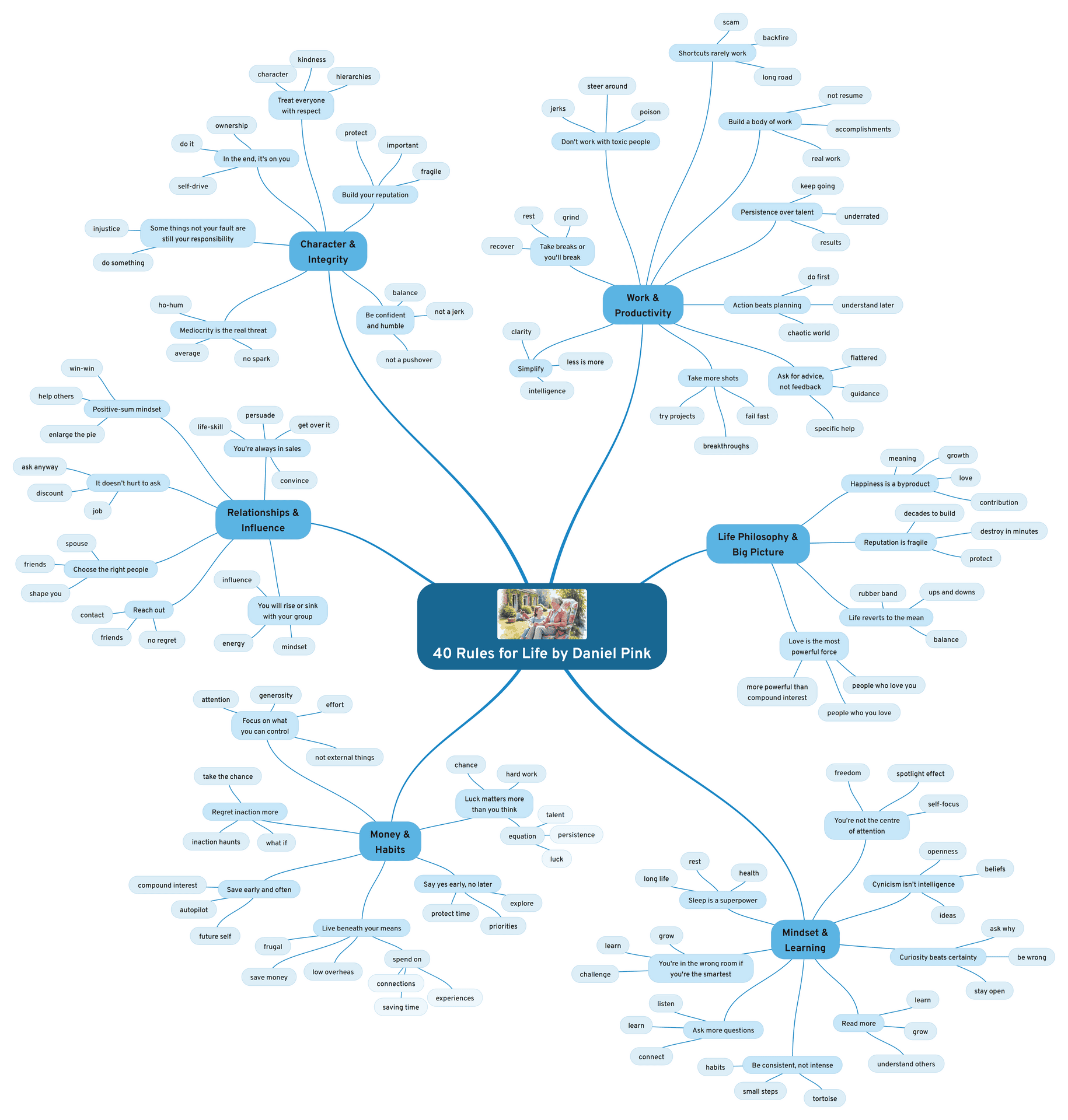
MIND-MAP

Use the mind-map to have a more in-depth discussion on these 40 rules.
lesson glossary

COMMENTS

What do you think of the ideas presented in this lesson?

Share your views and experience here.

0 Comments

Submit a Comment