
FUNCTIONS:

Agreeing

Disagreeing

Hesitating

Introducing your opinion

Asking for opinions

Expressing preferences

Asking for clarification

Expressing likelihood

Speculating, guessing

Advice and recommendations

Describing a picture

Agreeing

I think you’re right

I would go along with the idea

I completely agree with you

That makes perfect sense

You have a point there

Absolutely, that’s spot on!

I couldn’t agree more

Disagreeing

That’s not how I see it

I couldn’t agree less

You must be kidding

That’s a ridiculous idea, don’t you think?

With all due respect, I must disagree

I’m afraid I can’t see it that way

No way, that’s nonsense!

Hesitating

I’m in two minds about it

I have some reservations regarding that

I’m not entirely convinced

There’s something that gives me pause

While I’m not entirely opposed, I do have some doubts

Introducing your opinion

To my mind

I reckon

In my opinion

As I see it

It seems to me

I would argue

From my point of view

Asking for opinions

Don’t you think …?

What’s your attitude to …?

What’s your opinion of …?

Are you in favour of …?

What’s your position as regards …?

You don’t support …, do you?

Expressing preferences

I prefer…

I would rather…

My preference would be…

I tend to favour…

If I had to choose, I would…

I lean towards…

I am inclined to…

I’m a big fan of…

I really enjoy…

I’m into…

I absolutely love…

I’m crazy about…

I’m fond of…

It’s right up my alley

It’s my thing

I can’t get enough of…

It appeals to me

It’s growing on me

I wouldn’t miss it for the world

I’m not a big fan of…

I don’t really enjoy…

I’m not into…

I can’t stand…

I’m not fond of…

It’s not my cup of tea

It doesn’t do anything for me

I’m sick of…

It gets on my nerves

It puts me off

I’d rather not…

It leaves me cold…

Asking for clarification

Could you please elaborate on that?

Would you mind explaining that further?

I’m not quite sure I understand. Could you clarify?

Could you provide more details?

Can you expand on that point?

Expressing likelihood

“It’s a foregone conclusion that…”

“There’s no doubt in my mind that…”

“I am almost certain that…”

“It’s highly likely that…”

“Chances are that…”

“I wouldn’t be surprised if…”

“It’s possible that…”

“There’s a chance that…”

“It’s unlikely that…”

“I doubt that…”

Speculating, guessing

“It seems to me that…”

“My gut feeling is that…”

“From what I gather…”

“If I were to guess…”

“It would appear that…”

“I reckon that…”

“I suspect that…”

“In all likelihood…”

“There’s a distinct possibility that…”

“It’s plausible that…”

Advice and recommendations

“You might want to consider…”

“Perhaps you could try…”

“If I were you, I would…”

“One thing you could do is…”

“Have you thought of…”

“May I suggest…”

“It might be beneficial to…”

“Consider this approach…”

“Why not give this a go…”

“If it were up to me, I’d…”

Describing a picture

“In the foreground…”

“In the background…”

“In the center of the image…”

“On the left side of the picture…”

“On the right side of the picture…”

“At the top of the picture…”

“At the bottom of the picture…”

“The picture depicts…”

“The image illustrates…”

“The photograph shows…”

“One can see…”

“Notice how…”

“This scene captures…”

“This photograph highlights…”

DICTIONARY

Add new and interesting words from this lesson to your English dictionary.

Store your words and expressions in this handy dictionary. You can create groups and play games based on your entries. There is also a practical importing feature.

You must log in to see content.

Learn more words

THE BLUE TREE

Business English

CEF B1

CEFR B2

Upper
Intermediate

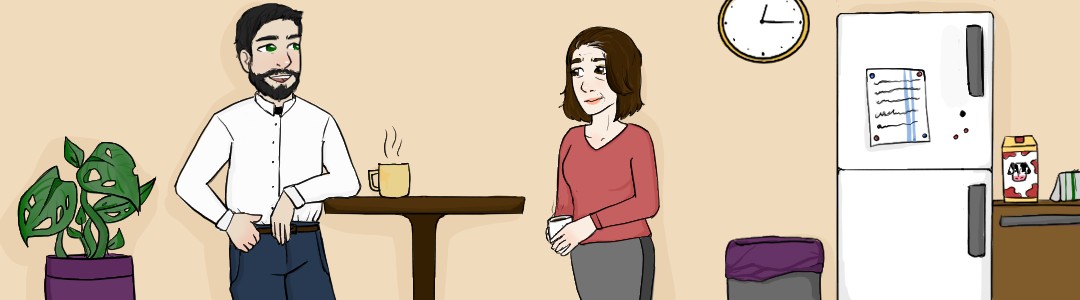
Practise speaking by describing this image

warm up

Answer the questions below. Listen to sample answers. Report back what you heard.

How would you describe the company culture of the firm you work for?
TRANSCRIPT

The company I work for has a collaborative and supportive culture. Teamwork is highly valued, and there’s a strong emphasis on innovation and continuous learning. People are approachable, and it’s easy to share ideas or concerns. It feels like an environment where personal growth and professional goals align.

Do you think companies should be run tightly or rather more liberally?
TRANSCRIPT

I think it depends on the nature of the business. Tight management works well in industries where precision and consistency are essential, like manufacturing or healthcare. On the other hand, a more liberal approach fosters creativity and innovation, especially in fields like tech or marketing. Balance is key.

Can the rules of democracy be implemented in the business setting?
TRANSCRIPT

Implementing the rules of democracy in business could work to an extent, like allowing employees to have a voice in major decisions. But businesses also need leadership that can act decisively. A fully democratic model might slow down processes, but a mix of consultation and leadership could be effective.

part one

KEY LANGUAGE

Go through the flashcards below. Make sure you understand all the words and expressions.

VIDEO

Watch the video. It’s a fragment of a series “For All Mankind” from Apple TV. A woman comes to an office of Helios. She talks to the boss of this company. They discuss a candidate for a job. Later a decision is made. 

When you watch this video, focus on how the office looks like and what the decision making process is like.

COMPREHENSION

Answer these questions. Refer to the information from the video.

  • ⌚ 0:19 Has Karen been in this office before?
  • ⌚ 0:32 What are some of the things Karen is surprised about?
  • ⌚ 0:43 Why does Karen begin with the question: “Is this your office?”?
  • ⌚ 0:54 How did Dev describe the work culture at Helios?
  • ⌚ 1:26 What drink does Dev offer Karen?
  • ⌚ 2:25 Who did Karen recommend for the position of Mars expedition leader?
  • ⌚ 2:35 Why doesn’t Ed want to work for NASA anymore?
  • ⌚ 2:55 What happens when Dev says: “Hey, everybody, bring it in.”
  • ⌚ 3:23 How do people react to the idea of Ed Baldwin becoming the leader of their expedition?
  • ⌚ 4:04 How is the decision finally made?

part two

When talking about company culture you can use many different adjectives. Go through this poll. Listen to and read the short description of each pair of adjectives. Check any new language if necessary.

Use your answers to create a description of company culture of your current or former employer.

1. Supportive - Unsupportive

In a supportive company, people feel they are not on their own. Managers listen, give feedback, and help employees grow. When someone struggles, the focus is on solving the problem, not blaming the person. This creates trust and makes people more willing to speak up.

In an unsupportive culture, help is hard to find. Feedback is rare or unclear, and problems are often ignored. Employees may feel stressed, undervalued, or left to figure things out alone, which slowly kills motivation.

Supportive
Unsupportive
2. Competitive - Collaborative


A competitive company pushes people to perform better than others. Targets, rankings, and results matter a lot. This can be motivating for some, but it may also create tension and reduce trust between colleagues.

A collaborative company focuses on working together. People share ideas, help each other, and succeed as a team. Individual results matter, but teamwork comes first, which usually creates a calmer and more positive atmosphere.

Competitive
Collaborative
3. Innovative - Traditional


An innovative culture encourages new ideas and experimentation. Employees are allowed to question old ways and try new solutions. Mistakes are treated as part of learning, not failure.

A traditional culture values proven methods. People follow established rules and processes that have worked for years. This brings stability and predictability, but change usually happens slowly and carefully.

Innovative
Traditional
4. Hierarchical - Flat


In a hierarchical company, roles are clearly defined and decisions come from the top. Employees know who is in charge and what is expected of them, but decisions can take time.

In a flat company, there are fewer levels of authority. People have easier access to leaders and more say in decisions. This can speed things up, though responsibilities may sometimes feel less clear.

Hierarchical
Flat
5. Flexible - Rigid


A flexible culture adapts easily to change. Rules are treated as guidelines, not strict laws. Employees often have freedom in how they work, which increases autonomy and creativity.

A rigid culture follows rules very closely. Processes are fixed and deviations are discouraged. This ensures consistency, but it can feel restrictive and slow when quick changes are needed.

Flexible
Rigid
6. Progressive - Conservative


A progressive company looks ahead and embraces change. New tools, ideas, and approaches are welcomed, and the company reacts quickly to trends and challenges.

A conservative company prefers stability and tradition. Changes are carefully considered and introduced slowly. This reduces risk but can make the organization less responsive to new opportunities.

Progressive
Conservative
7. Risk-taking - Risk-averse


A risk-taking culture accepts uncertainty. Employees are encouraged to try bold ideas, even if they might fail. This can lead to big successes, but also occasional setbacks.

A risk-averse culture avoids uncertainty. Decisions are made carefully, with a strong focus on safety and predictability. Growth is steadier, but innovation may be limited.

Risk-taking
Risk-averse
8. Empowering - Micromanaging


An empowering company trusts its people. Employees can make decisions and take responsibility for their work. This usually increases confidence and engagement.

A micromanaging culture controls every detail. Managers closely supervise how tasks are done, which can make employees feel mistrusted and less motivated to think independently.

Empowering
Micromanaging
9. Individualistic - Team-oriented


An individualistic culture highlights personal achievement. Employees are rewarded for their own results and independence.

A team-oriented culture values cooperation. Success is shared, and people support each other to reach common goals, even if individual effort is less visible.

Individualistic
Team-oriented
10. Sustainable - Short-term focused


A sustainable company thinks long-term. Decisions consider future employees, customers, and the environment. Growth may be slower, but it is more stable.

A short-term focused company aims for quick results. Immediate profits matter most, sometimes at the cost of long-term trust, people, or stability.

Sustainable
Short-term focused
w

DISCUSSION

Discuss these questions. Refer to the video fragment you have just seen and your own experience.

  • What do you think of the open office plan of modern offices?
  • How would you feel working for Helios?
  • Should companies take care of employees wellbeeing?
  • What do you think of Dev sitting together with everybody else?
  • What do you think of the democratic decision making process shown in this clip?
  • What are the pros and cons of adopting democracy in a business context?
COMMENTS

Share your views and opinions here.

0 Comments

Submit a Comment