



Bardzo mi przykro, ale lekcje na platformie The Blue Tree działają jedynie na komputerze lub tablecie.
Do zobaczenia na większym ekranie 🙂
Zespół The Blue Tree
back to HOME > Personal Development > Personal Productivity >

THE BLUE TREE
Personal
Productivity

CEFR B1
Intermediate

warm up
Answer the questions below.
| Is it important to do work that you enjoy? |
TRANSCRIPT
Absolutely! I think it’s really important to do work that you enjoy, or at least find meaning in. When I’m working on something creative or something that challenges me in a good way, I feel so much more energized. It’s tough to stay motivated if you’re not passionate about what you’re doing.
| How can recognition help us to enjoy our work more? |
TRANSCRIPT
Recognition can make a big difference. When people acknowledge your efforts, it boosts your morale and makes you feel like your work matters. I’ve seen how a simple thank you or feedback from a colleague can make the work feel more rewarding. It doesn’t have to be a big gesture—just knowing you’re making a positive impact is motivating.
| Is it a good idea to have a clear purpose for doing your job? |
TRANSCRIPT
Yes, having a clear purpose for doing your job is really important. It helps keep you focused, especially during challenging times. Personally, I like to remind myself why I started a project or how it fits into my bigger goals. It’s like having a compass—it guides your energy and decisions in the right direction, so you don’t get lost in the day-to-day stress.

part one

AT A GLANCE
Listen to a short version of the article that you will read later. Answer the questions that follow.

TRUE OR FALSE
Do the task below.


part two
FULL ARTICLE
Now read the full article and do the tasks that follow.

In a Rut at Work? Try These Simple Ways to Feel Re-Energized
We all have moments at work when everything feels heavy. You sit at your desk, look at your tasks, and think: “I just don’t have the energy today.” That’s completely normal.
Instead of trying to power through and force yourself to work harder, try something different: manage your energy, not your time. Small changes can make a big difference.
Here are three simple ideas that many people use to feel more motivated and positive at work.
1. Write Your Purpose on a Post-it 📝
Take a small piece of paper and write down why you do your job.
This can be:
your big purpose – why you chose this career
or a small purpose – why this one task or project matters right now
Put the note somewhere you can see it every day: on your desk, computer screen, or notebook.
“I wrote ‘I help people feel confident in meetings’ on a post-it and stuck it to my screen. On bad days, it reminds me that my work has meaning,” says Anna, a project coordinator.
When work feels stressful or tiring, this simple reminder can help you reconnect with what really matters.
2. Create a “Wall of Encouragement” 🌟
Collect things that make you feel good:
kind emails from colleagues or clients
positive feedback
awards or certificates
funny pictures or memes
You can put them on the wall near your desk or save them in a digital folder.
“When I feel tired or unappreciated, I open my ‘good moments’ folder. It reminds me that my work is noticed,” says Marek, an IT specialist.
Looking at these messages can give you a quick emotional boost and help you feel valued.
3. Make a “To-Don’t” List 🚫
Instead of only writing a to-do list, try writing a to-don’t list.
Ask yourself:
What activities drain my energy?
Which habits don’t help me anymore?
What tasks could be automated or given to someone else?
These might be:
unnecessary meetings
checking emails too often
tasks that are boring and repetitive
“I realized I was saying yes to everything. My to-don’t list helped me stop doing things that weren’t important,” says Kasia, a team leader.
Removing just one energy-draining habit can make your day feel much lighter.
Final Thought
You don’t always need more time. Very often, you just need more energy.
Small actions—like a post-it note, a kind message, or a better boundary—can help you feel more focused, motivated, and calm at work.
Sometimes, working smarter starts with being kinder to yourself 💙
COMPREHENSION
Answer these questions on the basis of the article.
What do people often fall into at work, according to the article?
What two kinds of purpose can someone write on a post-it note?
Why is it helpful to keep your purpose visible at your desk, especially on difficult days?
What kinds of things can be included in a “wall of encouragement”?
Why is it important to identify activities, habits, or people that drain your energy?
What actions should you take after making a “to-don’t” list?

POLL
Cast your vote in the poll.
DISCUSSION
DIALOGUE
Read or role-play this dialogue.
Alita:
You know, I really liked the idea of writing your purpose on a post-it. When work gets stressful, I sometimes forget why I’m doing what I’m doing in the first place.
Pete:
Yeah, I get that. I’m more skeptical, though. I used to think a post-it wouldn’t change much. But when I wrote a short sentence about helping my team work better, it actually helped me refocus on bad days.
Alita:
Exactly. It’s not about motivation in a big, dramatic way. It’s more like a quiet reminder. I also liked the idea of a wall of encouragement. I tend to focus too much on what goes wrong.
Pete:
Same here. I saved a few positive emails from clients, and when I read them again, I realize that my work is appreciated more than I think. It really changes my mood.
Alita:
What about the to-don’t list? That one felt very practical to me.
Pete:
Honestly, that’s my favourite idea. I noticed that too many meetings were draining my energy. Once I started saying no to some of them, my days felt much lighter.
Alita:
I agree. We usually add more and more to our to-do lists, but we rarely stop and ask what we should stop doing.
Pete:
Exactly. For me, managing energy is about small decisions, not big changes. And these ideas are simple enough to actually use.
OVER TO YOU
Discuss these questions.
 | What usually drains your energy the most at work or in everyday life, and how do you normally deal with it? |
| When you feel tired or unmotivated, what helps you recover your energy faster: rest, a change of activity, or a sense of purpose? Why? |
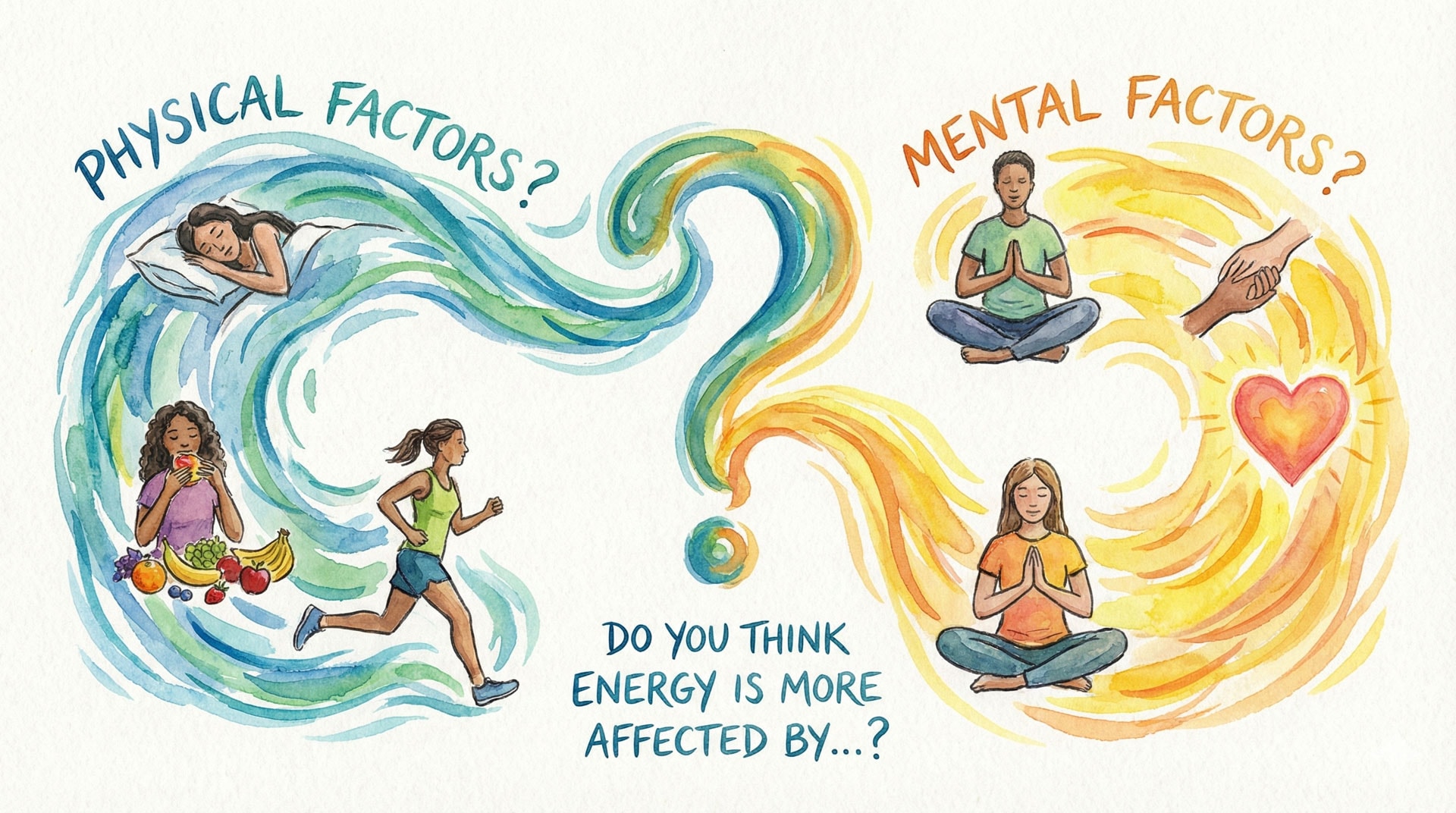
| Do you think energy is more affected by physical factors (sleep, food, movement) or mental factors (stress, meaning, relationships)? Explain your opinion. |
| Can being busy sometimes feel energizing instead of exhausting? In what situations does that happen for you? |
| If you had to give one piece of advice to a colleague who feels burned out, what would it be and why? |
COMMENTS
How do you re-energize yourself when you are feeling down at work? Would you like to give any of these ideas a try?
Share your views and experience here.
0 Comments