




Bardzo mi przykro, ale lekcje na platformie The Blue Tree działają jedynie na komputerze lub tablecie.
Do zobaczenia na większym ekranie 🙂
Zespół The Blue Tree

THE BLUE TREE
Better
Communicator

CEFR C2
Proficiency

warm up
Answer the questions below.
| Why do people argue? |
TRANSCRIPT
People argue because they feel strongly about their beliefs or perspectives and want to be heard. Sometimes it’s about proving a point, but other times it’s about defending what matters to them. Arguments can come from misunderstandings or differences in values, but they’re not always a bad thing. If handled the right way, disagreements can lead to better understanding and growth.
| Do you usually win or lose arguments? |
TRANSCRIPT
I don’t really think about arguments in terms of winning or losing. I guess it depends on the situation. Sometimes I feel like I’ve made my point clearly, but other times I realize that I’ve misunderstood the other person’s perspective. I try to focus more on finding common ground instead of just trying to ‘win’ the argument. That way, it feels like a win for both sides, not just one person.
| Would the world be a better place if people knew how to argue productively? |
TRANSCRIPT
Definitely! If people knew how to argue productively, the world would be a much better place. Arguments wouldn’t be about tearing each other down, but about genuinely trying to understand different viewpoints. We could solve problems more effectively and create stronger communities. Productive disagreement helps people see that it’s okay to have different ideas and still work together toward solutions.

part one

KEY LANGUAGE
Go through the flashcards below. Make sure you understand all the words and expressions.

VIDEO
Watch the first part of the video.

COMPREHENSION
Answer these questions. Refer to the information from the video.
- What is the state of public discourse?
- How do many arguments finish?
- What is Julia’s life mission?
part two
KEY LANGUAGE
Go through the flashcards below. Make sure you understand all the words and expressions.
VIDEO
Watch the second part of the video.
COMPREHENSION
Answer these questions. Refer to the information from the video.
- Why did Julia’s parents send her to a debating club?
- How does formal debating work?
- How did Julia’s first attempt at debating go?
- How good did she become eventually?
- What are the three elements of a productive debate?
part three
KEY LANGUAGE
Go through the flashcards below. Make sure you understand all the words and expressions.
VIDEO
Watch the third part of the video.
COMPREHENSION
Answer these questions. Refer to the information from the video.
- What is a rebuttal and why is it so important for debating?
- What was Julia’s initial thought on successful debaters?
- What is the first step to a productive disagreement?
- Why is it more beneficial to debate face to face?
part four
KEY LANGUAGE
Go through the flashcards below. Make sure you understand all the words and expressions.
VIDEO
Watch the fourth part of the video.
COMPREHENSION
Answer these questions. Refer to the information from the video.
- What is the second step towards a productive disagreement?
- What is the best strategy to win a debate?
- How can this principle be used in public discourse?
part five
KEY LANGUAGE
Go through the flashcards below. Make sure you understand all the words and expressions.
VIDEO
Watch the fifth part of the video.
COMPREHENSION
Answer these questions. Refer to the information from the video.
- What is the third key to a productive disagreement?
- What are the benefits of practising intellectual humility?
- What question does Julia recommend we all ask ourselves?
Julia Dhar
What is it that you have changed your mind about? And why?
follow up
Julia describes at length how Fred Rogers convinced Senator Pastore to change his mind about funding public television.
Would you like to see a short clip about this hearing? Here it is, and I cannot recommend it enough 🙂
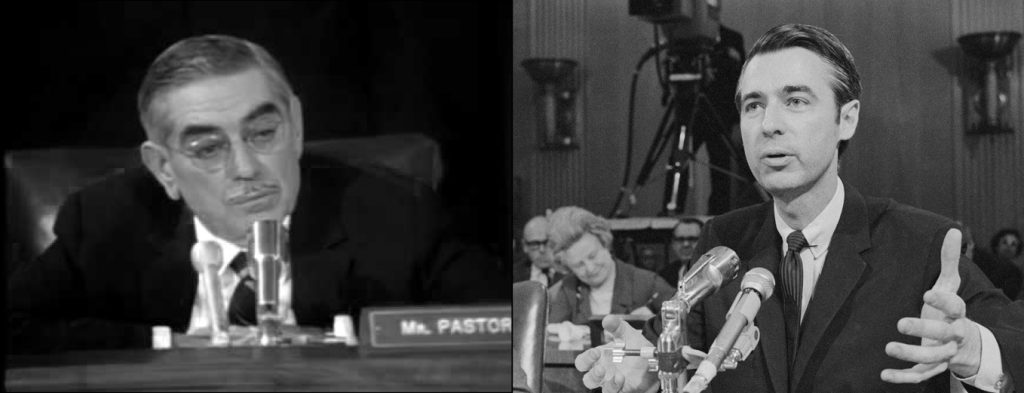
watch the video
POLL
Cast your vote in the poll.
DISCUSSION
JULIA’S IDEAS IN PRACTICE
Alita and Pete are discussing Julia’s ideas and how they helped them find a compromise in the past.
Read or role-play this dialogue.
Alita:
Did you watch Julia Dhar’s TED Talk about disagreeing productively?
Pete:
Yeah, I saw it last week. Honestly, I wish more people followed her ideas—especially during election season. The way politicians and even regular people argue these days is just depressing.
Alita:
Exactly. It’s like nobody listens anymore. Everyone’s shouting, but no one is really having a conversation. Dhar’s idea of shared reality really stuck with me. Imagine if candidates started with common ground instead of personal attacks.
Pete:
That would change everything. I remember last year I had a huge argument with my uncle about immigration policy. We both got emotional and defensive. But then I remembered Julia’s advice—separate identity from the idea. So I said, “Can we agree that we both want people to feel safe and be treated fairly?” That shifted the whole tone.
Alita:
That’s a great example. Something similar happened at work. We were debating whether to let people work fully remote. It got tense, but I asked everyone to write their opinions anonymously, like Julia suggested. When we discussed the proposals without knowing who wrote them, people were more open-minded. And we found a hybrid solution that worked for everyone.
Pete:
I love that. It’s proof her method works. But how do we bring that mindset into national conversations? Right now, candidates act like changing your mind is a weakness.
Alita:
That’s another point she made: the humility of uncertainty. I’d respect a leader more if they said, “I’ve changed my mind because I learned something new.” It shows they care more about truth than ego.
Pete:
Totally agree. We need more Mister Rogers and Senator Pastores, like she said. Thoughtful people on both sides, willing to listen and rethink. Maybe it starts with us—at home, work, even on social media.
Alita:
Yes, I believe small changes in how we talk to each other can lead to bigger changes in society. I just hope more people hear her message before the next election.
Pete:
Same here. Let’s keep practicing it—and maybe inspire a few others along the way.
OVER TO YOU
Discuss these questions. Refer to the information from the lesson and your own experience.
 | Why is it so hard for people to admit they might be wrong in an argument? What helps you stay open-minded? |
| How could we apply the idea of anonymous contributions, like Julia did in her project, to improve discussions at school or work? |
| Julia Dhar said we should ask each other: “What have you changed your mind about, and why?” — how would you answer that question? |
| What does intellectual humility mean to you? Do you think it’s a strength or a weakness in today’s world? Why? |
| How do people usually react when their opinions are challenged? What makes someone more open or more defensive in those situations? |
